SAFE Credit Union makes the case for its pending merger with Seattle-area firm
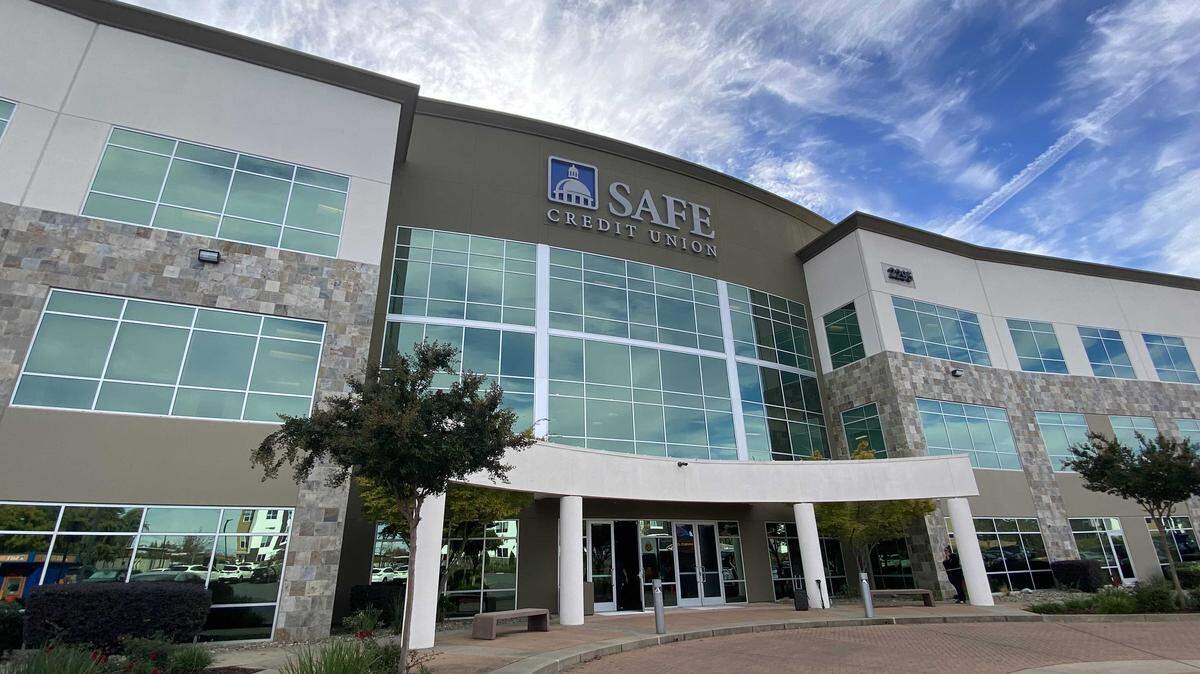
SAFE Credit Union leaders announced plans in November to merge with a larger firm, promising change for the 85-year-old Folsom institution. Now, looking to close the deal in early 2027, the company has to answer to regulators — and sell its members on the agreement.
In a recent interview, SAFE President and CEO Faye Nabhani laid out the credit union’s case for combining with Washington-based BECU.
Nabhani, who would serve as the Sacramento region market president for BECU after the merger, committed to advocate for the combined credit union’s Sacramento-area members. And she said the firms intend to expand their California operations.
“This isn’t about an efficiency play,” Nabhani said.
SAFE, with nearly 700 employees and 244,000 members, is the smaller player in the transaction. BECU employs 3,200 and has more than 1.5 million members.
SAFE’s plans are the latest in a series of credit union mergers over recent decades. Few today resemble the “shoebox credit unions” of the 1960s, so named for the notion that the entirety of their paperwork could fit in a shoebox, said Luis Dopico, partner and chief economist at CUCollaborate, a Washington, D.C. firm that advises credit unions on a range of issues including mergers.
The deal would make BECU the nation’s fourth-largest credit union, overseeing $33 billion in assets, up from fifth.
The pace of change
Following the merger, Nabhani said, members’ fees will be reduced. The credit union’s charitable giving in the Sacramento region will grow. And with access to a larger balance sheet, SAFE will have more lending options and will be better equipped for the accelerating technological changes in the industry, in areas like fraud protection and customer-facing banking software.
Nabhani expects credit unions will continue to consolidate, as they look to bolster balance sheets and keep up with “exponential” changes in banking technology.
“The pace of change is only increasing,” Nabhani said. “Our ability to continue to provide for consumers and our members, and the regions that we all serve as an industry, will only continue to get more challenged — just to keep the status quo.”
The credit union soon plans to give members access to Zelle, the money transfer platform, and it made a “major upgrade” to its mobile application late last year.
“(I’m) really proud of that. It looks phenomenal,” Nabhani said. “But that’ll be good for maybe a couple of years.”
The merger requires approval from the National Credit Union Administration and state finance agencies in California and Washington.
Nabhani said SAFE has been responding to questions from the regulatory agencies. Others in the industry have received approval in anywhere from five months to a year, she said. Then SAFE must hold a vote among its members.
Consolidation
In the early days of U.S. credit unions, policymakers imposed restrictions on banks’ and credit unions’ geography and membership, which kept the organizations small, said Dopico, the economist. Economic downturns changed that mindset.
“Those rules created fragile institutions,” Dopico said. “If there is a problem in the local economy, then people can’t repay their loans there, and the bank is not diversified, and the bank will go belly up.”
Many credit unions were originally focused on a single community, and therefore dependent on its economic fate. BECU, originally Boeing Employees’ Credit Union, was founded for the aircraft manufacturer’s employees, and later widened its membership.
SAFE, formerly the Sacramento Air Force Employees Credit Union, was founded for workers at McClellan Air Force Base, but eventually expanded its membership to anyone who lives, works or worships in its 13-county territory.
“Banks became so much bigger, and — like it happened to mom-and-pop stores — either you merge or you get driven out,” said Bidisha Chakrabarty, associate dean of research and professor at St. Louis University’s Chaifetz School of Business.
The U.S. has around 4,500 credit unions now, compared to 24,000 in 1969, Dopico said, with the decrease largely driven by mergers.
Over time, it became harder for smaller credit unions to compete, especially as the costs of keeping up with regulations and technology rose, said James Wilcox, a professor at UC Berkeley’s Haas School of Business, who researches banking and credit unions. While SAFE, he said, is hardly a small credit union, there are reasons to believe its costs would decrease following a merger.
Still, mergers can come with drawbacks, experts said. Charitable contributions and decision-making, for instance, tend to shift to the city where the larger credit union is headquartered.
Nabhani said the merger is structured “to ensure that California is heard,” and she would represent Sacramento-area members’ needs to BECU leadership after the deal closes. And she said she expected more philanthropic dollars would flow into the Sacramento region following the merger.
“I have 30-some odd years doing everything I do to try to help drive more value, better value, better opportunities, faster service to the members that I serve,” Nabhani said. “That doesn’t stop just because my role changes slightly. I will continue to be that voice. I will continue to represent our members’ needs”
Under the merger agreement, SAFE would get two seats on BECU’s board.
“The intention is to grow in California,” Nabhani said. “The intention is to make this an even stronger area and region.”
The overwhelming majority of proposed credit union mergers pass, Dopico said.
“There’s a huge impetus to get bigger,” Wilcox said. “There are all kinds of pressures. Cost pressures. Diversification pressures. Regulatory costs… I think there’s just no end in sight.”