U.S. cities rally billions to court MLB. How does Sacramento’s bid stack up?
After a year of behind-the-scenes maneuvering, the region’s MLB hopefuls gave the public a first look at their plan to court the league this week, launching West Sacramento into a competition with cities across North America, some of which have spent years advancing bids.
In Salt Lake City, a financier has pledged billions toward a ballpark-centered development. Portland’s effort is backed by a $800 million “jock tax” that would pay off stadium bonds with MLB employees’ income tax revenues, should the city secure a team.
Sacramento’s proposal has $1.8 billion in public and private commitments and other few key advantages that, civic leaders argue, could carry it through. And they have years, still, to build a compelling case. The league’s commissioner has said he wants a process in place to expand the league by the time he retires, expected in 2029.
But critically, the effort lacks an ownership group.
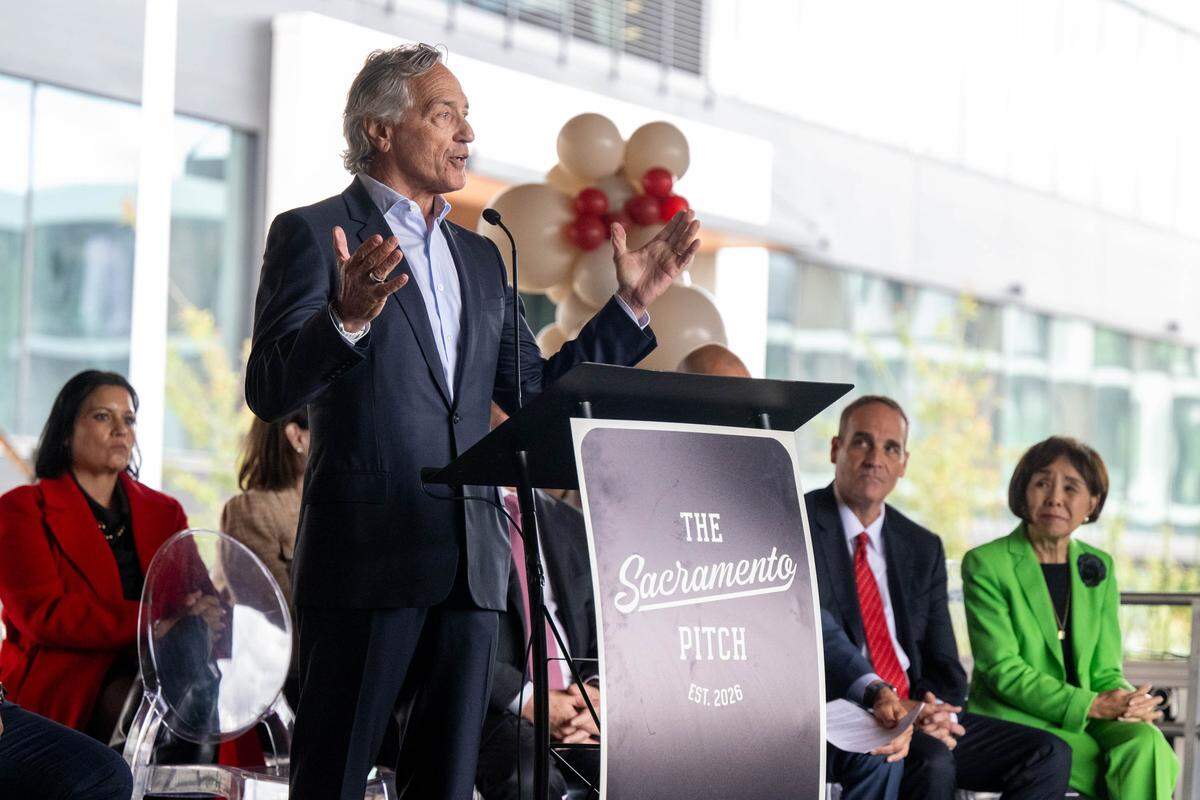
Mark Friedman, founder and chairman of Fulcrum Property and chair of the steering committee for “The Sacramento Pitch,” acknowledged the group is essentially trying to “set the table, and then invite the guest of honor.”
Many expect the league will look to establish one new team in the western U.S., and one in the east. In the west, Portland and Salt Lake City have the two most well-established expansion efforts. Vancouver has also adopted a plan to find a lead investor to kickstart their chances at an expansion.
The league will likely examine all aspects of the cities vying for its attention, from wealth and age demographics, to political interest in sports-related projects. But an ownership group is one of the most important pieces of any expansion bid, along with clear evidence of local fan and corporate support and a plan for a stadium, said Patrick Rishe, executive director of the sports business program at Washington University in St. Louis.
“Any market that can win the day on those three attributes is going to be the favorite,” he said.
A new market?
Sacramento’s most formidable competitor may be Salt Lake City, which has a more developed bid and a statehouse that has proven amenable to pro-expansion legislation.
Salt Lake City would represent an entirely new market for the league, with the nearest team more than 500 miles away in Denver. Las Vegas, where the A’s are planning to move after the 2027 baseball season, is 420 miles away, and Phoenix is 660 miles.
Portland, similarly, is farther from other MLB teams than Sacramento. The Mariners play about 170 miles north, and the San Francisco Giants 630 miles south.
“North of Sacramento, north of the Bay, there’s nothing,” said Lauren Anderson, director of the Warsaw Sports Business Center at the University of Oregon. “There’s Seattle.”
Sacramento, meanwhile, has a strong contingent of San Francisco Giants fans, many of them willing to drive 90 miles to the Bay Area to watch games.
Utah hosted the Winter Olympics in 2002, and will again in 2034. Salt Lake City has attracted a series of professional teams: Major League Soccer in 2004 and the NHL and National Women’s Soccer League in 2024.
Utah in 2024 passed legislation creating an investment and restoration district to support the mix-used development where a ballpark would be, including funding as much as $900 million toward the ballpark with state sales tax revenue and rental car taxes. In turn, the state would own the ballpark and lease it back to the team for $150,000 a month for 30 years.
In Salt Lake City, the Larry H. Miller Company, former owner of the Utah Jazz, has committed $3.5 billion toward a mixed-use development on the west side of the city that would be centered around a ballpark, and has pledged its support as a primary financier.
The company reportedly sold its group of car dealerships for $3.2 billion in 2021 after selling the Jazz for $1.66 billion in 2020. The family acquired Real Salt Lake of MLS in 2025 for $600 million. The deal included America First Field, a 20,000-seat soccer specific stadium that cost $110 million when it opened in 2008.
The company — now run by the family of the late Larry Miller — has money and experience owning sports teams that could be enticing to MLB.
Oregon, meanwhile, passed a bill that would authorize $800 million in bonds to build a stadium in Portland. The bonds would be repaid with income tax revenue from major league ballplayers and staff.
The Portland Diamond Project, a group backing the effort, has reportedly signed a purchase agreement for a 30-some acre waterfront parcel near the city’s downtown.
“The Sacramento Pitch,” a group advancing a bid here, said this week that it has assembled $800 million in land and private investment, and projected the city of West Sacramento could bring $1 billion in public financing through tax increment financing, hotel taxes and other sources.
Friedman, the developer, is contributing $150 million in land and equity, and will chair a steering committee for the effort. The Shingle Springs Band of Miwok Indians is committing $250 million, as is the United Auburn Indian Community, which is a partner in Friedman’s Pierside project in West Sacramento.
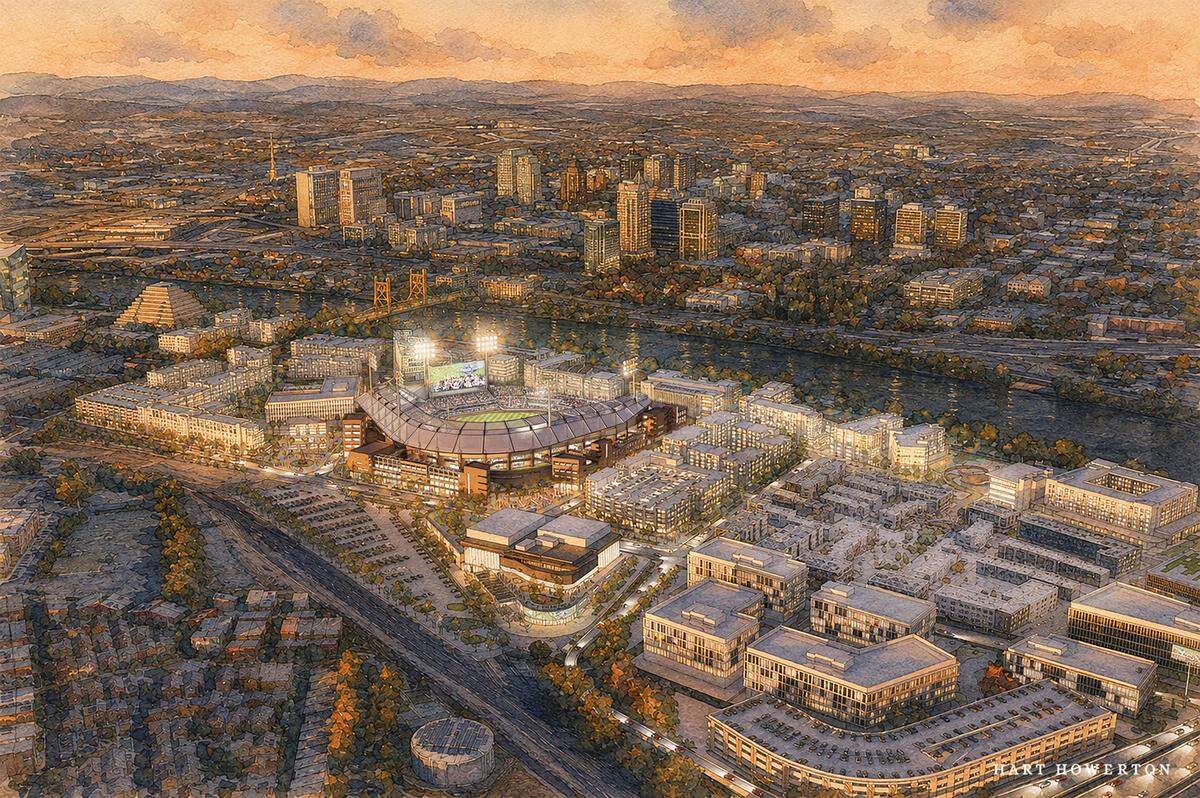
The group has proposed a 50-acre parcel along the riverfront, already zoned for a baseball stadium, with space for a ballpark, restaurants, shops and other amenities.
It’s somewhat unorthodox to “come out swinging,” as the Sacramento region did Thursday, by announcing its interest in an expansion team without an owner lined up, Anderson said.
Still, she said, it seems the situation is primed for the right group to enter the picture
“It seems like you’re well-positioned,” Anderson said. “If I had a lot of money, and I’d be interested in buying and being an owner and building something, maybe this is an ideal situation.”
Uncertainty
The league hasn’t formally begun a process to expand yet, and it’s unclear how much West Sacramento will know about its prospects over the coming years. The NBA has been relatively transparent in its expansion process, and Major League Soccer typically makes clear a few months before announcements that certain cities are “in the catbird seat,” Rishe said.
But, he added, “every league is different, in terms of how they hold their cards.”
Looming in the backdrop are two sources of financial uncertainty. First, negotiations are beginning for a new labor contract for MLB players, with the current agreement set to expire in December. Owners will push for a salary cap, which players fiercely oppose. Second, the overhaul of the league’s longtime broadcast model, the MLB’s bridge to its fans and often the largest source of revenue for teams, is ongoing.
The debates around a potential salary cap create an open financial question for prospective team owners. And broadcast fees, which have long been a significant source of revenues for teams, will shrink as the league adjusts its framework for televising games to the streaming era, experts said.
The Sacramento MLB effort will need an owner who understands those dynamics, and is prepared, Rishe said.
“The future of baseball is uncertain,” Anderson said. “Not that it’s going away. But the way revenue flows through the system is just unpredictable right now.”
.JPG "SAC_0575_PK_20260528_MLBEXPANSION (1).JPG")
Beyond the practical considerations like stadium sites and financing, experts say the MLB will also examine cities’ demographics and corporate presence.
Like all sports, baseball wants to attract young fans, Rishe said. And a team’s ability to secure corporate sponsorships depends partly on the city’s affluence and corporate business presence. Sacramento has a relatively strong television market, a bright spot for the region’s effort.
Avid support for the minor-league River Cats would also reflect well on the city’s bid, Rishe said, drawing a comparison to Sacramento’s MLS effort.
“Part of the reason Sacramento was well positioned and built some momentum for the Major League Soccer bid was the fact that the USL team was doing extremely well,” Rishe said, referring to Sacramento Republic FC. “They had a real argument.”
Setting the table
Regional leaders contemplated that very possibility before the West Sacramento minor league park was ever built.
In 1996, during early conversations about a potential ballpark there, a small group of local officials visited Denver to learn how the city secured the Rockies, said Roger Dickinson, a Sacramento city councilmember who, at the time, served on the Sacramento County Board of Supervisors.
“They had a triple-A team. They made sure they supported that triple-A team really well. Good attendance, good municipal support,” Dickinson said. “We came back and said, ‘Okay, we know we’re not going to get a major league team in Sacramento as long as there are two major league teams in the Bay Area. That’s not going to happen, but let’s set the table.’”
When regional leaders announced their bid this week, Sacramento Mayor Kevin McCarty implored locals to go to more games.
“Last year, if you went to five games, go to 10. If you went to zero, go to one. Because one thing that none of the other cities have that are vying for an expansion team is an MLB team here, today,” he said. “Filling that house for the A’s games, plus the River Cats as well, will only strengthen our case.”
And the vision for what a major league team could deliver in West Sacramento is just as clear today.
More than 20% of attendees at the ballpark last year came from more than 50 miles away, said Scott Ford, deputy director of the Downtown Sacramento Partnership, a hint at the potential for new tourism that a permanent MLB team may bring.
The proposed ballpark and ancillary development would deliver the city’s long-term vision for the waterfront-adjacent Bridge District, West Sacramento Mayor Martha Guerrero said during Thursday’s news conference. The once-industrial area that has steadily transformed with new housing and business.
Sacramento is a great baseball town, and has shown its capacity to support professional sports through its fandom of the Kings, said Kevin McClatchy, the former McClatchy chairman and former Pittsburgh Pirates owner, now a member of the “Sacramento Pitch” steering committee.
“I think we’re well positioned. I think Sacramento just needs to believe in itself a little better. Believe that we can do this, and we can,” McClatchy said.
Local baseball legend Derrek Lee attested that, after visiting all 30 big-league cities, West Sacramento deserves to be among them.
“This is a big deal. This is a major league city,” Lee said. “Let’s change the mindset. Let’s get it done.”
This story was originally published May 29, 2026 at 11:29 AM.