West Sacramento plant, shuttered abruptly last year, restarts under new owners
A West Sacramento bottling plant, which closed abruptly last year and laid off hundreds of workers, has partially resumed operations under new ownership, who have plans to steadily restore the site.
Members of the plant’s new ownership group said this week that their firm, Redwood Beverage Group, has hired nearly 100 people, most of whom worked for the facility under its previous owners. They plan to hire more in the coming months, as they bring back more production lines and make a steady stream of investments in the site, which, at full capacity, could fill more than 1 billion containers annually.
Still, the task is significant. Reviving the plant has been a months-long effort, and restoring production to its former pace will take months still.
“Rome wasn’t built in a day,” said Josh Young, director and owner of Redwood Beverage Group. “Let’s do it the right way. Slowly, methodically. Put the investment in the right place.”
The facility shut down suddenly last year, along with two other sites that were, at the time, owned by Manna Beverages, which employed more than 600 people collectively here and in Anaheim and Chino. Lawsuits followed, and are still pending, by employees alleging Manna failed to provide proper notice ahead of the layoffs.
The union that represented the West Sacramento workers — Nor Cal Beverage Employees’ Union — dissolved. Its former president, Greg Ball, found another job as a heavy equipment operator at Vulcan Materials Company, and while some of his former coworkers have been re-hired by the new owners and some have found other work, others, he said, are still searching.
Redwood Beverage Group acquired the West Sacramento plant in November. Manna’s Anaheim site was bought by an Arizona Beverages subsidiary late last year.
‘Fix everything’
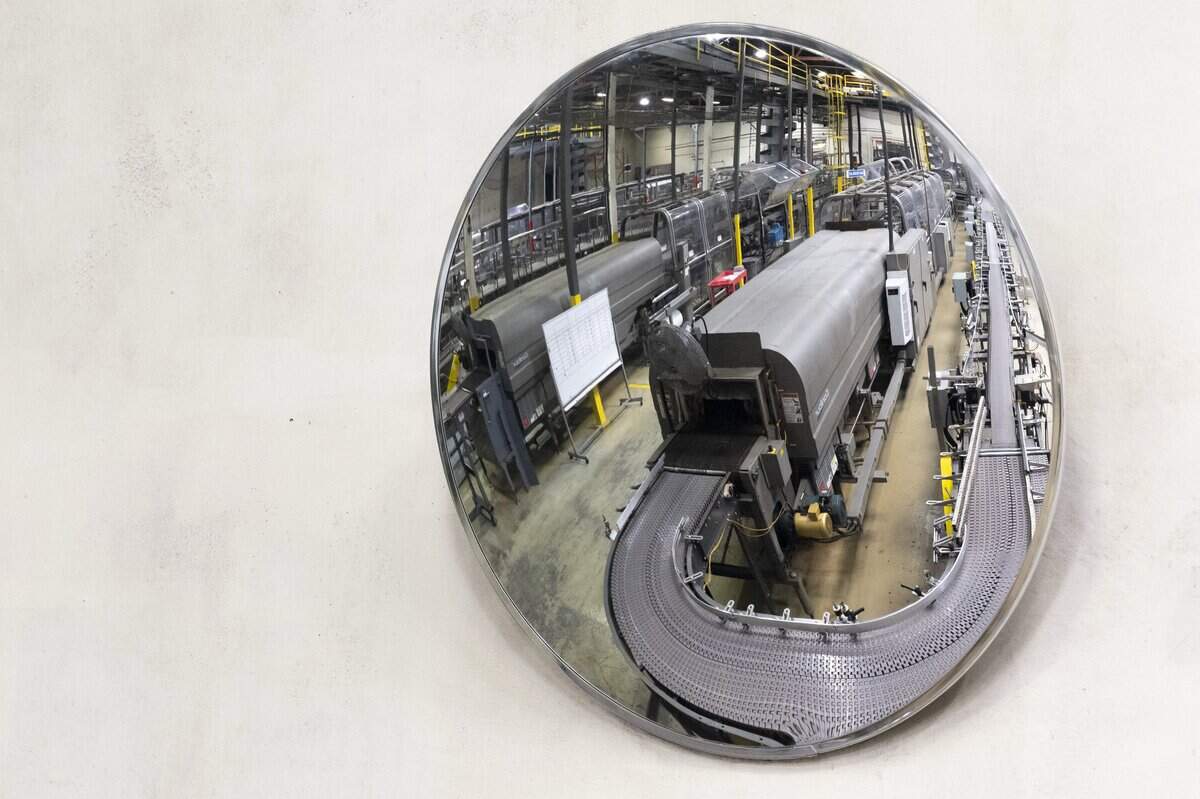
The West Sacramento plant posed a formidable challenge for its new owners. The bottling plant had stopped operating by the time Redwood acquired it, and such machinery fares poorly when it sits idle.
“The problem with manufacturing facilities is that, when you stop them, getting them to restart is really difficult,” said David Karsenti, managing principal at 13th Floor Capital and a director and owner of Redwood. “You can’t just press a button.”
But because the facility was idled — a rarity in manufacturing — the owners decided to “fix everything.”
They cleaned the facility, and installed new lights. They asked workers to choose a color for parts of the plant, and paint it. They planned for the installation of a new air conditioning system.
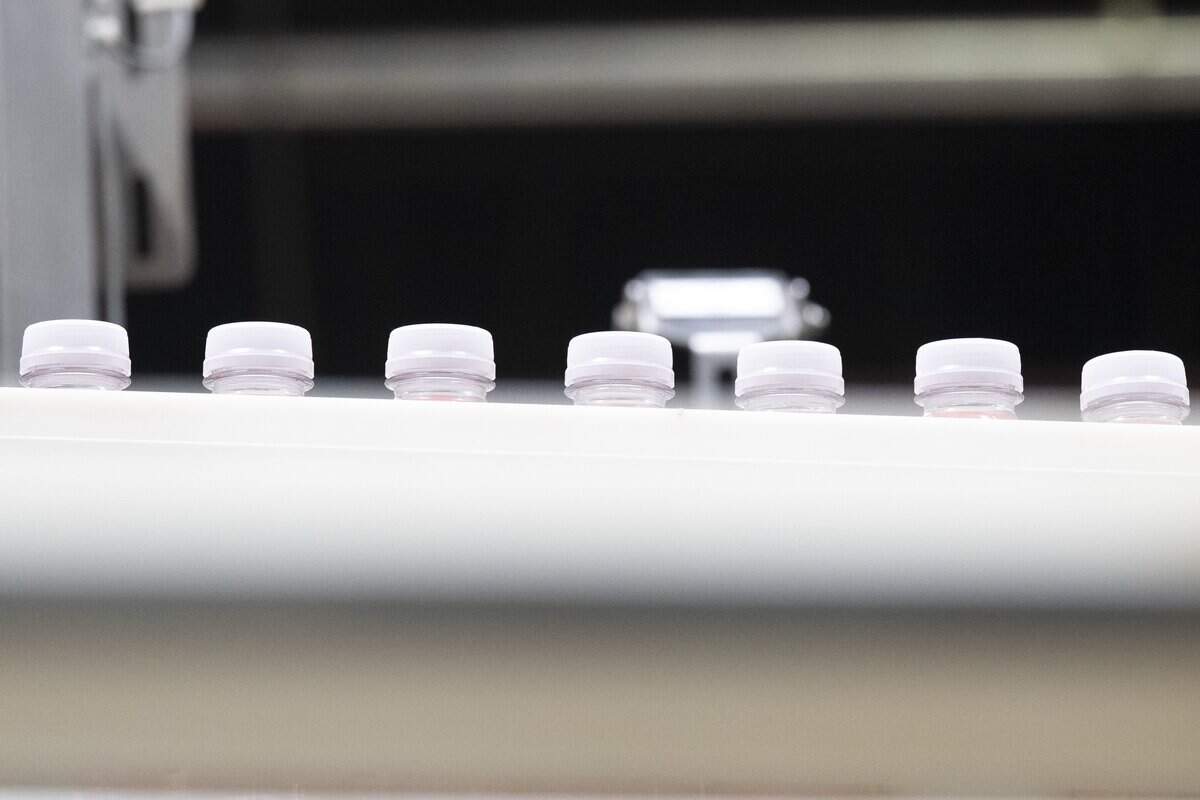
A new software system monitors how many containers each line is expected to fill during a given shift, and how many have been filled so far, the metrics displayed on a screen on the lobby wall. A production line that once lost about 10% to 13% of its product to errors with caps and fill levels has been brought down to about 0.5%, said Kyle Clarke, vice president of engineering for Redwood.
“Whatever needs to be repaired, we’re going to repair it. If it needs to be modernized, let’s modernize it,” Young said. But, he added, “there’s still a lot more to do.”
Redwood Beverage Group has hired 94 people to work at the plant. Of those, 87% are former Manna employees, Young said. They plan to hire around 30 more in the next two months.
Plus, they’ve gotten key customers back.
“Things are really starting to get back in order,” Young said. “We’re proud of what’s happening here.”
Patient money
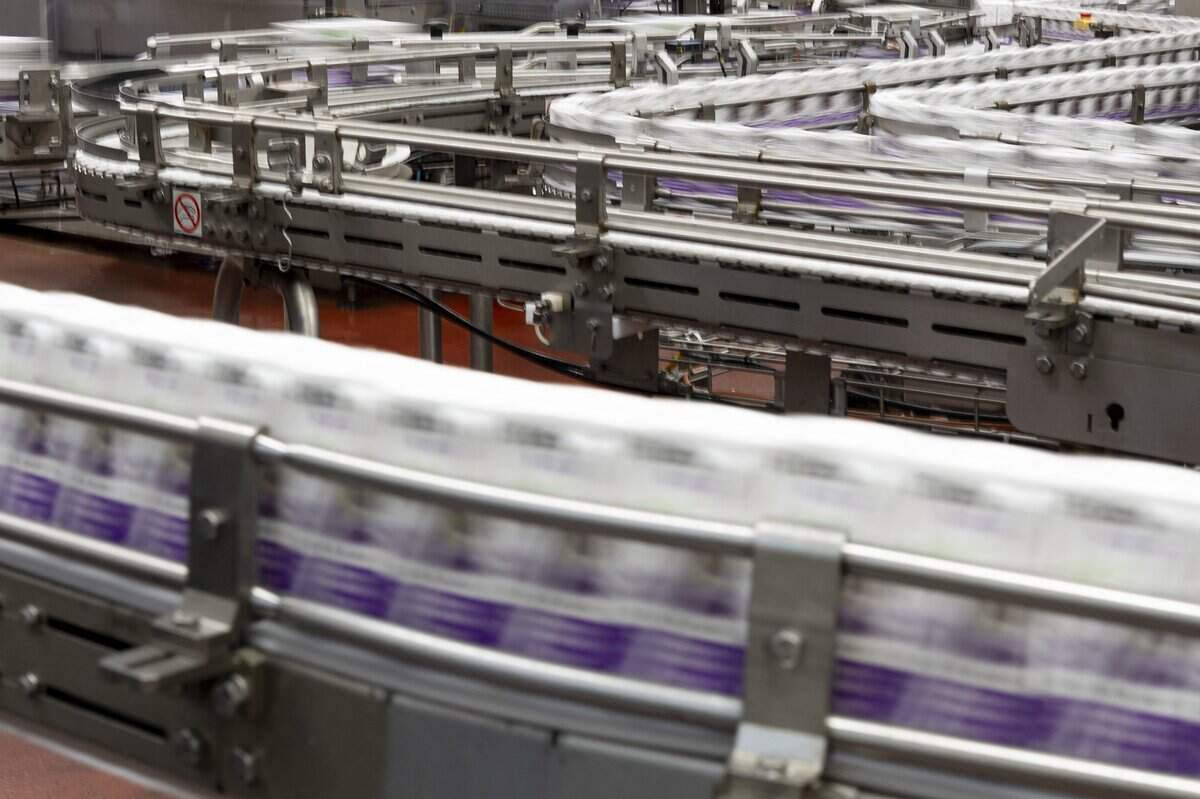
On a recent morning at the plant, with the smell of grape juice hanging in the air, giant rounds of cardboard unspooled into machinery, and metal jaws crushed the material neatly into juiceboxes. Packs of filled juiceboxes flowed around the room on curving stacks of conveyor belts, for eventual packaging onto pallets by a large yellow, robotic arm. Pallets of empty cans stood nearby, stacked 16 feet high, awaiting the resumption of the factory’s beverage canning line.
The plant’s juicebox line was running, as of this week. Redwood wants to restart one of the two bottling lines soon, and is doing trial runs for its two canning lines.
They hope that they may get a majority of the plant running within a year.
“It’s a very good business that has been around for a long time,” Karsenti said. “It ran into some roadblocks and some hiccups along the way, and we’re here to help shepherd it back to where it used to be. Hopefully even better, if we can.”
They aren’t in a rush to sell assets, Young said. The investment firms behind Redwood — Miami-based 13th Floor Capital, where Young is a principal, and Vancouver-based Tricor Pacific Capital — are family offices with patient money.
“We take a very long-term approach to things,” Young said.