
Restaurant hiring up, but has its hurdles
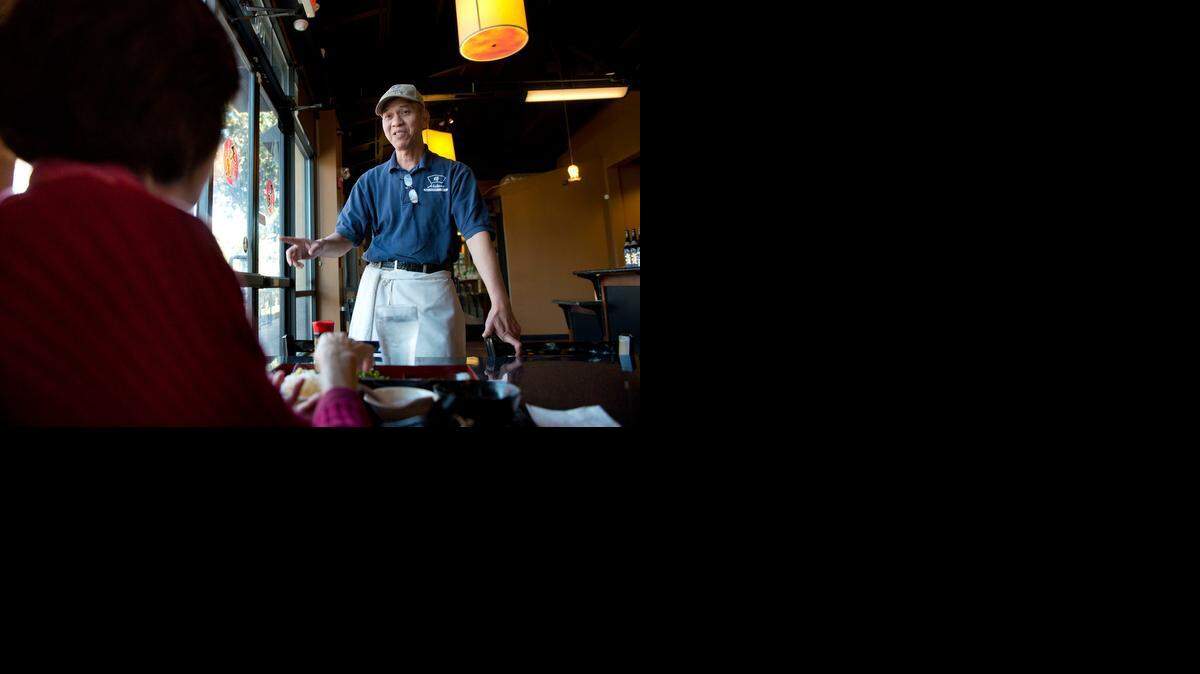
Before restaurant veteran Sai Wong opened his Japanese-style pub in midtown Sacramento in October, he spent lots of time interviewing streams of prospective employees in an effort to get the just-right team for his newest venture.
Wong, who has operated local eateries for more than 20 years, said the process to staff Izakaya Daikoku at the corner of 19th and S streets “was very hard ... It took time to find the right people.”
Wong said this is common in today’s restaurant scene, even for seasoned restaurateurs like himself. Plenty of people are looking for restaurant work – and landing jobs, but for owners, finding experienced, quick-thinking restaurant staff is a challenge.
Here and nationally, restaurant hiring is up. In the last four years, employment in California’s full-service restaurants has bumped up 23 percent, reaching 610,400 in August, according to the state Employment Development Department. Across the country, it’s a similar tale.
Despite comprising only 8 percent of total nonfarm U.S. employment, the food services and drinking places industry “accounted for almost 1 out of every 6 non-farm jobs added during the (post-recession) recovery,” according to an August report by the U.S. Bureau of Labor Statistics.
“There’s a lot of hiring going on,” said Michael Bernick, a labor lawyer in San Francisco and former state Employment Development Department director. “Especially in fast-food restaurants, employment is very competitive, and the turnover in that industry has always been high.”
And there are other challenges. Even as restaurant hiring is up and driving down unemployment numbers locally and nationwide, there’s a layer of discontent on the lowest rung of the dining world: fast-food establishments.
While many restaurant jobs are being filled, positions in the fast-food industry only pay minimum wage or slightly more, which critics say are inadequate for many workers to enjoy even modest lifestyles.
Fast-food workers here and nationwide have taken to the streets to protest, advocating for a minimum wage of up to $15 an hour. In California, the minimum wage went up to $9 an hour in July, but some cities have voted to raise their own minimum wages. In San Francisco, for instance, voters approved a gradual increase in the minimum wage to $15 by 2018.
In September, fast-food workers in Sacramento joined a nationwide call by union organizers seeking a $15-an-hour wage; 10 arrests were made when demonstrators blocked a portion of Broadway. At the gathering, Sacramento Mayor Kevin Johnson and outgoing state Senate President Pro Tem Darrell Steinberg, D-Sacramento, voiced their support for the protesters’ cause.
A similar protest was held at a Sacramento Dollar Tree store and a local McDonald’s restaurant earlier this month. Workers and labor activists in those protests said it’s not possible to make a living on the state’s $9-an-hour minimum wage, especially with limited scheduling by their employers.
The minimum wage debate comes amid a time of robust, post-recession job growth in the restaurant industry overall.
According to the California Restaurant Association, the state’s 65,000 eating and drinking places account for 1.5 million jobs, or about 10 percent of the Golden State’s overall non-farm jobs. CRA is projecting 9.1 percent growth over the next decade, equating to nearly 1.7 million restaurant jobs statewide in 2024.
The Washington, D.C.-based National Restaurant Association projects a similar growth track. NRA said the U.S. restaurant industry employs about 13.1 million and is expected to employ nearly 14.4 million by 2023.
Besides minimum wage activism, restaurant employment growth has produced other ripples in Sacramento, including stiff competition among local restaurants to hire qualified staff, both entry-level and experienced managers.
With hourly wages inching toward the $15-an-hour range, “Restaurant owners are going to be more picky about who they hire,” said Jot Condie, president and CEO of the California Restaurant Association, based in Sacramento. “Looking for experienced workers is something they’ll spend more time doing, if the rates are that high. If you’re going to pay someone $30,000 a year (for a full-time, $15-an-hour job), you’re not going to gamble on an inexperienced, untested worker.”
But Condie said it’s also become harder for restaurant owners to hire experienced managers, a key post in the hustle-bustle restaurant environment.
Restaurant managers not only must understand “the very volatile food service industry environment, (with) fluctuating food costs, unpredictable labor costs and the looming health care mandate,” he said, “but they also have to manage a relatively young workforce with a high turnover rate.”
Although the state has several reputable college-level programs in hospitality, such as California State University, Pomona, the CRA CEO said there aren’t enough to meet the hiring needs. “The demand is outstripping the supply in restaurant hospitality industry,” Condie said. “Those that graduate are in high demand.”
Sacramento restaurateur Wong, who has run the Akebono restaurant in Sacramento’s Land Park neighborhood since 2007, said that despite the transient nature of restaurant staff, “the people I do hire tend to stay with me a long time, usually years.” He said there was no magic formula, beyond having a restaurant atmosphere of “good food and good people.”
Twenty-five-year-old Hang Gao, one of the servers at Izakaya Daikoku, said he has been working at local restaurants since he was 18, and has many friends with restaurant jobs. “Now, when you (interview) with them, they always want people with more experience, a lot of experience. That can be difficult if you’re just looking for work.”
Rebecca Smith, a 24-year-old Sacramento resident who recently resumed her college education after working at several local restaurants to save money, said a determined person should be able to find a job. “I don’t think it’s as hard now as it used to be. Lots of places are opening and hiring, so if you have people skills and manners, you should be able to catch on at a lot of places.”
Despite a spate of high-profile restaurant closings in the Sacramento area this year, overall restaurant openings are on the upswing here.
California added a nation-leading 1,368 eating and drinking establishments in 2013, up 2.1 percent from 2012, according to the federal Bureau of Labor Statistics.
Meanwhile, the Sacramento area has recently attracted renewed interest by franchised restaurant operations, including Grants Pass, Ore.-based Dutch Bros. Coffee, Dallas-based Dickey’s Barbecue Pit and Costa Mesa-based El Pollo Loco outlets.
Jared Katzenbarger, a local franchisee opening his sixth Sacramento-area Dickey’s Barbecue Pit restaurant in Rocklin, said fast-casual restaurants are a growing sector locally. But overseeing his operations can be a double-edged sword.
“It’s increasingly difficult to find people and compete against corporate brands like Starbucks,” he said. “I think it’s going to be more difficult as the minimum wage issue goes forward.”
Katzenbarger said a $15-an-hour requirement “undoubtedly would put me out of business.” He said the fast-food industry tends to be a transient business, with employees either moving on after a fairly short time or seeking other opportunities elsewhere.
“These are not lifetime careers for most people,” he said.
But others, like former EDD Director Bernick, said the workplace demographics in fast-food chains like McDonald’s, Wendy’s and Jack-in-the-Box have changed.
“(Fast-food restaurants) have traditionally been a good source of entry into the labor market for teenagers and young people. Not so much anymore,” he said. “Increasingly, the workforces in these fast-food places are adult immigrants, whose hard work and reliability make them sought by employers.”
CRA’s Condie calls the restaurant industry an ideal place to start a working life. “We hire inexperienced workers and give them a shot at that first job, learning customer service” and other skills. “These are important part-time, entry-level jobs.”
Call The Bee’s Mark Glover, (916) 321-1184. The Bee’s Claudia Buck contributed to this report.
This story was originally published December 28, 2014 at 4:00 AM with the headline "Restaurant hiring up, but has its hurdles."