The Gem of G Street: Landmark 1909 Sacramento home hits the market for $2.15M
One of the most historic residences in midtown Sacramento — a 1909 Craftsman-style home designed by California’s first state architect — has hit the market for $2.15 million.
Called the Cranston-Geary House, the three-story gem is listed on the National Register of Historic Places and commands the corner at 2101 G St.
More than a century ago, master architect George Sellon was the first to breathe life into the house, which sits on a quarter-acre lot in Sacramento’s venerable Boulevard Park neighborhood. The iconic property has been wonderfully preserved, exquisitely renovated and comfortably modernized in recent years.
“Historic districts and historic buildings draw people, people love them, they want to be near them, they want to live there, and they have many lives over time,” said William Burg, president of the board of Preservation Sacramento. “That’s why they’re worth protecting.”
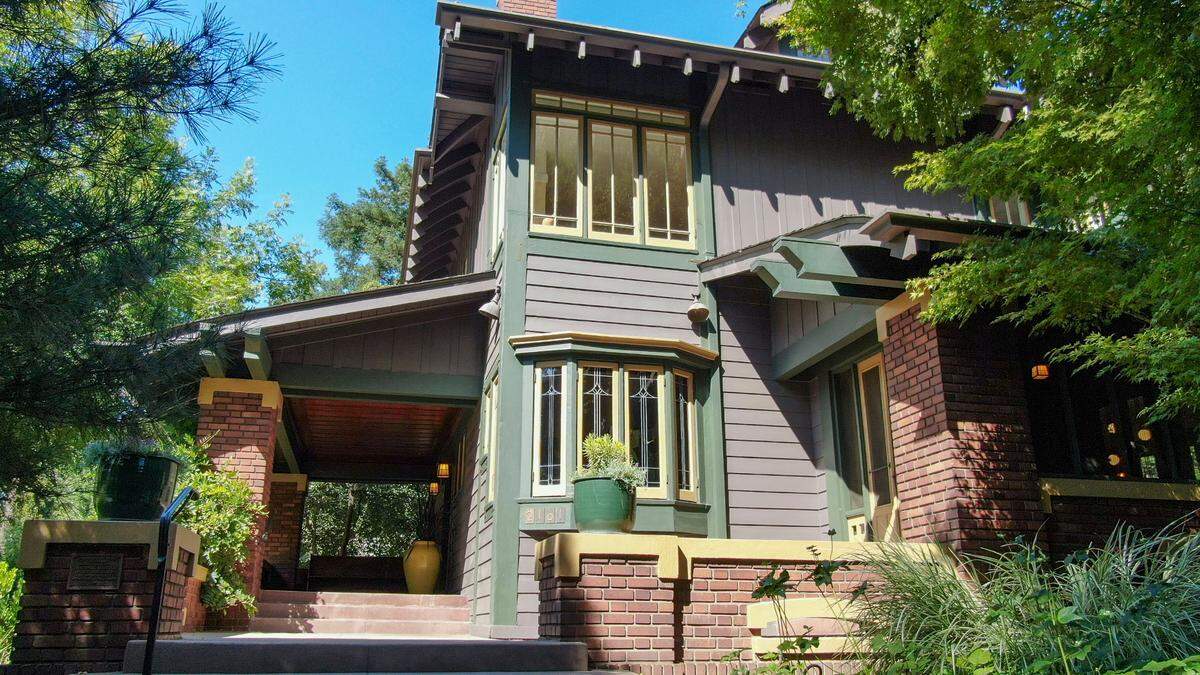
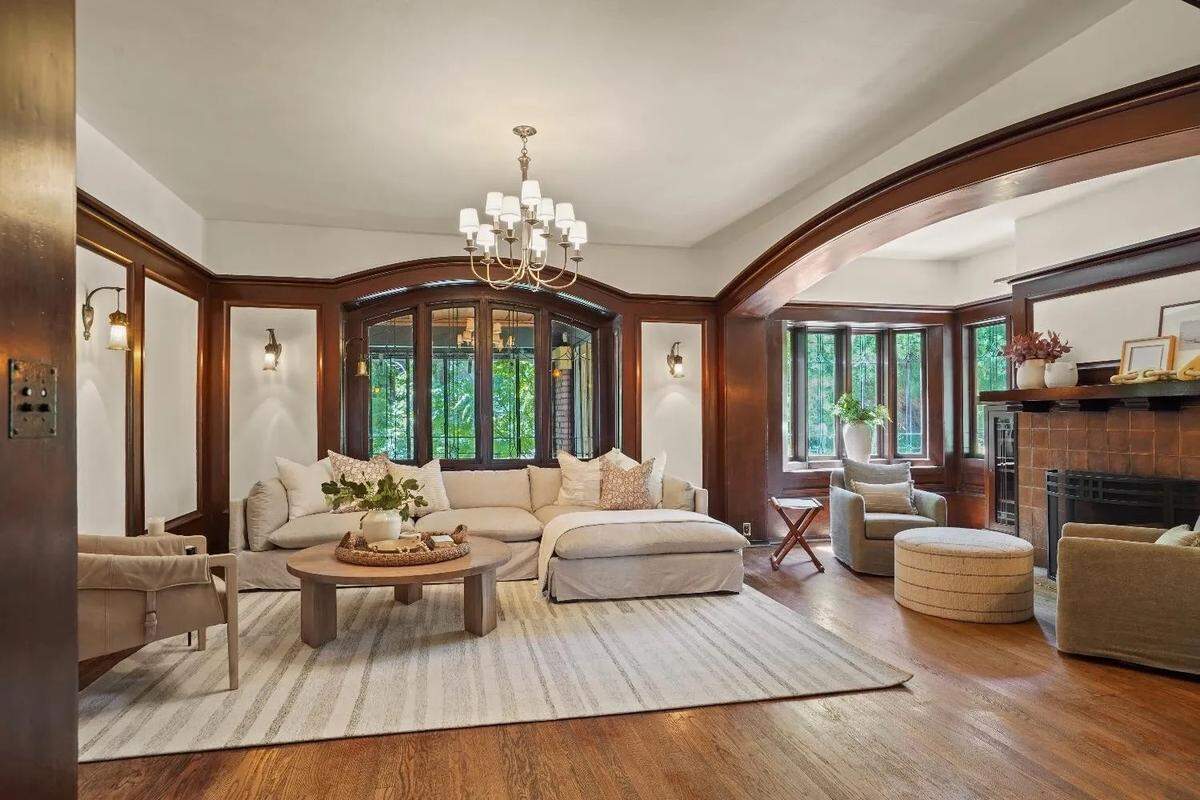
The residence spans 3,680 square feet with six bedrooms and four bathrooms. Many of the original architectural details, carefully crafted woodwork and custom finishes — from numerous leaded-glass windows and ornate light fixtures to hand-cut woodwork — remain true to the era.
Many Craftsman homes were built in Sacramento in the early 20th century, but none quite like the Cranston-Geary home. Sellon’s distinctive design mixes intersecting gables and dormers, generous low-slung eaves and carved rafter tails with a hint of Japanese influence.
“What makes it so exquisite is the grandeur of it,” said listing agent Jamie Rich of House Real Estate. “There’s a lot of different architectural details that really make this stand out from a typical Craftsman.”
Both the estate and the surrounding neighborhood of Boulevard Park are steeped in history. From 1860 to 1904, the area was used for the California State Fairgrounds and its racetrack. When the state fair moved to a larger location at Stockton Boulevard and Broadway in 1905 (the current fairgrounds moved to Cal Expo in the late 1960s), developers swooped in, bought up the land and began converting the original fairgrounds into an upscale residential subdivision.
“It’s an individual landmark,” Burg said about the Cranston-Geary House. “It’s a historic home in a grouping of historic homes. They tended to put the largest lots closest to the streetcar lines and so this is on one of the most prominent corners. It’s one of the most prominent buildings in one of the most recognizable historic districts in the city.”
Mining engineer R.E. Cranston built the imposing residence for $11,000, a high price at the time, according to William Mahan, a retired college history professor who wrote about Boulevard Park’s history.
William F. Geary, president of a pharmaceutical firm, and his family purchased the house in 1912 for $25,000, according to a Sacramento Bee article. The Geary family lived there until World War II.
Then, the neighborhood and the house’s next life began.
“Suburbia was on the rise,” Mahan wrote in his account, provided by Rich from a stack of materials and photos about the property.
Homeowners moved to the outskirts of town and workers flocked to the city in search of rental housing. Larger homes became apartments or boarding houses.
A 1952 rental advertisement for 2101 G St. in the Sacramento Bee reads: “Magnificently shaded old rustic home with single sleeping rooms for permanent young women. Walk to town or ride bus just 2 blocks away! Phone, laundry and cooling system, all for only $5 a week!!”
After the house fell into disrepair, George Bramson, a retired metallurgist engineer, preservationist and community activist, came to the rescue in 1994. He began major restoration projects to bring the building back to its original architectural glory, according to a history of the house co-written by his son Pete Bramson.
The property is also referred to as the Bramson Home.
In 1998, California approved listing the home on the National Register of Historic Places.
The property is filled with charming, interesting and wonderful spaces:
▪ The kitchen contains a 1940s-era stove in perfect working condition that was featured in “Bungalow Kitchens,” a restored ice box refrigerator and a speaking tube that was used to call the house staff;
▪ The dining room (which leads out to a delightful screened breakfast porch) is highlighted by carved wood paneling with a cutout design, resembling back-to-back axes or crosses, and a solid oak table originally used in a convent where each sister had her own drawer in front of her sitting place;
▪ A lower floor bathroom’s pull chain toilet is original and in working order, and the wallpaper is replicated from the era;
▪ The front door’s “seahorse” knocker is believed to be designed by artist William W. Denslow and author L. Frank Baum of the original “Wizard of Oz” book;
▪ A second set of stairs, parallel to the main stairway, were used by the staff in the old days and still exist;
▪ A sleeping porch addition was modified in response to the influenza epidemic of 1918, with pocket windows that slide down to allow fresh air into the room;
▪ An original hitching post still exists in front of the house.
“The details will make you dizzy with joy,” the property listing states.
The house’s backyard provides direct access to a private, oval landscaped park surrounded by several residences, a unique amenity designed as a safe play area for children as well as a meeting place for neighbors, according to Rich. The shady, grassy park is maintained and used by the adjacent neighbors whose homes encircle the area.
Rich called the home’s unique attic space “magical.”
“I think the possibilities are endless up here,” she said. “It would make a fabulous playroom. There are two bedrooms with closets, and there’s a full bathroom. But the way that it’s shaped and designed, it just leads your mind to lots of fun activities, craft rooms, costume rooms. There’s just nooks and crannies everywhere that make it super special and fun.”
An original carriage house — complete with a sunken mechanics pit — remains intact on the property’s second parcel and can be used as a two-car garage or converted into a small additional dwelling unit, or ADU.
‘A very special opportunity’
The sellers are Roxane Duka Beach, CEO of online marketplace Alder, and Max Beach, a longtime classroom teacher. They bought the home in 2021 when they were expecting their first child.
“We really did fall in love with the history of the place,” Roxane said. “It felt like a very special opportunity to be part of that history and to be a custodian. We were moving from outside Sacramento, and it kind of felt like a built-in way to have community.”
The house has “famously hosted” many community events, fundraisers and private parties over the years, she said. Having moved to Sacramento from big cities — “places where you didn’t know your neighbors” — the house provided a “special way to meet people and to give back,” she added.
The couple put the house up for sale because they have to relocate to the East Coast for work.
People on the street often stop in front of the house to look at and talk about the residence, she said.
“There were a lot of days where it felt like a privilege to live there,” Roxane said. “We had a lot of pride in the house. I would either be gardening in the front yard, or sitting in the living room, and I could hear people, probably half a dozen people a day, especially on the weekends, outside commenting on the house. It felt like we had a real responsibility to keep it a certain way and to keep it really well maintained for the neighborhood, not just for us.”
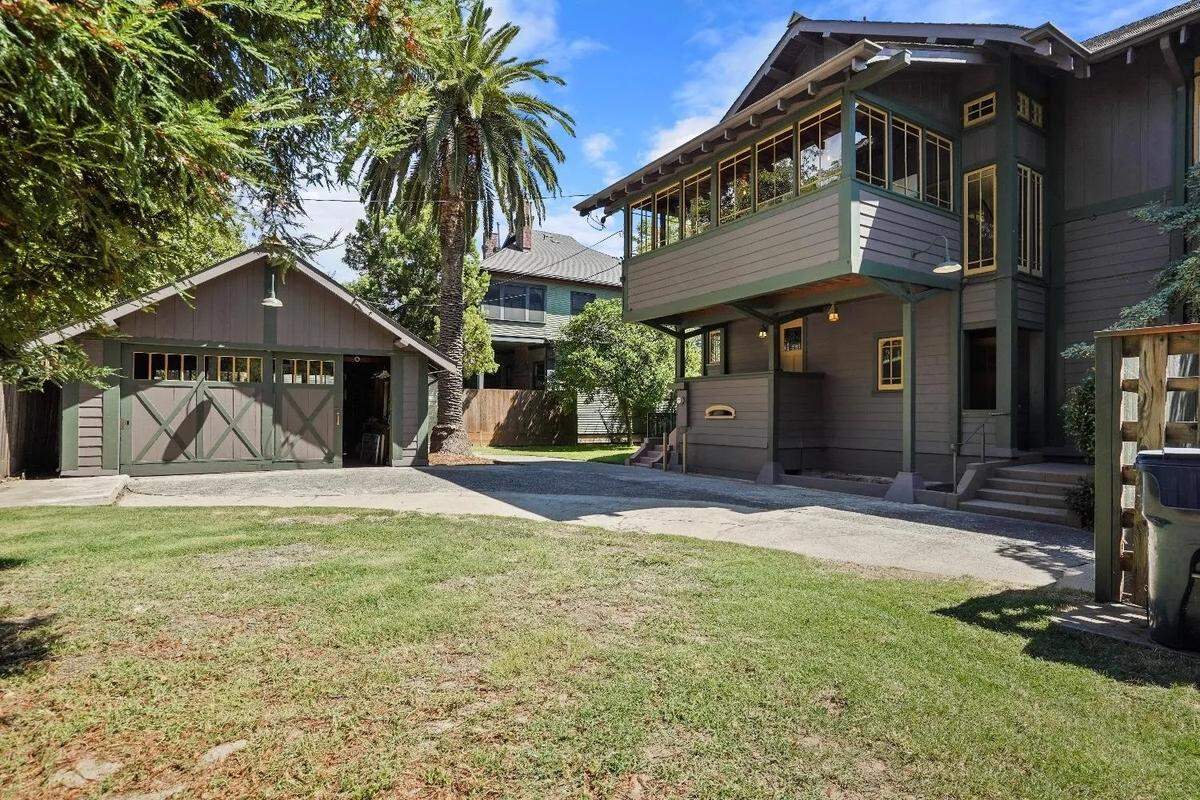
Some of the most recent upgrades to the home include adding a Sub-Zero fridge in the kitchen, installing a new heating and air-conditioning system (2021) and redoing the roof and paint.
“The home has been meticulously restored to maintain its glory while adding modern amenities for all to enjoy,” the listing states.
Lauren Williams of Sacramento-based Revive Design Collective staged the home for sale, Rich said.
Burg, of Preservation Sacramento, added: “That’s one of the nice things about historic buildings, they’re flexible, and many of them play different roles over time. Some are switched from residential to commercial or vice versa, or from single-family to multi-family, but because the building is protected, it maintains that sense of continuity while change is happening all around it.”
This story was originally published September 6, 2023 at 11:44 AM.