Architect Carr Jones built the 1936 Walnut Grove home with mission-style elements.
Original features include curved layouts, hand-finished wood and recycled materials.
Estate listed at $2.4M includes pool, studio, boat access and preserved architecture.
Inside Look is a Sacramento Bee series where we take readers behind the scenes at restaurants, new businesses, local landmarks and news stories.
In an eclectic town in the heart of the Delta, one of the most distinctive homes in the Sacramento area is for sale for $2.4 million.
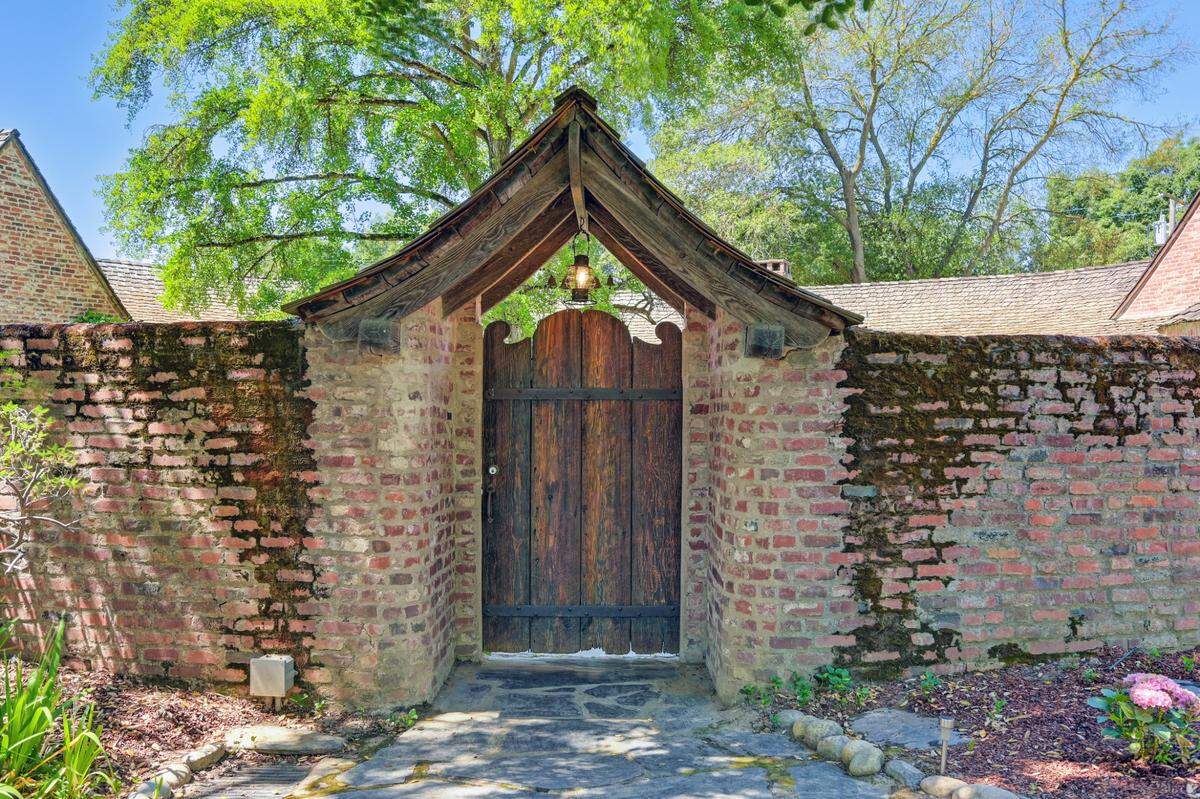
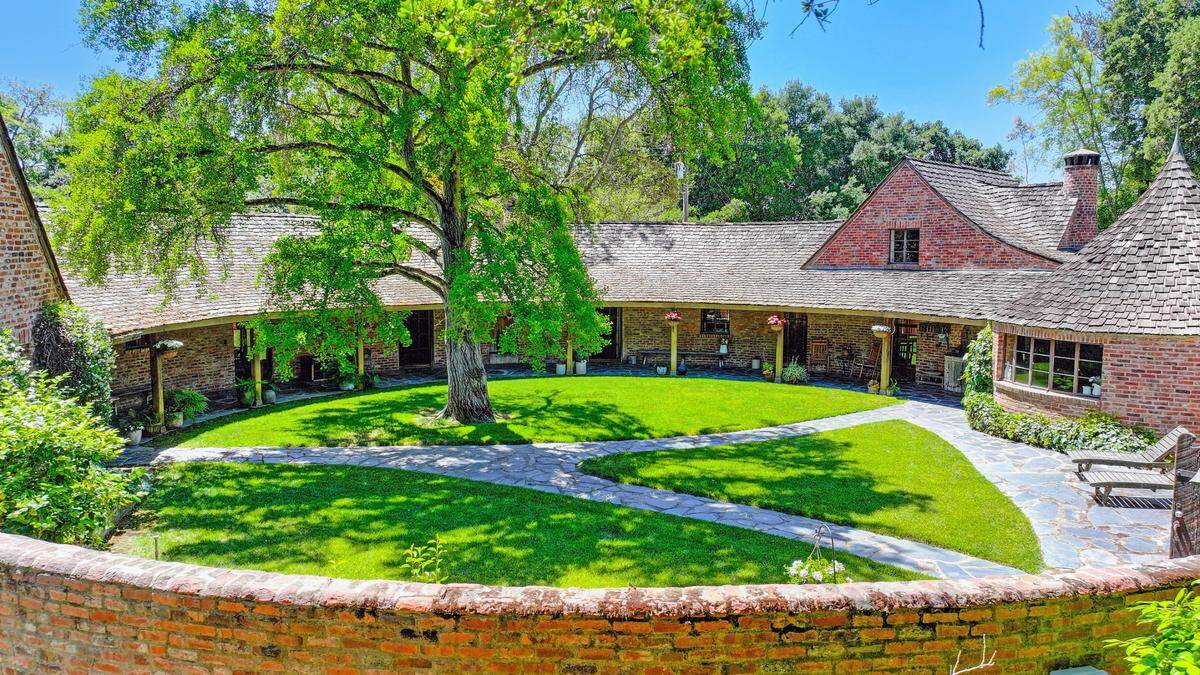
At the heart of the two-acre property along the Sacramento River is a private central courtyard with lush grass and shade from a grand tree. Step through its vintage iron-and-wood gate and you’ll discover the storybook home, which curves to connect to the courtyard wall, completing the unique circular design.
Seven doors — four steel-and-glass sliders and three solid, handcrafted wood portals — open onto the courtyard’s circular portico, creating a seamless blend of indoor and outdoor spaces, reminiscent of the early California Spanish missions.
The European-style farmhouse, built in 1936, has been held by the same family for three generations. The waterfront residence — located at 13860 State Highway 160 in Walnut Grove (pop. 970) — was originally built for John Stewart Brown, the grandfather of owner Kristen Brown, who grew up on the property and raised her children there.
The storybook home for sale on a two-acre property along the Sacramento River was built by architect Carr Jones in 1936. Glenn Rose Photography
‘Beyond rare’
Brown, a family nurse practitioner, has put the 4,200-square-foot home on the market for the first time ever.
“People say things are unique and rare, but this is beyond unique and rare,” she said.
Built in 1936 by Carr Jones — a Bay Area icon of storybook architecture — the house exhibits old world charm like nothing else. Carr studied the architecture of European masonry farmhouses and is known for incorporating elements of early mission design into his work, such as covered porches, courtyards and outdoor living spaces. Turrets, undulating brickwork and roof shingles are his trademark, too.
The residence flows in a circular path — from vaulted living room to quiet primary suite to delightful kitchen — with the covered porch serving as an outdoor hallway. In all, there are six bedrooms and three bathrooms.
“It has a soul and it has a life of its own, because my grandmother and my grandfather built it with Carr Jones, and this was one of his first homes,” Brown said.
Fans of Carr Jones say the Walnut Grove property is one of the most notable and distinctive homes he created, according to listing agent Debbie Elliot of Windermere Signature Properties.
Compass real estate agent Paloma Begin agrees. She is not involved in selling the home but is familiar with properties in the area.
“There are only 27 homes built or redesigned by Carr Jones in California, and his storybook architecture has a romance and whimsy that transcends time,” Begin said. “Whoever buys this property will be lucky, indeed.”
The wood-and-iron gate opens into the courtyard. Glenn Rose Photography
Signature Carr Jones
Carr Jones’ signature touches are found throughout the Delta home, whether it’s the rustic stonework, whimsical hidden rooms, dramatic vertical spaces, double-brick walls, sweeping roof lines, wooden doors with hand-forged iron details, corbeled arched doorways or wood-plank timbered ceilings.
“If you’ve seen a Carr Jones house and been in a Carr Jones house, then you know it’s going to be brick and wood and iron,” Elliot said.
Radiant heat in the home’s hand-laid quarry tile flooring was a visionary amenity at the time. Carr Jones was also known for using eco-friendly practices — recycling and re-purposing building materials, such as brick, iron, wood, slate and tiles, for instance.
Three unique and carefully crafted fireplaces, including one shaped like a turret, are scattered through the interior. There’s a fireplace upstairs in a bedroom that used to be an office.
The property offers modern amenities, too. A pool with water fountains, built in 2010, a spa, cabana and grilling area create a resort feeling in the backyard. A workshop behind the house can be used for an artist’s studio or home office. The property’s wi-fi, which can be patchy down in the Delta, is provided by Starlink, and is more reliable, Brown said.
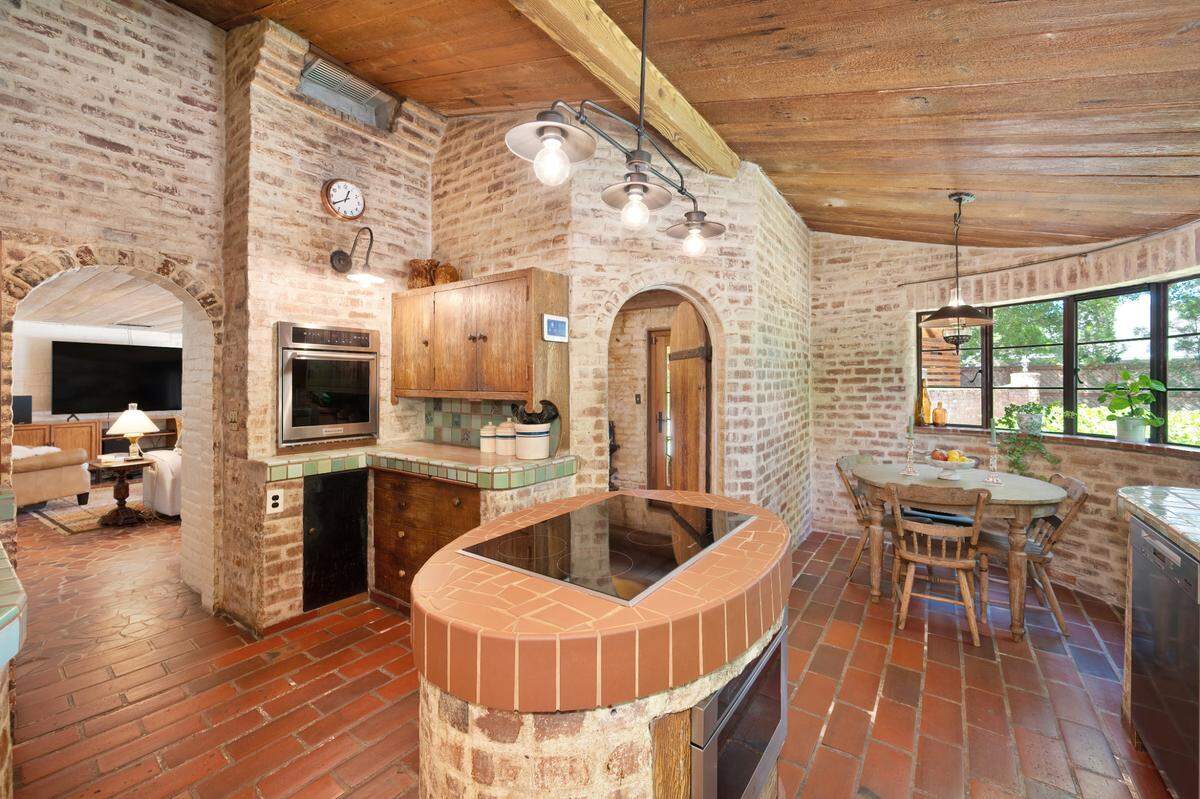
Burners built into the island have always been part of the delightful kitchen with breakfast nook. Glenn Rose Photography
Delightful kitchen
In the unparalleled kitchen, the architect integrated burners directly into a cooking island by salvaging parts from stoves. The island still includes a stove, but it’s been updated. A comfortable breakfast nook overlooks the backyard.
After nearly 90 years, the home retains its original layout, according to Brown and Elliot. Brown made improvements to the property but preserved the initial design and character, she said.
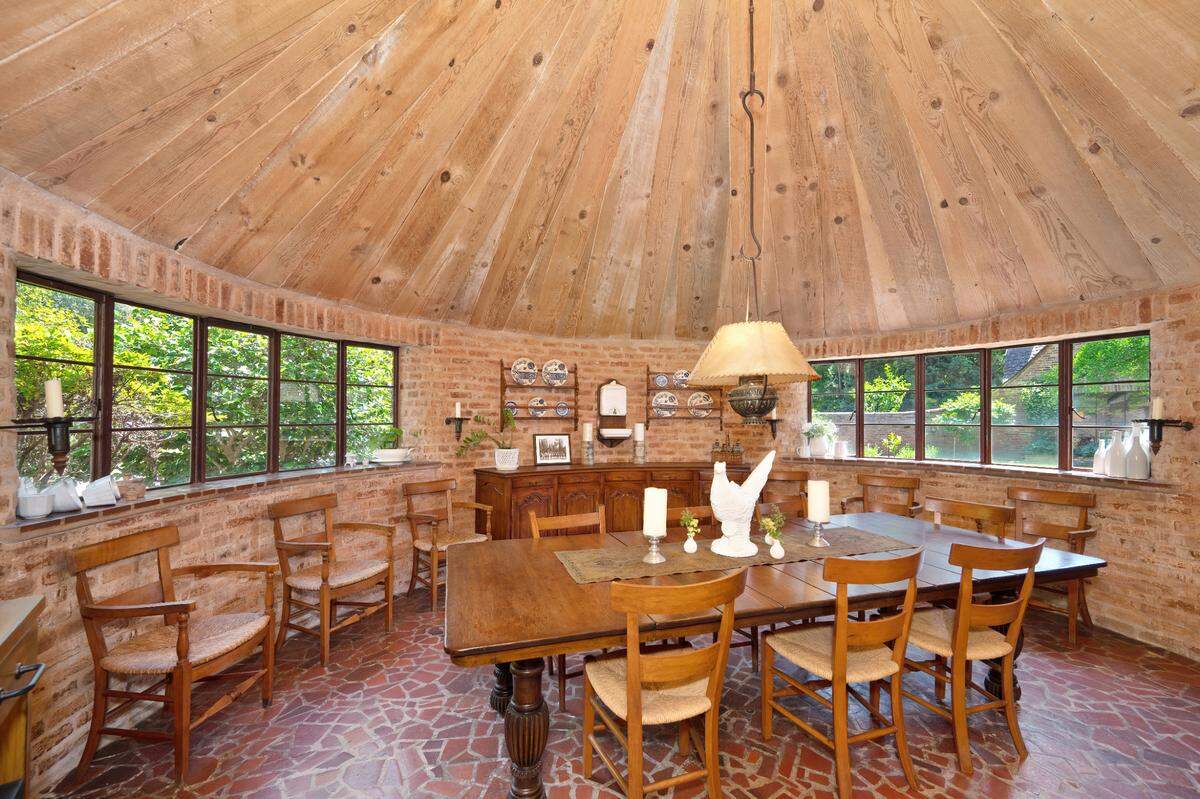
The circular dining room is amazing. Its soaring cone-shaped ceiling contains no visible nails. The handcrafted sliders in the room are curved without a flaw — and so is the furniture positioned against the walls and the shelves above. The curved furniture is likely to stay in the home, Brown said.
House staff could close off the dining room from the kitchen, butler’s pantry and the rest of the house for privacy during family meals. The room offers remarkable acoustics, too. Brown recalled a harmoniously resonant chamber performance taking place in there when she was young.
Brown’s grandfather was a farmer who grew “sugar beets, corn, wheat, barley out here, and on Sherman Island.”
“We lived in Walnut Grove because my dad farmed with my grandpa,” Brown said. She moved to the property at age 9.
Carr Jones and John Stewart Brown and his wife Eleanor worked together closely to create personal touches for the Browns’ house. He recycled a copper candy pot by making it into a porch sink, which still stands today. Carr’s close relationship with his clients is also evident in the hand-carvings he did in the bar area that conveyed their love of pears.
While the home has modern comforts, including HVAC, the architect’s original handiwork is prevalent. A curved, reinforced cement lentil beam supports the roof overhang and portico around the courtyard. The steel-reinforced double brick walls run 16 to 24 inches thick.
The authentic, handcrafted light fixtures — with all electrical cords hidden within — displayed throughout the residence are still used today.
The circular courtyard and curved residence is the heart of the Walnut Grove property. Glenn Rose Photography
Peaceful yard
The brick — as well as the roped railing on the stairway — was recycled from the Oakland shipyards. Wood plank timbered ceilings were milled on the property when the home was constructed. The wood finishing involved repeatedly wire brushing and applying lime, according to Elliot.
“To me, this house just has an emotional warmth to it,” Elliot said.
Outside the courtyard, the spacious front yard is peaceful and playful. A swing hangs from a limb of a gorgeous gingko tree. Expansive lawn unfurls across most of the lot. An elaborate tree house with a floating bridge stands on the edge of the lot. Curved benches outside were originally used as molds in the building of the house.
The property uses a well and septic system.
The property line extends to the high water mark of the Sacramento River, which means the owner can put in a boat dock. Brown said she remembers as a kid taking her water skis down to the river and hitching a boat ride.
“My dad did not care for that,” she said.
Brown possesses a collection of literature about the architect and his work, including a 1936 Sunset Magazine article featuring the Walnut Grove home.
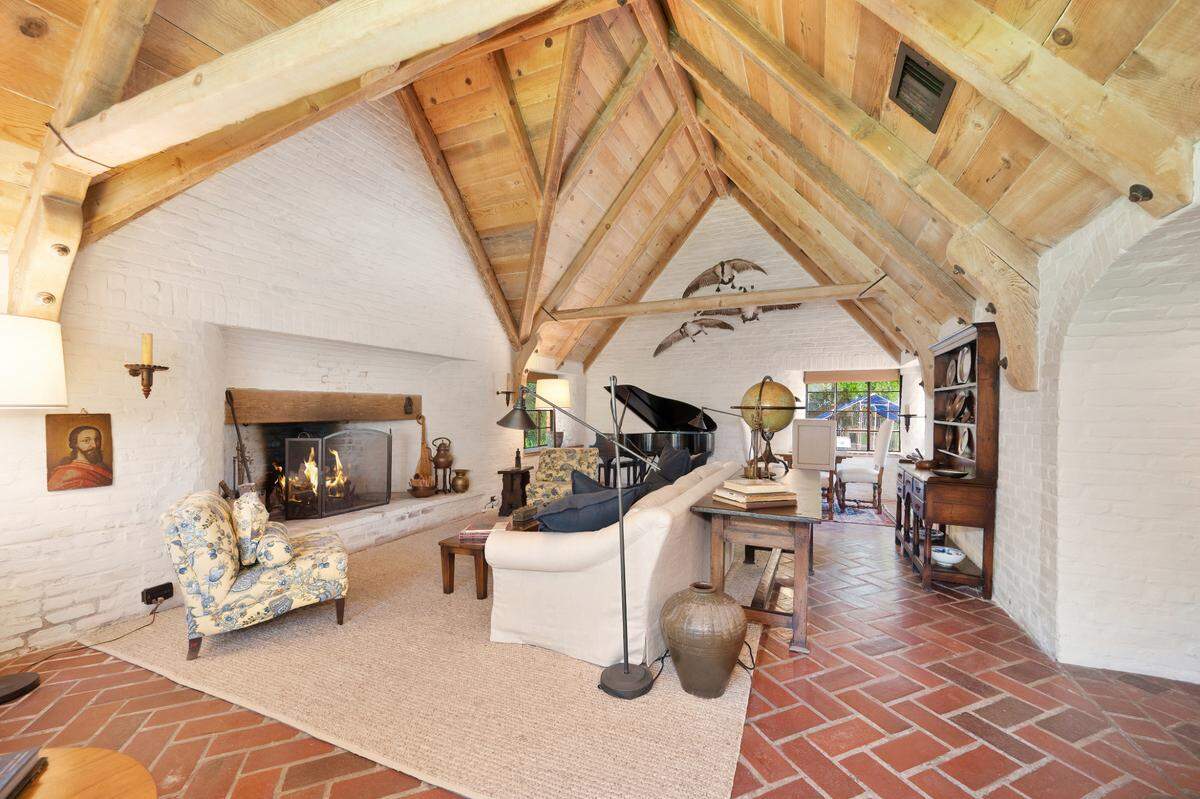
The living room with soaring timber beam ceiling. Glenn Rose Photography
The circular dining room’s soaring cone-shaped ceiling was built without nails. Glenn Rose Photography
David Caraccio is a video producer for The Sacramento Bee who was born and raised in Sacramento. He is a graduate of San Diego State University and a longtime journalist who has worked for newspapers as a reporter, editor, page designer and digital content producer.
Get one year of unlimited digital access for $159.99