One family has owned this Sierra foothills ranch since 1873. Now it can be yours
AI-generated summary reviewed by our newsroom.
- Historic 232-acre Schaad Ranch, family-held since 1873, listed for $2.85M.
- Property pairs modern off-grid 2,000 sqft home with sweeping forest views
- Land offers subdivision potential; minimum 40-acre parcels and recreation.
A 232-acre ranch for sale in the Sierra Nevada foothills bridges California’s pioneer past and modern off-grid living.
Held in the same family for 152 years, historic Schaad Ranch now beckons a new steward. Perched at a 3,000-foot elevation, the historic ranch in Wilseyville, 80 miles southeast of Sacramento, is on the market for $2.85 million.
The ranch’s story begins around 1873, when Swiss immigrant Johan Schaad’s journey across continents led his family from Switzerland to Tennessee, and ultimately to the promise of California. Switzerland was experiencing an upheaval that led many Europeans to emigrate.
“You kind of dream about what it was like in 1870, and why they were pushed out of Switzerland,” seller Rick Shaad said in a phone interview.
Shaad is the great-great grandson of Johan. He and his daughter recently traveled to the Swiss town of Biberist and discovered their family tree goes back much farther, to 1642.
“Switzerland was kind of a hard place to live and secure land for your family and feel safe,” Shaad said. “So they came, (and) it was a trek to get from Switzerland to California.”
The Schaad family’s resilience in the face of tragedy and challenge became legend, according to a historical account compiled by Shaad.
Augustus Schaad, Johan’s son who forged the path westward, settled above the middle fork of the Mokelumne River and pieced together a life of hard work on the land. Augustus met his wife Appolonia in Stockton, and the family established their legacy amid towering pines, firs and oaks.
Historically, the primary work on the ranch has been timber production and operating a sawmill, but over the years the property has seen its share of farming, ranching and — briefly — the running of a resort and campground.
Augustus Schaad’s two eldest sons, John and Joe, established their own sawmill. Shaad has records of the family’s business activity in the early 1900s when their sawmill provided timber for local mining and residential construction in the region.
“I have a receipt from Shaad brothers sawmill for 5,000 board feet of pine boards delivered to Mokelumne Hill for $97,” he said. The sales transaction is dated 1917.
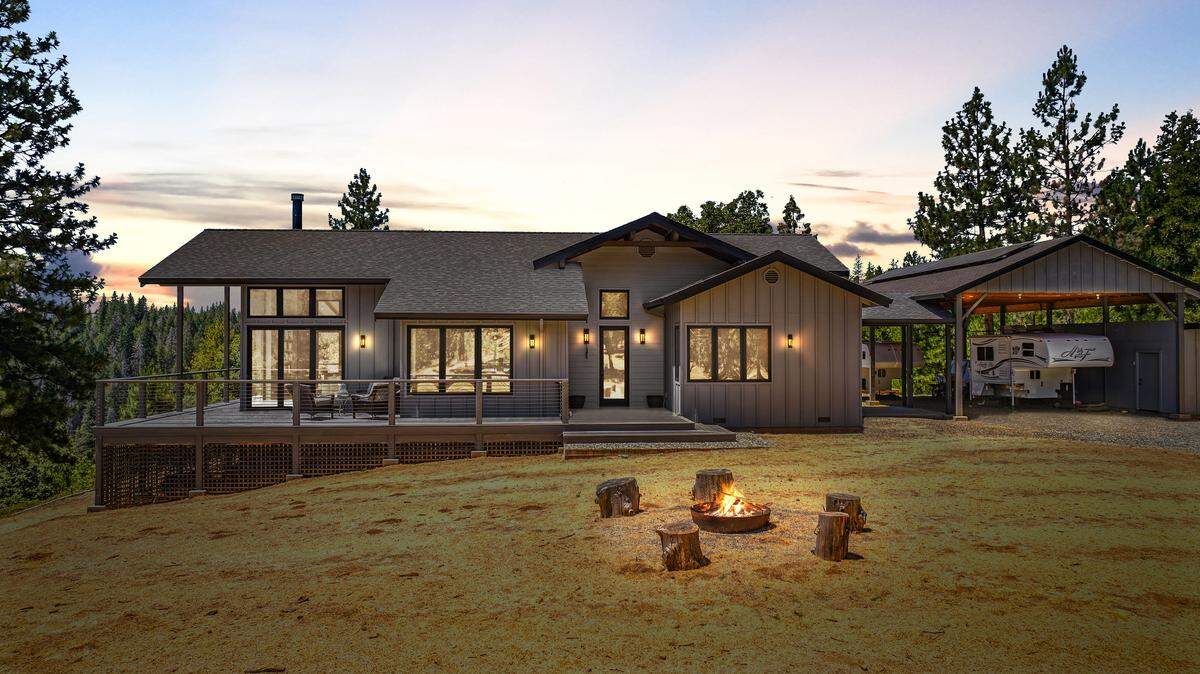
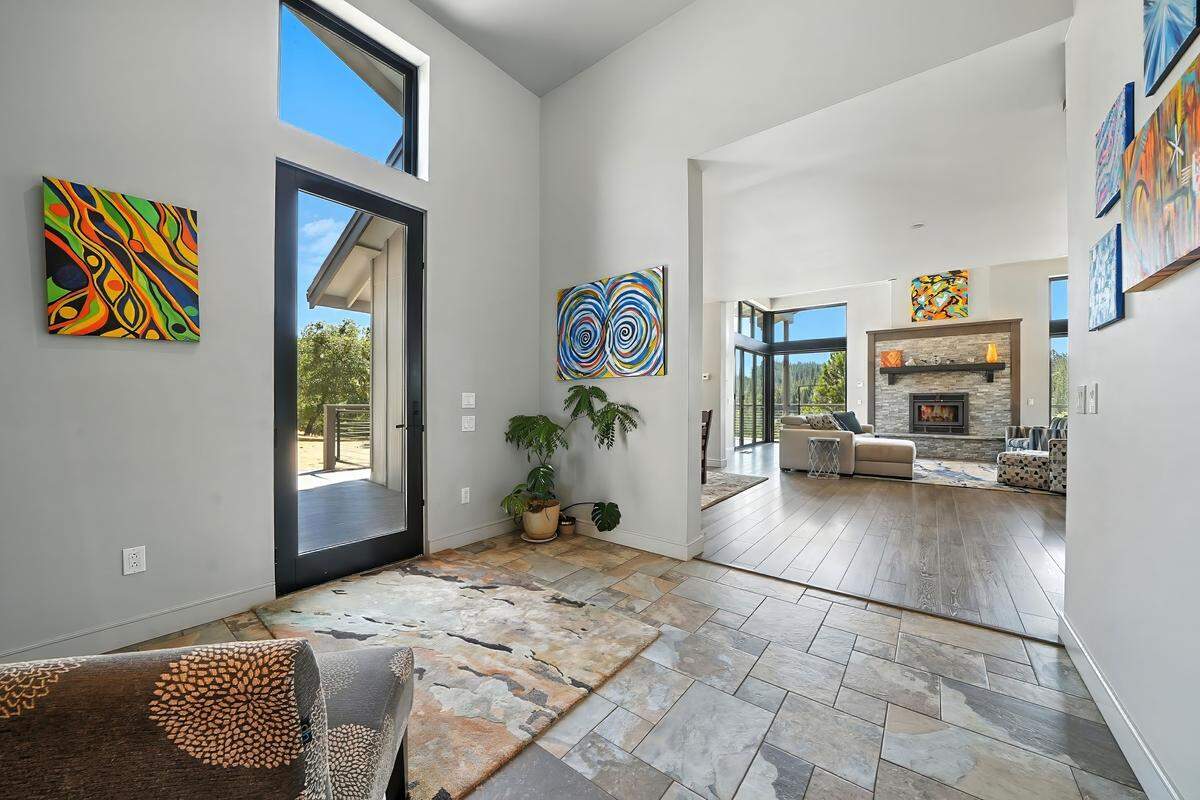
The Schaad property once encompassed about 5,000 acres but over time was significantly reduced in size. Today, the two combined parcels for sale are anchored by a stunning contemporary home, built in 2018, that masterfully blends modern aesthetics like glass and clean lines with views of the forest landscape.
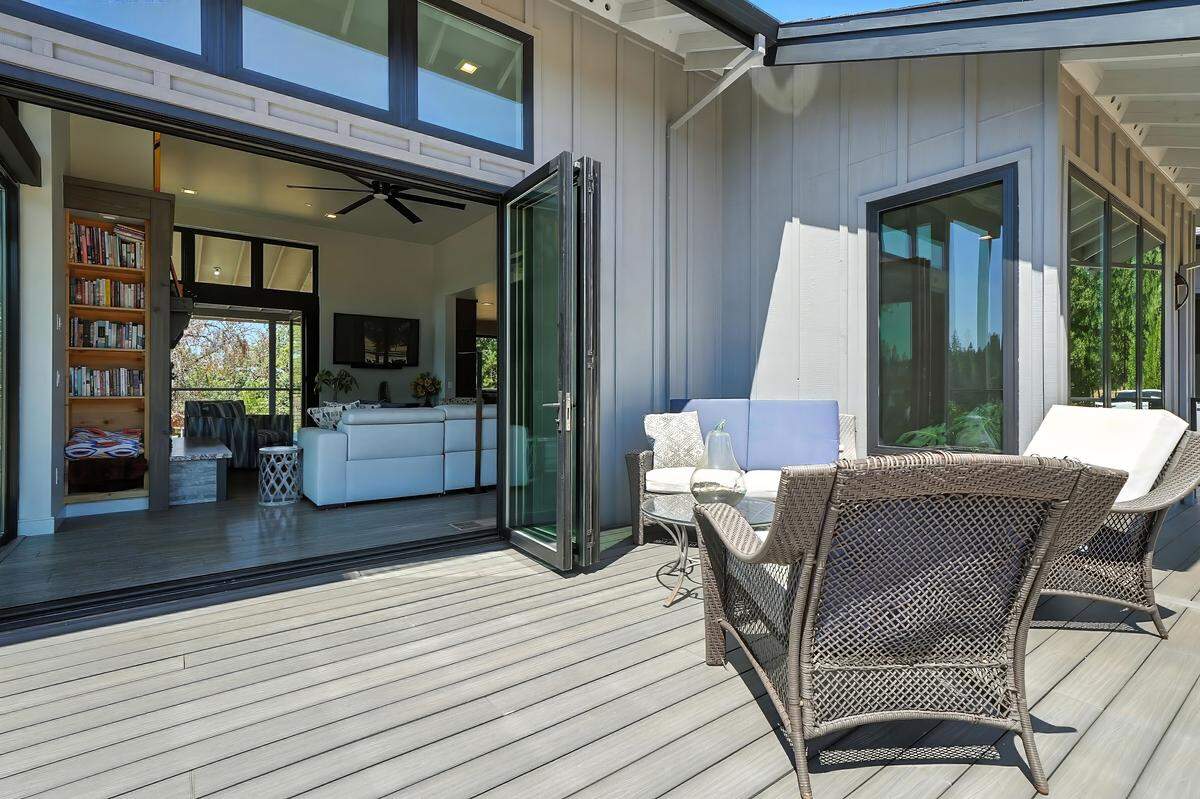
Modern aesthetics
The residence spans 2,000 square feet, with two bedrooms, two bathrooms, a bonus room and attached barn, designed to blend modern aesthetics with the surrounding forest landscape.
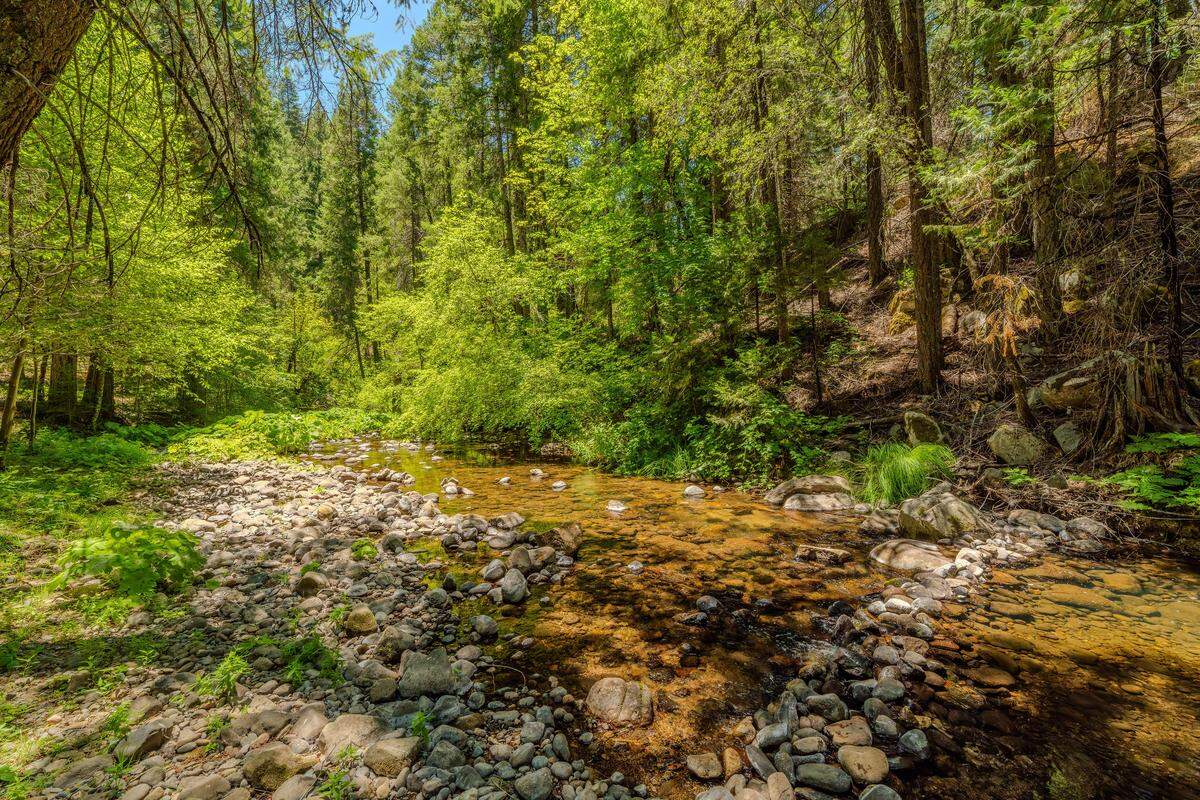
Forest Creek, Boston Gulch and the Mokelumne River wind their way through the property. The ranch’s extensive trails and riverfront offer opportunities for fishing, swimming, and exploration.
“Sweeping views surround the property, graced by the middle fork of the Mokelumne River and Forest Creek, both offering swimming holes and a picturesque camping spot along the banks,” listing agent Tiffany Kraft of Vista Sotheby’s International Realty, said in an email. “The grounds are beautifully maintained, blending comfort and natural beauty. A rare retreat, this property delivers tranquility, recreation, and unmatched seclusion.”
The home, sitting on a hill, was architecturally designed to capture sweeping mountain views and dissolve the boundary between the house and forest.
“I did some work with an architect, and he threw out all of my ideas and said, ‘Nope, this is it,’ ” Shaad, a longtime building contractor, said. “And the more we got into the clean lines and all of that, the more we liked it. So we just went with the rustic contemporary (look).”
Lifelong off-grid dream
The house was built around Shaad’s lifelong dream to live off-grid. It features a complete solar system with battery storage, requiring generator use of only “about 100 hours a year, generally in winter when there’s snow on the panels.”
Instead of air conditioning, he uses innovative cooling methods.
“We open the windows at night and close them in the morning,” he said. “I poured concrete underneath the floor, and we draw cooler air from underneath the house with a whole-house fan.”
Shaad implemented a unique wall construction technique using “staggered two-by-four studs” creating an eight-inch thick wall with a special insulation layer. The result is remarkable, he said.
“When you sit in the house and the wind’s blowing, you don’t hear anything,” he said.
The land — with its mix of waterways, grasses and pine, cedar, Douglas fir and black oak trees — has been meticulously managed through generations. Shaad described it as “like a park.”
Shaad envisions a buyer possibly making the property into a family compound where someone could “build multiple homes and have some insulation from the rest of the world” — or maybe a retreat center, “where you have a lot of room to stretch out and have space to yourself.”
The land can be split and developed, too. The minimum required lot size is 40 acres, he said.
Ranch is more than a business
The ranch, however, was never simply a business. It was equal parts homestead, enterprise and refuge — even when events tested and steeled the family.
The Spanish flu swept through the Sierra foothills and claimed multiple members of the Schaad family in a single devastating year. In the generations to follow, resilience remained a hallmark of the ranch.
Edward Schadd and Effie Day, who married in 1919, continued the family legacy, raising three children on the property. Edward briefly ran the sawmill before shifting to farming and livestock, according to the family’s historical account.
As camping and recreation flourished along the river, the ranch welcomed visitors drawn by fishing, hunting and a taste of backcountry hospitality. Electricity, generated with a Pelton wheel, lit up the cabins long before modern utilities arrived.
After Edward died in 1937, Effie partnered with a local entrepreneur to develop cabins, campgrounds and a bar and restaurant, according to the family. Effie successfully ran Schaad’s Resort until she passed away in 1996, Rick Shaad said.
This story was originally published October 4, 2025 at 7:00 AM.