How one rare $900K South Land Park midcentury found a buyer in single weekend
AI-generated summary reviewed by our newsroom.
- A custom four-bedroom, two-bath midcentury home at 6301 Longridge Way listed for $900,000.
- The Streng Brothers built the 1968 home, and Carter Sparks designed it.
- The property went into contract within one weekend of its first market offering.
It took only one weekend for a transitional midcentury modern house in Sacramento’s South Land Park neighborhood to find a buyer — a blink in a market where the right mix of design, neighborhood and condition can create a rush.
The custom four-bedroom, two-bathroom home at 6301 Longridge Way hit the market May 13 for $900,000, and by the time many shoppers would’ve been scheduling a second showing, it was already in contract. The sale is pending.
Listing agent Gabriela Moreira of Mod Real Estate wasn’t surprised.
“It went into contract in a weekend, and that’s typically the situation when you have a good neighborhood, such as South Land Park, with a midcentury modern home,” she said. “They usually sell in one weekend.”
This one also comes with pedigree. It was built in 1968 by the Streng Brothers and designed by architect Carter Sparks. Originally purchased for $58,000, the home is the kind of listing that reads like a checklist for midcentury devotees. And, Moreira said, this is the kind of property that tends to set buyers into motion quickly.
Bill and Jim Streng teamed up as Sacramento-area residential developers who over about 30 years built roughly 3,800 modern-style homes in the region. Carter Sparks was a Sacramento modernist architect and longtime design partner of the Streng brothers.
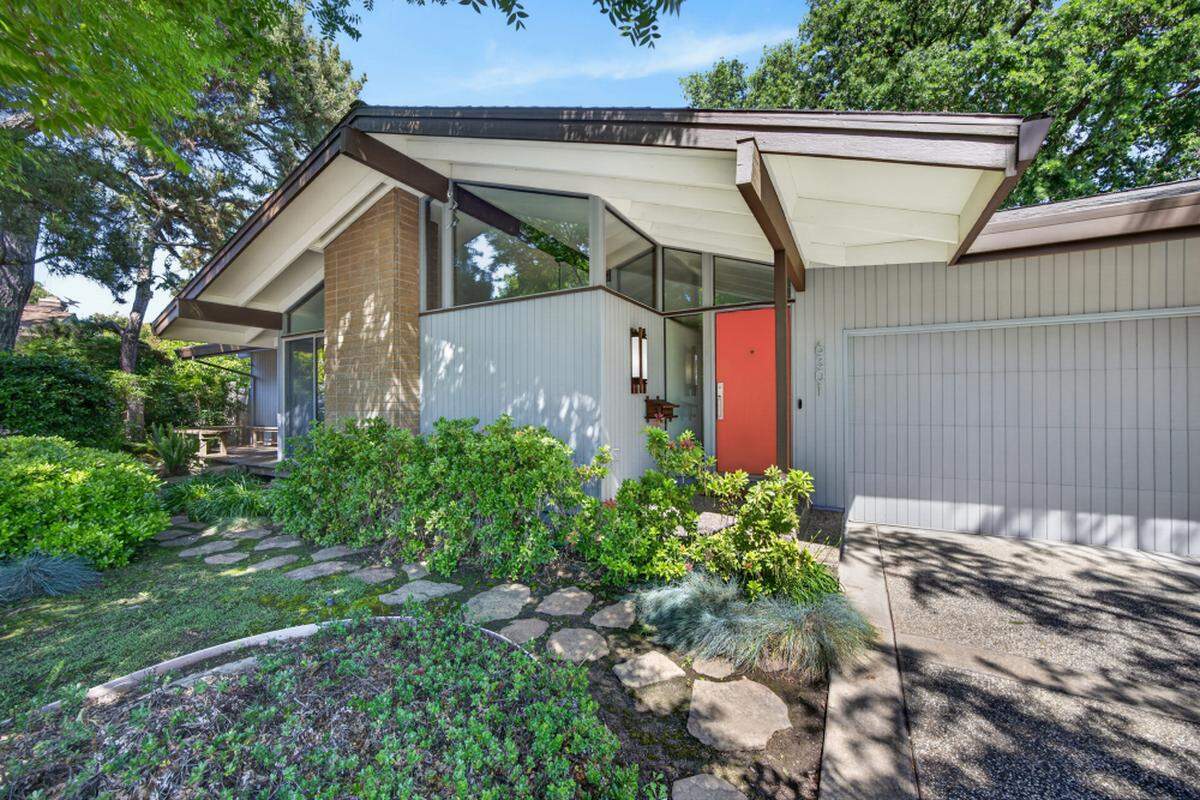
“Offered for the first time on the market, this architectural gem features clean lines, expansive clerestory windows, exposed beams, and solar tubes throughout that bathe the home in natural light,” the property listing states.
For Carolyn Hagler, who grew up in the home, those features aren’t just selling points — they provide the background for a long family story.
Hagler said she was about 4 when the house was being built, “and there was nothing around us.” There are still pictures showing not another house in sight. Her family’s lot backed up to what she remembers as “a little private airstrip” where small planes took off.
In a detail that still makes her laugh, Hagler said her father initially thought he was buying a similar home “one street over,” but didn’t realize the mistake until after he had secured the lot. It turned out fine, she said — the family settled into Longridge Way — but it’s the kind of human hiccup that’s hard to imagine in today’s hyper-mapped, app-driven home search.
Hagler remembers when she was young that the street itself was part of the childhood landscape — gravel, not like today’s paved road. So the circle at the end of the cul-de-sac became her and her brother and sister’s playground because there were no houses and no cars. Early on, she said, the backyard was “a giant open space,” and her family didn’t even have a fence at first.
A levee separated the property from railroad tracks that were still in use then, Hagler said, and the kids would watch trains roll by. She remembered running out mid-bath when a train came through to wave as it passed — the kind of memory that pins a house to a specific time in Sacramento.
Hagler’s father, Ronald Blubaugh, died in March. When she was growing up in the house, he was a reporter for The Sacramento Bee. In 1972, when a plane crashed into Farrell’s Ice Cream Parlor, the family was sitting down to dinner when they heard a loud boom.
A moment later, the phone rang. Her father looked at her mother — and they both knew that call was for him. He pushed back from the table and left dinner on the spot to cover the story.
After retiring as an administrative law judge for the state, Blubaugh dedicated his time to helping Sacramento’s homeless community through Loaves and Fishes.
Moreira described the midcentury home as a “transitional” model — still unmistakably midcentury, but with a roofline and proportions that hint at the stylistic shift coming at the end of the decade.
“So this model is known as the transitional model that the Streng Brothers built, it has a pitch roof, lots of clerestory windows, stacked brick fireplace, lots of windows, and natural light,” she said.
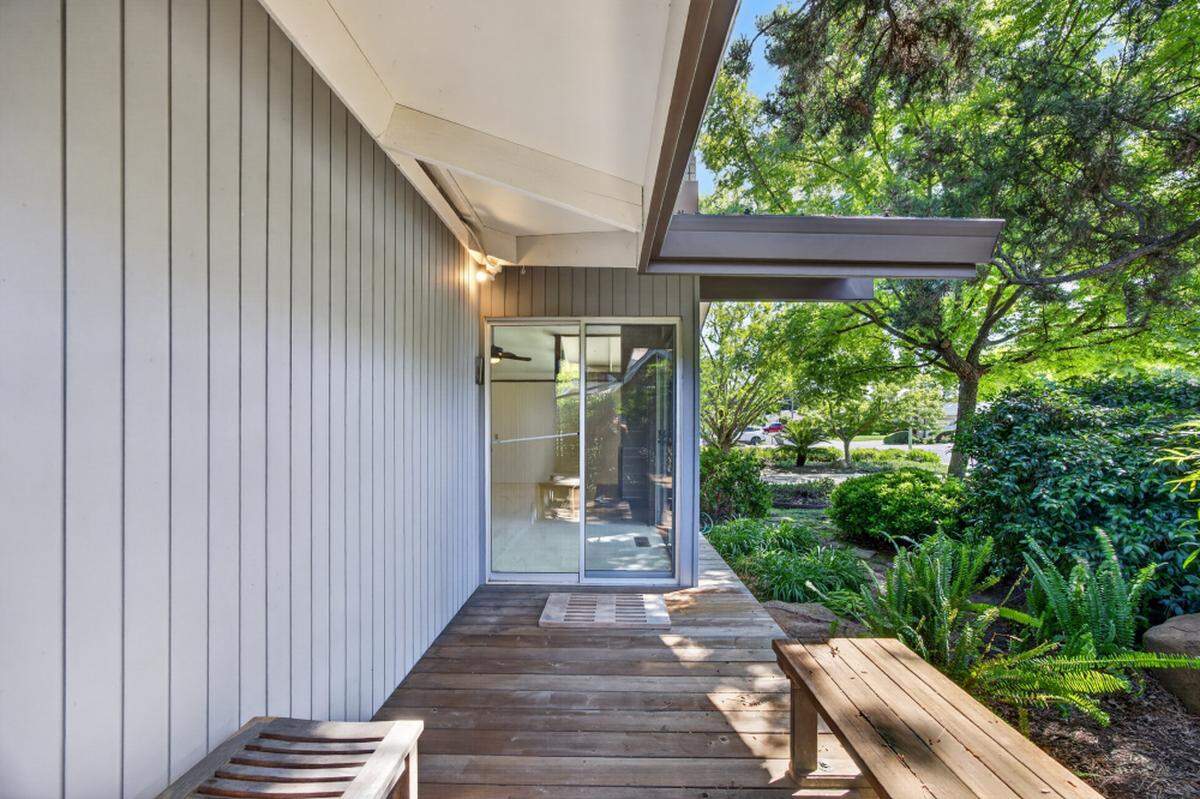
Inside there’s “a statement fireplace” and a kitchen outfitted with high-end appliances.
The part of the property that Moreira lingers on is the lush backyard, which she described less like a yard and more like a refuge.
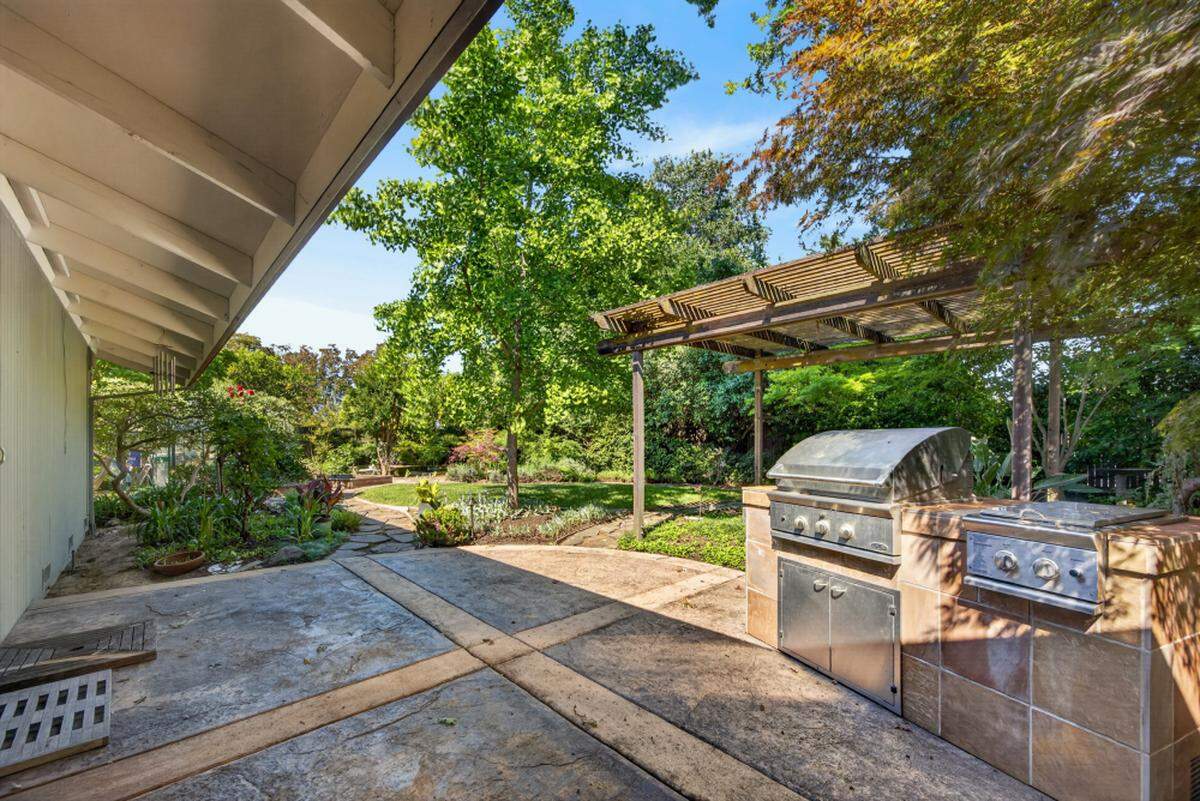
“One of my favorite parts about this house is the beautiful serene backyard,” she said. “It has a ton of mature trees with a Japanese-inspired landscape, lots of Japanese maples. Here we got raised garden beds, a greenhouse, a built-in barbecue, water fountains, and it is just so peaceful and tranquil back here. I love it.”
The towering oak that anchors the yard has its own family origin story, Hagler said. Near the house, she remembered, acorns would fall from valley oaks at nearby Alice Birney elementary school. She and her brother would bring the acorns home and “kind of mess around” by throwing them at each other.
One finally took root in the backyard. Her father transplanted the seedling to its current spot, where it grew into what she described as a “pretty massive” protected tree.
Hagler said the Zen-like backyard became her father’s refuge, especially in later years when he was caring for her mother, Carola. The greenhouse and a small sitting area near the fountain, she said, were places he returned to for quiet and solace.
South Land Park brings its own modernist reputation. Moreira said the neighborhood is better known for another midcentury name that’s not Streng or Sparks.
“We’re in South Land Park, which is known for the Eichlers,” she said. “There’s an enclave of about 50-something Eichlers still standing. So the Streng Brothers homes are actually more rare here, so it would be just the occasional custom home that was put in here by the Strengs versus the development that was happening in the ’50s by Eichler.”
Hagler said the home became a gathering place over the decades — full of parties and concerts. Now living in Austin, Texas, she’s a professional cellist and said the concerts were typically held in the front living room, where the home’s openness and light made it a natural stage.
Hagler said it’s hard to let go after her family owned it for 58 years, but she hopes the next owners “love it as much as our family did” and carry on what she called the home’s “good juju.”
Moreira said that rarity and nostalgia help explain why this segment of the market often behaves differently from the broader pool of suburban listings.
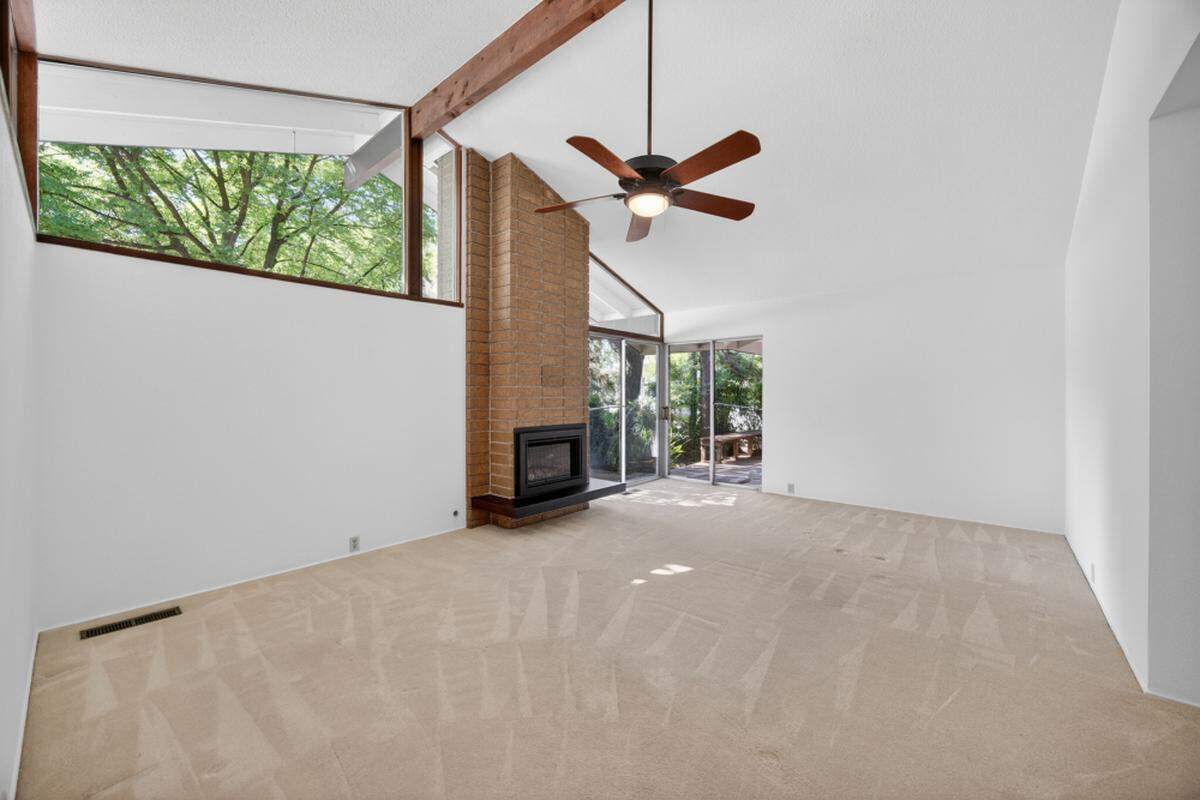
“Midcentury modern homes sell like a hot cake in the real estate market,” she said. “They go for a premium too. You can’t compare a midcentury modern home with a regular, maybe ranch style home or a cookie cutter home in the same neighborhood, because these are more desirable.
“People long for that nostalgia and uniqueness of a midcentury modern home, and not only that, it just feels good when you’re living in them, all the glass, all the natural light that you get in them, the high ceilings, the post and beam, the charm is what really draws people in.”
In this case, the fundamentals helped. The home offers 1,937 square feet on a quarter-acre lot on a cul-de-sac, and the listing calls it a “rare opportunity” — not just for its design, but because it is offered for the first time on the market and has been well-kept.