
Decades after destruction, Yosemite welcomes home Native Americans
It's been 41 years since Les James and Jay Johnson first asked the National Park Service for Yosemite's last Native American village back.
Leveled by the park service by 1969, the village site is located just down the road from Yosemite Lodge in Yosemite Valley.
On Friday, the native elders watched with pride as Yosemite's new superintendent, Michael Reynolds, signed an agreement giving them permission to use the site for the next 30 years.
The agreement also green lights remaining construction of a roundhouse, what will become the spiritual heart of the village.
The historic signing happened during a ceremony attended by around 50 people, including a handful of elders who once lived in the village, named Wahhoga, the Miwuk word for village.
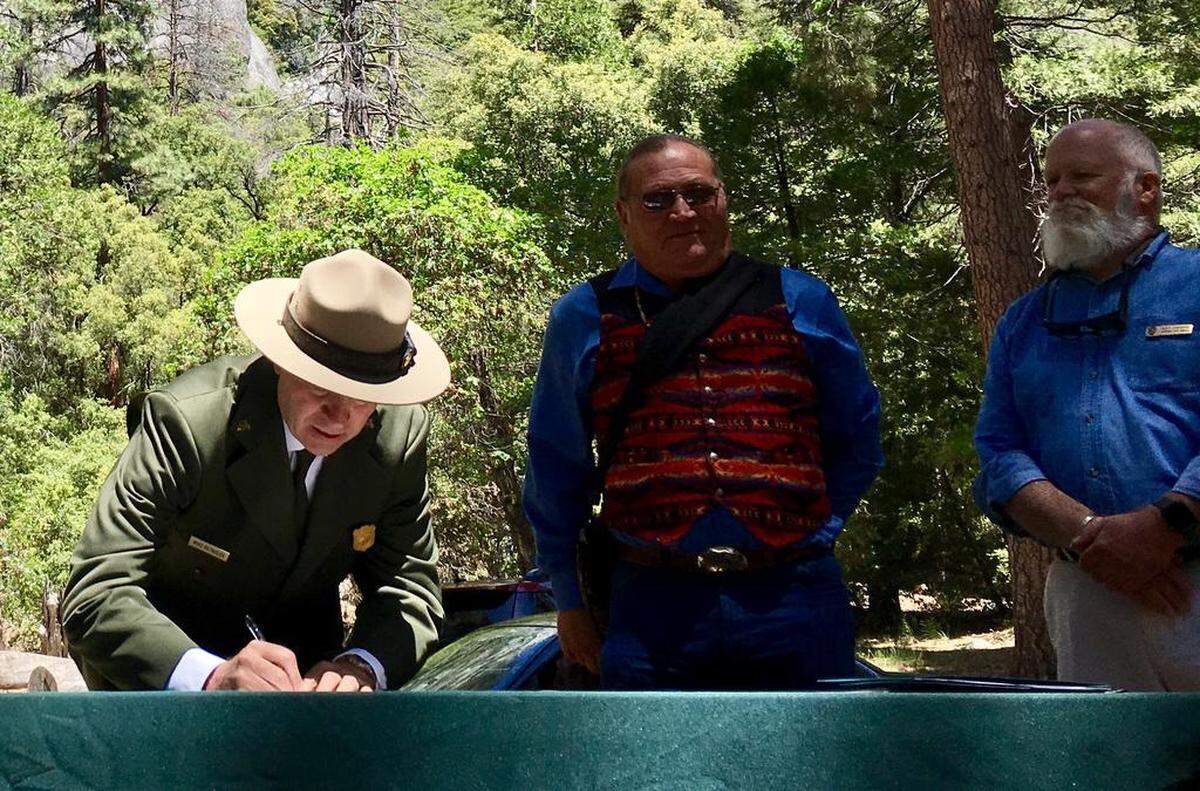
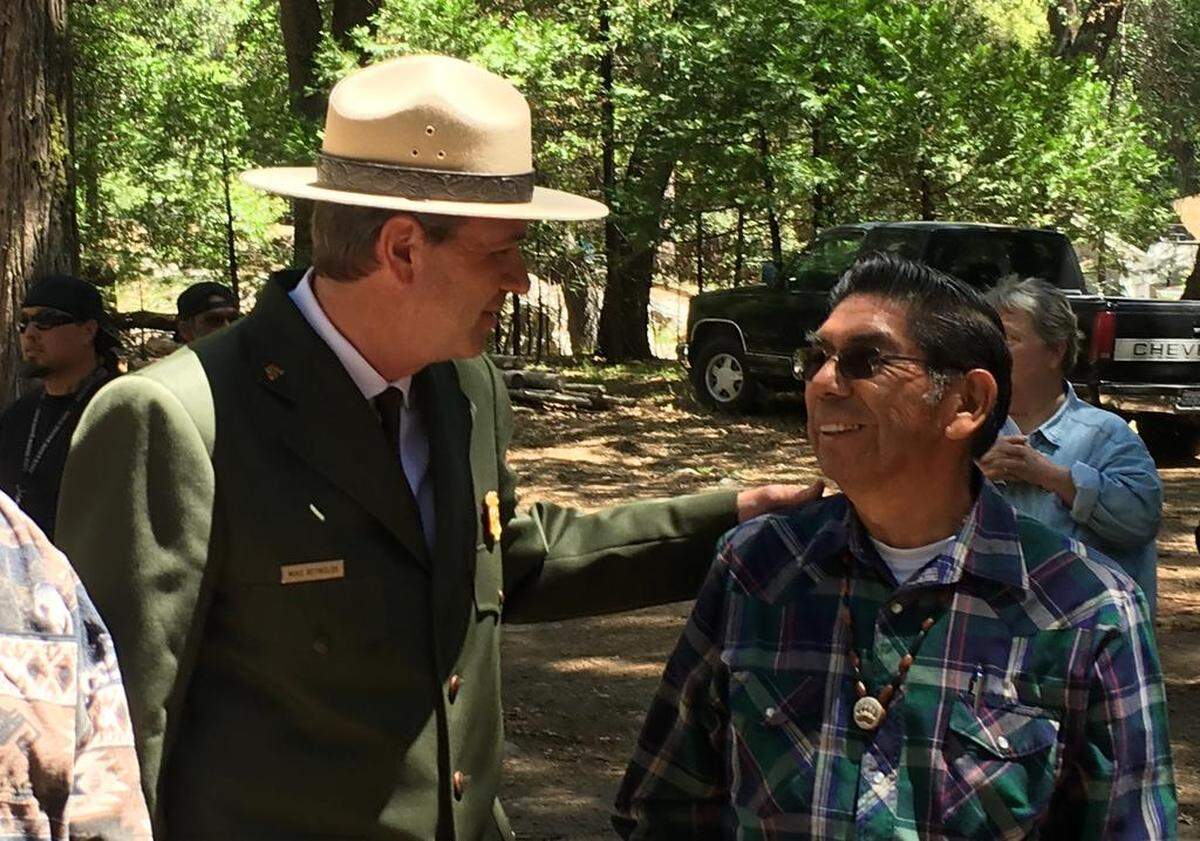
James recalled watching Reynolds grow up in Yosemite, and Reynolds talked about his relationship with the native elders and attending school in Yosemite Valley with their children.
"I've always respected them and admired them," Reynolds said. "I learned from them."
Wahhoga's return has been decades in the making. The American Indian Council of Mariposa County/Southern Sierra Miwuk Nation finally got the OK to begin construction a decade ago, only to have their work halted for nearly seven years by Yosemite's former superintendent, who cited safety concerns.
"We knew how to build a roundhouse from traditional knowledge that's been passed down. … The park service didn't understand that," said Tony Brochini, former tribal chairman and executive director of the Wahhoga Committee. "That is where we butted heads. The park service wanted us to follow project management protocol and we were moving forward with our traditional methods."
Construction resumed last year, but was limited, after the tribe agreed to more structural analysis and engineering. The agreement signed Friday allows the large roundhouse to be fully completed and used.
Tribal chairman Bill Leonard said any hard feelings should be left in the past.
"We're starting fresh," he said, "we're starting new."
Healing wounds
The displacement of Yosemite's native population began in the mid-1800s during the Gold Rush, when a battalion of state militia found Yosemite while hunting for Native Americans. Villages were burned and Native Americans shot, hung or captured. Others fled to the foothills or eastern Sierra.
"Native peoples have resided in and taken care of this place we know as Yosemite for at least the past 8,000 years. … but the homeland of Yosemite was never completely abandoned by those ancestors, and by all of you today," Reynolds said.
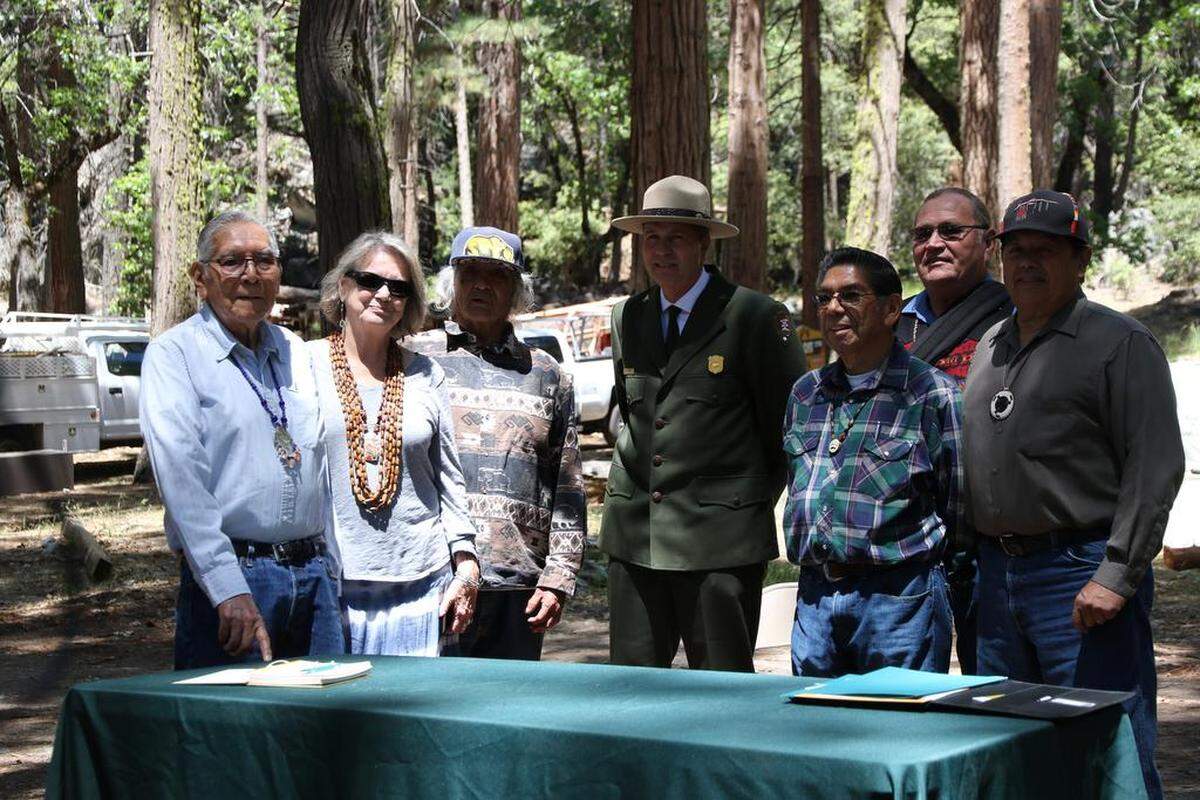
He named seven tribes who "remain as partners in Yosemite's stewardship today." All will be able to use Wahhoga.
Reynolds recognized "anger, sadness and displacement" native people faced, and non-native people's "confusion, sadness and guilt for what we as a culture have done to native people."
"Wahhoga and events like today can help bring that healing if our hearts and minds are open to it," Reynolds said.
Wahhoga stands as a "tangible symbol," he said, to help people better understand Native American history, culture and traditions.
"Wahhoga can, in a small way, pass the spirit and meaning along to future generations," Reynolds said, "to break away from the feelings of separateness."
Returning home
After the ceremony, native elders Bill Tucker and Charles Castro reminisced happily together, pointing out where cabins once stood and grinding holes on boulders where their families pounded acorns and plants for cooking.
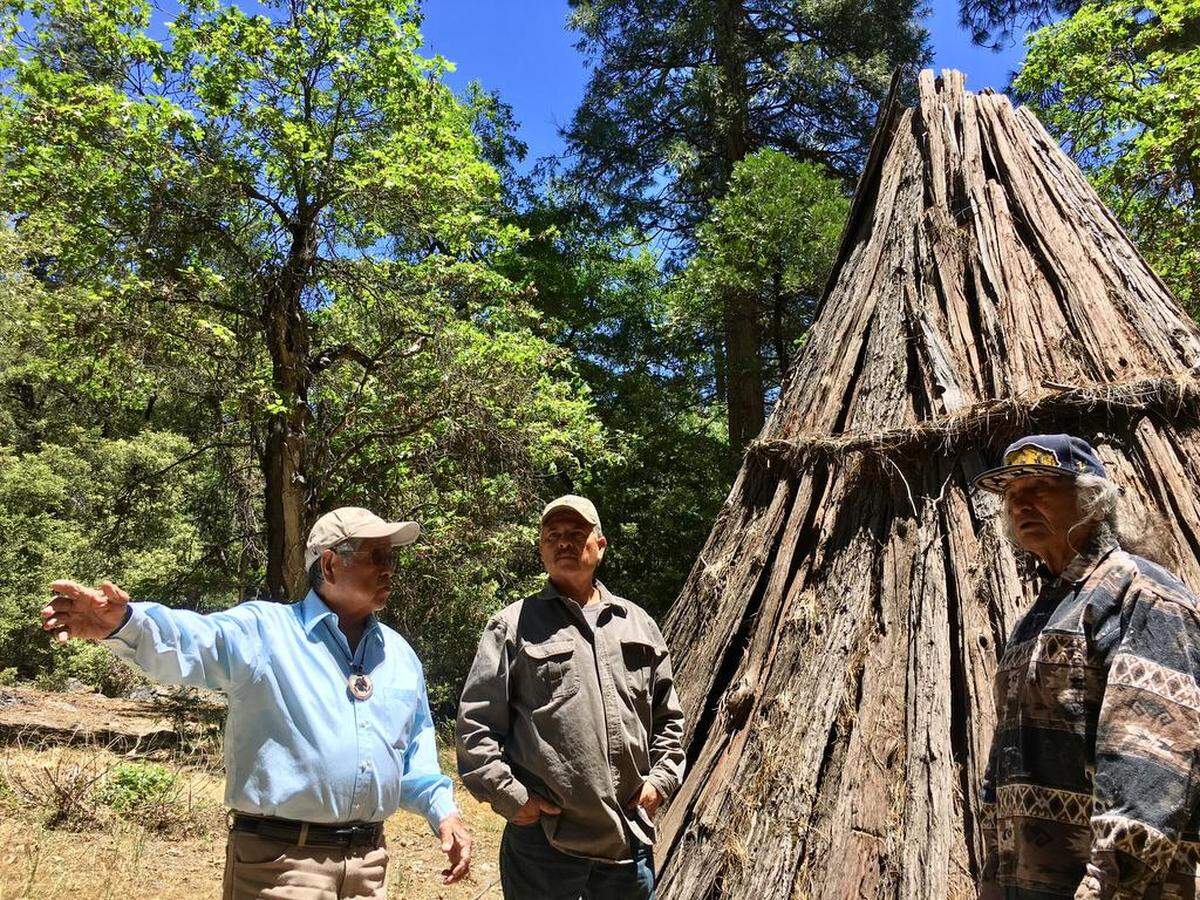
But the jolliness quickly turned to tears as Castro paused to think about the significance of the day for his family and future generations.
Vernett "Sis" Calhoun, a Wahhoga Committee member, called Wahhoga's return a "dream come true."
Yosemite's native community moved to Wahhoga after another Yosemite Valley village was destroyed in 1928 to make way for a medical clinic.
"And they were moved and mistreated long after that," Reynolds said, recalling other housing that people called "Army Row" when he was a kid.
"There were many, many efforts, sometimes on deaf ears from our side, to give back the village to native people," Reynolds said.
But some promises were made and noted in official park policy, including Yosemite’s 1980 General Management Plan and Merced River Plan, which helped pave the way.
Brochini's great-grandmother, Phoebe Wilson Hogan, was the last person to live in the village. She resided in one of its 15 small cabins that were gradually destroyed as inhabitants lost seasonal or full-time employment in the park.
"They burned down all the houses because they wouldn't allow any other Indians to come in and live there," Brochini said, "because they were systematically trying to remove the indigenous people out of Yosemite."
Wahhoga is different than the cluster of Native American demonstration buildings behind the Yosemite Museum. The native community has to ask permission to use those structures. They won't have to do that anymore at Wahhoga.
The native community has hosted spiritual walks, camps and dances in Yosemite for decades, but now, Johnson said, "we can do that with more feeling and strength."
The future
The now-gone cabins are being replaced with umachas, traditional teepee-shaped houses covered with cedar bark.
There are already several – a project led by Castro's granddaughter, who was named after her great-great grandmother Leanna Tom, a Yosemite native.
One Wahhoga cabin survived, now used as a wildlife management office. There are hopes to move it back to the village.
The roundhouse is being built with a $100,000 donation from Yosemite Conservancy, Brochini said. The Wahhoga Committee hopes to receive another $50,000 to finish the project next year.
A volunteer crew from the Jackson Rancheria Band of Miwuk Indians is handling the construction. Materials were gathered from Stanislaus National Forest. No man-made materials are being used. Oak pins take the place of metal nails.
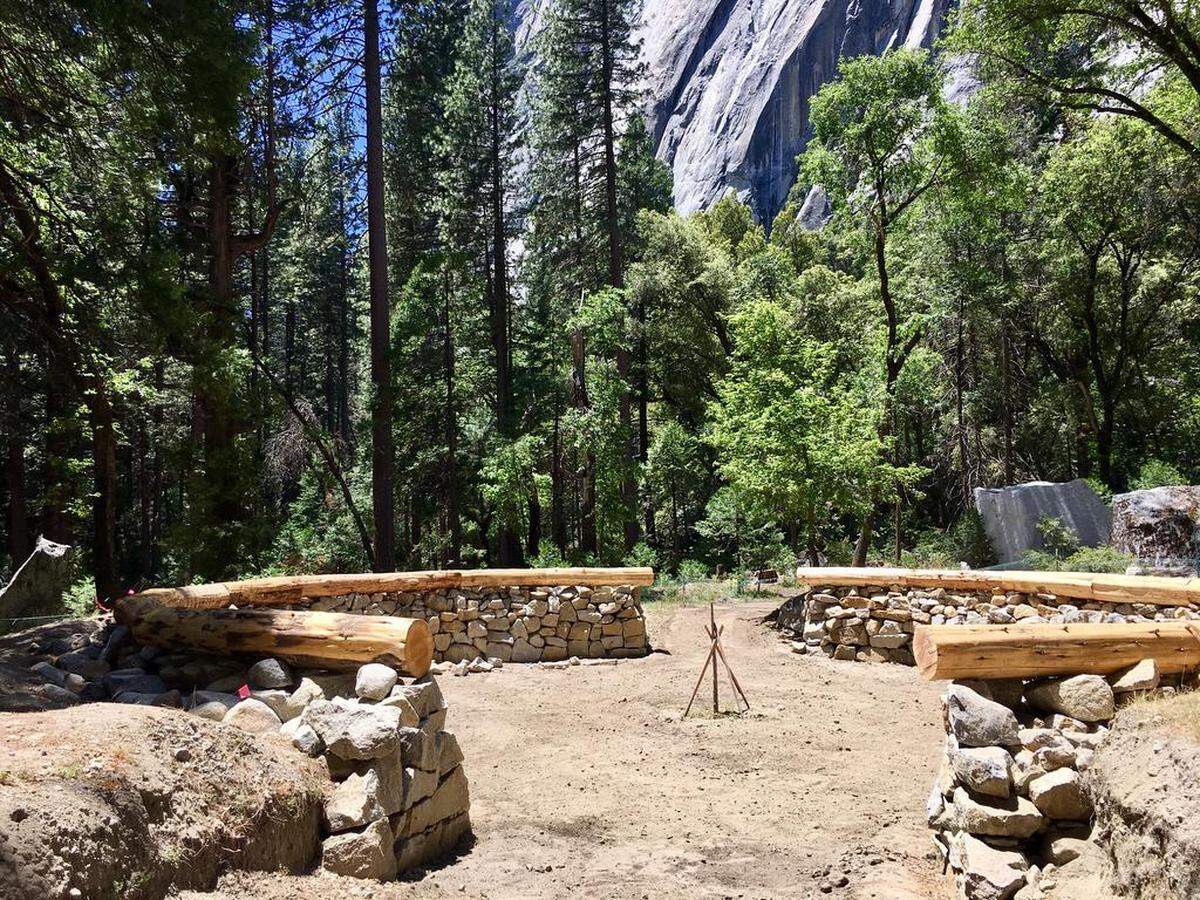
Brochini said the roundhouse and a small sweat lodge will only be used by tribal members and invited guests.
A fundraising campaign should begin soon to build a modern community building that would include a kitchen, bathrooms and meeting room for educational services.
Tribal members won't be able to live there or use the village for commercial purposes.
There's still plenty of work to be done, and more agreements to be signed for any future construction once the roundhouse is done, but the 83-year-old James is determined to keep going with the project he started as a young man.
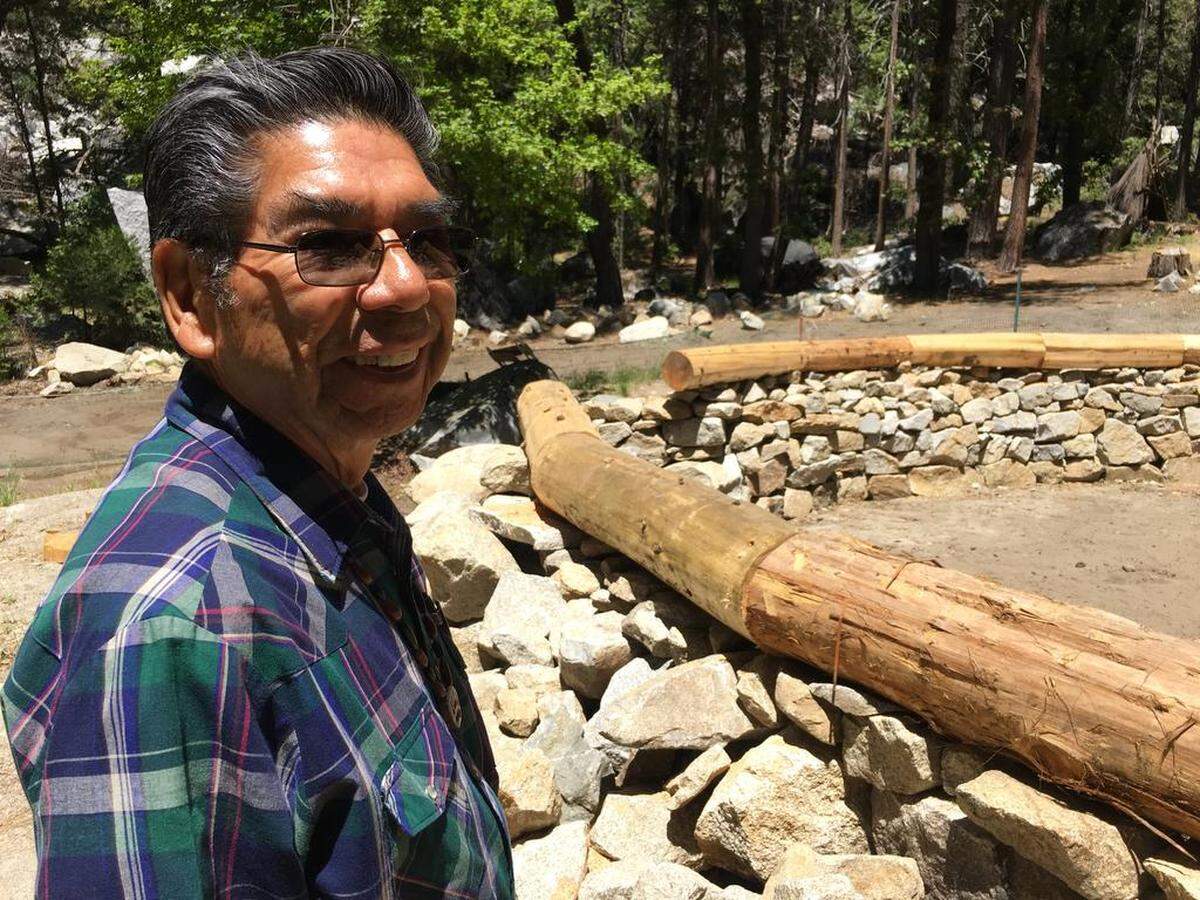
Tucker, who has been by James' side through many of those years, will keep helping, too.
"Right now I'm feeling pretty good," Tucker said Friday. "But, hey, this is home. I never did leave it."
Carmen George: 559-441-6386, @CarmenGeorge
This story was originally published June 2, 2018 at 1:49 PM with the headline "Decades after destruction, Yosemite welcomes home Native Americans."