California lawmakers: Time to consider revoking badges of problem officers
READ MORE
California’s Criminal Cops: Full Investigation
Click the arrow for the full investigation into how California deals with law enforcement officers who break the law.
Expand All
State lawmakers said this week that it’s time for California to consider joining 45 other states that can revoke the badges of officers who commit crimes and other serious misconduct.
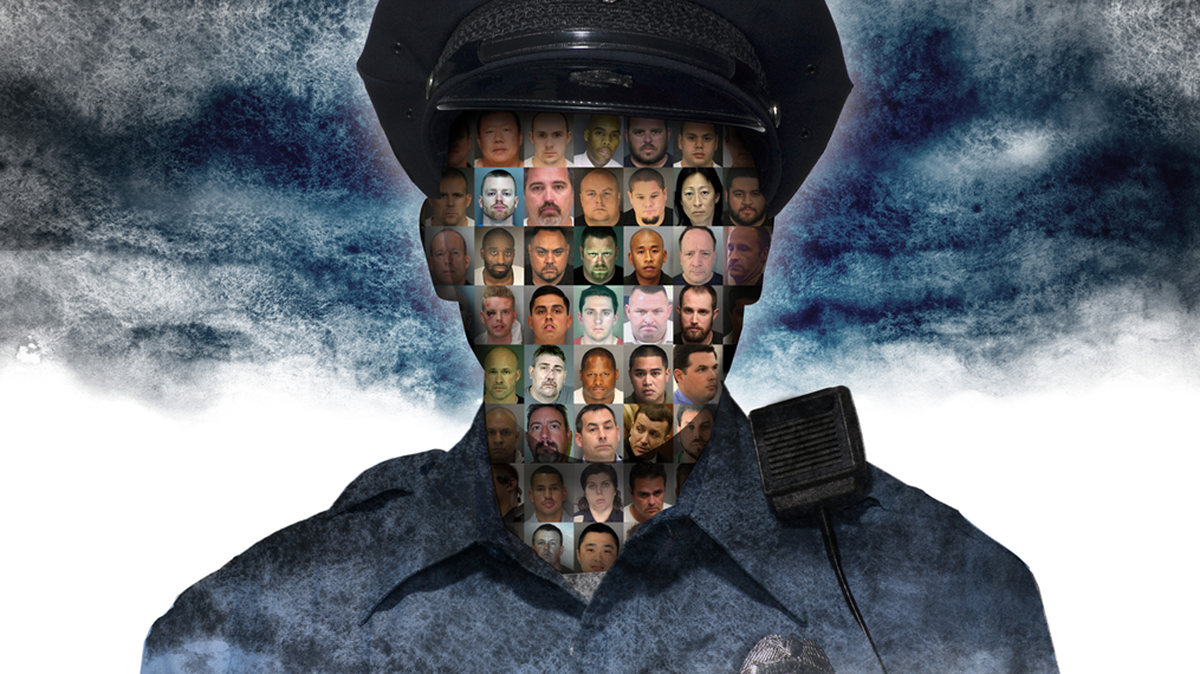
The call for action comes in the wake of a six-month investigation from a statewide coalition of news organizations, including McClatchy, that revealed more than 80 law enforcement officers working today in California have a prior criminal conviction.
“We need to do something about this,” said state Sen. Hannah-Beth Jackson, a Democrat and member of the Public Safety Committee representing Santa Barbara and part of Ventura County. “Having convicted criminals on our police force is just not O.K. in any way, shape or form.”
With demands for more police accountability growing in Sacramento, Democrats and a Republican on state public safety committees said they are deeply concerned about revelations in the series.
Jackson said she was “upset and angered,” particularly about officers routinely pleading down domestic violence charges to lesser crimes that allow them to keep their guns and in some cases remain on the job.
California is one of only five states in the country that doesn’t “decertify” an officer for misconduct — or essentially take away a license to work in law enforcement. Instead, almost all hiring and firing decisions are up to local departments.
So while many departments hold officers to the highest ethical standards, there are some that allow officers accused — and even convicted — of egregious misconduct to stay on the force.
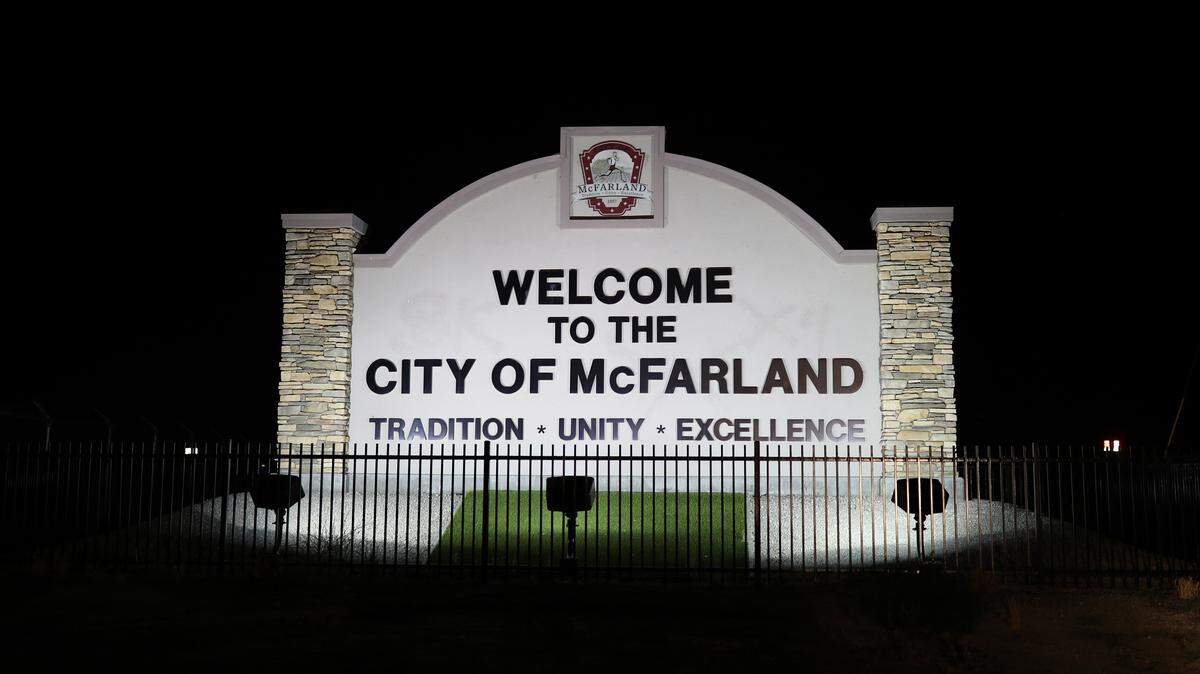
And some small rural departments have a history of hiring cast-off cops. For example, the news coalition’s investigation found the police department in the Kern County city of McFarland hired more than a dozen officers in the last decade — nearly one of every five officers — who were either sued or fired from another department for misconduct or convicted of a crime.
Jackson said the question now for her fellow legislators is: “Do we want some kind of state oversight?”
At least one Republican legislator agrees. State Sen. John Moorlach, who represents parts of Orange County, is vice chair of the senate’s Public Safety Committee. Moorlach said he’d likely support more state oversight, including decertification.
“It’s the right thing to do. It’s not a partisan issue. It’s about quality control,” Moorlach said.
Assemblywoman Buffy Wicks, an Oakland Democrat who sits on the Assembly’s Public Safety Committee, agreed. “There’s no denying that we need to explore changes once this level of sunlight is cast on law enforcement,” she said in a statement.
Secret database of cops
The series examined the cases of 630 current and former officers convicted of a crime in the past decade, featuring many of the cases in a searchable database. The exact number of officers with convictions is unknown.
Earlier this year, reporters from the Investigative Reporting Program at UC Berkeley obtained a secret state list of nearly 12,000 officers and applicants with convictions in the past decade. But the state Attorney General’s Office refused to say who on the list was an actual officer. Reporters ultimately were able to review about 1,000 court files and used news clips to identify other cases.
Attorney General Xavier Becerra has refused to answer questions about the list and his office declined numerous interview requests before the series ran and again for this story.
Michael Rains, a Bay Area-based lawyer who represents law enforcement, including officers named in the newspapers’ investigation, said he was “dismayed” to read about the crimes committed by police officers, calling them a “smear on the great name and reputation of their colleagues.”
“I’m a firm believer the badge is something that should be valued and honored by law enforcement officers,” Rains said. But, “rather than saying we have 630 bad apples, that’s the wrong way to look at it. We have close to 80,000 good ones. Those are the ones we should be thanking for all that they do.”
California Police Chiefs Association President Ronald Lawrence echoed those comments earlier this week in a statement, stressing that only a tiny percentage of officers are convicted of crimes. There are about 79,000 sworn officers in California.
“Our criminal justice system, for both the public and peace officers, must offer due process as well as pathways for an individual to accept accountability and correct their mistakes,” Lawrence wrote. “For those who are deserving and willing to embrace accountability and retraining, there must be a way to retain experienced, well-trained officers in an environment that is already difficult to recruit new hires.”
BEHIND THE STORY
MOREWhat started this project?
In early 2019, reporters from the Investigative Reporting Program at the UC Berkeley Graduate School of Journalism obtained a list of criminal convictions from the past decade of nearly 12,000 current or former law enforcement officers and people who applied to be in law enforcement. The records — provided by the state’s Commission on Peace Officer Standards and Training in response to a Public Records Act request — didn’t indicate which individuals on the list actually worked in law enforcement nor the departments where they were employed.
Instead of providing any more information, POST referred the reporters to state Attorney General Xavier Becerra’s office, which wrote the reporters a letter calling the release of the records “inadvertent” and indicating mere possession of the document was a crime. The letter instructed the reporters to destroy the list or face legal action.
Instead, the reporting program formed an unprecedented collaboration to investigate the list, involving three dozen news outlets across the state.
Click on the arrow in the upper right to learn more about this important investigation.
How was this story reported?
Berkeley reporters first performed a simple name match, comparing the individuals on the supposedly secret convictions list with a roster of current and former peace officers, which was also obtained from POST. The effort found about 4,000 of the individuals with a conviction had the same name as someone who had been a cop in California. Given the volume, the reporters identified cases involving officers who would have been employed in the past decade, focusing largely on non-driving offenses.
Reporters across the state then fanned out to inspect case files from local courthouses in almost every county. They encountered numerous hurdles, including poor record-keeping, uncooperative clerks and hundreds of destroyed files. They ultimately reviewed about 1,000 files. Some were clearly false matches — a person convicted of a crime who merely shared the same name as a cop. Many, however, were clearly officers. In cases where it wasn’t clear, the reporters used other public records and interviewed sources to confirm identities.
Reporters also searched news clips from the past decade to bolster the research.
In the end, the effort identified 630 officers convicted of a crime since late 2008. That is clearly an underestimate, but it is also the most comprehensive public accounting of criminal convictions involving peace officers in California.
Those cases now comprise a database created for this project and are the basis for the news articles produced by the collaboration.
Contact us if you believe any information in our reports is inaccurate. We would also appreciate hearing if you are aware of a case that’s missing from our list. Our email address is cacriminalcops@gmail.com.
Who contributed to this project?
This story is part of a collaboration of news organizations throughout California coordinated by the Investigative Reporting Program at UC Berkeley and the Bay Area News Group. Reporters participated from more than 30 newsrooms, including MediaNews Group, McClatchy, USA Today Network, Voice of San Diego, and Reveal from the Center for Investigative Reporting.
For McClatchy, contributors include Rosalio Ahumada, Matt Fountain, Nathaniel Levine, Rob Parsons, Cresencio Rodriguez-Delgado, Robert Salladay, Darrell Smith, Sam Stanton and Elliot Wailoo.
Support local news
Investigative journalism makes a difference. And your support makes it possible.
Support local journalists, and subscribe to The Sacramento Bee: https://bit.ly/2Q9vzJg
Rains, who is also a former police officer, said he’s seen examples around the state of troubled small agencies like McFarland, due to a combination of low pay and benefits and a smaller pool of applicants.
“Departments are lamenting the fact that the people they are hiring don’t have in some cases the level of education, life experience, and maturity that in an ideal world they’d prefer,” Rains said. “If those agencies get in such trouble they can’t find quality candidates and individuals that have not had problems elsewhere, they should call the county sheriff to bail them out.”
Powerful police unions have had strong pull over the years in Sacramento, but the latest call for more accountability comes after California enacted a law known as SB 1421 that opened some officer disciplinary records to the public for the first time. However, after unsuccessfully fighting the law in court, many departments have been slow to comply.
Rains said he is not opposed to the state asserting some control over decertifying officers, but he would “insist it be a fair, impartial and thorough investigation” that sometimes does not occur at the local level due to what he called “politics and mob rule.”
“That’s a joke,” Rains said, “and that’s not fair to anybody.”
Email us at cacriminalcops@gmail.com.