
He served 12 years and wants a family reunion. Why he could be shipped out of the U.S.
Chuckles and jokes were heard at the end of the line in a private prison. Despite the uncertainty and restlessness, Charles Joseph wants to remain hopeful.
Joseph, an American born in Fiji, was convicted of robbing a convenience store in 2007. He served 12 years of his 13-year sentence and was found suitable to be released in May. But instead of being able to reunite with his family, he was immediately detained by U.S. Immigration and Customs Enforcement. He’s been at a private prison for seven months.
Joseph, 34, is an Indo-Fijian. His wife, Shelly Clements, their two daughters and mother are in Sacramento. Clements submitted Joseph’s pardon application in June.
“We don’t know who to ask for help,” she said. “We don’t have any money. It’s hard.”
California Department of Corrections and Rehabilitation officials allow ICE to enter state prisons and detain individuals for the purpose of deportation upon their release. On Dec. 23, Cambodian American Tith Ton was detained by ICE immediately after serving a 22-year sentence and was sent to Yuba County Jail.
ICE’s detainment of Joseph and Ton means that despite California becoming a “sanctuary state” in 2018, CDCR is still notifying ICE of parolee release dates. This sets up the possibility of immediate detention upon leaving prison, a practice which has resulted in thousands of immigrants eventually being deported.
Joseph is now in the process of removal proceedings, which would deport him to Fiji, where he hasn’t been since he left with his family as a child.
Who is Charles Joseph?
Joseph was 15 when he immigrated to the U.S. with his family and settled in San Bruno.
His father, Robert Joseph, was active in the Labor Party in Fiji to advance the rights of Indo-Fijians. A year after the family moved to the U.S., Joseph’s father was incarcerated for domestic violence, then deported to Fiji three years later. Despite his conviction, he wanted to teach his son to be good.
“My dad is a big part of my life,” Joseph said.
At school, Joseph felt like an outsider and wanted to fit in. Without a father figure to look up to and rely on, teenage Joseph found acceptance among friends who were involved in gangs, drugs and alcohol. He later got suspended from school for fighting a student who had been firing spitballs at his head for a semester.
In 2003, Joseph’s family moved to Sacramento. Vowing to start fresh, he attended Sacramento City College, majoring in music and business, and worked full time at a pharmacy store.
But another incident changed his life. In 2007, Joseph helped people on the streets by giving them doughnuts that were meant to be thrown away at the end of day. He was fired from his job at an east Sacramento convenience store.
“They (staffers) saw that on camera and told me I was pretty much stealing,” Joseph recalled. Frustrated and with no coping mechanism, he succumbed to the influence of marijuana, alcohol and cocaine. He went to the store, brandishing a weapon, took money from the cash register and walked out. No one was hurt.
The father of three was arrested and eventually convicted of second-degree armed robbery and was sentenced to 13 years in prison.
A transformative journey
But in prison, Joseph changed.
“It was a sad awakening in prison ... it finally opened my eyes, where people can die over $5, you know, and it causes me to reevaluate myself,” according to an appeal citing him.
At High Desert State Prison in Susanville, some Native American inmates invited Joseph to their sweat lodge – a hut for prayer, healing and religious ceremonies open only to indigenous people unless invited. Joseph found refuge in their code of ethics.
“(During the ceremonies) you work your body to strengthen your mind,” Joseph said.
“That was the biggest thing that helped me begin my healing process.”
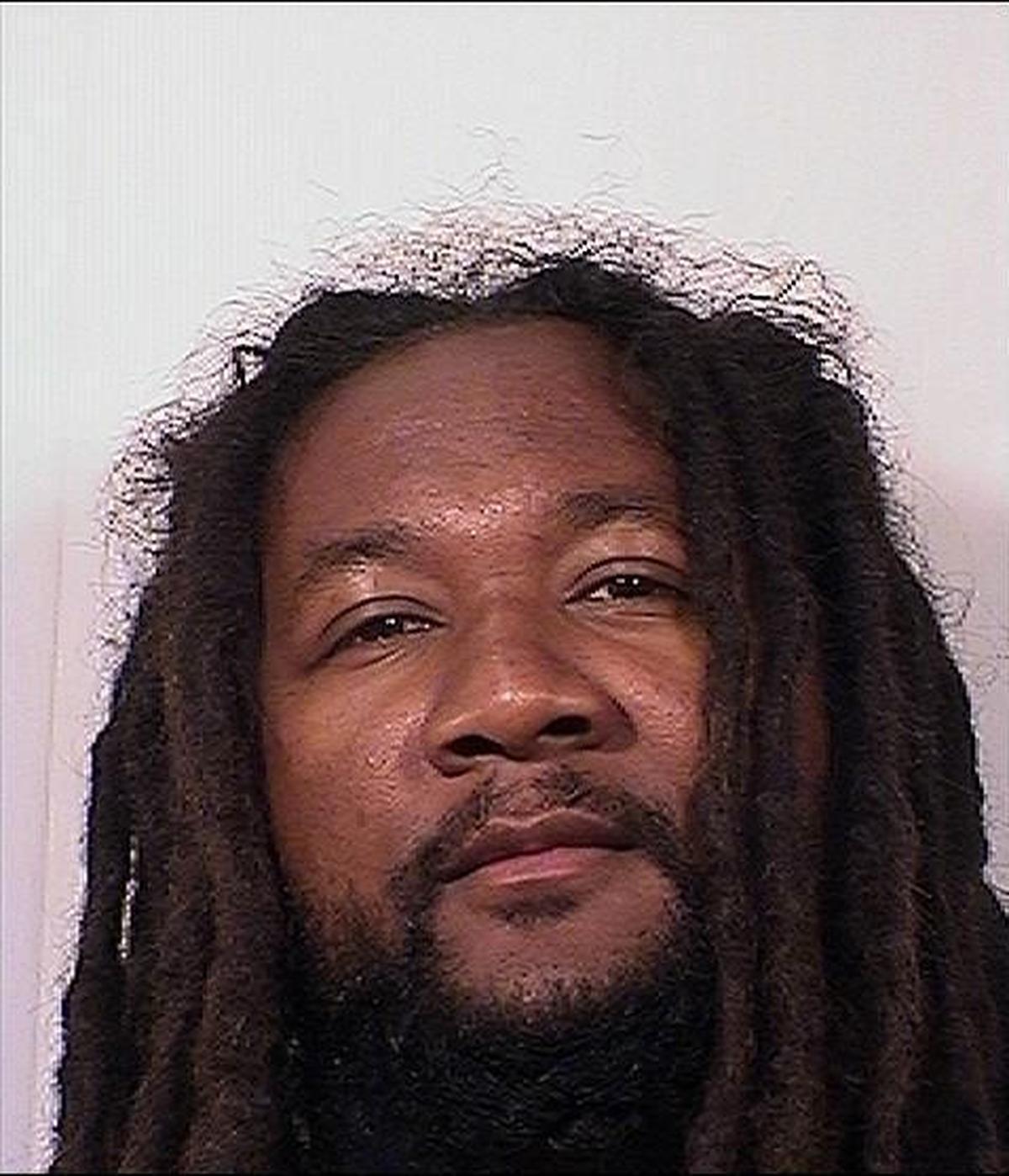
Joseph realized he needed to take leadership roles to make changes, starting in prison. He was elected as a violence prevention leader at a men’s advisory council at High Desert, where he spoke for his cohort and mediated disputes between inmates.
“The system wants us to change and forget that things exist outside the bars,” Joseph said. “This is the power of the bars. This concrete wants to drink our blood...I don’t want people to be stuck in prison. We don’t want to catch another murderer here. We learned something and we want to go back to our families.”
Joseph began to explore his identity, learning to sing Fijian songs he remembered from his childhood. He would ask his mother, Alumita Siva, to clarify the pronunciations and melodies of the songs and chants over the phone.
Lacy Dalton, a musician with three Bay Area Music Awards, was Joseph’s teacher while he was at High Desert. She wrote a letter to California Gov. Gavin Newsom, urging him to consider a pardon.
Dalton says Joseph is one of the most talented individuals she’s worked with. He is a gentle, fatherly and deeply spiritual person, who always wanted to help others.
Joseph is a natural teacher, Dalton noted. He is gifted in teaching about cultural studies and heritage with his compelling presence.
“People in the class are really drawn to him,” she said. “There’s a lot of folks from the islands and their diversity and heritage needs to be celebrated. Charles is a representative of it in its highest form and that is entirely sincere.”
Dalton added that Joseph will be a good father and citizen, and to separate him and his family is “unnecessary.”
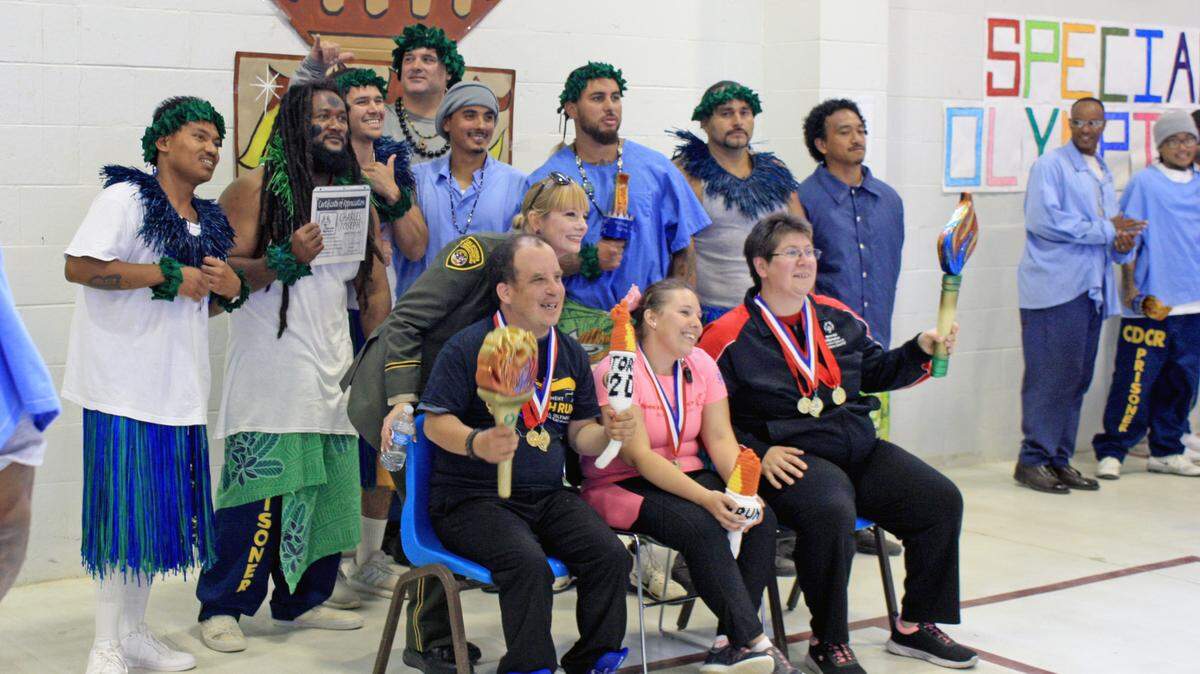
Joseph in 2013 was transferred to California State Prison, Solano. He led music and theater groups, taught and performed the haka – a ceremonial dance or challenge in Māori culture – for Special Olympians at a fundraiser. He composed background music for a play produced by the Marin Shakespeare Company.
In words of Mary Jo Bauen, an advocate from Restorative Justice for Families who taught Joseph in the Vacaville prison, Joseph led discussions and demonstrated humility and self-awareness about his own rehabilitation.
Yet, a devastating blow wiped away hope built through years of waiting.
After his release May 17, Joseph was immediately detained by ICE. He was transferred to Mesa Verde Detention Facility, a for-profit private prison contracted by ICE in Bakersfield. He now faces deportation to Fiji.
Unfair due process, lawyer says
The immigration judge ordered Joseph’s deportation in October. Francisco Ugarte, Joseph’s lawyer from the San Francisco Public Defenders Office, filed for an appeal with the U.S. Dept. of Justice Board of Immigration in mid-December to challenge the decision.
The court declined Joseph permission to call his brother in Fiji as a witness via phone, saying it wouldn’t be able to assess credibility.
Ugarte called the denial “absurd,” saying it was the first time in his career that a judge denied a motion for telephone witness. All witnesses are subject to cross-examination, a routine procedure in court that allows opposing lawyers to review witness credibility.
“It is what lawyers are trained to do,” Ugarte said.
The immigrant judge also ignored the evidence in the records that “torture and impunity is rampant in Fiji against criminal suspects,” according to the appeal. Joseph’s brother, who identifies as Rastafarian, has submitted a declaration on being repeatedly targeted and beaten by Fijian authorities because of his identity. Joseph, with his Indo-Fijian ethnicity, long dreadlocks and Rastafarian religion and lifestyle, could face the same threat.
The court deprives Joseph of a meaningful opportunity to present his claim which would affect his proceedings, the appeal reads. The decision to deny due processes for people facing torture in their home country shows how the system has been weaponized by an administration hostile to immigrants, Ugarte said.
‘Doing it for both of us’
Joseph used to be a lawful permanent resident. His mother, grandmother, wife and children are U.S. citizens.
Joseph’s wife Clements and their two daughters, Hope and Carly, live in a rented two-bedroom apartment in the Parkway area of south Sacramento. Hope is 12 and Carly is 7.
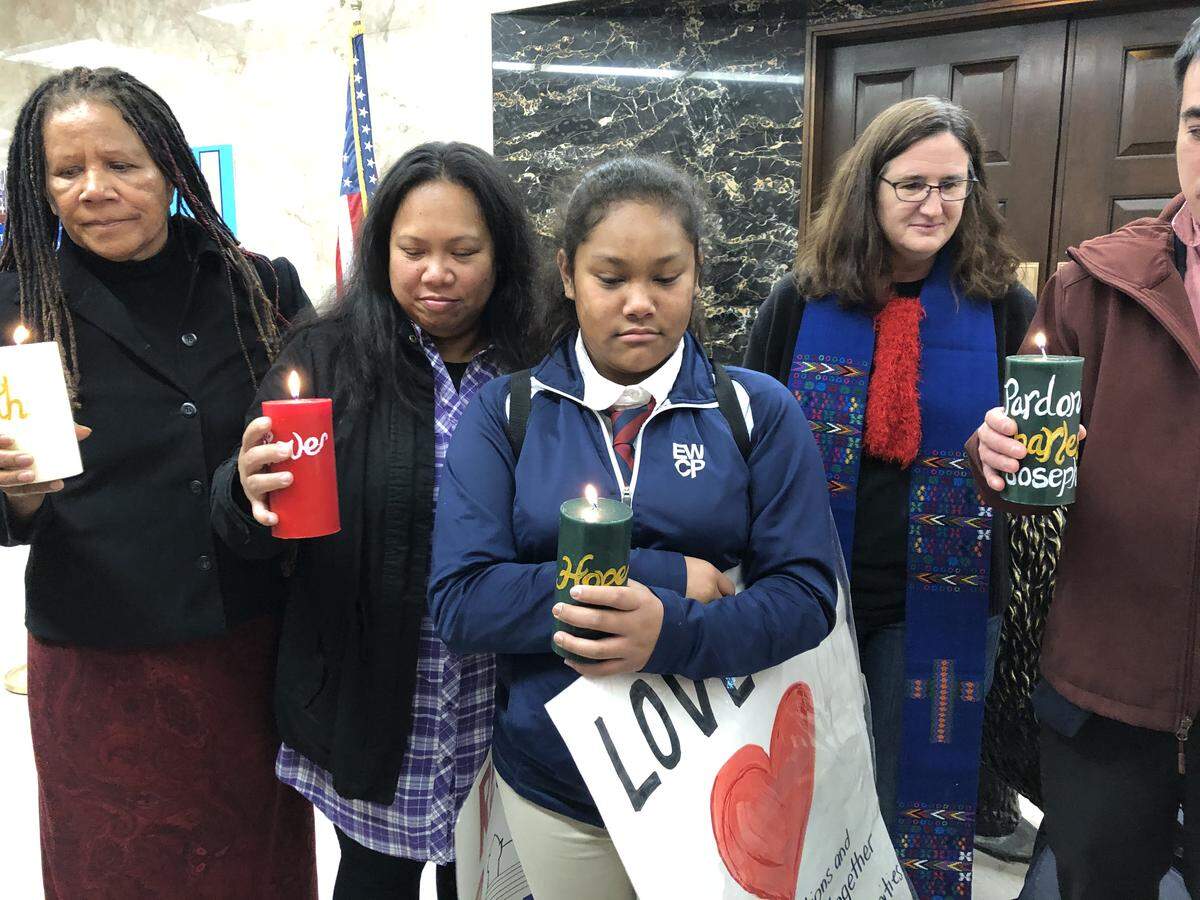
Clements reached out for help on her husband’s behalf when he was detained. She collected letters of support from Joseph’s teachers, social workers and community members for the pardon application. She found Galatea King, regional organizer from the Interfaith Movement for Human Integrity, who later helped organize rallies and prayer vigils for Joseph.
She and the girls remain close to Joseph, but he prefers they don’t visit because the trip is up to 10 hours for an hour meeting.
“Being in a prison is expensive for the family,” Clements said. “Money is not so easy.”
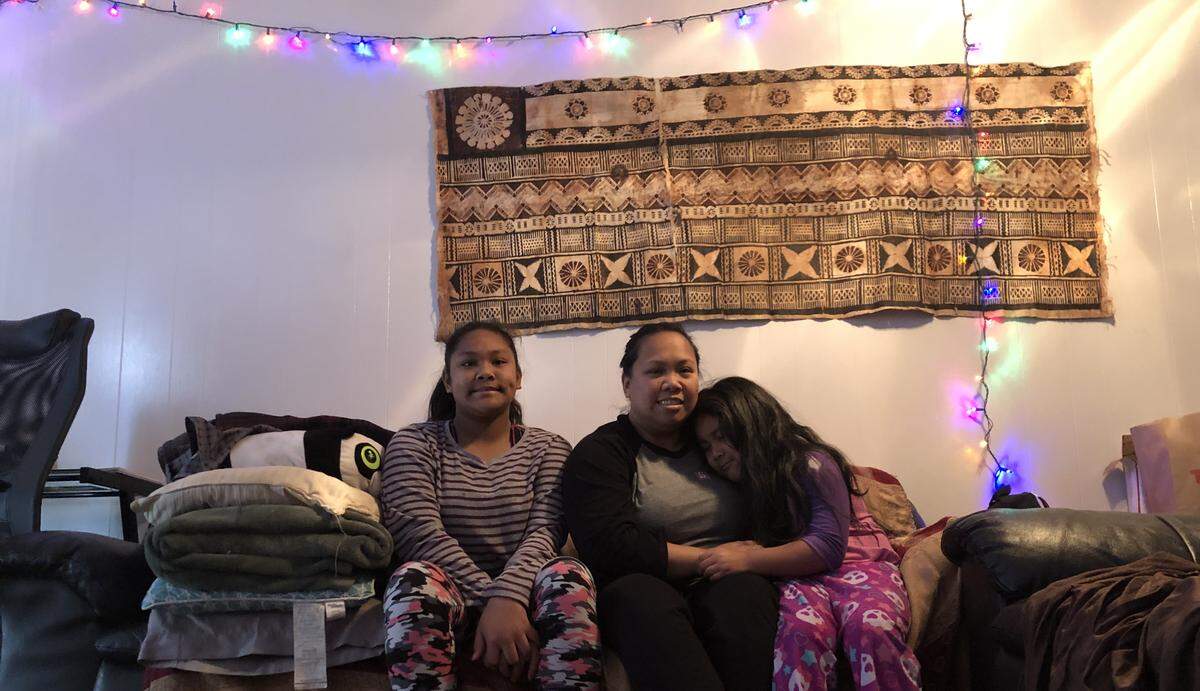
Instead, Joseph calls every day. He talks for at least 15 minutes each with Clements and the girls. The prison charges by the minute, so Clements learned to talk fast. She tries not to be emotional.
“There are certain things that I don’t share with him, as I don’t want him to stress,” she said. “The kids need things. They need their father for support.”
Carly, who was drawing on the floor in her pink and purple pajamas, dropped her pen, stood up to give her mother a hug.
“Tell me when she cries more, I will hug her,” the 7-year-old said.
Clements worked as a medical records clerk and is recently unemployed. She has been looking for jobs in the health care industry while working for cash aid and unemployment benefits in California’s welfare-to-work program. She carpools with her sister every day to take her daughters to and from school. The family is on the waiting list for Sacramento’s housing choice voucher program, formerly known as Section 8.
Clements sleeps at most five hours per day, she said. She regularly suffers from migraines. She said she’s never had a vacation and only takes time off for school commitments.
“It will be easier with Charles out, as it will not just be me taking care of things,” she said. “There is always one part that the husband and the wife will each do. But in the meantime, I’m going to do it for both of us.”
Joseph admitted he wasn’t doing his part.
“I abandoned my children (being in prison) and that hurt me,” he said. “But that drove me to change and become who I am today. I am indebted to them. They are my prime focus. I owe them everything.”
Joseph said he would be able to make a living to support his family once he is freed. His goal is to uplift his family and community.
“I can become an electrician, a musician or a tattoo artist,” he said. “So making a living is not difficult. It is just to focus on my children, to live with them and make sure they are not lost and emotionally damaged. The emotional illness is real.”
Petitioning the governor
On Dec. 19, Clements, Siva, advocates and faith leaders gathered at Newsom’s office to ask that the governor pardon Joseph. If granted, while it does not forgive or minimize the harm caused by the crime, and therefore does not automatically guarantee protection from deportation, it does recognize a person’s rehabilitation.
Clements presented a drawing painted by Joseph to a staffer in Newsom’s office.
As Mesa Verde lacks art supplies, Joseph completed the painting with three pens on his bedsheet as the canvas. He bought a red pen from one of the inmates. The painting features Newsom blended with the American flag and the California bear as the backdrop, which Clements then framed.
Ugarte said he is certain Joseph’s removal will be imminent upon the denial of his appeal, which would then become a final order of removal. It can happen within days, if not hours.
Vicky Waters, deputy director of media and public affairs, replied to The Sacramento Bee’s inquiry, saying the office is unable to discuss individual pardon applications, but can assure that each application receives careful and individualized consideration.
While this series of events could break most people, Joseph laughs constantly. He keeps pictures of his daughters in his worn wallet.
“I look at them every day,” he said. “It helps me stay focused. I am fighting the questions around me and the negative energy. There are people fighting for me, talking to senators and Assembly members. I have to do my own fighting here, I have to do my part.”
This story was originally published January 14, 2020 at 5:00 AM.