
California’s federal prisons to lift COVID-19 visitor restriction — and workers are worried
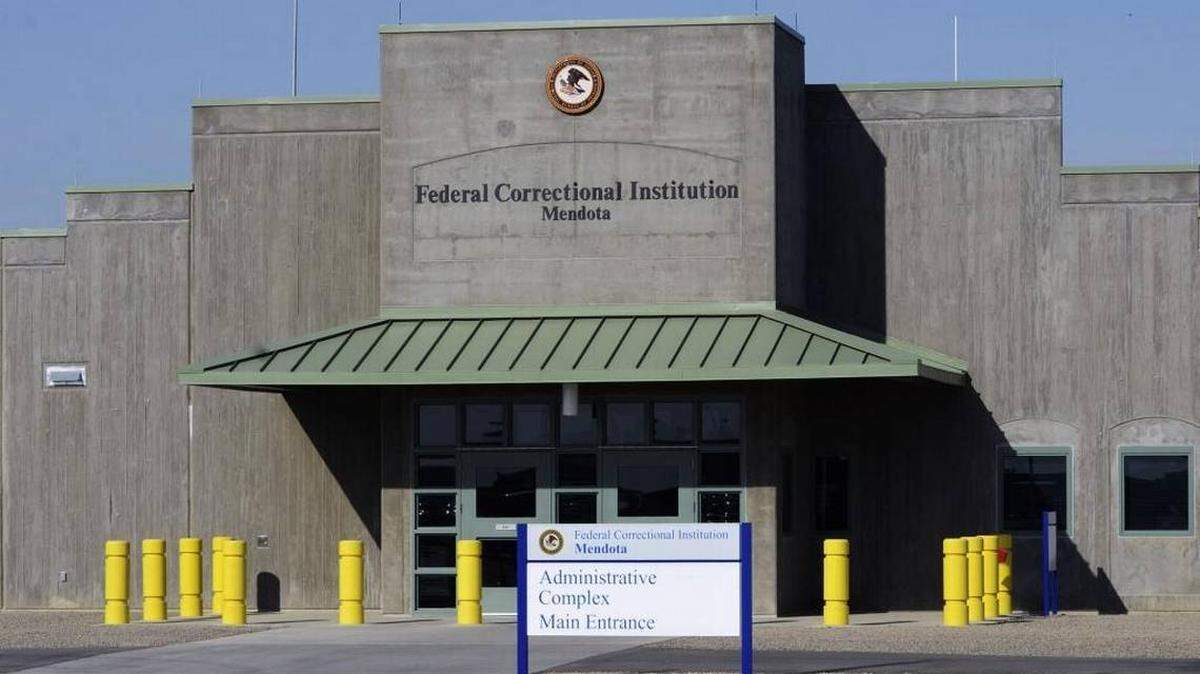
The Bureau of Prisons directed all federal prisons to reopen visitation for inmates by Oct. 3 in a memo sent to wardens on Monday, a move a representatives for correctional officers called “dangerous” and compared it to “opening Pandora’s box.”
The Bureau of Prisons suspended visitors coming to see inmates in March amid concerns over the COVID-19 pandemic. Six months later, it is directing wardens to open visitation under “non-contact only” rules.
“Social visiting will resume no later than Saturday, October 3, 2020, in accordance with the guidance below,” the memo states. “Wardens will immediately begin developing local procedures to reinstate social visiting.”
Nationwide rules include temperature checks for visitors, at least six feet of distance between all visitors and inmates, proper face masks and cleaning between each visitor.
Prisons are expected to allow fewer visitors than normal to follow social distancing procedures, but the memo directs officials to ensure all eligible inmates have the opportunity to have at least two visitors per month.
The Bureau of Prisons oversees facilities in nine California cities, including Atwater, Herlong, Lompoc and Mendota.
California also has 34 state-run prisons, which have suspended inmates visits since March and not released a plan to resume them.
Leaders of the unions for federal correctional officers have significant concerns about the visitation plan.
They question the timing of the decision, since it’s being instituted just as flu season begins and experts say the coronavirus pandemic may get worse.
And in order to ensure inmates all get at least two visits per month, visitation days could occur seven days per week, according to Aaron McGlothin, the union leader for employees at a federal prison in Mendota, 30 minutes west of Fresno. In normal times, visitation hours are only on weekends. That means more risks for exposure for staff. he said.
“I’m seeing a lot of anger,” said Joe Rojas, the Southeast regional vice president for the national prison union. “We’re coming to the flu season, there’s still a pandemic and then they’re putting up visiting.”
Rojas emphasized that he knew visitation was important to inmates and he does not want to remain closed to punish them. But “this is important for keeping them safe,” he said.
McGlothin said the Bureau of Prisons should try other methods first, such as allowing inmates to use Zoom or Skype to video chat with loved ones.
“I’m afraid we’re going to go through a meltdown, like at Lompoc, that we’ll have mass outbreaks just because they want social visits when they haven’t even tried other methods first,” McGlothin said, referencing the location of a federal prison where hundreds got infected earlier this year.
The federal prison in Lompoc on the Central Coast saw hundreds of COVID-19 infections earlier this year, according to the Lompoc Record.
Scott Taylor, a spokesman for the Bureau of Prisons, emphasized in a statement to McClatchy that visitation would remain “non-contact” and “enforced with social distancing.”
“We are committed to protecting the health and welfare of those inmates who are entrusted to our care, as well as our staff, their families, and the communities we live and work in,” Taylor said. “It is our highest priority to continue to do everything we can to mitigate the spread of COVID-19 in our facilities; therefore, every CDC recommended precaution will be incorporated into our visiting procedures.”
Coronavirus has killed 118 federal inmates and two Bureau of Prisons staff members, according to the latest numbers published on the bureau’s website. Of nearly 130,000 federal inmates nationwide, 12,000 have a had a positive coronavirus test at some point. The vast majority of those who have been infected have recovered.
The Centers for Disease Control and Prevention Director Robert Redfield warned in a WebMD interview on Wednesday that due to coronavirus and the flu season, which begins in October, American health officials are bracing for “the worst fall, from a public health perspective, we’ve ever had.”
Rojas also said while the memo lays out good guidance for reopening visitation, it’s not realistic for a lot of prisons. Most visitation areas, including at his prison, FCC Coleman near Orlando, do not currently have plexiglass to separate visitors, the top guideline for prisons to reopen visitation on the memo. The memo mentions nothing about additional funding to prepare federal prisons for visitations during the pandemic.
“It sounds good on paper but in reality it’s something different,” Rojas said. “It causes a lot of confusion among the staff.”
McGlothin said workers are installing plexiglass at his prison in Mendota, but he doesn’t think that’s good enough to prevent the spread of coronavirus to staff.
“The agency as a whole is missing the bigger picture,” McGlothin said. “At Mendota, we’re smack in the middle of the Central Valley where every zone is purple. We have visitors from Fresno, Sacramento — people come from Oregon, Arizona. They’re opening Pandora’s box.”
This story was originally published September 3, 2020 at 5:00 AM.
.jpg)