
Here’s how hard the coronavirus pandemic hit Black workers in California
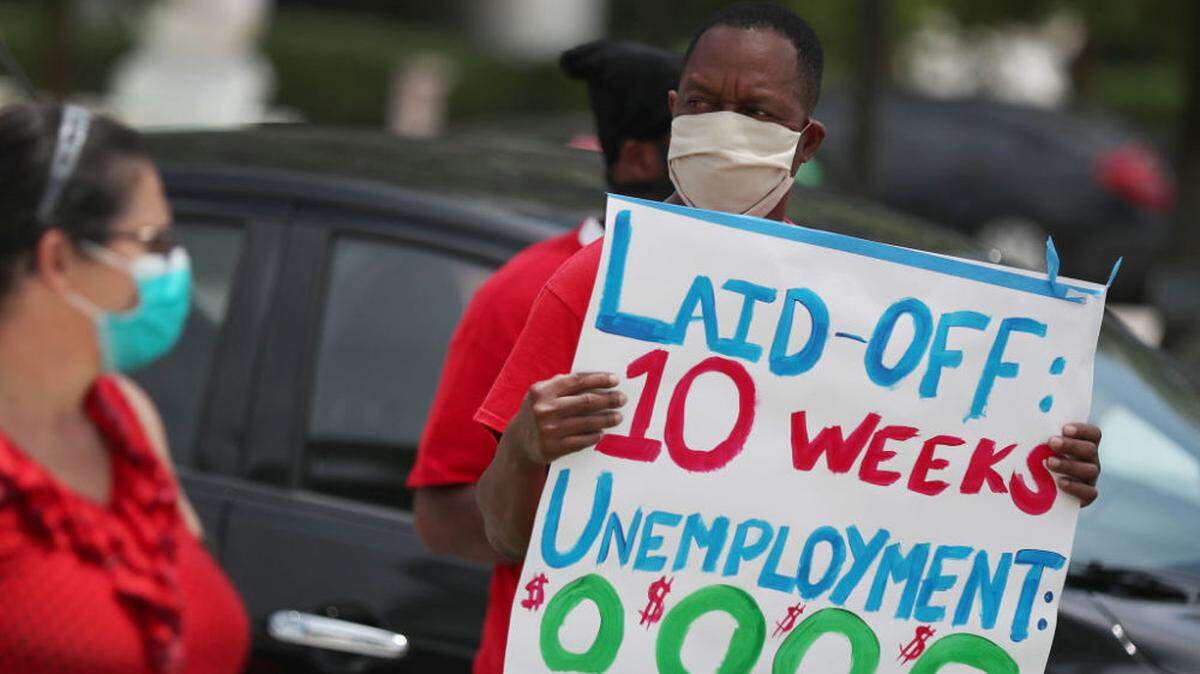
More than four of five Black workers in California have sought unemployment benefits during the covid pandemic — a rate nearly twice the state average.
A new report from the nonpartisan California Policy Lab, obtained by McClatchy Wednesday, illustrates dramatically how Black workers have been hit unusually hard by the coronavirus crisis.
“Black workers are less likely to work in the industries which have weathered the COVID-19 crisis well, and more likely to work in the sectors that COVID has wreaked havoc,” said Till von Wachter, the Lab’s faculty director.
They could feel an even greater impact in the weeks and months ahead.
Some unemployment benefits are scheduled to end in December, and for benefit programs that do survive, eligibility could be gone by the spring.
Among Black workers, the Lab found that more than about 28% of current claimants are expected to exhaust benefits by mid-May, higher than the 17.7% rate among whites.
Blacks have long endured higher unemployment rates than whites. Last month, the national unemployment rate for Blacks was 10.8%, while for whites it was 6%.
In California, 83.7% of Black workers have filed for unemployment benefits since the covid-19 pandemic sent the economy into a tailspin in March. The white rate is 38.5%, and the statewide average is 44.4%.
The Economic Policy Institute, a progressive research firm, studied black unemployment during the pandemic. There are three main groups of workers in the COVID-19 economy, said a report from Elise Gould, a senior economist, and Valerie Wilson, director of the institute’s program on race, ethnicity and the economy.
One group of people has lost their jobs and faces economic insecurity. Another involve people classified as essential workers and face health insecurity as a result. The third can continue working from the safety of their homes.
“Unfortunately, black workers are less likely to be found in the last group,” the researchers found.
Nationwide, Black workers make up over 12% of the labor force, but make up less than 9% of workers in the computer and mathematical occupations, areas where they could likely move to remote work, and just above 8% of management occupations - one of the sectors most insulated from the crisis.
Blacks have also suffered from the coronavirus at higher rates than whites, so “it’s not unexpected that the (unemployment) numbers are staggering,” said Michael Graetz, a former Treasury Department official and author of The Wolf at the Door: The Menace of Economic Insecurity and How to Fight It.
The Lab found another source of gloom: People are not as optimistic that they can return to their jobs.
When someone seeks unemployment benefits, they’re asked if they anticipate returning to their job. In mid-to-late October, 60% of filers said they expected to be recalled.
The study found that was “a noticeable decrease” from September’s 80% recent peak.
“People are discouraged,” said Douglas Holtz-Eakin, president of the American Action Forum, a center-right economic research firm.
The different numbers illustrate how many employers had figured any layoffs would be over by now. Instead, another COVID-19 wave is triggering a new series of tight restrictions.
“It’s easy to see a circumstance in April where the boss said, ‘Go for eight weeks. I’ll close the place down, then we’ll be back in business,” said Holtz-Eakin. “Now the job is often really done.”
California’s unemployment rate in September was 11%, the nation’s 3rd highest.
Many California metropolitan areas rank among the 25 highest jobless rates in the nation, including Modesto, Fresno, Merced, Stockton-Lodi, Bakersfield, Visalia-Porterville, Los Angeles, Hanford-Corcoran, Riverside-San Bernardino, Yuba City and El Centro,
This story was originally published November 19, 2020 at 5:00 AM.
.jpg)