
Did ‘I-5 Strangler’ have more victims? How detective tried for years to pry a confession
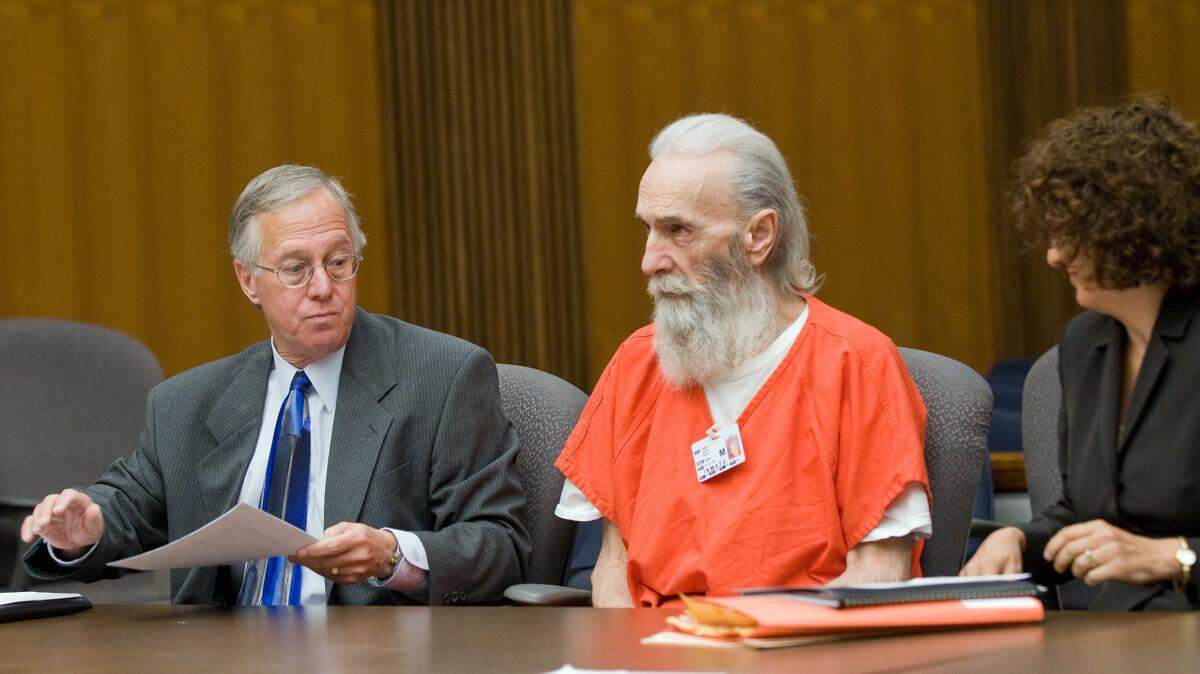
They’d pull up to the McDonald’s drive-thru and place an order for the serial murderer in the backseat.
At breakfast time, they’d buy an egg McMuffin and a Coke for the man who raped and strangled at least seven women with his bare hands and a homemade garrote. At lunch, the man known as the I-5 Strangler would want another Coke and a hamburger and fries.
“We had tinted windows, so they couldn’t see who was in the back or anything. And it didn’t look anything like a police vehicle whatsoever,” said Vito Bertocchini, a retired San Joaquin County sheriff’s detective and district attorney’s investigator. “If the people inside only knew the cargo that we had.”
Satisfying Roger Reece Kibbe’s fast food cravings as the detectives took him on trips outside of prison to look at where he had dumped the bodies of his victims was one of the ways Bertocchini spent nearly two decades trying to ingratiate himself to the killer. The hope was Kibbe would eventually confess to killing more women than his seven known victims.
Those hopes ended early Sunday morning when a guard at Mule Creek State Prison found Kibbe, 81, laying on the floor of his cell. His cellmate, another convicted murderer, was standing over him.
The Amador County Sheriff’s Office announced Wednesday that Kibbe — the I-5 Strangler — was himself strangled to death. Kibbe’s cellmate was Jason Budrow, 40, a self-described Satanist and sex offender with a “666” tattoo over his right eyebrow. He was convicted in 2011 of strangling his then-girlfriend in Riverside County.
District Attorney Todd Riebe said Wednesday he hadn’t yet received the investigative files so he couldn’t comment on any potential charges for Budrow.
Bertocchini believes there’s no way Kibbe stopped murdering and raping women in a decade-long gap between his first known murder in 1977 and the 1986-1987 killing spree that left him forever known as the I-5 Strangler.
If Bertocchin’s suspicions are true, Kibbe would have been one of the most prolific serial killers in the state, though he is overshadowed by other notorious serial murderers from that era including Ted Bundy and the Sacramento-area’s Golden State Killer, Joseph DeAngelo.
How many Jane Does are Kibbe’s victims? How many of his victims’ bodies were never found?
Bertocchini spoke to The Sacramento Bee for nearly an hour on Monday after prison officials announced Kibbe had been killed the day before. For the retired detective, it was a chance to reflect on the untold hours he spent thinking of those victims, the horrors Kibbe put them through, their families and the now-dashed hopes that Bertocchini could persuade the aging serial killer to confess to more killings before he died behind bars.
The Kibbe case so consumed the detective that he persuaded California lawmakers to pass a law that allowed Kibbe, who murdered victims in different counties, to stand trial in just one, saving the victims’ families from having to relive the horrors in each separate trial. The same law was used last year to try DeAngelo, also known as the East Area Rapist, in Sacramento County for 13 murder counts and a series of rapes he committed across California from 1974 through mid-1986.
For Bertocchini, who continued reaching out to Kibbe after he retired in 2012, Kibbe’s death means he now no longer has to appear to be nice to a man who made his skin crawl, a man Bertocchini said was so evil he likely strangled his victims and “then let them come back to life and then strangle (them) again,” he said.
“I think he toyed with them.”
Finding a serial killer
When he was arrested in 1987, Kibbe lived in Citrus Heights and ran a storage business and he once made and sold furniture. The Sacramento Bee reported in 1988 that his then-wife, Harriet, described Kibbe as “the kindest, sweetest person in the world.”
Kibbe was fond of skydiving, and had a younger brother who was a homicide detective in Nevada.
So no one suspected Kibbe had been killing women since at least 1977, leaving his signature with their corpses — random cuts in their clothing with a pair of scissors, a habit he’d picked up as a child from stealing women’s garments off clotheslines and then cutting them off his body with his mother’s nursing scissors. He eventually graduated to doing that to the women he raped and murdered.
In 1986 and 1987, detectives across the region kept finding Jane Does, most strangled and one stabbed, with the telltale cuts on their clothes. Some were sex workers. Kibbe kept officers off his tracks because he would remove all identifying information and would dump the bodies in jurisdictions away from their home counties.
“And so these (detectives) in neighboring counties had no idea that this person is this county’s missing person, a woman whose name they knew, often whose car was found abandoned on the highway … that she was missing,” said Bruce Henderson, the author of “Trace Evidence: The Hunt for an Elusive Serial Killer,” a book about the I-5 Strangler investigation.
Eventually, legendary Sacramento County Sheriff’s Detective Ray Biondi launched a multi-jurisdictional task force that linked Kibbe to the killing spree, but it was only because an officer happened to be nearby when Kibbe attacked what would be his final victim that the serial killer ended up in custody.
On Sept. 14, 1987, Kibbe had picked up a 24-year-old sex worker and drove her to a parking lot at Haggin Oaks golf course in Sacramento.
“He reaches over, grabs her by the hair and starts slamming her head into the dash,” Bertocchini said.
As she struggled, he tried to put handcuffs on her, but the woman was able to get out of the vehicle and flag down an officer.
As the officer pulled Kibbe over, the officer spotted him toss something out the window — a plastic bag. Inside, was a garrote fashioned out of a pair of dowels and some parachute cord, a pair of scissors, a sex toy, some women’s hair ties and a pair of handcuffs, Bertocchini said.
Detectives like Bertocchini would later call it his “killing kit.”
The rope — and specifically what was on it — would later prove to be one of the keys to Kibbe’s first murder conviction.
Fear of death penalty spurs confessions
Earlier in 1987, Kibbe murdered 17-year-old Darcie Rene Frackenpohl, a Seattle runaway whose body was found near Highway 50 in the Echo Summit area. Detectives found a parachute cord with Frackenpohl’s body that appeared to match the cord in Kibbe’s killing kit.
But it was only when both sets of rope, along with rope detectives found in his home during a search, were examined under a microscope that it became clear all the rope was Kibbe’s. Bertocchini said there were microscopic spatters of red paint on all three sets.
“The odds of that were just phenomenal to have specks like that on all three pieces, Bertocchini said.
It was part of the evidence that detectives used to charge Kibbe in 1988 with Frackenpohl’s murder, just two days before he was to be released from the Sacramento County jail for his attack on the sex worker.
Detectives across the region suspected Kibbe of killing at least seven other women, but he wouldn’t admit to it. They had no other evidence to link him to the crimes, other than the bizarre cuts on some of their clothing and the similar ways they were bound.
Then in the early 2000s, after substantial advancements were made in forensic DNA technology, Bertocchini began submitting DNA evidence to state crime labs in the hopes he’d get a match.
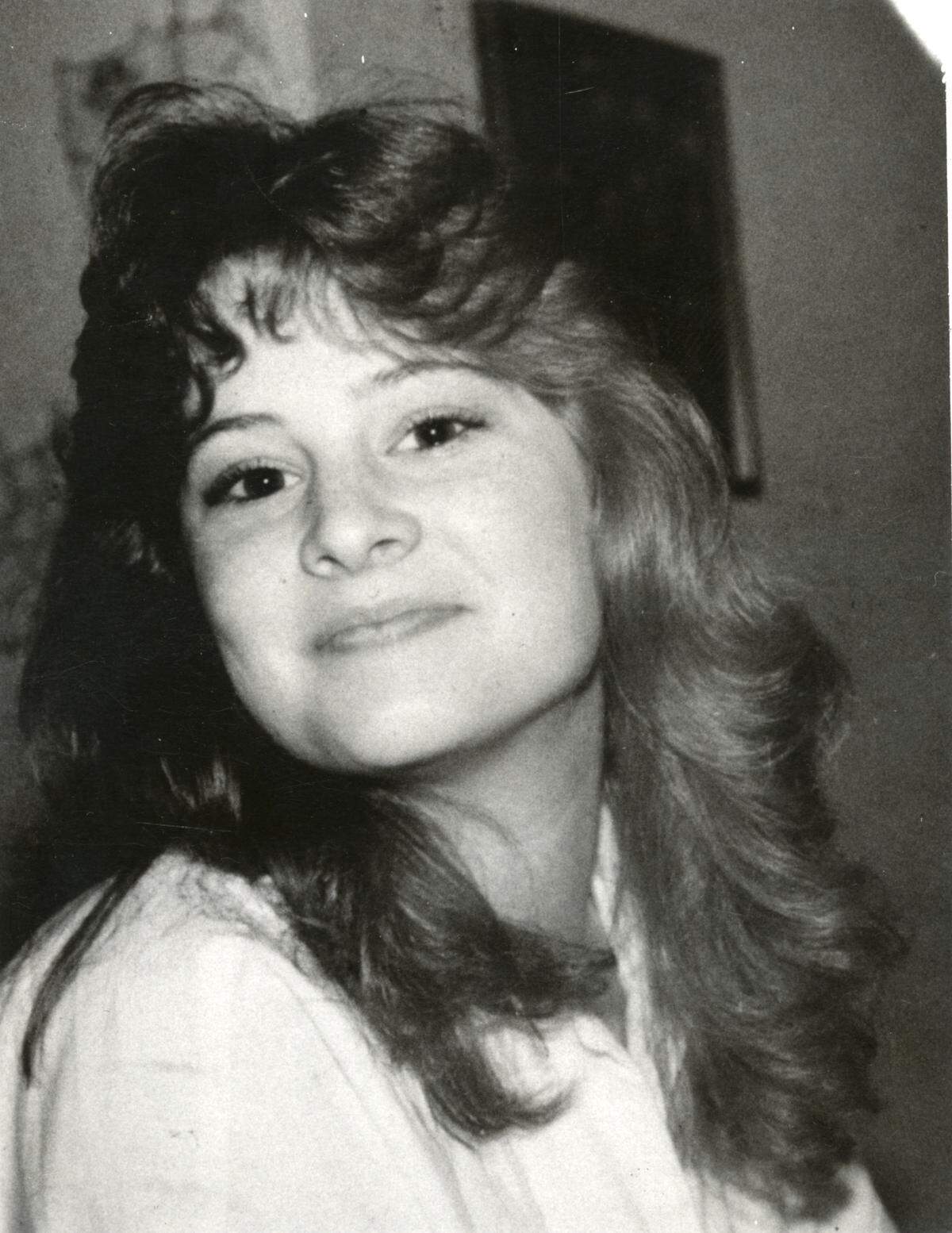
Two matches eventually came back — Kibbe’s DNA was on a Sacramento woman named Stephanie Brown, 19, whose strangled and raped body was found the morning of July 15, 1986, in a ditch beside Highway 12 near Terminus Island.
The other was Barbara Ann Scott, 29, who was kidnapped in Pittsburg, her body found near an Antioch golf course.
With the new evidence, Bertocchini went to interview Kibbe in prison.
“I said, ‘Well, you know, I got you on a couple more cases, and we’re going to file special circumstances.’ ” Bertocchini said. “He says, ‘Ok, I tell you what. If you don’t seek the death penalty, I’ll tell you about the ones that I did.’ ”
He eventually confessed to killing not just Scott and Brown, but also Lou Ellen Burleigh in 1977, and the 1986 murders of Charmaine Sabrah, Katherine Kelly Quinones and Lora Heedrick.
Not long after, Bertocchini found himself buying hamburgers and McMuffins for a serial killer.
Day trips for bodies
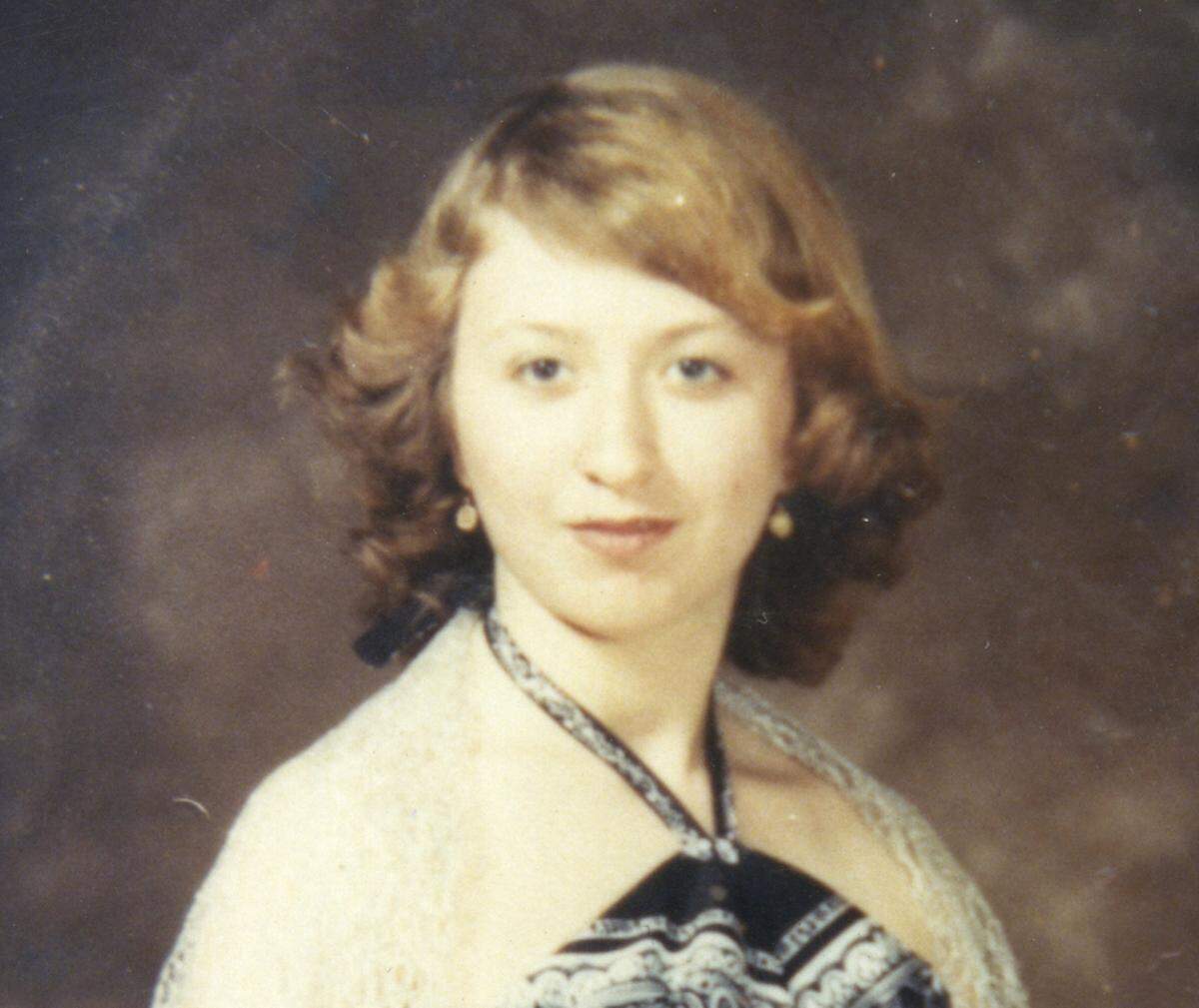
Burleigh, 21, left her Walnut Creek home in September 1977 for a job interview, and never came back.
Kibbe confessed to luring her into a van to discuss a cosmetics job, saying his office was under construction. He then tied her up, drove her to the Lake Berryessa area where he raped and killed her before dumping her body in a dry river bed.
There was only one problem: When detectives searched the area, they couldn’t find her body. They needed Kibbe to take them there.
Bertocchini got special permission from a judge to allow for Kibbe to be escorted out of the prison. For seven straight days, Bertocchini and his partner, Petter Rosenquist, would drive Kibbe, tailed by another car, to the Berryessa site and to other locations where bodies had been found.
They were never able to locate Burleigh’s remains, despite at one point taking Kibbe up in a helicopter to look at the area from above.
The reason why was because in the two decades since the murder, much had changed. There’d been floods and the access road to the site had been bulldozed. Her remains were buried or scattered.
Burleigh wasn’t found until 2011, when a Napa County sheriff’s deputy found a bone fragment in a creek near where Kibbe confessed to leaving her body.
“Every day he was getting his McDonald’s fix,” Bertocchini said. “That’s what he wanted. Every day. And we were trying to keep him happy and just as elicit as much information as we possibly could.”
At one point, during those day trips, the detectives took Kibbe to where they found 25-year-old Karen Finch’s body in 1987 — a canal near Sloughhouse in Sacramento County.
Bertocchini believed Finch was one of the victims Kibbe killed but he wouldn’t confess to it.
As they approached the site, Kibbe said, “‘This looks very familiar here. This is familiar. Yeah, this is familiar.’ ” Bertocchini said. “And he even gets a little bit more excited right there close to where we stopped, along a bridge right where her body was found. And then I think he realizes what he said. ‘I don’t know this. I don’t know this area.’ ”
And that was that. Kibbe never admitted to killing Finch, despite her having his telltale scissor cuts on her clothing. Bertocchini has a theory about why. Finch had been stabbed, likely because she fought back.
“He’s told us before that in his mind, strangling, they just sort of go to sleep,” Bertocchini said. “Stabbing is violent.”
Bertocchini noted the irony Wednesday at the announcement that Kibbe had been strangled.
“I wonder if he felt like it was just like going to sleep,” the detective said in a text message.
Was prison killing justice?
Bertocchini believed at least one other case matched Kibbe’s methods — the disappearance of a 15-year-old Stanislaus County girl, but Kibbe would never confess to that either.
“He says, “‘Oh no, I wouldn’t do that because I’d be a child molester,’ ” Bertocchini said. “Well, he knows if he goes to prison as a child molester, he’s going to have, you know, problems.”
If Kibbe ever confessed to that crime and others it would bring some measure of peace to the victims’ loved ones, so it meant Bertocchini had to stay on good terms with an unrepentant monster.
Every year, Bertocchini would send Kibbe birthday and Christmas cards with a note that said to give the detective a call if he remembered anything. As a result, Kibbe’s date of birth — May 21, 1939 — is forever seared into Bertocchini’s mind.
“That’s one of the birthdays I, unfortunately, remember,” he said.
He also continued to visit Kibbe from time to time, even after he retired in 2012. The most recent was a visit to Mule Creek prison in late 2019 with Bertocchini’s former partner, Rosenquist.
But in an hour and a half conversation, Kibbe clammed up and didn’t confess to any more murders, though he did tell the detectives he’d think on it.
Then COVID-19 hit and prison visits ended, and then Kibbe was found dead Sunday morning in his cell.
Bertocchini got the news that day. Though disappointed Kibbe won’t be able to name any more of his victims, he called his death “some fitting justice.”
“I don’t wish ill on anyone,” Bertocchini said. “But I hope he remembered every one of his victims while he was being killed.”
This story was originally published March 3, 2021 at 5:00 AM.