Video shows iconic Pismo clams being crushed by cars at Oceano Dunes
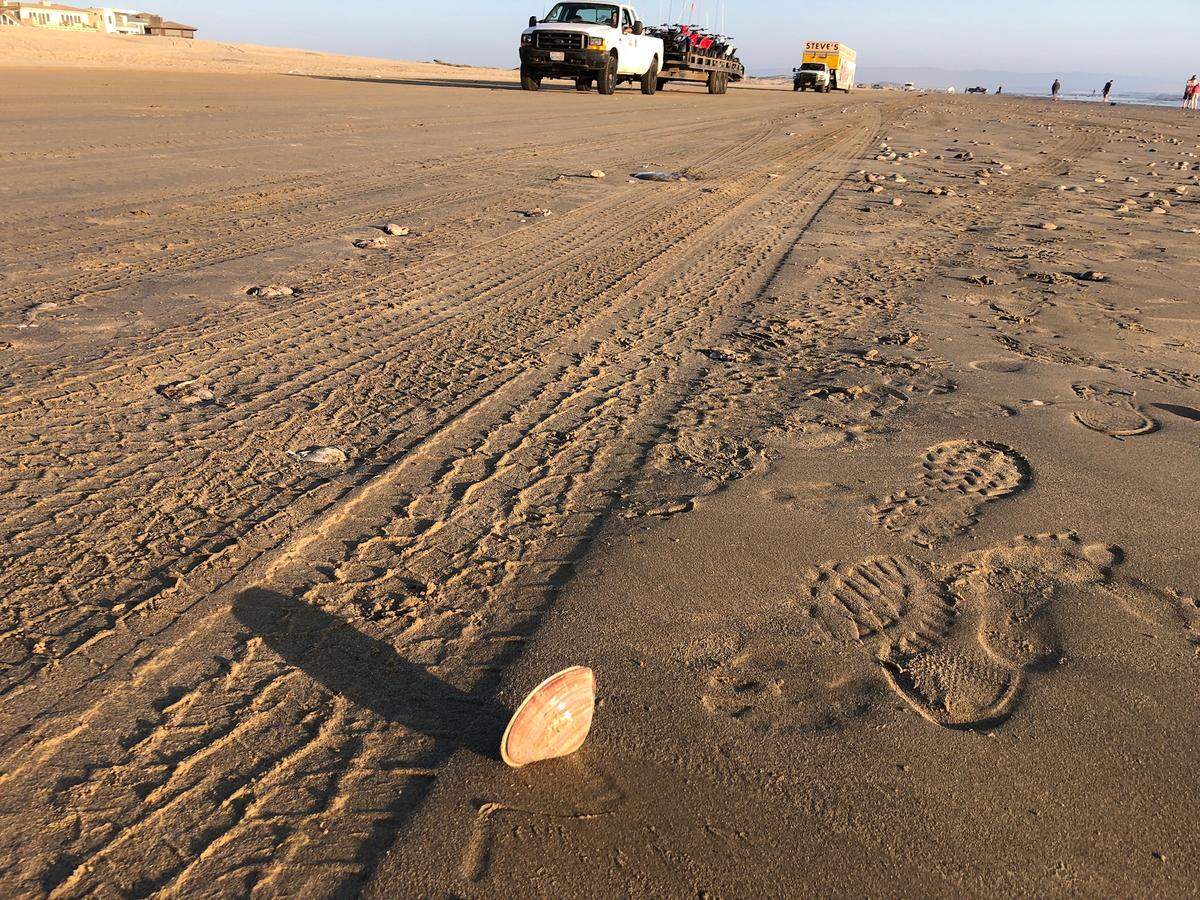
Vehicles driving on the sand to and from the Oceano Dunes crushed countless Pismo clams exposed on the surface of the beach, a video taken two weeks ago shows.
The audible popping and cracking sounds of the hundreds, if not thousands, of surfaced Pismo clams can be heard as a truck drives over them in the video taken the evening of Aug. 10 at Pismo State Beach.
The video, which was taken by Oceano resident Bonita Ernst, then shows evidence of the clams’ meat completely mashed between the cracks of the shells.
Ernst said she regularly walks along Pismo State Beach, but on Aug. 10, she’d “never seen so many clams out there, it was incredible.”
She quickly began taking photos and video of cars driving over the clams, which she said shocked her. The video has since been posted to the Ocean Beach Community Association’s YouTube page.
“That video shows the careless, reckless and unnecessary destruction of a species that is trying to return,” said Mona Tucker, chair of the yak tityu tityu yak tiłhini Northern Chumash Tribe of San Luis Obispo County and region, who watched the video.
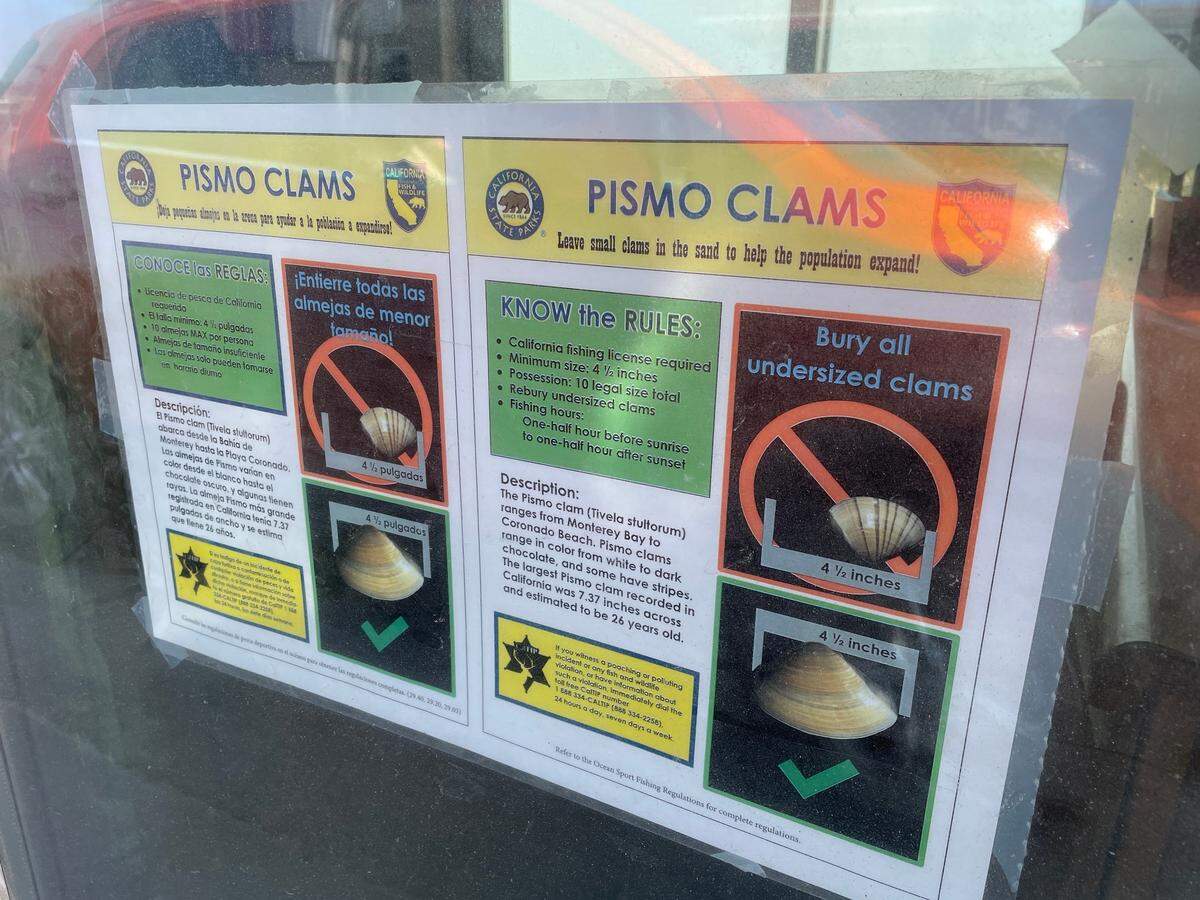
The “more than iconic” Pismo clam, as Tucker described it, has recently seen a resurgence in numbers after a near total die-off in the 1990s. Most of the clams found on the beaches in San Luis Obispo County today are much smaller than the 4½-inch clams that can be legally harvested, however.
According to the California Coastal Commission and Department of Fish and Wildlife, this is the first video evidence they’ve received of the cars crushing the clams, but both agencies have received multiple reports of such damage in the past.
The Coastal Commission has forwarded the reports to Fish and Wildlife and State Parks, which are in the best position to impose any enforcement action or resolution quickly.
“California State Parks continues to work closely with the California Department of Fish and Wildlife on the protection of Pismo clams at Oceano Dunes SVRA and Pismo State Beach,” wrote Gloria Sandoval, deputy director of public affairs for the agency, in an email to The Tribune in response to the video.
“The Oceano Dunes District will continue to educate visitors about avoiding stranded clams and develop safe driving patterns,” the statement continues. “We ask the public to immediately report any disturbances to park staff so that they can respond accordingly. Together, we can continue to protect the natural resources found at Oceano Dunes SVRA and Pismo State Beach.”
The Tribune also received a photo taken on Aug. 19 of a dead baby seal lying with its stomach split open on Pismo State Beach near the Grand Avenue vehicle ramp. Reportedly, a car ran over the seal while it laid on the beach, although it’s unknown whether the seal was alive or dead at the time.
State Parks warns about clams
While driving and walking around the park on Tuesday, a Tribune reporter found that there was little signage warning visitors of the clams that may be present on the beach and impact their driving.
On Wednesday, an electric sign posted at each vehicle entrance of the beach flashes “Pismo clam alert!” Other signage posted at the entrance stations informs visitors that Pismo clams are on the beach, and asks them to “leave small clams in the sand to help the population expand.”
When asked, the State Parks employees at the entrance stations said drivers should stay in the dry sand when possible and to avoid the clams on the beach if spotted. One employee said no one has ever asked about the clams before, and he didn’t know much about them.
Sarah Christie, the legislative director for the Coastal Commission, said that agency staff has viewed the video and “found it to be very disturbing.”
The law enforcement division of the California Department of Fish and Wildlife “has no experience with clams being run over at this level ever before (in current staff memory),” wrote Jordan Traverso, a spokeswoman for the agency, in an email to The Tribune.
Biologists at the department theorize that the red tide occurring in the Pacific Ocean off the Central Coast may be why so many clams left their burrows in the sand and surfaced on the beach, Traverso wrote. A red tide is caused by a bloom of phytoplankton in the ocean.
The department has considered such “take” — which means to “hunt, pursue, catch, capture, or kill, or attempt to hunt, pursue, catch, capture, or kill” a species — to be incidental for Pismo clams at the off-roading park, Traverso wrote.
Cars prohibited from driving below mean high tide line
Cars driving along Pismo State Beach, many of which are traveling to and from Oceano Dunes State Vehicular Recreation Area, typically drive below the mean high tide line on the wet sand. Above the mean high tide line, the dry sand is softer — making it much more difficult to drive and much easier to get stuck.
But that’s where cars are supposed to drive.
The California Coastal Commission officially banned cars from driving below the mean high tide line in its March 18 vote to amend the park’s Coastal Development Permit, which governs the land use for the park per the California Coastal Act.
Specifically, the permit for the park now reads “all areas below the mean high tide line shall be off-limits to all vehicular forms of access.”
The video showing the clams getting crushed was taken between 5 and 6 p.m. on Aug. 10, Ernst said, which was during a low tide event, according to the National Oceanic and Atmospheric Administration water levels for Port San Luis, which are generally reflective of Central Coast tide levels.
This means that by allowing cars to drive below the mean high tide line, State Parks has directly violated the Coastal Commission’s coastal development permit for the park and therefore the Coastal Act.
Whether any action will be taken by any of the three agencies is unclear.
“It appears that people are probably unwittingly contributing to the very slow return of the Pismo clam population,” Tucker said. “I’d like to see State Parks do more to educate people regarding proper treatment of the Pismo clam to leave them alone. We have to rely on them to inform the visitors.”
This story was originally published August 25, 2021 at 4:20 PM with the headline "Video shows iconic Pismo clams being crushed by cars at Oceano Dunes."