Kristin Smart murder case against Paul and Ruben Flores will head to trial, judge rules
After a nearly two-month-long hearing, a San Luis Obispo Superior Court judge on Wednesday ruled that the case against Paul and Ruben Flores will move toward trial for the 1996 disappearance of Cal Poly freshman Kristin Smart.
Paul Flores, 44, is charged with murder. His father, 80-year-old Ruben Flores, is charged with accessory after the fact.
Superior Court Judge Craig van Rooyen said in court that he found the prosecution presented sufficient evidence to proceed the case toward trial.
Audible gasps were heard from the section of the audience where Smart’s family, including parents Stan and Denise Smart, sat with about a dozen others.
The two co-defendants will now proceed to the pretrial phase, with an in-person arraignment scheduled for Oct. 20.
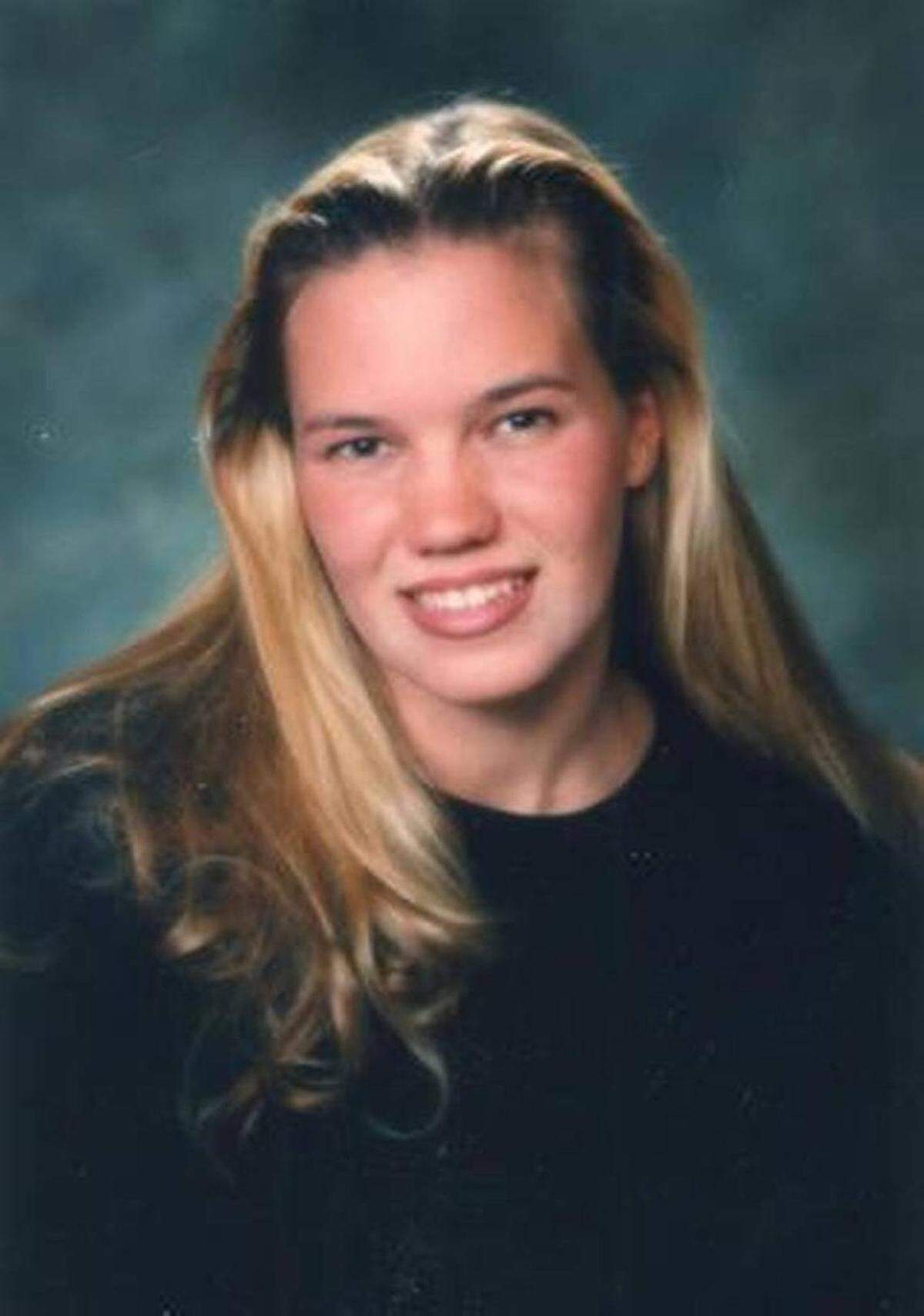
Paul Flores is the last person known to have seen then-19-year-old Smart alive after walking her back from a party toward the Cal Poly campus dorms on May 24, 1996. Her body has never been found.
Ruben Flores is accused of helping his son concealing her body under the deck of his Arroyo Grande home and recently removing the remains.
The preliminary hearing began Aug. 2 and lasted a month and a half, with 22 days of testimony and arguments.
Judge explains his ruling
Van Rooyen, who was tasked with ruling whether the prosecution established probable cause to move the case to trial, heard testimony from three dozen prosecution witnesses — including several investigators, forensic specialists, cadaver dog handlers, attendees of a house party attended by Smart, former Cal Poly students and Paul Flores’ former girlfriend.
The defense did not call any witnesses.
Probable cause is a lesser standard of proof than guilt beyond a reasonable doubt, which a jury must use at trial.
Van Rooyen explained in his ruling that he has a “strong suspicion” that Smart was murdered and buried under Ruben Flores’ deck.
“Whether there’s proof beyond a reasonable doubt, that’s for a jury to decide,” van Rooyen said.
Among the evidence that he found convincing, the judge said that Paul Flores minimized his contact with Smart the night of the party, and was aware of her intoxication.
Flores was the last person seen with Smart, van Rooyen noted, and his residence hall was near where she was last seen. Evidence showed Smart never returned to her room.
Van Rooyen added that the defense’s assertions that Smart had disappeared in the past don’t account for her going missing for 25 years.
The judge noted that a retired Cal Poly detective testified that Flores had a black eye when he was interviewed three days after Smart’s disappearance.
Flores told investigators that he sustained the black eye while playing basketball, while one of Flores’ friends testified that the defendant he didn’t have a black eye on the day they played basketball.
Flores’ comments about the black eye showed his “consciousness of guilt,” van Rooyen said.
The judge also cited the four cadaver detection dogs that alerted to Flores’ former dorm room, noting that the defense called no expert witnesses to refute the science behind human remains detection.
Finally, van Rooyen addressed the digs investigators conducted at Ruben Flores’ house that revealed disturbed soil the size of a body, as well as staining in the soil and traces of human blood.
“Nothing links it definitively to Ms. Smart” due to lack of DNA, but it leads to a reasonable suspicion that Smart was buried there, van Rooyen said.
The judge said that Flores had control of the Arroyo Grande property, which again leads to “a strong suspicion it was Ms. Smart’s remains.”
If convicted, Paul Flores could face life in prison. He will remain in custody at the San Luis Obispo County Jail without bail through the trial.
If convicted of the charge against him, Ruben Flores faces up to three years in jail. He remains out of custody after posting $50,000 bail in April.
This story was originally published September 22, 2021 at 9:07 AM with the headline "Kristin Smart murder case against Paul and Ruben Flores will head to trial, judge rules."