
An endangered California wolf became roadkill, highlighting a major risk for wildlife
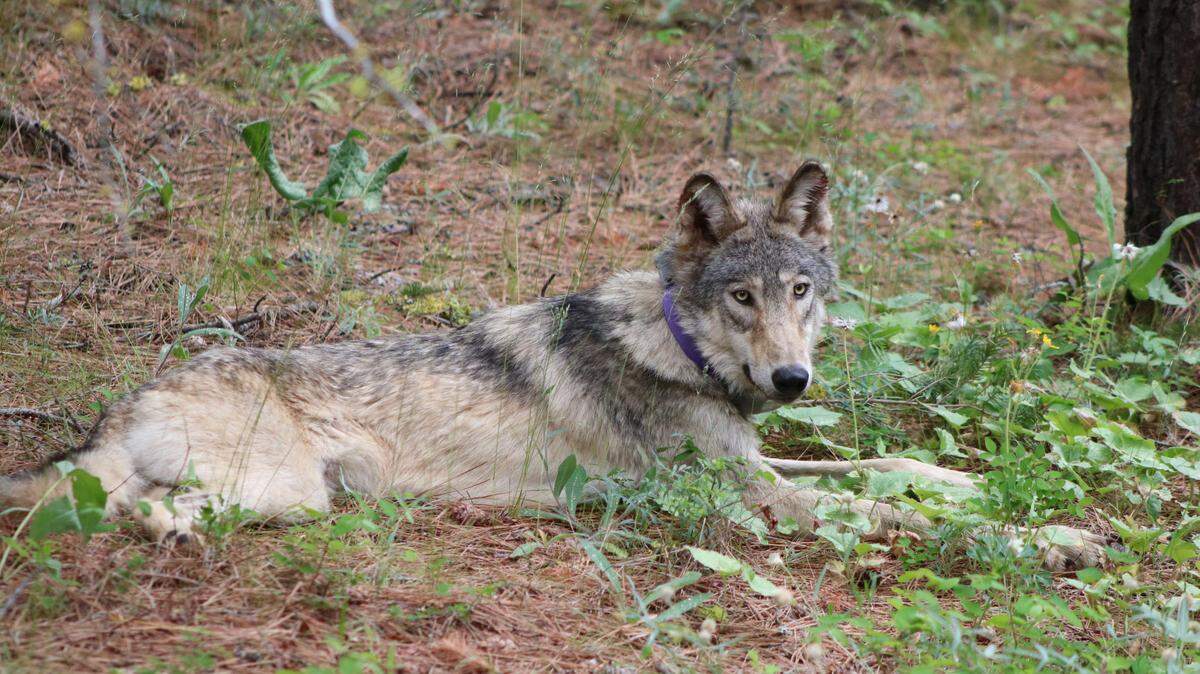
The death of a young wolf earlier this month along a busy Southern California freeway illustrates a significant challenge that wolves — and other far-wandering wildlife — face as they try to navigate a state bisected by some of the country’s most traveled roadways.
State wildlife officials announced Wednesday that a truck driver on Nov. 10 discovered the corpse of the wolf known as OR93 near a frontage road running parallel to Interstate 5 near the Kern County town of Lebec.
State veterinarians determined that the wolf had died after being struck by a vehicle. The collision ended the journey of what had been the furthest south any known wolf had traveled into California since they’d been shot, poisoned and trapped to extinction nearly a century earlier.
The wolf was born in 2019 to the White River pack near Mt. Hood in Northern Oregon. Biologists in that state had trapped him and put a GPS-tracking collar around his neck. The number “93” indicates he was the 93rd wolf captured and collared in that state.
OR93 quickly captivated California’s wildlife watchers as he began a remarkable southern journey, after his collar showed on Jan. 30 he traipsed from Oregon into Modoc County in the northeastern corner of California.
In the years since OR7 in 2011 became the first known wolf to venture into California in nearly a century, more than 40 wolves have passed through, settled or been born in California. Almost all of them have stayed in a remote, five-county region about the size of West Virginia in California’s northeastern corner.
But in just a few months, OR93 headed further south into California than any other known wolf, crisscrossing at least 18 counties as he traveled hundreds of miles on his lonely search for a mate or a new pack.
His collar stopped working in San Luis Obispo County in April. Biologists lost track of him until August, when a rancher in Kern County got a photo of him on a motion-activated trail camera set up at a livestock watering trough.
He was spotted again in September in Ventura County.
Advocates call for more wildlife crossings
That he died a few weeks later along a major freeway is not particularly surprising, given OR93 had pushed his luck on and around highways several times as his wanderings took him along Interstate 80, I-5, highways 99 and 101 and other busy roads.
OR93’s death highlights the dangerous problem migratory wildlife face in America’s most heavily populated state with its hundreds of thousands of miles of roadways.
A report released this month by UC Davis Road Ecology Center estimated that as many as 88,000 to 220,000 deer alone may have been struck by cars between 2016 and 2020.
Tens of thousands of other animals, including hundreds of bears and mountain lions, died along roads during the same period. UC Davis researchers estimate these wildlife collisions cost Californians $1 billion over five years.
The wrecks and roadkill alone aren’t the only worries. The freeways themselves also can prove an impassable barrier for certain at-risk species.
For instance, research shows that mountain lions in Southern California are exhibiting troubling signs of genetic anomalies from prolonged interbreeding, due to isolated populations of pumas being hemmed in by deadly freeways such as Interstate 15, Highway 101 and Interstate 405.
The UC Davis researchers say building wildlife-proof fencing along highways and special tunnels or bridges to allow wildlife to cross certain deadly stretches of road may cost taxpayers hundreds of millions of dollars up front, but the preventative measures pay for themselves over time by reducing expensive and potentially deadly vehicle collisions.
It’s a problem the state and the federal governments are increasingly having taxpayers pay to fix.
President Joe Biden’s infrastructure bill allocates $350 million over five years so that state, local, and tribal governments can construct wildlife crossings. It’s unclear how much of that money will go to California.
In October, Gov. Gavin Newsom signed a budget that includes more than $61 million to help build wildlife crossings in California.
Meanwhile, next year California will begin construction on a wildlife bridge over the 10 lanes of U.S. 101 in the Santa Monica Mountains of Southern California, home to some of those mountain lions suffering from inbreeding.
This story was originally published November 25, 2021 at 1:22 PM.