
She grew up in foster care. Now this Latina trailblazer opens doors in California colleges
This story is part of the Central Valley News Collaborative — a bilingual, community journalism project funded by the Central Valley Community Foundation and with technology and training support from Microsoft Corp. The collaboration includes The Fresno Bee, Valley Public Radio, Vida en el Valle, Radio Bilingüe and the Institute for Media & Public Trust at Fresno State.
For Daisy Gonzales, who grew up in the foster care system in the San Fernando Valley, school was always a safe haven.
Gonzales regularly moved in and out of group homes, child care facilities and her parents’ house throughout her childhood. She immersed herself in her studies to avoid the abusive and unstable environment of her home life.
“I always knew that school was safer than any other place could be because my home was not,” she said.
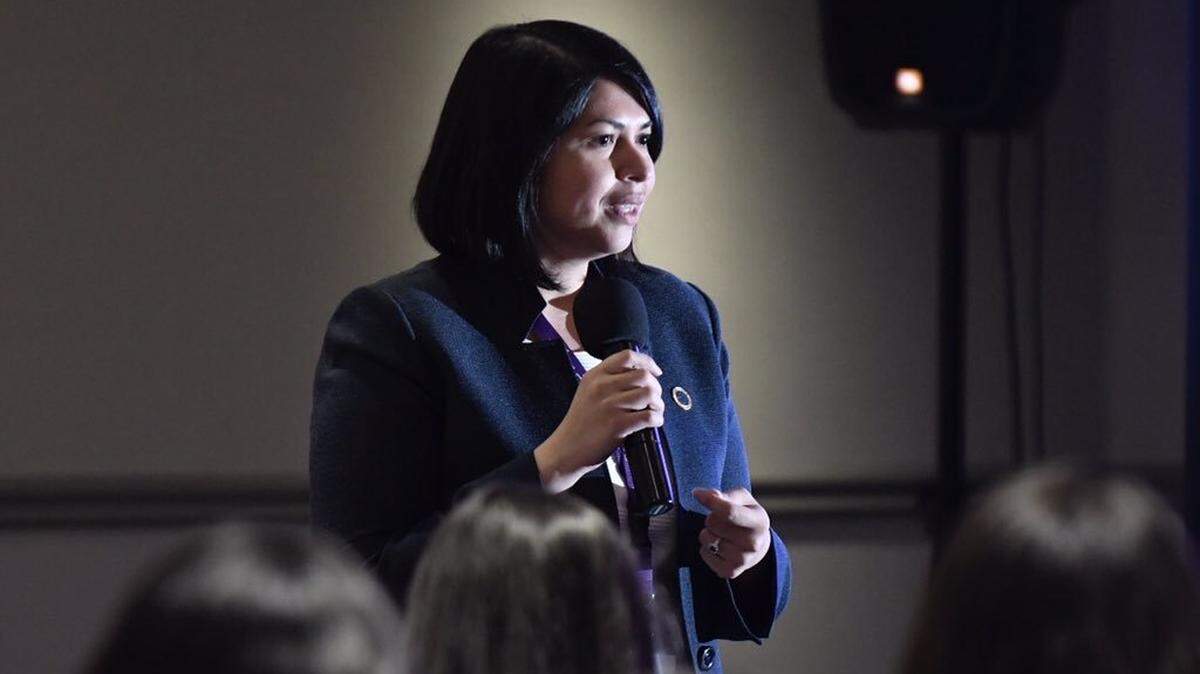
Gonzales went on to study at Mills College in Oakland and the University of California, Santa Barbara as she pursued a career in education. She is now the first Latina to serve as deputy chancellor of the California Community Colleges Chancellor’s Office and is responsible for creating educational policies for the state’s 116 community colleges. She also became the first Latina to serve as acting chancellor of the state’s community college system in 2021.
Gonzales is now focused on bridging achievement gaps, boosting transfers to four-year universities and providing the right job skills to Latinos to achieve upward economic mobility. Latinos make up 43% of all undergraduate students in the state’s public institutions, according to a 2021 report from The Campaign for College Opportunity.
The Fresno Bee interviewed Gonzales on Feb. 14 to learn more about her goals for Latinos enrolled in California’s community colleges. This interview was edited for length and clarity.
Q: How has your background influenced your decision to pursue a career in education?
A: My parents came from Jalisco and Zacatecas, Mexico. My mother’s highest educational attainment was second grade and my father never attended school. I grew up in a really big family, but there was a lot of violence and abuse. I spent most of my childhood in and out of the foster care system and finally at the age of 13, I decided to stay in the system.
I learned early on that an education was really important. When I was in third grade, I was the only one at home that could write in cursive, so my mom would make me sit down and write all the checks for the bills. It really was those small moments that instilled in me the importance of education. The ability to write in cursive, knowing how to add and subtract — those are really important skills for an immigrant family and more importantly to have in your life.
But what really helped me stay focused and motivated me to pursue education were my experiences in the foster care system. I would hear every day that there were only three things that could happen to me by the age of 16: I would end up pregnant, dead or in prison. But I really loved school and I remember thinking that those three things couldn’t be my only options.
Q: How has COVID-19 impacted Latino community college students?
A: The pandemic has been very difficult on many different students, but particularly our Latino students. We see a lot of our students struggling. I’ve seen a lot of students who are dealing with basic needs like housing and food insecurity. We are seeing declining enrollment. One of the biggest challenges, even if our students want to stay enrolled, is financial aid.
We need to reform financial aid. Right now we have a financial aid system in the state that does not serve our community college students. Many of our low-income students qualify for federal state financial aid, but it excludes many of our students who are actually working part time who cannot go to school full time and it also doesn’t take into account all of the other costs associated with entering an education — it’s more than just tuition.
We also need a long-term solution for undocumented students. Once they get out of our system, they still struggle to enter other institutions or to access certain opportunities. We need immigration reform.
Q: What are your goals for the state’s community college system?
A: The number one thing I’m really focused on is ensuring our low-income Latino students stay enrolled. If they’re enrolled, we can help them succeed. But my goals have never really changed. The only thing that the pandemic did was to make earning an education a lot more urgent.
We want to increase the number of students that are transferring so that they could earn master’s degrees and Ph.D.s. We want to decrease how long it takes a student to obtain their degree. We want to make sure that when they graduate, they move on to get financially stable jobs. We need to serve our students with compassion and find resources to give them, from mental health resources to laptops, even child care stipends– those now need to become the norm.
Q: How can we increase diversity in higher education leadership positions?
A: It all starts with the number of students who are earning a higher education. If we want to see more underrepresented and Latino individuals in leadership, we have to make sure that our students are earning a higher education degree. The second thing is making sure we have diverse and culturally competent leaders when they’re hiring for these positions. The last thing I would highlight is having strong mentorship.
My message to Latino students is: “When the room doesn’t look like you, your job is to change it. Your job is to ask for help, because people want to help you, they want to see you succeed.”
This story was originally published February 16, 2022 at 5:00 AM with the headline "She grew up in foster care. Now this Latina trailblazer opens doors in California colleges."