Yosemite will soon oust homeowners near the national park. Residents call it ‘heartless’
This weekend, a group of homeowners near Yosemite National Park are expected to remove or surrender their mobile homes without compensation.
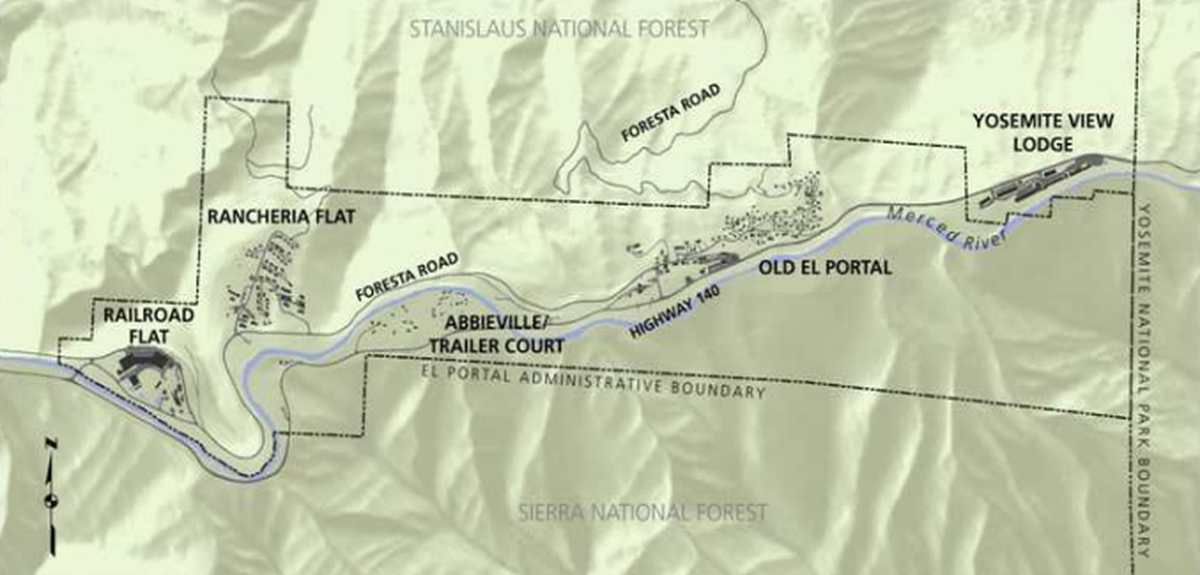
El Portal Trailer Park residents learned of this deadline the week before Christmas. Yosemite officials are concerned about the safety of power lines there that Yosemite owns and have other plans for the site.
Many El Portal residents own their homes but lease the land beneath. Those leases in the trailer park will be terminated Sunday.
“We’re all stressed. I see my mom cry every single day. It’s not right,” said Luke Harbin, whose mother is among the affected homeowners. She’s lived in the mobile home park for 38 years as she’s worked in nearby Yosemite.
There’s been efforts to help the residents. A GoFundMe created last month to fund legal services raised just over $1,000 of a $100,000 goal. A change.org petition, “Stop the inhumane eviction of our community members at the El Portal Trailer Court,” has over 2,100 signatures. Others have written to Yosemite Superintendent Cicely Muldoon expressing concerns, including California Assemblymember Jim Patterson, R-Fresno.
But what many El Portal residents say they need most – more time to leave their longtime homes, and moving help or compensation for the homes they own – has not been provided.
Many being forced out have worked in Yosemite for decades and are nearing retirement age. El Portal residents have to work for Yosemite or its park partners to live in the community located along Highway 140 outside the national park, about a five-minute drive from Yosemite’s west entrance.
‘We’re at the twilight hour ... we need the response now’
Yosemite is not allowing people to live in their homes past 11:59 p.m. March 13, citing coming dangers from fire season.
Instead, three residents were granted 30-day extensions only to remove personal property once they “have vacated their sites and the pads have been de-energized,” the National Park Service’s public affairs office wrote in an email March 3, attributing the information only to “NPS Spokesperson,” declining to provide a name or reason for withholding one.
That’s a quarter of the 12 individuals Yosemite has housing agreements with in the trailer park, also called the El Portal Trailer Court. Three no longer live there: one trailer is vacant, and two were subletting in violation of housing agreements, the Park Service reported.
Five residents interviewed by The Bee said mobile homes there are too old and large to be trucked out, and if that was possible, it would be too expensive.
Harbin’s mother had not been given a 30-day extension to remove her belongings as of Tuesday, despite asking for one during a meeting with Muldoon in person over a month ago, and then leaving many voicemails and emails, Harbin said.
Harbin said he was initially told Muldoon wouldn’t meet with him and his mom, but they later got a meeting in early February. They weren’t allowed inside Muldoon’s office without a COVID test, so they talked outside because they weren’t given enough advance notice to get a test in time, Harbin said. He said they left the meeting with Muldoon early because she and other NPS staffers made his mom cry.
“My mom broke down in tears in front of them, and I called them all heartless, because they don’t have a heart,” Harbin said of that meeting. “They don’t have a heart. The way they were talking to my mom, no heart.”
Harbin’s mom was finally told Wednesday morning in a phone call with someone at the superintendent’s office that she would be granted a 30-day extension to remove her belongings, not to live there, and that a letter saying the same would be mailed Wednesday or Thursday.
The extension for Harbin’s mother was granted following a heated phone conference meeting of the El Portal Planning Advisory Committee the night before, which included a discussion about the trailer court closure. Four trailer park residents who attended said they also left multiple messages for Muldoon asking for an extension but hadn’t heard from her.
“We’re not getting a response from the superintendent, and we’re at the twilight hour,” one person said. “March 13 is the date that was given, so we need the response now.”
One NPS employee at the meeting said he’d relay the information to the superintendent’s office the next day.
Frustrations mounted, with some in attendance asking the advisory committee and Mariposa County Supervisor Rosemarie Smallcombe to do more to help. The committee, part of the Mariposa County Planning Department, told residents the county doesn’t have authority over El Portal land, which is under federal jurisdiction, but promised to record and relay concerns.
Yosemite National Park hasn’t held a group meeting with affected residents – despite requests for one – instead promising individual meetings upon request. Yosemite officials said they aren’t currently doing in-person public meetings due to the pandemic, and plan to hold a meeting with residents in El Portal this spring.
This spring is too late for Harbin. The 32-year-old took matters into his own hands and rented out the community hall in Old El Portal, just down the road from the trailer park, and held a town hall meeting himself March 4. He said about 30 to 40 community members attended although Yosemite didn’t send a representative.
NPS spokespeople told The Bee, “We continue to communicate directly to residents, hear their concerns, answer their questions, and provide additional information.”
What will happen to displaced mobile home park residents?
Eviction notices haven’t been served. But according to Yosemite, if residents don’t leave by March 13, they could be punished by up to six months imprisonment or a $5,000 fine per violation for unlawfully residing on federal lands and trespassing. Yosemite’s chief ranger sent that information to Harbin in an email, adding that he was sharing it at the request of the superintendent, in response to one of Harbin’s questions.
Some of the affected residents have been able to rent an employee dorm in Yosemite, but the units – a fraction the size of the mobile homes they own, and with shared bathrooms and kitchens – are far from ideal in comparison. Unlike in El Portal, up the road in Yosemite Valley, children and spouses of most employees also aren’t allowed to reside in employee housing, except for some park managers.
NPS spokespeople said nine trailer court residents have been offered rentals within Yosemite via park partners.
“Of those nine, five have already moved into concessioner-provided housing elsewhere in the park, and two more are set to move in the coming week,” officials wrote March 3.
Affordable housing is sparse in the mountainous region. The closest major town to El Portal is rural Mariposa, a 45-minute drive away. Storage units are also far away and often full – as are the dumpsters in the trailer park, Harbin added. He just rented a storage unit a couple days ago in Fresno – over two hours away – and one of their cars is broken down. Mariposa County resources, including phone numbers provided to a “drop-in recovery support center,” have been inadequate for many of their needs.
The evictions are coming at a time when Yosemite employee housing rental rates and gas prices are steeply rising, in addition to COVID-19 remaining a concern throughout the region.
Harbin said he feels trailer park residents are being treated like “peasants” because they are the workers who do “all the dirty work” in Yosemite, serving in maintenance and retail jobs.
Terri Nishimura, another longtime resident, said earlier this winter that “we have been on the wrong side of the tracks” ever since the trailer park opened in the 1950s.
Why now? Questions, concerns about Yosemite’s decision
El Portal is an unusual community in that Congress designated it an administrative site for the national park in 1958. It was created so “utilities, facilities, and services” required to run Yosemite could be located outside the national park.
Some argue that eliminating more employee housing outside Yosemite and subsequently moving more employees into housing in Yosemite Valley runs contrary to the intent of the administrative area designation.
Yosemite’s plans for the site have morphed over the years, leaving many unsure what to expect. There were plans to close the trailer park in 2000 to use the land for other things, but Yosemite vacated that date due to a lack of funding.
By contrast, Yosemite later got authorization in 2009 for a project to increase employee housing in the trailer park. The plans Yosemite announced then called for the restoration of underground water, sewer and electrical services to 58 spaces in the El Portal Trailer Court, including for privately-owned mobile homes. Only about 25 of the spaces were occupied at that time. NPS spokespeople said the project was never funded.
Yosemite then moved into developing the Merced River Plan, spokespeople added, which “remains the guidance that the park is implementing today.” That plan’s 200-page record of decision from 2014 is far from clear, however, with plenty of contradictions and unknowns about what could be in store for El Portal.
Lease agreements have said the closure of the trailer park would “continue to be implemented through attrition,” but it wasn’t until December that residents were given a deadline to leave – March 13 – in letters signed by Muldoon. Some unauthorized tenants, including renters, were initially given just 60 days – Feb. 13 – but that was changed to all residents having to leave March 13.
In October, residents received another letter from the superintendent that said the overhead electrical system was found to be in “very poor condition,” cautioning that “one potential outcome” might be a decision to turn off the power, depending on what was found during further assessments. That letter also said the site would be converted to a public and administrative-use campground for recreational vehicles, with campground construction slated to begin in 2024. Residents said that was the first time they were informed of that 2024 date.
NPS spokespeople said Yosemite “is in the process of pursuing funding” for that campground project, but the decision to close the trailer park was “driven by safety concerns associated with the severely degraded overhead electrical infrastructure that is beyond its useful life and at serious risk of failure.”
“Currently, there is no alternative use planned for the trailer court area in 2022,” NPS said last week.
That’s different from what was previously shared. During an interview with Yosemite spokesperson Scott Gediman, The Bee asked why trailer park residents have to leave in 90 days instead of giving them more time, “Is it because the site is going to be needed?”
“The park is embarking on construction projects starting next spring and summer,” Gediman responded in December. “In order to complete these construction projects, we need to start bringing in materials, people, and get some of the things going.”
Yosemite projects were noted many times by Gediman as a reason for the trailer park closure, in addition to electrical concerns.
“With our budgets coming up and a need for staging area and temporary camping for the construction workers, this is the use that we need in order to operate the park,” Gediman said during the December interview about the trailer park closure.
Some of the large Yosemite construction projects mentioned that have funding this year include work on Glacier Point and Tioga roads, campground rehabilitation, and a new wastewater treatment facility in El Portal.
“So it could be for any of those things then?” The Bee asked about using the trailer park site as a construction staging area.
“Major multi-million dollar projects, exactly,” Gediman responded.
There will be so much construction in Yosemite this year that Muldoon announced last month that reservations will be required to enter the national park during peak hours starting May 20.
Of the trailer court site, NPS spokespeople said last week that, “In the future, and once the electrical system is rebuilt, the park may use the site to support construction of a project they are in the process of pursuing funding for, which wouldn’t begin until at least 2024.” They added that the trailer pad leases are being terminated due to “safety and park management needs” and that “the electrical system will be repaired/rebuilt prior to any future use.”
NPS spokespeople didn’t respond to questions about why information now differs from what was shared in December.
“There is much misinformation circulating about the reasons for park management’s decision to close trailer court housing in March,” Muldoon wrote to one resident in late January, “but the safety concern is the sole driver for taking this action.”
Some question whether Yosemite allowed the power lines that NPS owns to fall into disrepair as a way to force them out – and if so, how long Yosemite has known there was an electrical problem.
A leader of the Yosemite Conservancy – Yosemite’s largest and main philanthropic partner – told one concerned member of the public in an email, “It is our understanding that the electrical power grid there has not been maintained for more than 20 years – since the 1997 flood displaced most of the trailers there at the time.”
In October, Muldoon told residents that if “requisite repairs” to electricity in the trailer park “are not feasible, particularly in the context of the NPS’ long-term plan for the site,” then the National Park Service would “accelerate” the relocation of residents.
Yosemite recently redid power lines in that area, but it reportedly didn’t include the trailer park.
There’s also skepticism that the electrical system is so unsafe it warrants evictions, and a knowledge that electricity will continue to power NPS infrastructure and other homes in that area. The trailer park is sandwiched between the hamlets of Old El Portal and Abbieville, where power won’t be shutoff.
“I feel the power issue down there is a red herring by the Park Service,” said one El Portal Planning Advisory Committee member during a regular advisory committee meeting last month. “El Portal, the water well number four, is located down there. It’s got a three-inch conduit running to it. It’s got a power pole right next to it, plenty of power right there. There’s also the lift station on the lower end of the (trailer) park, so NPS has infrastructure down there that they’re powering.”
There are also concerns that future construction there could damage Native American artifacts and burial grounds. Park documents say the trailer court lies within the El Portal Archeological District and the El Portal/Foresta American Indian Traditional Cultural Area.
Is this legal? What attorneys say. ‘They’re not dictators’
One of the affected residents said they personally reached out to over 30 attorneys, who said they couldn’t represent them.
Several attorneys interviewed by The Bee weren’t aware of federal laws that clearly speak to this unique situation.
“The Park Service is like the worst landlord you can imagine,” said attorney Peter Prows of law firm Briscoe Ivester & Bazel based in San Francisco. Prows was part of the team that represented Drakes Bay Oyster Company in a high-profile federal lawsuit over the Interior Department’s decision to close that business at Point Reyes National Seashore, what happened in 2014. Yosemite’s superintendent, Muldoon, was superintendent of the national seashore at that time.
Like the mobile home residents in El Portal, the Interior Department gave the oyster farm just 90 days to move out.
“You’ve got, effectively, a landlord that is really in the business of national parks, not in the business of being a landlord, that has the force of the federal government and federal criminal law behind it,” Prows continued. “So it’s a really unenviable position for any tenant to be in. Now that said, we do live in a nation of laws and due process, and the Park Service can’t just boot people out. This is not a tin-pot dictatorship. People are entitled to due process.”
Of NPS, Prows added, “They carry guns and they got fancy hats, but they’re not dictators.”
Robert Cortez, supervising attorney for Central California Legal Services’ Housing Team, said state law requires at least a one-year notice for residents to leave when a mobile home park is being converted.
“If the change of use requires no local governmental permits, then notice shall be given 12 months or more prior to the management’s determination that a change of use will occur. The management in the notice shall disclose and describe in detail the nature of the change of use,” reads California Assembly Bill 2782, “Mobilehome parks: change of use: rent control,” enacted in 2020.
El Portal sits on land under federal jurisdiction, which complicates this, as do the safety concerns raised. Still, Cortez said of mobile home parks, “I believe that’s exclusively a state issue.”
Cortez said NPS still has to go through the unlawful detainer process, serving eviction paperwork, and that it would be illegal for the Park Service on March 14 to send law enforcement to forcibly remove residents from their homes. That’s only supposed to happen after a judge grants a request for a lockout, he added.
Cortez said it’s suspicious that Yosemite decided to close the trailer park based on its determination that electrical lines are unsafe, since those lines are owned by Yosemite and the responsibility of Yosemite to maintain.
“It’s kind of like the landlord investigating his own property, saying, ‘Oh, my property is substandard, so therefore you have to leave.’ I’d be interested to see who actually did that investigation to determine that the property is unsafe,” Cortez said.
Muldoon told residents in her October letter that NPS contracted Laymon Electric, which completed a “limited assessment” in September “based predominately on visual inspection.” Yosemite said then that it was contacting Pacific Gas and Electric Company to “fully assess the conditions of the power lines and related infrastructure.”
A PG&E spokesperson didn’t share what the company told Yosemite, but said PG&E looked at the power lines as a courtesy, adding, “there would never be a time where we would have any kind of authority to recommend a tenant be evicted for any reason.” A worker who inspected the lines told residents there aren’t safety issues that warrant evictions.
Attorney Mariah Thompson of California Rural Legal Assistance said the National Park Service needs to “slow down.”
“There’s a reason California law grants residents up to a year in advance notice, and under some circumstances, relocation benefits,” Thompson continued, “because mobile home park residents are tremendously vulnerable.”
The El Portal residents are among many now facing similar challenges, she added.
“Some of the things the residents are dealing with – in terms of being pushed out and not being adequately compensated for the investments they made in their home, being probably unable to afford legal counsel to help defend themselves ... that’s happening wherever people live, if they’re living in a mobile home park,” said Thompson, who is currently representing over 200 people living in Fresno County mobile home parks.
Why there’s no compensation for homes or moving expenses
NPS spokespeople didn’t respond to a question about what federal laws Yosemite is following that show its course of action is legal. Officials did say NPS managers looked into providing financial compensation to trailer park residents “but we have not found a viable legal authority” to make that happen.
Park managers researched options under the Uniform Relocation Assistance and Real Property Acquisition Policies Act of 1970 and “the determination from the Department of the Interior Office of the Solicitor is that these tenants are not covered as displaced persons under that act,” NPS spokespeople said. “There is no acquisition of real property involved in this action.”
In December, when Muldoon told residents that they’d soon have to remove or surrender their homes, she added that if they are surrendered, residents would have to do so “recognizing that the property holds no value and is not considered a donation to NPS.”
Lorraine López, senior attorney with the housing team of the Western Center on Law & Poverty, said residents might be able to push back on this point by saying, “Yes, we understand this isn’t like a clean eminent domain situation, but you’re still effectively keeping our house. You’re asking us to just walk away from that and you’re not compensating us in any way.”
The nonprofit organizations that López, Thompson and Cortez work for provide free legal services to those in need.
In the 1990s, prior to the previous vacated closure date, another Yosemite superintendent told trailer park residents they might be eligible for relocation benefits under federal law, and held public meetings to help the residents.
López said it appears Yosemite is now getting around providing compensation by focusing on closing the trailer park due to perceived safety issues vs. wanting to use the land – even though Yosemite already has construction plans there.
“I think that’s why they’ve been couching it that way,” said López, adding that the residents have been put in a “really unfair situation.”
NPS spokespeople said NPS leadership “further explored options such as waiving a portion of the monthly rent charged to the tenants but have not found valid exceptions allowing us to do so under existing government housing policies and regulations.”
The letter residents received in December, titled, “NOTICE OF TERMINATION,” says, “At all times, the Government reserves the right to manage its housing in whatever way it deems necessary” and that “as the owner and manager of its housing” it can eliminate housing, relocate employees or terminate leases with at least a 30-day notice.
There’s no acknowledgment in that language about how many El Portal residents own their homes. What’s happening to trailer park residents is also worrying homeowners in the larger adjacent community of Old El Portal, who also lease the land beneath their homes.
Tim Sheahan, a board member and past president of the National Manufactured Home Owners Association and Golden State Manufactured-Home Owners League, said more should be done to help the soon-to-be displaced residents in El Portal.
As an example, he said after mobile home parks on tribal land in Coachella Valley were closed because of poor living conditions, federal, state and county officials worked together to relocate residents, including constructing a new mobile home community. Gov. Gavin Newsom approved $30 million to help with that relocation.
“In the case of El Portal, I feel the feds should step up and do the right thing,” Sheahan said, “but if it takes a partnership or pressure from the state and county, those avenues should be pursued.”
With Yosemite now receiving an influx of funds for huge construction projects in one of the nation’s most visited national parks, Harbin said he can’t believe there isn’t a little money available to help longtime Yosemite workers about to lose the homes they own in a small mobile home park.
“Don’t tell me that they don’t have any money,” Harbin said. “They got tons of money. This park is just a cash cow.”
He isn’t optimistic about what will happen to his community.
“We live in fairy tale land where apparently the superintendent is queen,” Harbin said, “and she can do whatever she wants here.”
This story was originally published March 10, 2022 at 5:00 AM with the headline "Yosemite will soon oust homeowners near the national park. Residents call it ‘heartless’."