Biden’s federal rail chief visits Fresno-area bullet train work. Will more money follow?
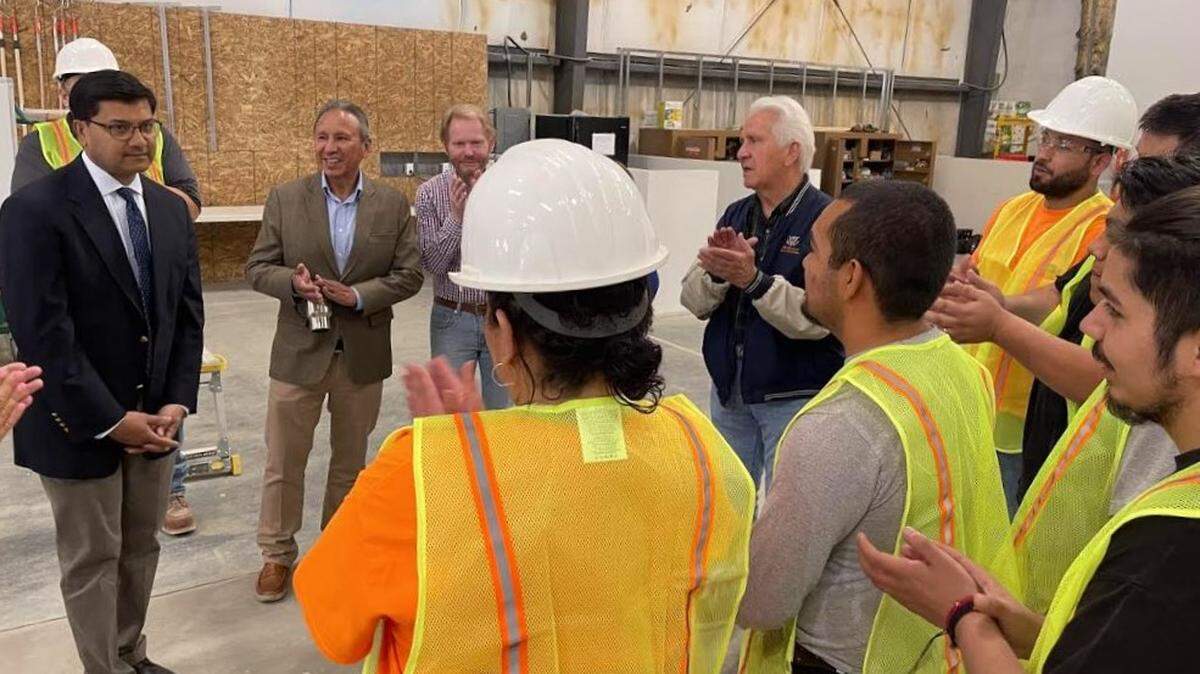
The head of the Federal Railroad Administration under President Joe Biden got a close-up look Thursday at a construction-industry training program in Selma that is preparing people to work on California’s high-speed rail project.
The agency’s administrator, Amit Bose, toured the Central Valley Training Center and encouraged trainees in the pre-apprenticeship program to “please stick with it” as the state continues its efforts to build a bullet-train system connecting northern and southern California through the San Joaquin Valley.
The center is a collaboration between the city of Selma, the California High-Speed Rail Authority, the local Building Trades Council, the Fresno County Economic Opportunities Commission and the Fresno County Economic Development Corporation to help prepare workers for jobs building the rail line and other work in the construction agency.
Bose’s visit was timely for state rail officials because the California High-Speed Rail Authority is counting on receiving a portion of about $102 billion that’s earmarked in the Bipartisan Infrastructure Law passed last year in Congress for railroad improvements nationwide over the next five years.
“For us it’s so important to show within that five-year period the results so that behind that, Congress will give us more (money) and put rail on par with highways, transit and aviation,” Bose told The Fresno Bee in an interview Thursday. “We took a big step with the bipartisan infrastructure law, but we don’t have that permanent funding.”
This was Bose’s second trip to central California to see work related to high-speed rail. In December, he had a daylong tour of key construction sites including a viaduct being built over Highway 99 at the south end of Fresno.
“What I’m learning is that in Washington, at the Department of Transportation, we often don’t get to see the impact and the results of the things that we do there,” Bose said Thursday. “We have a tendency to be in silos and not think broadly about our efforts there. …”
A message for trainees
The training center is an example of how those efforts are realized in communities like Selma. “If it’s not helping local folks, if it’s not helping rural areas, urban areas, disadvantaged areas, then the benefits aren’t being accrued where they should be,” Bose said.
The trainees, he added, “are going to build the things that we’re going to use down the road. It’s really beneficial to see all of that in action.”
Since it opened in 2020 in a building on the site of a former scissors-lift manufacturing plant, several groups of trainees have graduated from the Selma center.
It was launched with goal of helping veterans, at-risk young adults, and trainees from minority and low-income backgrounds to get their foot in the door of the construction industry. About 60 students have completed the program to date, according the high-speed rail agency.
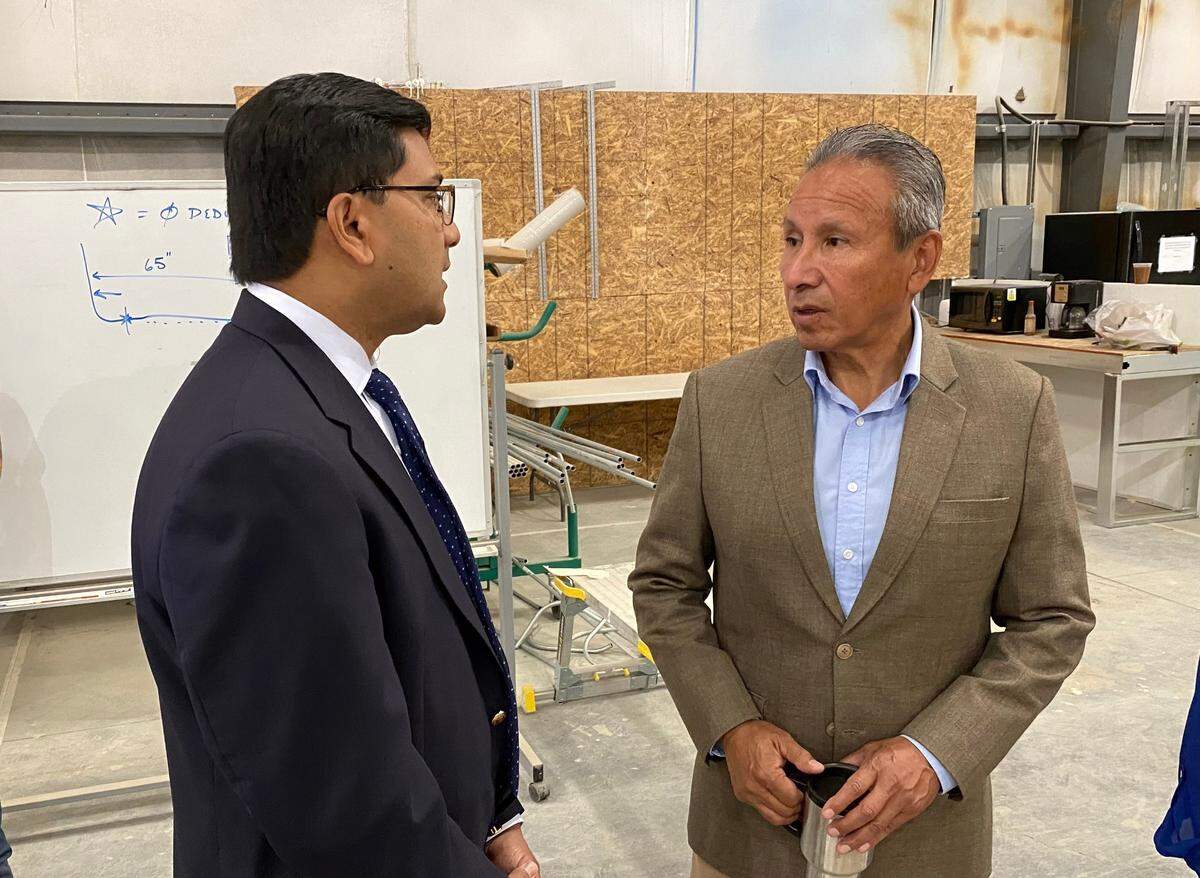
“My advice to you is just stick to the basics, the things that you can control, because there’s a lot that’s out of your control,” Bose told the trainees. “But if you stick to those core principles, success will follow.”
Bose said it will be construction workers on projects like high-speed rail who will show what can be done. “Now it’s all about showing the people who believe in us and put us in these positions that we can deliver benefits for you all and the country,” he said. “I really appreciate you putting the effort into this.”
One of the uncertainties is whether California will be successful in securing a share of about $43.5 billion in funds for federal/state railroad partnerships in the infrastructure law. Bose said the application process for those grants will open this summer and fall.
“We know we don’t have all the time in the world,” he said. “It’s going to be merit based and where the needs are.”
Competing for federal funds
Tom Richards, a Fresno developer who is chairman of the California High-Speed Rail Authority board of directors, said Bose’s visit is a positive sign for the state’s bullet-train project.
“It’s clearly an affirmation of the importance of this project to the federal government,” Richards told The Fresno Bee. “When the FRA administrator comes out here, it shows they are connected and recognize the importance of what we’re doing here. They need to actually see it more than on a piece of paper.”
Richards acknowledged that California’s project will be competing with other rail plans across the country. “That’s a hard challenge when you’re dealing with 50 states,” he said. “We would certainly like to have it all but we know we’re not going to get it all, but we want to get as much as we possibly can.”
“We want to make the argument with (the FRA) that the reason for putting money here is because this project is moving forward, and there’s nowhere else in the country that can say that,” Richards added.
The state rail authority has, since 2010, been using a combination of money to plan, design and advance construction on the first sections of what’s envisioned as a statewide bullet-train route connecting San Francisco and Los Angeles by way of the San Joaquin Valley.
Those funds come from Proposition 1A, a bond of nearly $10 billion approved by California voters in 2008; the state’s greenhouse gas-reduction program; and about $3.5 billion in federal railroad improvement and economic stimulus funds awarded by the Obama administration in the early 2010s.
What’s being built so far since construction began in 2013 is a 119-mile stretch of the future rail route from north of Madera to northeast of Bakersfield. More money is needed to complete work on what’s described as an interim operating line from downtown Merced to downtown Bakersfield by 2029.
After that, future extensions north and west to the Bay Area and south into the Los Angeles basin will depend on additional money, including substantial contributions from the federal government.
This story was originally published May 5, 2022 at 2:27 PM with the headline "Biden’s federal rail chief visits Fresno-area bullet train work. Will more money follow?."