
Monkeypox case ‘likely’ in California. Health officials say risk of outbreak ‘extremely low’
California health officials are investigating a “likely” case of monkeypox virus in a resident who recently returned from Europe. Sacramento County officials are awaiting tests by the Centers for Disease Control and Prevention that would confirm the infection, it was announced Tuesday.
If confirmed, it would be the first case of this rash-like virus in California and one of at least six cases in the U.S. this year.
“Based on symptoms and preliminary testing, monkeypox confirmation is likely,” Sacramento County Public Health officials said in a Tuesday morning announcement. The California Department of Public Health said the individual “tested preliminarily positive for an orthopox virus,” which is a subfamily of viruses that includes monkeypox and smallpox. State and local officials were awaiting confirmation from the CDC.
Sacramento County Public Health Officer Dr. Olivia Kasirye said in a news conference that the risk of spread to the public was “extremely low.”
“This case appears to be related to recent travel to Europe,” Kasirye said at a news conference. “Public Health is working with CDPH to conduct contract tracing.” Officials declined to disclose the day the person returned to the U.S. or if the traveler arrived at Sacramento International Airport.
CDPH did say health officials began investigating the case on Saturday.
The tests were sent on Monday to CDC officials, Kasirye said Tuesday, and local officials weren’t sure when results would be returned.
Monkeypox exposure risk low
The individual suspected of infection is isolating at home and “doing well,” Kasirye said.
“We’re still determining the number of close contacts,” Kasirye told reporters during a briefing, saying health officials are still trying to define what constitutes close contacts in this instance. She shared no details about the infected person, like the person’s gender, age or health history, but said the case came to light after the individual’s health provider called county officials.
“It’s important that if people are exhibiting symptoms that they contact their health care provider, so if they need to make a determination, they can do that right away,” Kasirye said.
Kasirye said monkeypox “is a rare disease in the U.S.” and does not naturally occur in the United States.
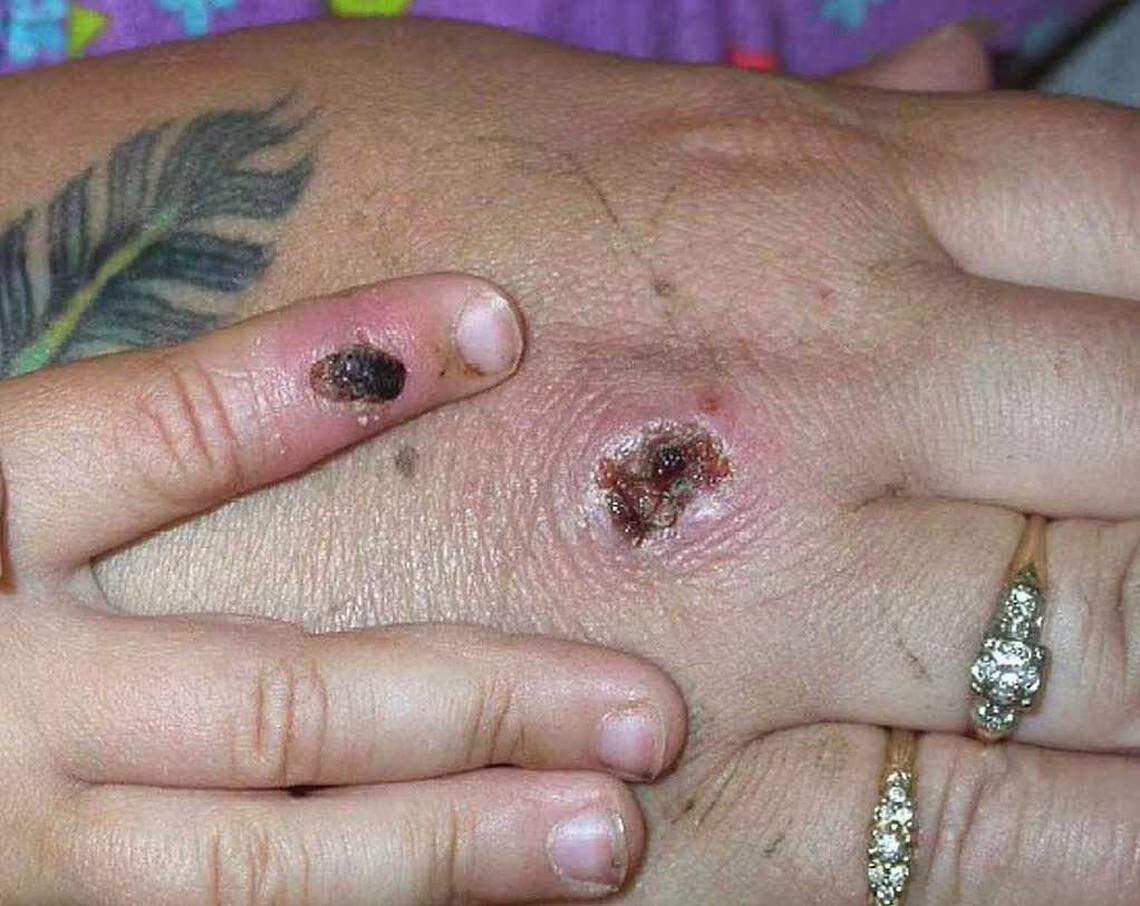
Monkeypox symptoms include fever, headache, muscle aches, backache, swollen lymph nodes, chills and exhaustion. Within one to three days after the appearance of fever, the patient develops a rash. The rash often begins on the face before spreading to other parts of the body. The span from infection to symptoms can range from five to 21 days and the illness can last two to four weeks.
The California Department of Public Health is working with the county and said its Richmond laboratory is prepared to perform more tests if needed.
“The California Department of Public Health is working quickly with local and federal health officials to ensure appropriate care and response, including contact tracing and post-exposure prevention for close contacts,” state epidemiologist Dr. Erica Pan said in a statement. “Because the disease is rare, health care providers may not be familiar with the presentation of monkeypox and the possibility of monkeypox transmission during intimate or sexual contact may not be well known.
“As such, CDPH is promoting awareness amongst health care providers and the public, including appropriate infection control for monkeypox cases in the health care setting.”
Origins of monkeypox
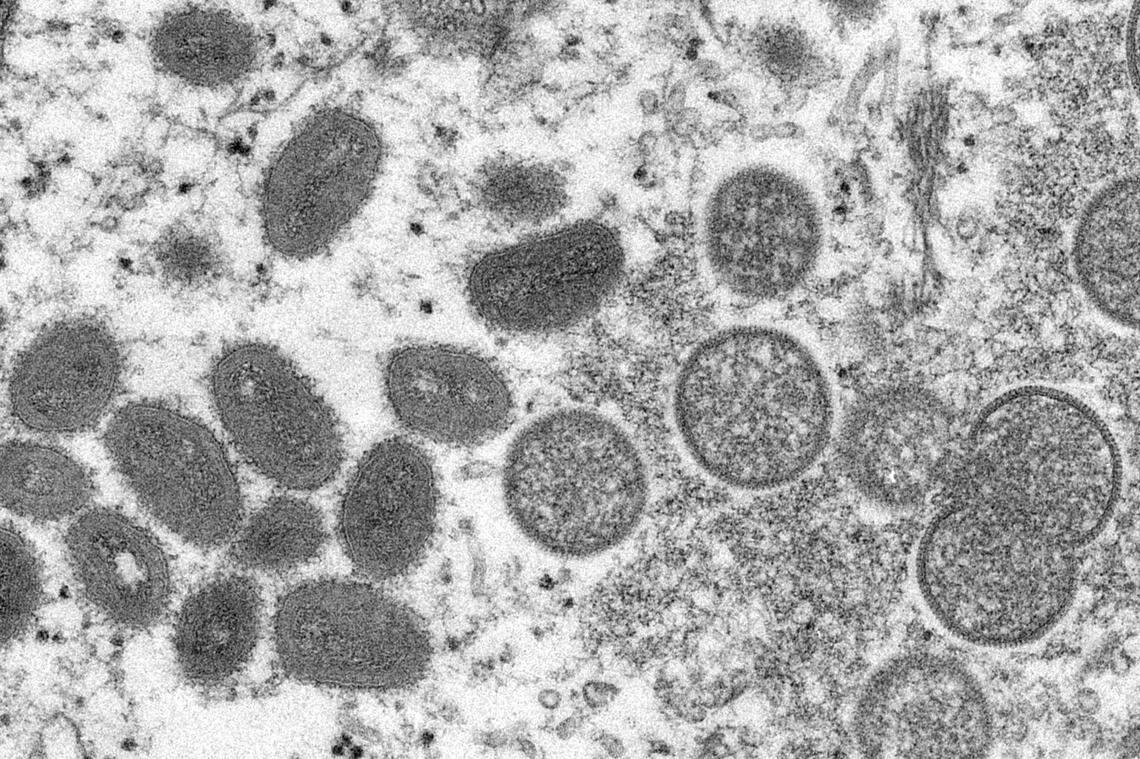
Monkeypox is not an emerging disease. It’s name comes from the first documented animal cases in 1958 when two outbreaks occurred in monkeys kept for research, according to Rodney E. Rohde, a microbiologist and the Regents’ Professor of Clinical Laboratory Science at Texas State University. Rohde said “the virus did not jump” to humans at the time, “nor are monkeys major carriers of the disease.”
The first human case of monkeypox was found in the Democratic Republic of Congo in the 1970s, and is considered an endemic in Central and West Africa. The United States previously saw two cases in 2021, in Texas and Maryland. Both cases were from residents who had recently traveled to Nigeria.
But in 2022, the World Health Organization has recorded more than 90 cases of monkeypox in a dozen countries including Canada, Spain, Israel, France, Switzerland and Australia. U.S. health officials said Monday they knew of one confirmed case, in the state of Massachusetts, and four probable cases — two in Utah, one in Florida and one in New York City. All were men who had traveled outside the U.S.
A WHO adviser called the outbreak “a random event” that might be explained by sexual behavior at two recent raves in Europe.
Dr. David Heymann, who formerly headed WHO’s emergencies department, told the Associated Press on Monday that the leading theory to explain the spread of the disease was sexual transmission at raves held in Spain and Belgium.
“We know monkeypox can spread when there is close contact with the lesions of someone who is infected, and it looks like sexual contact has now amplified that transmission,” said Heymann.
Health officials said, however, that anyone can be infected through close contact with a sick person, their clothing or bedsheets.
In Massachusetts, health officials had identified 200 people who came in contact with the first confirmed patient, a man who had traveled to Canada. The Boston Globe reported the “vast majority” of close contacts in Boston were among health care workers.
Dr. Dean Blumberg, an expert in infectious diseases at UC Davis Health, said the disease is very rare and that he had not seen a case of the disease in his 32 years of practice. Public health officials have access to supplies of smallpox vaccine, he said, that they can give to people who have been exposed or give to health care workers who are treating infected patients.
“Getting the smallpox vaccine within four days of exposure can prevent infection,” Blumberg said. “That works about 85% of the time, and even getting it four to 14 days after exposure, it may not prevent infection, but it should result in decreased severity of the illness.”
Kasirye said Sacramento County health officials would have to formally request the doses from the CDC in Atlanta, but cautioned it was too soon to make such a request.
“This is very different from COVID,” she said, but added, “We have yet to see where this is going to go or how many cases we’re going to get.”
This story was originally published May 24, 2022 at 11:06 AM with the headline "Monkeypox case ‘likely’ in California. Health officials say risk of outbreak ‘extremely low’."
.JPG)
