
Sacramento County sheriff says SCOTUS ruling easing concealed carry laws matches his policy
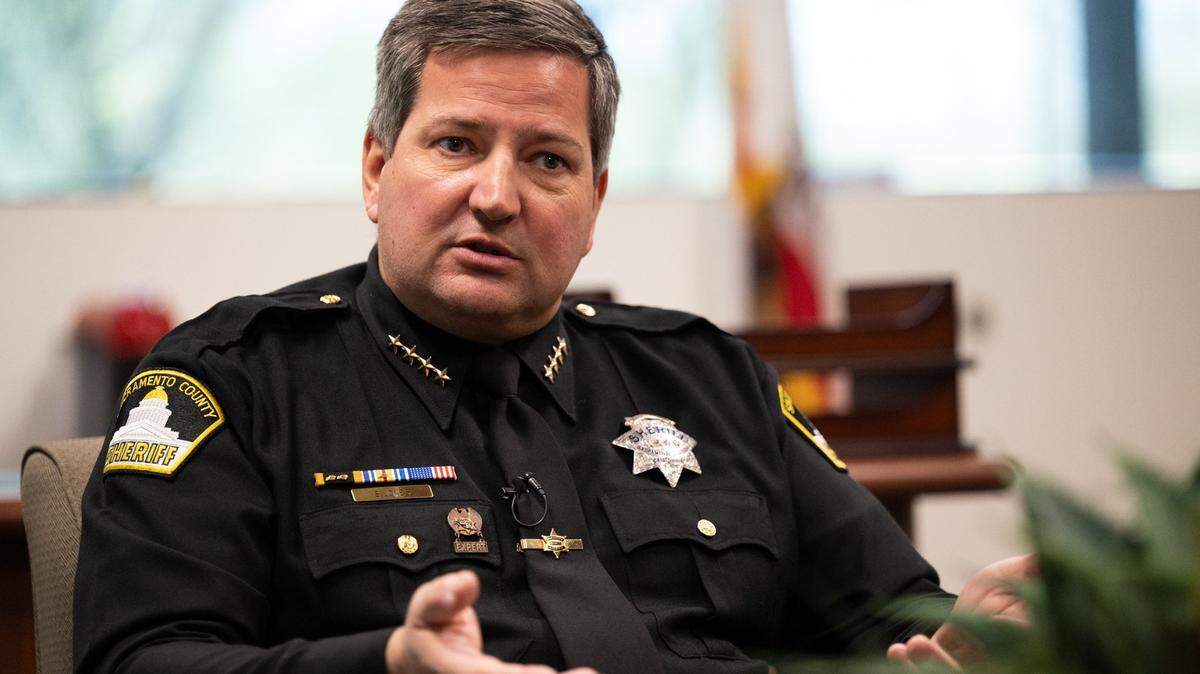
Sacramento County Sheriff Scott Jones said Thursday that the Supreme Court’s decision making it easier to get a permit for a concealed weapon won’t change his department’s practices.
In an email, Jones called the 6-to-3 ruling “consistent with our current policies and my own personal reasoning, so for Sacramento County at least, nothing will change.”
When Jones took office in 2010, there were about 350 permit holders in the county. Since then, he said, his office has issued roughly 12,000.
“I think during the early years there was a period of time that I issued more permits than anywhere else in the state,” he said.
On Thursday the court struck down a New York law that says gun owners must show a special need for self-defense to carry a handgun in public.
The California law, regarded as one of the nation’s toughest, requires permit applicants to give strong reasons to local law enforcement officials for their need to carry a gun in public. The court ruling does not mean immediate changes to state laws, but gun rights groups suggested Thursday that court challenges are coming.
Jones supportive of Supreme Court decision
Jones told The Bee he not only agreed with the court decision “but I’ve also used some of the same reasoning and talking points here locally when I took office to open up that process, and during the years to defend it.”
Justice Clarence Thomas, writing for the majority, said, “The constitutional right to bear arms in public for self-defense is not ‘a second-class right, subject to an entirely different body of rules than the other Bill of Rights guarantees,”
Jones explained how he worked out a process with local police chiefs where he would be the conduit for applications and issuance for the county. He consults with chiefs when an applicant is from their city.
“This way there is a single standard for issuance, a single repository for (permit) information, and a single guy (me!) for criticism,” he said.
Jones described what he called a “robust monitoring system after issuance to ensure continued good conduct.” His office revokes two or three permits a month for different reasons.
“We also work very hard to take guns out of the hands of those who aren’t allowed to have them, such as criminals and those with legal barriers such as specified mental health issues,” he said.
Jones is retiring from the sheriff’s office this year, following an unsuccessful run for Congress.
Looser concealed carry laws ‘bad news’ for California?
However, a Stanford University legal expert disagrees with Jones’ assessment, saying more guns in public is not a good thing for California.
“This will be very bad news for places like New York and California, because the research is pretty clear that allowing citizens ... to carry guns outside the home leads to a lot of bad outcomes and more violent crime,” said John Donohue, the C. Wendell and Edith M. Carlsmith Professor of Law at Stanford Law School.
Donohue was one of 14 social scientists who signed a letter to the Supreme Court saying states with minimal or no concealed carry restrictions experience more violent crime.
He said carrying a gun around today “is often not a very convenient thing,” as a handgun is similar in size to “three cell phones strapped together.” This results in many people putting their guns down or leaving them in their vehicles, which means they get stolen more frequently.
More guns in public also creates more opportunities for road rage incidents and other altercations to go from minor scuffles involving unarmed people to deadly shootings, Donohue said.
“You also make the job of police a lot harder when they have to be confronting armed citizens constantly,” he said. “So another consequence is you see police become less effective.”
Overall, the Supreme Court decision is “largely about some very extreme right-wing judges wanting to show their disdain for the blue states that had adopted various gun safety measures,” Donohue said.
“This is their effort to sort of stick it to them,” he said. “So whether that’s going to be worth the violent crime that they’re going to unleash — I think they don’t really care that much about that.”
This story was originally published June 23, 2022 at 2:54 PM.
.jpg)