Judge modifies gag order in Kristin Smart case after news coalition motion. What changed?
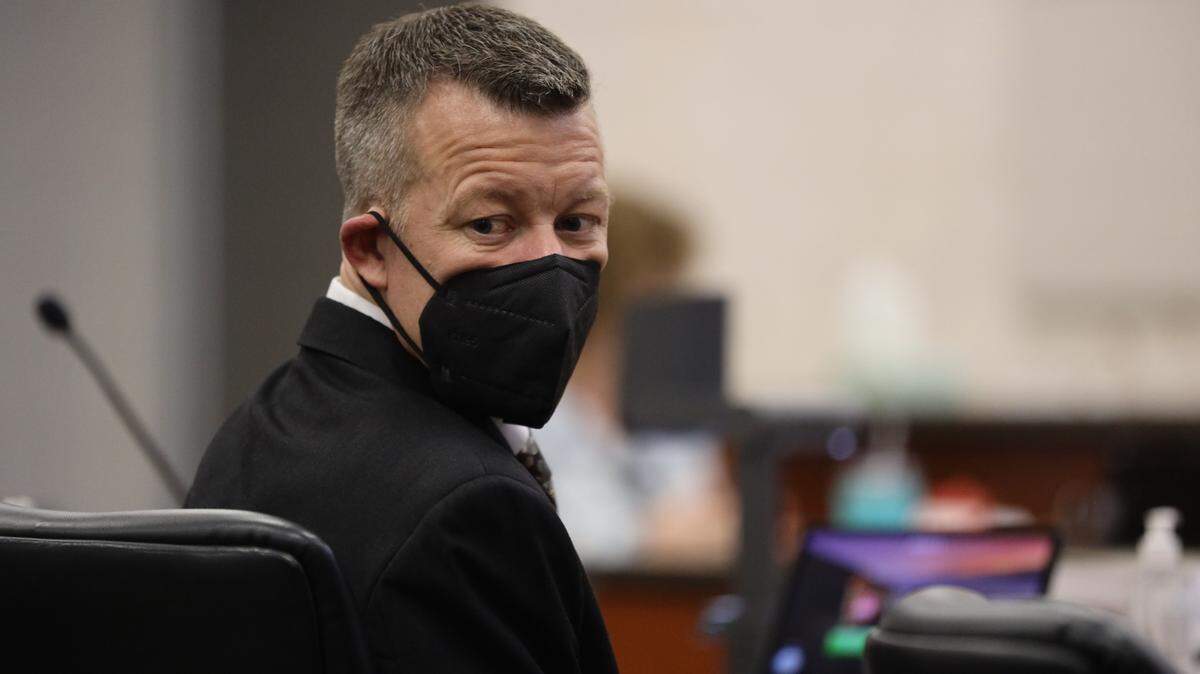
A Monterey County Superior Court judge modified the gag order in the Kristin Smart murder case on Friday, explicitly stating that it cannot be used to seal documents.
Judge Jennifer O’Keefe made the modification in response to a motion to unseal documents filed by a news media coalition made up of The Tribune, ABC News, Los Angeles Times and Associated Press.
The original gag order was signed by San Luis Obispo Superior Court Judge Craig van Rooyen in April 2021.
In a previous hearing, O’Keefe unsealed hundreds of documents in response to the coalition’s motion, and asked attorneys for the prosecution, defense and San Luis Obispo County to provide lists of documents they wish to remain sealed in whole or in part with justifications.
Only the county met the deadline to provide its list of proposed sealing requests.
The San Luis Obispo County District Attorney’s Office only provided a list of documents when counsel for the news coalition reached out to the agency when the deadline passed, and defense attorneys for Paul and Ruben Flores never provided a list.
Paul Flores is accused of killing Cal Poly student Kristin Smart in 1996 and hiding her body with the help of his father, Ruben Flores.
News coalition: Prosecution, defense not following sealing requirements
San Francisco attorney Aaron Field, who represents the news coalition, argued Friday that the parties asking for the remaining documents to be sealed still have not met the procedural or substantive requirements to seal them.
If a party wants documents to be sealed, this request must be publicly docketed and include justifications as to why the document should not be accessible to the public, according to the California Rules of Court.
These requests had not been publicly docketed since at least April, when the case moved to Monterey County, until shortly after the news coalition filed its original motion on July 14.
Since the defense and prosecution failed to meet the deadline to provide their lists of documents they wish to remain sealed, and the county filed its justifications for sealing documents under seal, there was no way to know if the reasons they provided for keeping records sealed met the burden they needed to, Field said.
In response, the county told the court on Wednesday that revealing its justifications would jeopardize the information it wants to be shielded from the public eye.
San Luis Obispo Deputy District Attorney Chris Peuvrelle and defense attorney Robert Sanger both called Field “offensive,” with Peuvrelle saying he was “bending over backwards” to unseal documents with proper redactions while managing a murder trial that has “taken over (his) life.”
Field assured the court that the coalition is appreciative of the work that has gone into unsealing records thus far, but holds that document sealing procedures need to be followed in line with the U.S. and California Constitutions and California Rules of Court — something it argues has not been happening procedurally or substantively.
There must be an “overriding interest” that outweighs the public’s First Amendment right of access in order for judicial documents to be sealed in whole or in part, he said. The coalition argues that the parties in the case have not met this burden for the remaining sealed documents.
Both the defense and prosecution argued that the defendants’ right to a fair trial was a justification for sealing, but the coalition argued that this justification alone cannot be used to seal documents — especially since jurors have been sworn in and admonished multiple times per day to avoid outside information and uphold their oaths.
The court ruled that it will continue to unseal documents with redactions as quickly as possible and denied the news coalition’s motion to immediately unseal all remaining documents.
Gag order no longer a blanket seal, judge rules
At the Aug. 4 hearing where O’Keefe ruled that document sealing procedures were to be followed by parties, she said she would modify the gag order to prevent it from being used as a blanket seal and would provide a proposed order within a week.
O’Keefe did not present a modified order until during the Sept. 2 follow-up hearing on the news coalition’s motion.
Field argued for the gag order to be voided completely as it has not only been used to justify blanket document sealing in the case, but also has prevented court clerks and staff from being able to share basic information about the case with the public, such as hearing topics.
The order is unconstitutional “on its face,” he argued.
Sanger called members of the news coalition “the entertainment industry, infotainment industry, maybe news.”
Sanger argued that the gag order should not be voided to protect fair trial rights for his client, Paul Flores, and his client’s father, Ruben Flores, who is represented by Harold Mesick.
Sanger said he wants Paul Flores’ trial to be in the judicial court rather than the court of public opinion.
Field argued that jurors are being admonished repeatedly to protect fair trial rights, and that the public’s interest in access to ensure that government institutions including the District Attorney’s Office and Monterey County Superior Court are transparent about the judicial process and how it is being applied.
The original gag order was modified to delete a sentence from the first bullet point, as well as the entire second bullet point, that had to do with the release and notice of existence of documents.
This story was originally published September 6, 2022 at 12:40 PM with the headline "Judge modifies gag order in Kristin Smart case after news coalition motion. What changed?."