Animation shows deadly Northern California earthquake’s shockwave roll across the US
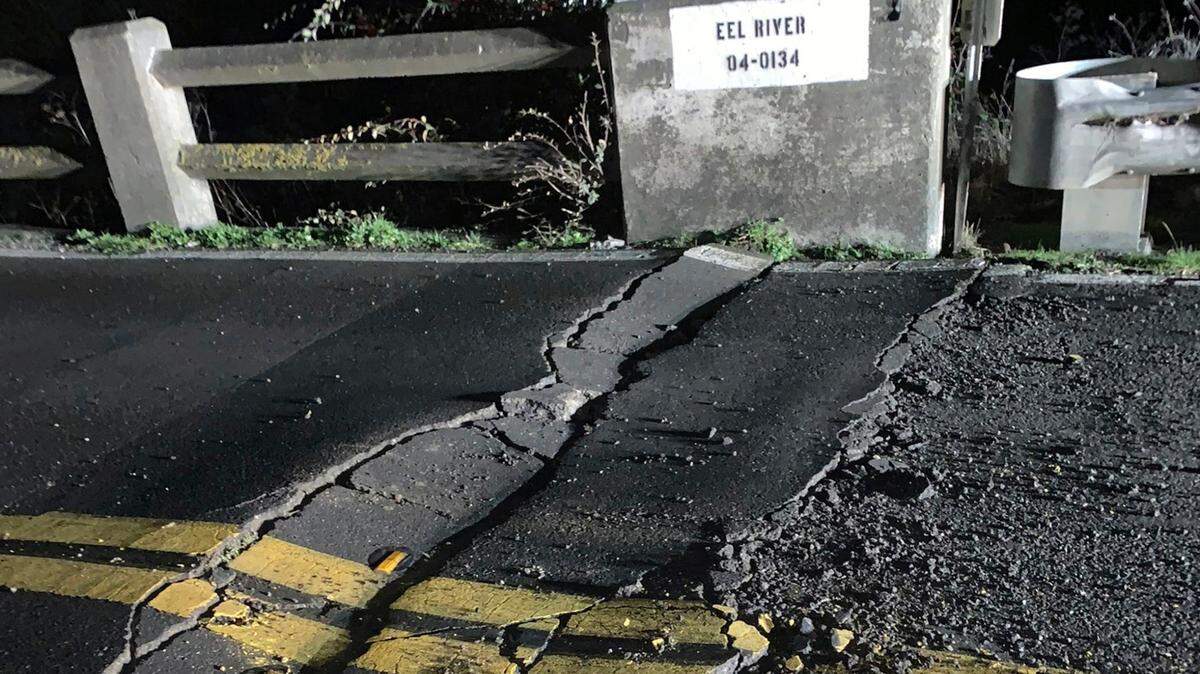
If you’ve wondered how earthquake aftershocks work, this animation might help you visualize it.
The animation shows the shock wave from the 6.4-magnitude earthquake that hit Northern California as it rolled across North America and lit up sensitive seismic stations in its path. At least two people died and 12 were injured after the earthquake rattled Humboldt County, according to The Sacramento Bee.
The EarthScope Consortium posted the animation to Facebook on Wednesday, Dec. 21.
“This animation, called a Ground Motion Visualization (GMV), shows the motion of the ground as detected on seismometers across North America,” the consortium said. “Each dot is a seismic station and when the ground moves up it turns red and when it moves down it turns blue.”
The consortium explained that the waves generated by an earthquake travel both around and through the earth, and get smaller the farther they move from the location of the earthquake, “just like ripples in a pond.”
When the waves are far enough away from where the earthquake hit, people can’t feel them. But the waves can still be picked up by “sensitive seismic instruments,” the consortium said.
That’s what the animation shows. It also suggested the shockwave moved across the entire country in 10 or 15 minutes, as seismic instruments in Maine first detected the shockwaves 10 minutes after the wave started rippling out from the epicenter.
In another Facebook post, the consortium said the earthquake happened right where three tectonic plates meet, called the Mendocino Triple Junction. That’s where the North American, Pacific, and Gorda plates meet.
An earthquake is triggered when there is a sudden release of energy that then causes seismic waves and causes the ground to shake, McClatchy News previously reported.