California heralds creation of 10K jobs on bullet train. ‘This project is unparalleled’
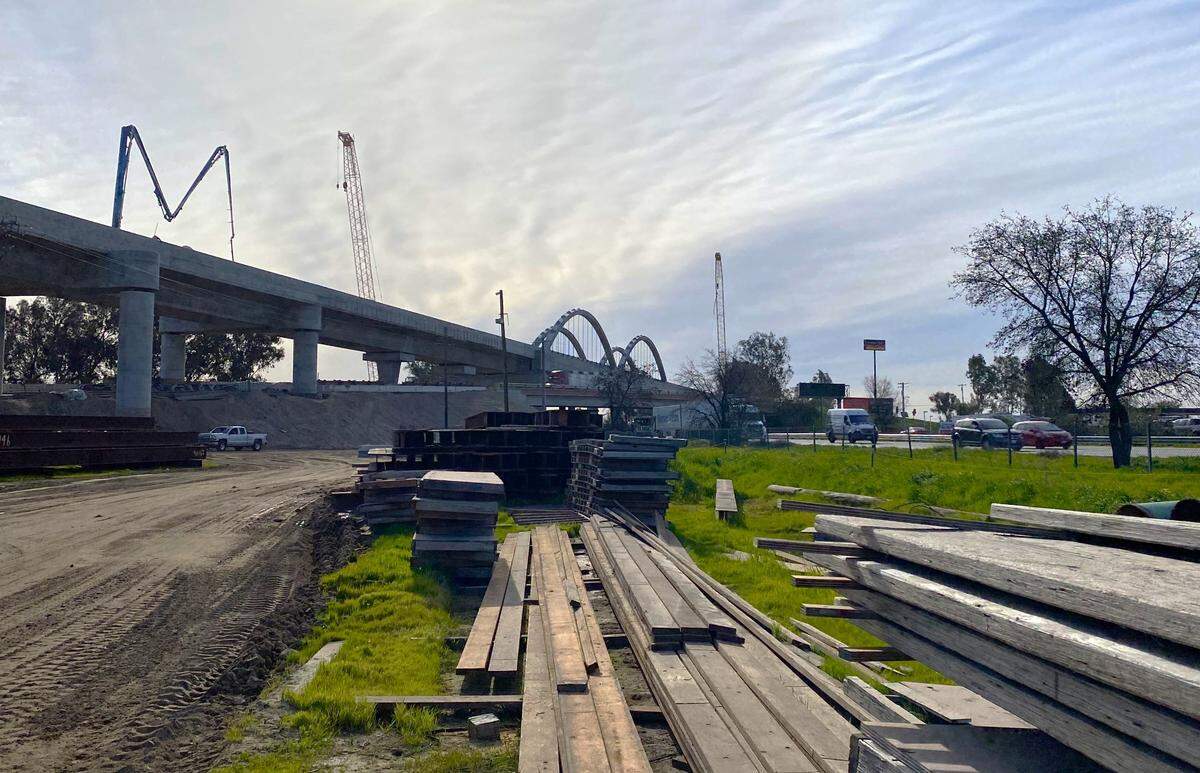
More than 60 feet above the ground near Cedar Avenue and Highway 99 at the south end of Fresno, workers on California’s high-speed rail project poured concrete and bolted steel beams into place Tuesday on a viaduct that will eventually carry bullet trains up and over the busy freeway.
Those crews for contractor Tutor Perini/Zachry/Parsons are among the thousands of people who have gotten construction jobs on the landmark rail system over the past 10 years.
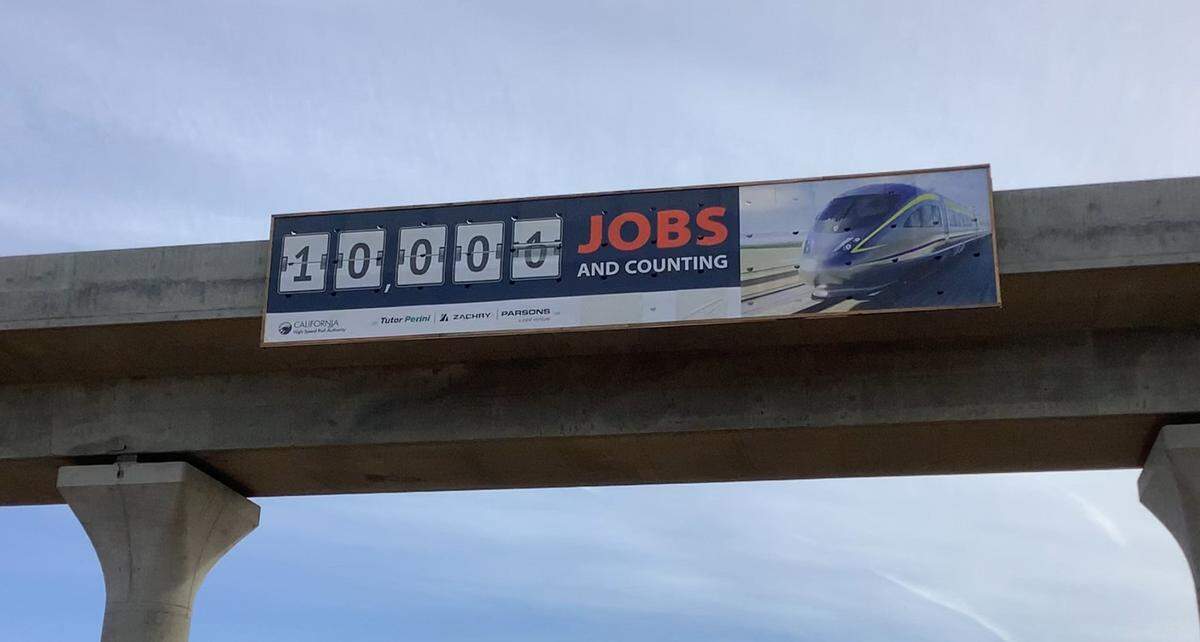
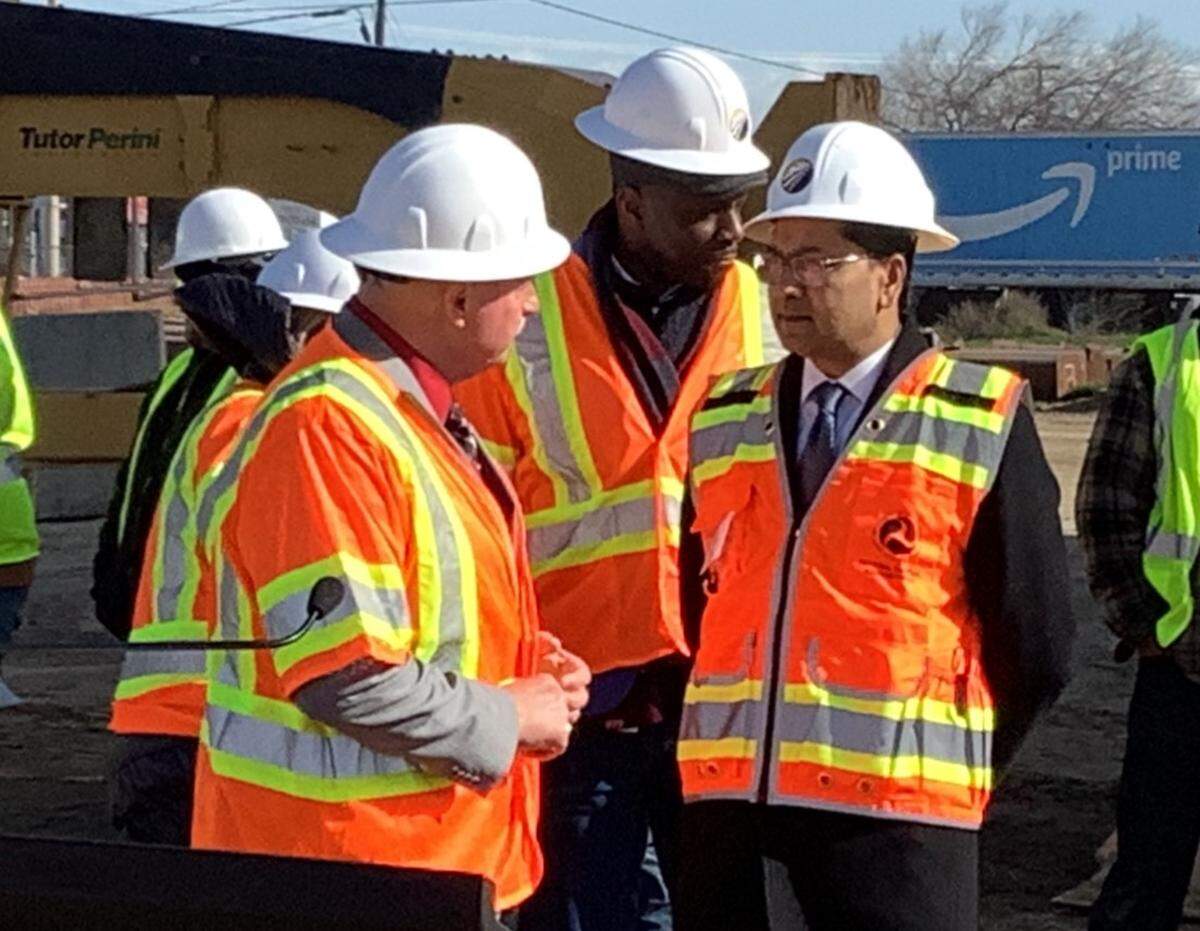
Local, state and federal officials gathered in the shadow of the viaduct Tuesday to celebrate reaching a milestone of 10,000 jobs on the massive infrastructure project.
“Just two years ago, Gov. (Gavin) Newsom was here in Fresno to announce 5,000 jobs being created,” said Toks Omishaken, secretary of the California State Transportation Agency. “Here we are just a couple of years later with more than double the jobs being created.”
Construction began in 2013 on the first of three segments of the future rail line through the central San Joaquin Valley. Contractors are engaged in work on 119 miles of the route from north of Madera through Fresno, Kings and Tulare counties to Shafter, northwest of Bakersfield in Kern County.
“When you come from an area of California that’s been commonly known for decades as the ‘Appalachia of the West,’ jobs are critically important,” said Tom Richards, a Fresno developer who serves as chairman of the California High Speed Rail Authority board of directors. “This project has led to a revival of economic growth in the Central Valley, and that’s only the beginning.”
Even more jobs will be forthcoming, Richards said, “as we move north to the Bay Area and south to Southern California.”
Fresno Mayor Jerry Dyer described the jobs creation of the high-speed rail project as “nothing short of miraculous.”
“Not just 10,000 jobs, but 10,000 good-paying jobs, livable-wage jobs, jobs that give people an opportunity to provide for their family, send their kids to college, be able to buy a home (and) be able to transform a family,” Dyer said. “When you know in Fresno that nearly one out of four families … live at or below the poverty line, good paying jobs are more meaningful than perhaps anywhere else in the state of California.”
Dyer added that of the 10,000 jobs, 3,000 are held by people living in Fresno County.
More money is needed
But officials with the high-speed rail authority acknowledged that to extend and complete the Central Valley portions of the system from downtown Merced in the north to downtown Bakersfield in the south – and keep the jobs flowing – more money will be needed, particularly from the federal government.
To date, about $3.5 billion in federal stimulus, economic recovery and railroad infrastructure grants have been funneled to California for its high-speed rail program, much of that coming almost 10 years ago.
“This project is unparalleled, and the federal government will continue to partner with California to deliver passenger rail benefits that people want and deserve,” Bose, the FRA administrator, said. “The Department of Transportation and the Federal Railroad Administration will continue to stand shoulder to shoulder with the workers and the cities of California to deliver this project.”
Another federal official, Deputy Assistant Transportation Secretary Charles Small, offered similar encouragement. “We are so excited about the potential of this project and what it’s doing for Fresno,” Small said. “As a Californian, there’s a lot of pride seeing something like this.”
Small, who grew up in southern California’s drive-everywhere car culture, said that living on the East Coast and experiencing train travel in the Northeast Corridor between New England and Washington, D.C. “changes your perception about the way you want to travel when you have these kinds of options.”
But while Bose and Small both expressed their support for more money for California’s project, the state rail agency’s application last year for $1.2 billion from the Bipartisan Infrastructure Law was passed over for funding by the Department of Transportation.
Bose said that application for funds from what’s called the MEGA grant program was in competition with other projects from a broad array of infrastructure needs nationwide, not specifically for passenger rail.
“I don’t think in any way it’s a reflection of the (federal) commitment to the California high-speed rail project,” Bose said.
The FRA has about $66 billion allocated from the Bipartisan Infrastructure Law, “but the pot that the California project in particular is paying close attention to is $12 billion from the Federal-State Partnership (for intercity passenger rail) over five years; that’s going to be a really good opportunity.”
“I’m sure they will regroup and look forward to more (grant) opportunities,” Bose added.
Small agreed. “We are committed to partnering with the state to figure out what the capital stack of funding will be,” he said. “That’s the beauty of the Bipartisan Infrastructure Law, that we have a variety of programs that this project is eligible for and to be able to provide the necessary funding to move this thing forward.”
“We’re going to break this down piece by piece,” Small added, “and get this over the finish line.”
This story was originally published February 14, 2023 at 4:38 PM with the headline "California heralds creation of 10K jobs on bullet train. ‘This project is unparalleled’."