Hugo Morales: “If you’re indígena in the Americas, you’re discriminated against and by many people”
.png "Harvard University awarded an honorary doctorate to Hugo Morales (center), co-founder and executive director of Radio Bilingüe, in recognition of his lifelong achievements on May 25, 2023. Morales is the first Indigenous Mexican to receive the honor that has previously been granted to 16 U.S. presidents, world leaders, civil rights leaders, scientists and artists.")
For all the educational and career achievements that Hugo Morales has accomplished, he still feels the sting of being judged for his Mexican indigenous roots.
He founded Radio Bilingüe in 1976 and expanded it into the nation’s largest Latino radio station network with 13 stations, 9 repeater stations and 92 affiliates. Yet, on a return trip from Oaxaca, an airline worker in México City told him in Spanish that he was in the wrong line; that the line was for those with premier status. Morales was wearing a chiquihuite (a woven reed basket) and a straw hat from his village.
He did have a premier card with the airline.
“I believe that even if I were to dress in suits – I have a lot of suits and ties – I don’t think that will make a difference in terms of avoiding discrimination because, again, racism is about race. It’s not about class,” he said.
Morales started school as a 3-year-old in his native Oaxaca, México and went on to earn degrees from Harvard. Yet during a Christmas visit back home in 1983 with six farmworker friends and his mother, he was the only one held up in customs. He was denied entry “porque no te estás portando bien” (because you are not behaving well).
A request to speak with the U.S. Embassy was denied. (As a naturalized U.S. citizen, he was traveling with a U.S. passport). He was soon on a plane to Los Ángeles, and an airline attendant apologized, sat him in the front seat and handed him a bottle of wine. He was told he could have been taken away and ended up in a ditch.
“The airline people already know what happens to indigenous people who ‘misbehave,’” said Morales. Upon his arrival at the Los Ángeles Airport, an airline customer service representative told him he should have given the Mexican customs agent $20 to gain entry. The airline could have coughed up $1,000 to get him through customs, but didn’t.
“So that’s essentially, you know, what as indigenous people, that’s what we face,” Morales said. “You know, this kind of blunt discrimination.”
Like an estimated 350,000 indigenous Oaxacans who have migrated to California, Morales has felt the sting of double discrimination – which can evolve to hate speech and hate crimes. State officials have noted an increase in hate crimes in recent years among all ethnicities and sexual orientation.
On one hand, Mexicans look down on indigenous Oaxacans because of their dark skin, different languages (16 languages are spoken), and culture.
Then, when they arrive in the U.S., they face discrimination from Americans and non-Oaxacan Latinos.
Eduardo Reyes, one of four Oaxacan immigrants toiling in the fields near Madera in October 1990, related the harsh reality they encountered from farm labor contractors who forced them into the most difficult jobs, make them pay $5 for lunch, $4 a day for a ride to work and $50 monthly rent.
“It’s tough to be from Oaxaca, but to be from Oaxaca and to be an illegal is hell,” he told Vida en el Valle.
More than three decades later, not much has changed.
Morales said that some of the workers that are the worst abused are the indigenous people.
Morales said those in the fields and the crews justified that abuse by saying “oh que son de Oaxaca, son oaxaqueños, son oaxaquitas (oh they are from Oaxaca, they are Oaxacan, they are Oaxaquita).”
“As if we, oaxaqueños, it is okay to exploit us. It’s okay to call us names. It’s okay to work long hours and not pay us. It’s okay for us to live in terrible working conditions. It’s okay to cheat us out of our paycheck, you know, because somos indios (we are indigenous),” Morales said.
He said unfortunately, that kind of attitude and racism is quite common among Mexicanos and Mayordomos in the fields in how people talk.
Racism is very deep
“I have these identities (Mixteco, Mexican American, Chicano) because I’m so out of place with the indígena norm,” Morales said. “You know, I’m not a gardener, you know, anymore. I’m not a farmworker anymore. I have all these degrees and, you know, fancy schools and all that kind of thing.”
They have not been shields against discrimination and racism. “Getting, you know, higher education is not necessarily an escape from discrimination,” he said.
“The challenge is that, you know, if you’re indígena (indigenous) in the Americas, at least that’s where I’ve been and lived, you know, you’re, you’re, you’re discriminated against and by many people,” said Morales, who migrated at the age of 9 to Northern California. “And so that’s, that’s part of the life of being in an indígena.”
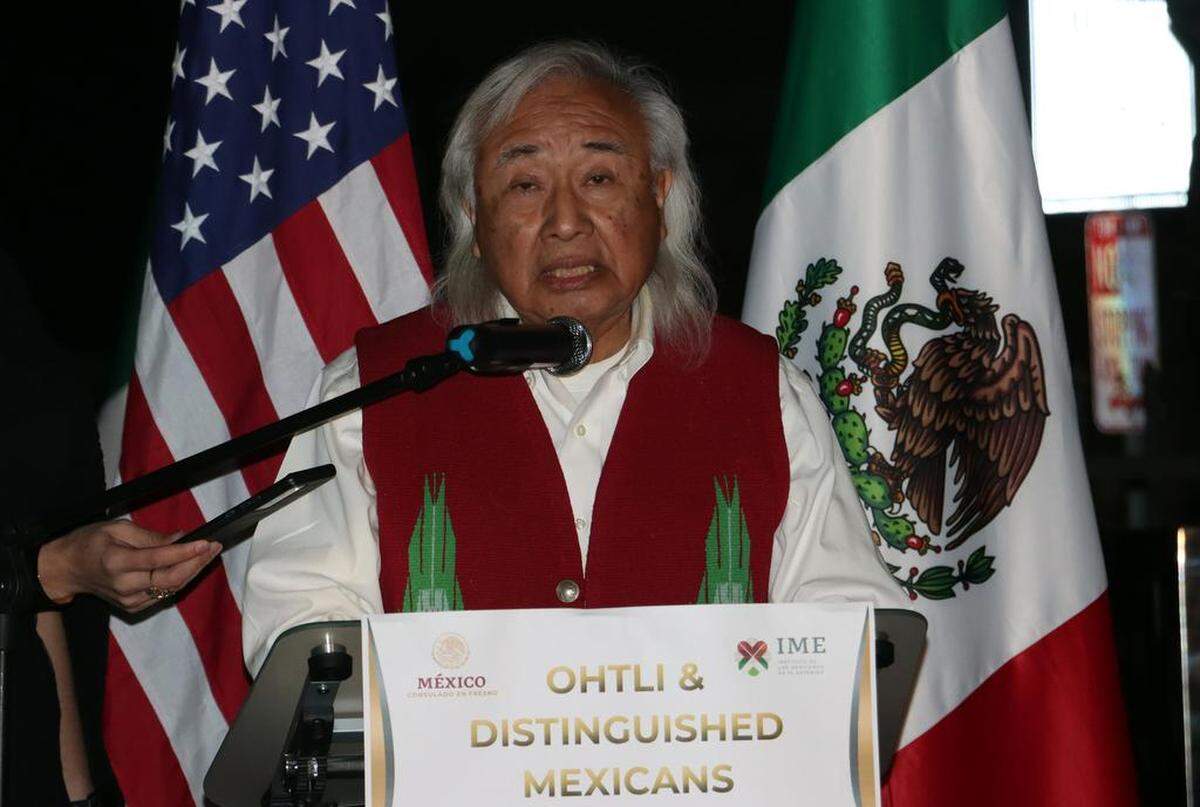
As a child farmworker attending public schools, Morales excelled academically and went on to graduate from Harvard College in 1972 and Harvard Law School in 1975.
Morales, 74, shared his brushes with discrimination and racism during a lengthy interview with Vida en el Valle. He has lived most of his life in the United States.
His experiences include:
▪ Situations where people will approach him and call him “chinito” (Chinese).
“Another way to put down indigenous people,” he said.
Morales has now begun to confront incidents of racism more personally when he sees that, while in the past he would just let it go and forget about it because he knew it was ridiculous.
“But more and more I’m like, you know, at least I need to educate one person at a time, because it’s unacceptable,” Morales said.
▪ During a youth trip to Perú, he was discriminated against by people who mistook him as an indigenous Peruvian.
▪ A 1979 trip to Perú and Bolivia with a white girlfriend while visiting a colonial site in Perú where all tourists were required to surrender their passports. The passports were returned to everyone but him, “because everyone else was white and I was the only indigenous person,” he said.
The pair did not complete their travel through Bolivia. Halfway to Cochabamba by train, Morales told his girlfriend he couldn’t stand the discrimination by some of the mixed bloods toward the natives.
“These mixed bloods had criadas. They had servants who were indigenous. The way the indigenous servants were treated was so demeaning that I could not stand it anymore,” Morales said.
Morales believes people use racism to put somebody down, to pull themselves up, adding that he can give “hundreds of examples.”
“The racism is very, very deep. That’s what I can tell you, including, you know, Latinos. And it’s not just Mexicans, it’s Central Americans. It’s brasileños. It’s Latin América, Perú, Bolivia, Chile, Colombia, I mean, everywhere,” Morales said. “It’s a big, big challenge.”
This story was originally published August 14, 2023 at 5:00 AM with the headline "Hugo Morales: “If you’re indígena in the Americas, you’re discriminated against and by many people”."