
Northern California may see ‘more hazardous’ storms as winter temperatures rise, report says
Winters in Northern California aren’t as cold as they used to be — and that’s not a good thing.
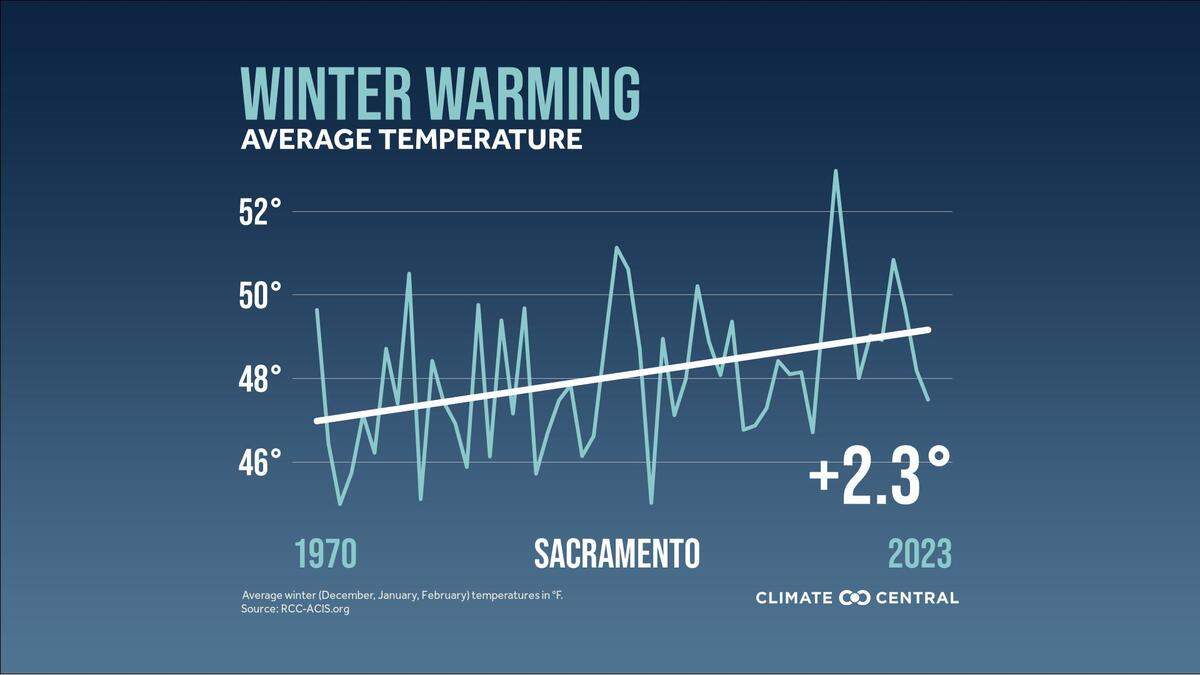
Temperatures across the Central Valley have increased at least 2 degrees over the past several decades, according to Climate Central’s “2023 Winter Package.” Other parts of the state have warmed at least 1 degree, and the majority of the U.S. has risen an average of 3.8 degrees, posing a long-term threat to water supplies, energy use, public health and agriculture.
In California, warm and short-lived winters could disturb fruit and nut crops.
Climate Central analyzed temperatures and days recorded above normal between December and February — from 1969-70 to 2022-23 — with data from the National Oceanic Atmospheric Administration’s Regional Climate Centers.
.jpeg "2023WinterPackage_Map_en_title_lg (1).jpeg")
“Warmer temperatures can make winter storms more hazardous, with sleet and freezing rain,” Climate Central wrote on its website.
Meteorologist Katrina Hand with the National Weather Service in Sacramento said wet conditions are “certainly a possibility” in California as a “strong” El Niño continues through the winter season.
Historically, El Niño winters have been anywhere from very dry to very wet, with warmer-than-normal temperatures.
It’s unclear what this winter will bring.
In January, extreme winter storms hit the region with historical flooding, downed trees and extensive power outages. There’s a 100% chance El Niño will last the entire winter with a 75 to 85% chance it will be “strong,” The Sacramento Bee previously reported.
The deadly storms led a state once gripped with arid conditions and water shortage out of a three-year drought.
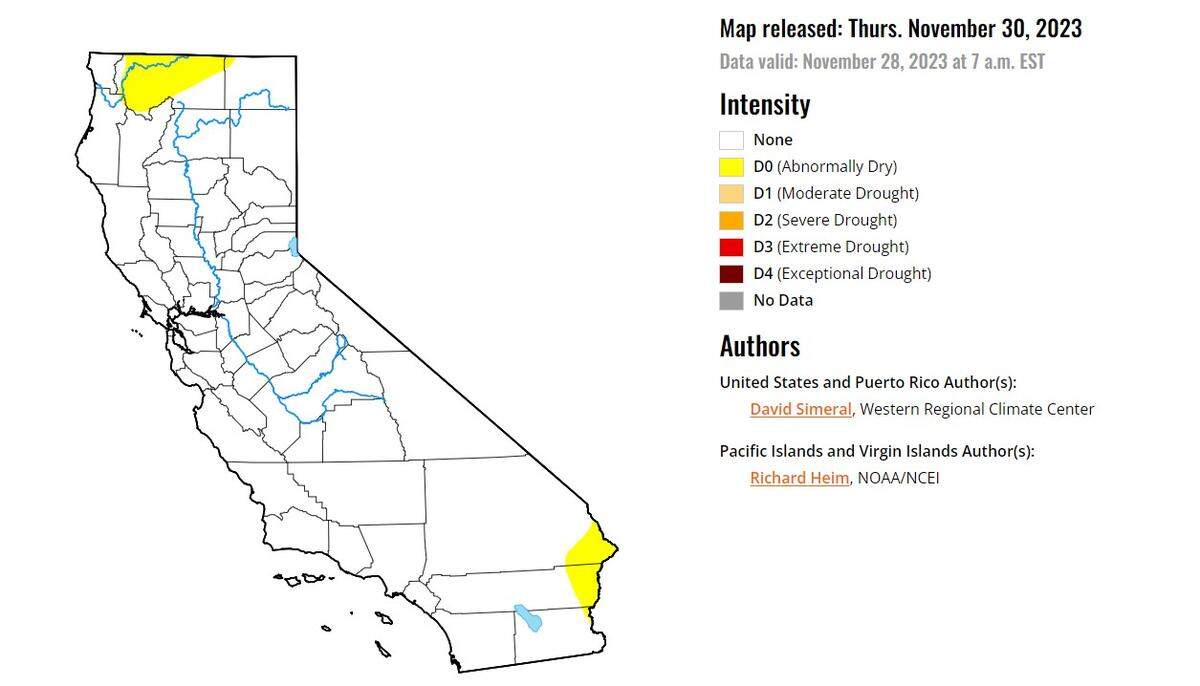
No one in California has lived in a drought area since November — according to a Thursday update from the U.S. Drought Monitor — a significant decrease from roughly 9,800 people in September.
The update showed 0% of California has “moderate drought,” down from 0.07% on Oct. 10. Roughly 4.6% of the state — parts of Siskiyou, Modoc, San Bernardino, Riverside and Imperial counties — remains “abnormally dry” as of Nov. 28. Before that, conditions teetered between 25% and 32% from May to mid-August.
Weather in Sacramento
A brief stint of warmer temperatures will soon blanket Northern California but not enough to have any lasting effects on climate.
“There’s not a crazy fluctuation or anything,” Hand said.
The Sacramento Valley will see a “slight” warming trend in daytime temperature highs over the weekend into early next week as the region undergoes high pressure. By the end of next week, cooler temperatures will creep back into the valley, and with it; the possibility of showers and mountain snow.
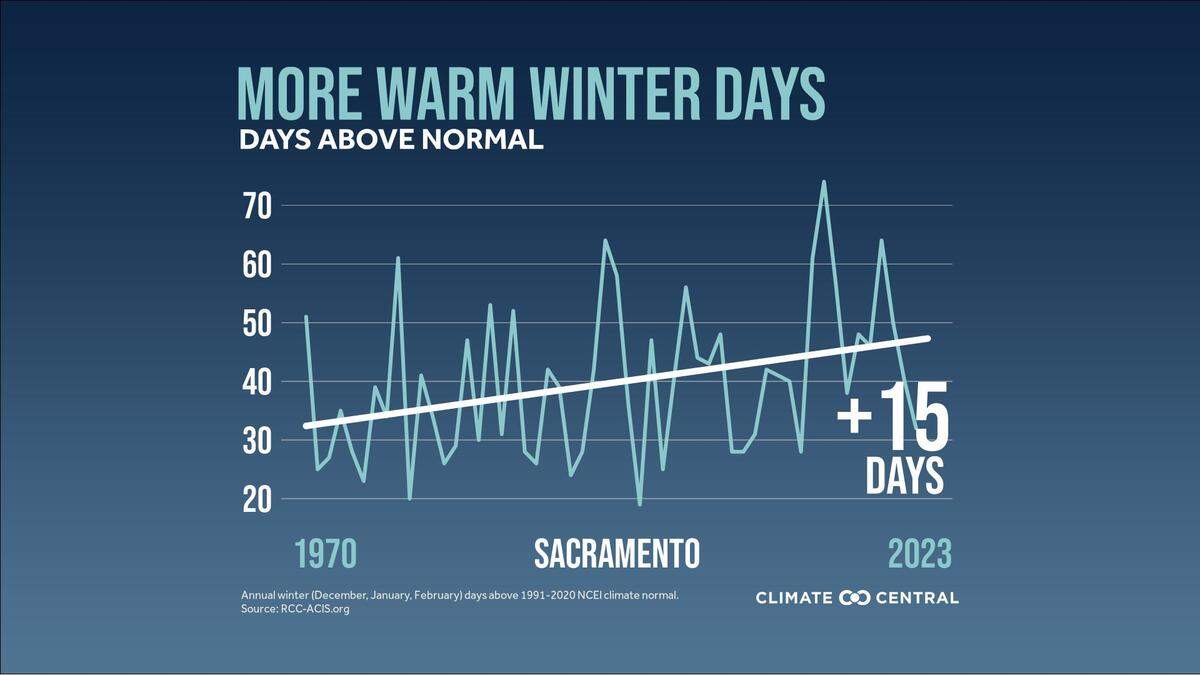
Over the past several years, Sacramento has warmed up by an average of more than 2.3 degrees, according to Climate Central. The city recorded more than 15 days of above-normal temperatures during the winter, between 1991 and 2020.
This story was originally published December 4, 2023 at 5:00 AM.