How can you spot bed bugs in a hotel room? What to know before a California vacation
Beware of hotels while on vacation in California. You could find bed bugs crawling around in your sheets and into your suitcase.
One in seven U.S. travelers have had an unfortunate bed bug encounter in a hotel room in the past year, according to a February survey from Sleep Doctor, a wellness company that provides information on sleep education.
The study found 20% of those bed bug sightings happened in five-star hotels.
Though bed bugs were most frequently reported in short-term housing locations, according to the Los Angeles County Department of Public Health, more hotels have found the pesky creatures crawling around in recent years.
Bed bugs are commonly found in homes and apartments after traveling, according to the National Pest Management Association, and the insects can travel easily and multiply rapidly.
“California has so many travel hotspots, visitors are constantly coming and going through airports, cruise ports and hotels,” Ian Williams, an entomologist at Orkin Pest Control, told McClatchy News via email.
In 2024, Los Angeles and San Francisco were among of the top 50 cities in the United States with the biggest bed bug problems, according to Orkin.
Here’s how to spot bed bugs in hotels and homes and get rid of them.
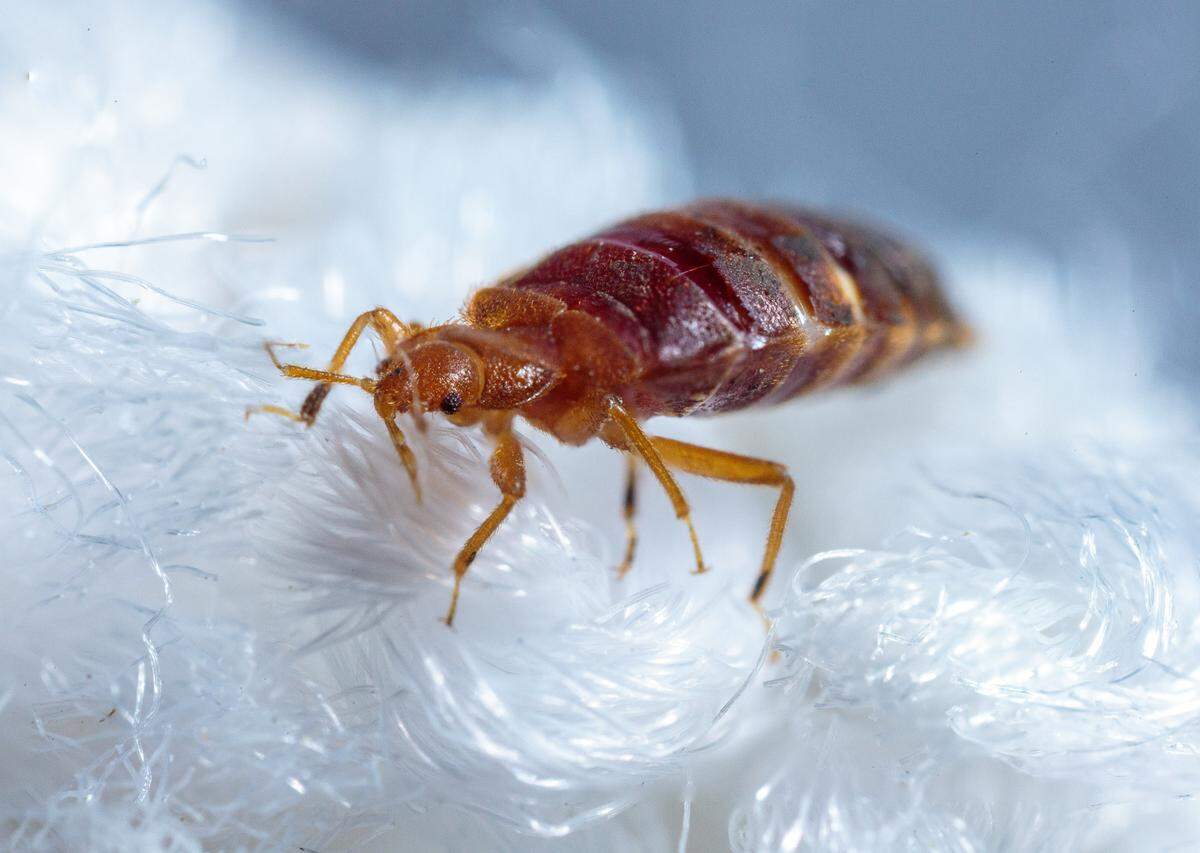
What do bed bugs look like?
In general, adult bed bugs are reddish brown and about the size of an apple seed, according to the U.S. Environmental Protection Agency. They measure about 3/16 to 1/4 inch long.
Young bed bugs, also known as nymphs, are smaller and translucent or whiteish-yellow in color, the EPA said.
Though the insects have wings, they can’t fly, the EPA’s website notes.
Where do the insects hide?
Bed bugs are only about the width of a credit card, meaning they can squeeze into small hiding spots, according to the EPA.
The insects can hide in or around beds — notably near mattress piping, on seams and tags of mattresses and box springs — and in cracks in bed frames and headboards, the agency said.
“They tend to be more active in temperatures between 70 to 90 (degrees Fahrenheit),” Williams said. “California’s temperatures make the region hospitable for bed bugs, with warm temperatures and an unending availability of human hosts.”
According to the EPA, if a room is heavily infested with bed bugs, you may find them:
In the seams of chairs and couches, between cushions and in the folds of curtains
In drawer joints
In appliances
Under loose wallpaper and wall hangings
At the junction where the wall and the ceiling meet
These bugs can end up in your home when carried from items such as luggage and clothing.
What are the signs of bed bug infestation?
You may think you have bed bugs if you wake up with bites on your skin, but that’s not the best indicator of an infestation, the EPA says, since bites can resemble those of other insects, such as mosquitoes or chiggers.
The EPA recommends looking for the following signs when examining a room for bed bugs:
Red stains on bed sheets or mattresses caused by bed bugs being crushed
Dark spots, which are bed bug excrement (spots may bleed on the fabric like a marker would)
Eggs and eggshells, which are tiny and pale yellow skins that bed bugs shed as they grow larger
Live bed bugs
How to get rid of bed bugs
If you find bed bugs in your home after a trip, here are some ways you can get rid of them, according to the EPA and Williams.
Remove infested items and seal them in a plastic bag.
Wash your bedding, clothes, curtains and any other fabric in hot water, preferably with temperatures above 140 degrees.
Vacuum all surfaces, including mattresses, box springs and furniture.
Use a bed bug-proof cover to trap the insects.
The California Department of Public Health recommends contacting a licensed pest control company to control the infestation and using heat treatments and insecticides to target bed bugs.
How to prevent pests
When staying in a hotel, Williams recommends travelers store their luggage in an area with “hard surfaces,” such as a luggage rack.
To prevent bringing bed bugs into your home after traveling, you should wash all of the clothes you bring home immediately, then dry them using the hot setting, according to the American Academy of Dermatology.
Using a hand steamer on your luggage can also help kill bed bugs and their eggs.
Williams also recommends leaving suitcases in the garage until they can be inspected for bed bugs and vacuumed.
You should also avoid bringing secondhand furniture into your home, the dermatology association said. Signs of bed bugs can be hard to spot, since they can survive for up to a year without eating.