SMUD’s plan for 500,000 Sacramento County solar panels is taking heat from environmentalists
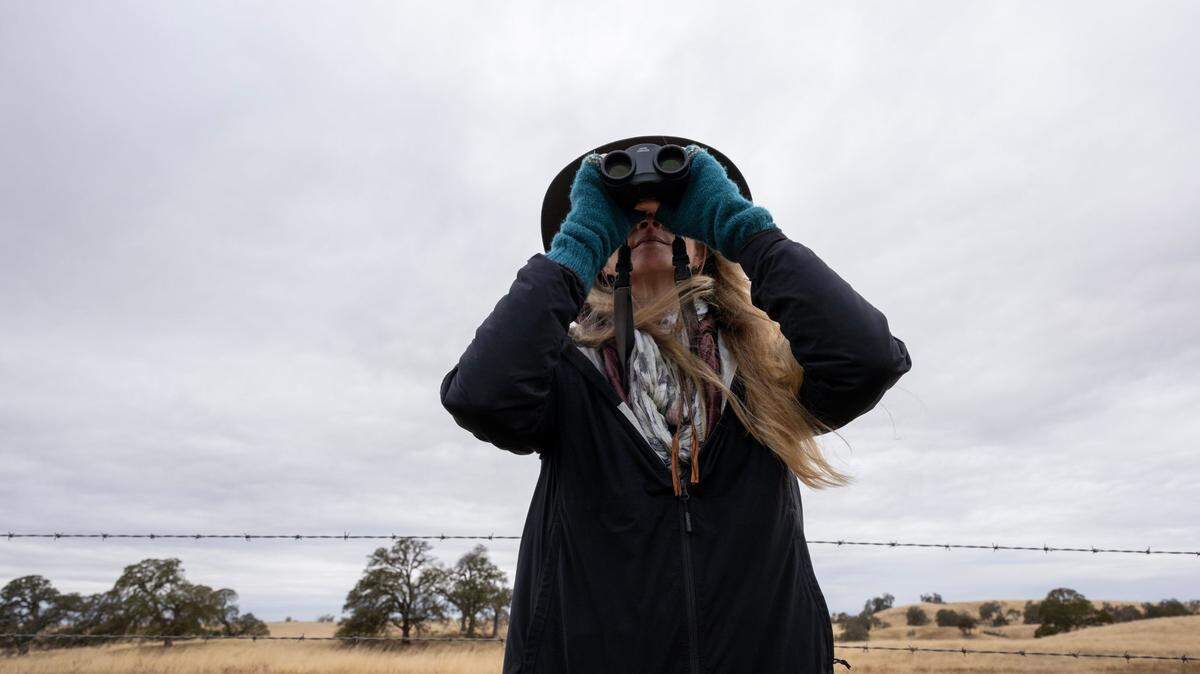
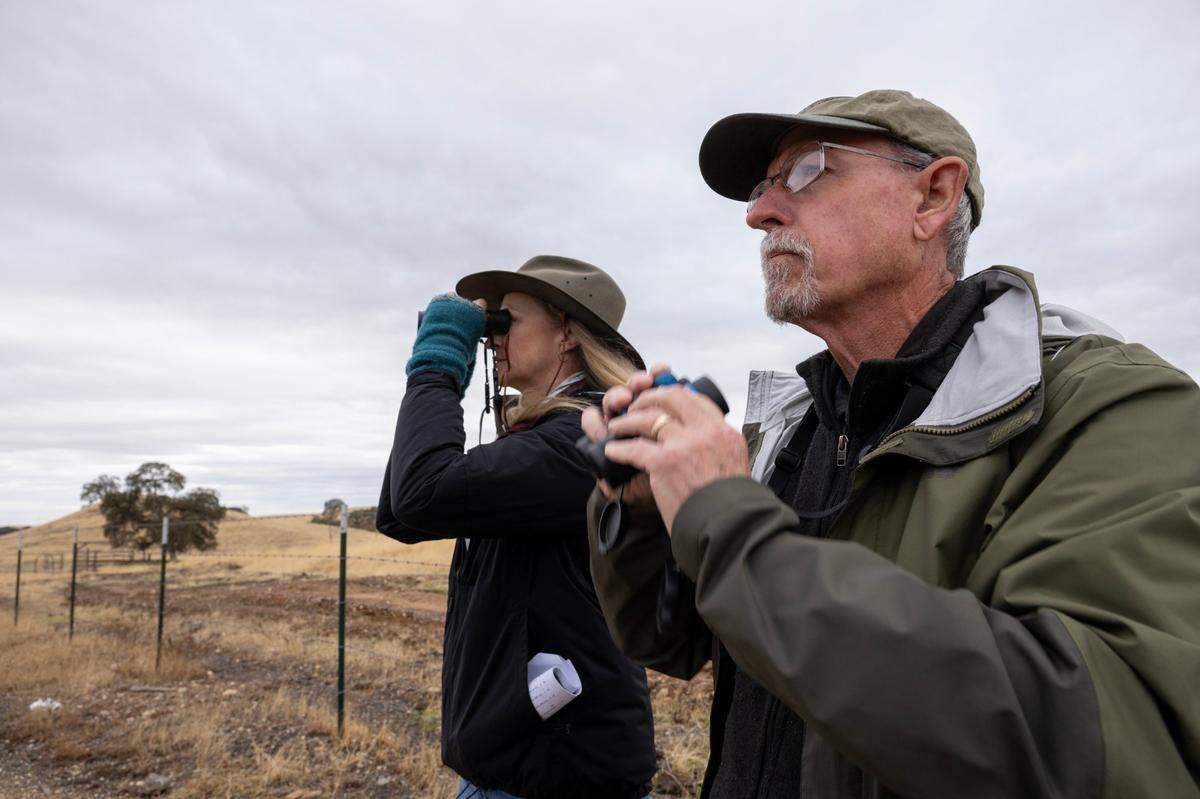
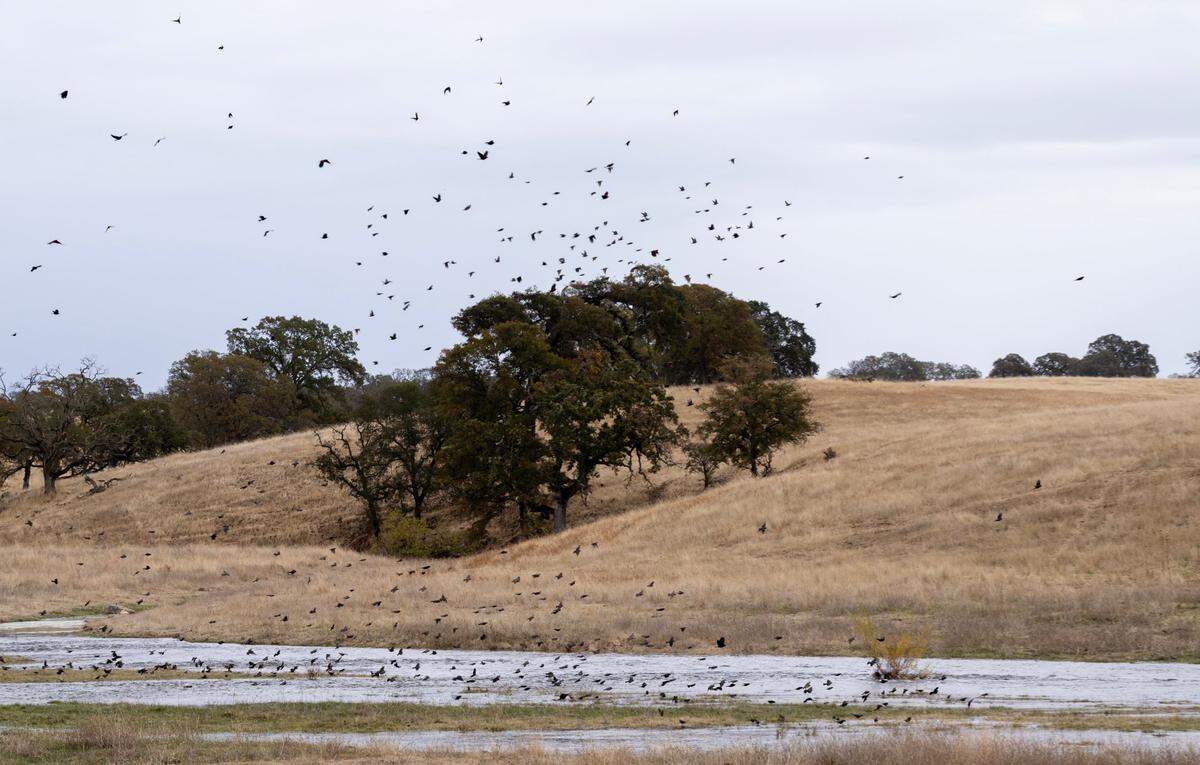
On a cloudy November day in eastern Sacramento County, flocks of black birds swirled over a slow moving creek, catching bugs in the air and resting on 100-foot valley oak trees.
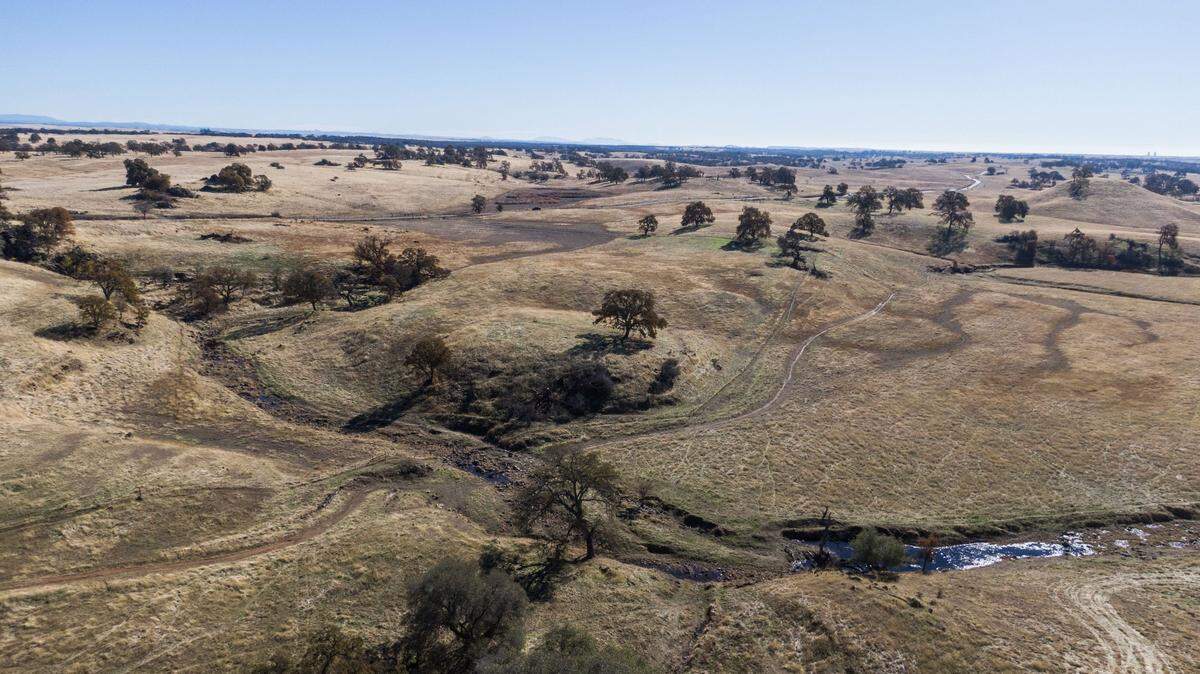
The landscape of rolling hills known as Barton Ranch is also the future site of Coyote Creek Agrovoltaic Ranch — one of the largest planned solar projects in California.
The 2,700 acre, $450 million project by New York-based D.E. Shaw Renewable Investments would power about 45,000 households in Sacramento Municipal Utility District (SMUD) territory.
It’s a core piece of the utility’s clean energy plans. Yet the project is coming under fire from environmentalists, who warn it would permanently harm this rare landscape and the animal species that depend on it.
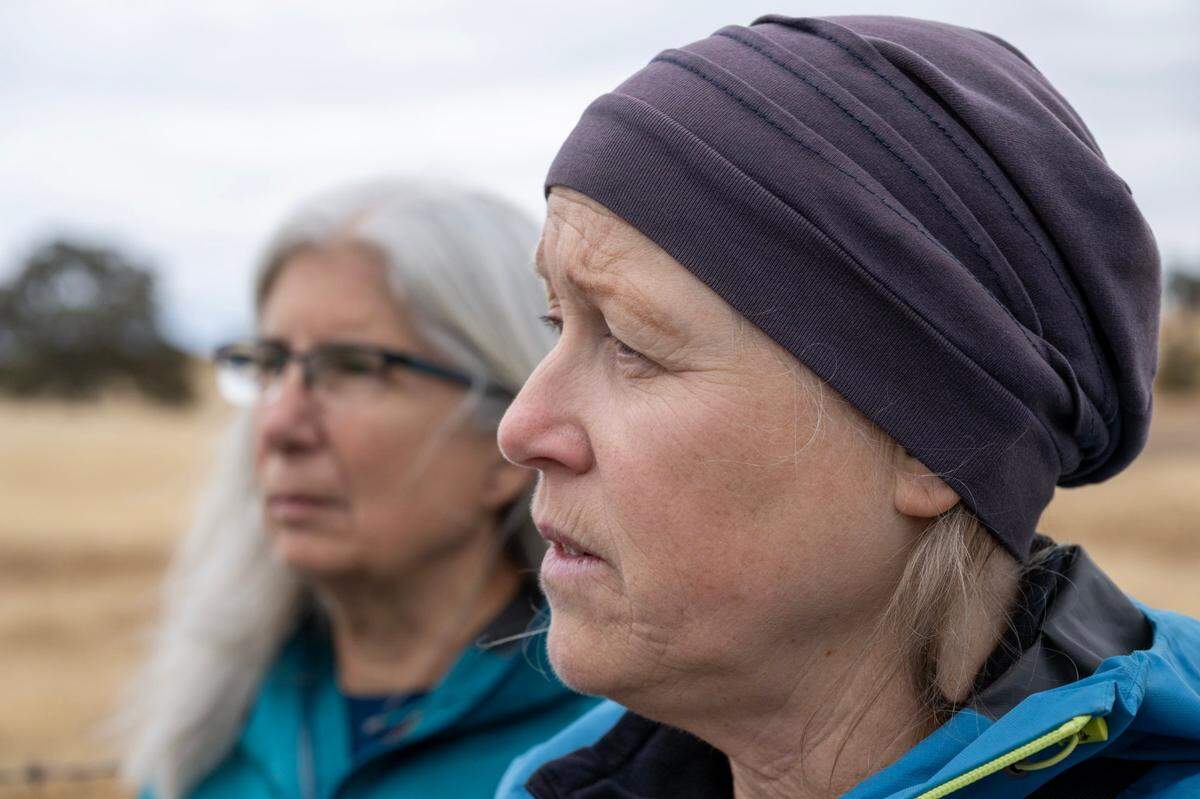
“We’re not saying don’t build massive solar. We understand you need to do that,” said Kim Delfino, an environmental consultant for Defenders of Wildlife. “The question is where, and this is one of the worst places I’ve seen.”
As utilities ramp up renewables to cut carbon emissions and avoid the worst consequences of climate change, they often collide with efforts to protect fragile ecosystems.
SMUD said the project is balancing these considerations. Representatives of D.E. Shaw said they have gone “above and beyond regulatory requirements” to limit impact.
The project is undergoing an environmental review, which is expected to be released early next year.
‘Agrovoltaic Ranch’ at Coyote Creek
In 2021, SMUD set one of the most ambitious clean energy goals in the country. The utility is working to produce zero-carbon power by 2030, 15 years ahead of California’s statewide target.
In its recent Zero Carbon Plan Progress Report, the utility highlighted Coyote Creek as one of the key renewable projects needed to advance its goals. It’s set to be completed in 2027.
The project would include half a million solar panels paired with a 100-megawatt, four-hour battery energy storage system, making 5% of the utility’s entire electrical load. SMUD serves roughly 1.5 million customers.
D.E. Shaw has a longstanding relationship with Sacramento’s power utility. The company owns and operates a 160-megawatt solar array on 550 acres at the decommissioned Rancho Seco Nuclear Generating Station.
The energy company estimates that Coyote Creek would create about 400 jobs and displace 200,000 metric tons of carbon emissions a year, equivalent to removing some 70,000 cars from the road.
The project has already been delayed by several years. The company initially planned to begin operations in 2024, but later redesigned the project to minimize environmental impact, leaders said.
“One of the reasons to target this property and why we spent so much time, was that it was considered low value grazing land,” said Hy Martin, D.E. Shaw Renewable Investments chief development officer.
The new project design protects two creeks flowing through the site and sets aside 1,000 acres of land for permanent conservation.
“Over the past three years, our redesign has advanced our tracking technology so we won’t be moving as much dirt or impacting wetlands.”
Sacramento is not the only community seeing clashes between renewable energy developers and environmental conservationists. In Nevada, plans for large solar farms sparked opposition over potential harm to desert tortoise habitats.
So far, much of California’s large-scale solar farms are in the south, with 85% of the state’s solar capacity generated in Kern, Riverside, San Bernardino, Los Angeles and Fresno counties.
Pro-solar but somewhere else
Several environmental groups, including the California Native Plant Society, Defenders of Wildlife and the California Wildlife Foundation, are advocating for SMUD to change course.
The area’s unique environmental resources, they say, make Barton Ranch a harmful place to build utility-scale solar and that the project’s development will do more harm than good.
The undeveloped landscape is an example of untouched Central Valley chaparral, a now-rare California Mediterranean ecosystem characterized by fire resistant brush and mature oak trees.
“Theyre going to have to flatten and terrace these hills,” said Delfino, the environmental consultant, suggesting it be built elsewhere. “Why do that when you already have flattened farmland?”
They say the project site is home to dozens of special status species, including bald eagles, burrowing owls, and tri-colored blackbirds. It also has vernal pools, a temporary wetland where the endangered fairy shrimp live.
Valley oaks are one of California’s unique native tree species. The state was once covered in them, but 90% have been cleared in the last century for agriculture and urban development.
“We hope that SMUD does the right thing and makes a different decision,” Delfino said.
She also asserts that SMUD did not hold a competitive bidding process for the project, so did not get the opportunity to consider other locations.
SMUD, which is relying on Coyote Creek and another solar project to help transition away from natural gas generation of electricity, declined to make a subject matter expert available to interview.
In a statement, utility spokesperson Gamaliel Ortiz said the forthcoming review under the California Environmental Quality Act “will address the potential environmental impacts of the project along with mitigation measures.”
“SMUD carefully evaluates renewable energy projects to ensure environmental considerations are thoroughly addressed,” said the statement.
“We believe in balancing renewable energy development with responsible environmental stewardship as we work toward our industry-leading goal of zero carbon in our power supply by 2030.”
Environmental advocates that aim to protect biodiversity want to see more rooftop solar or large-scale development on farmland taken out of production instead, which is becoming more common in California.
“You want to find low-impact areas,” said Delfino. “That way it will be faster and cheaper to develop… I get the feeling they have buyer’s remorse with this one.”