Tiny endangered species returns home ‘more resilient than ever’ after CA wildfire
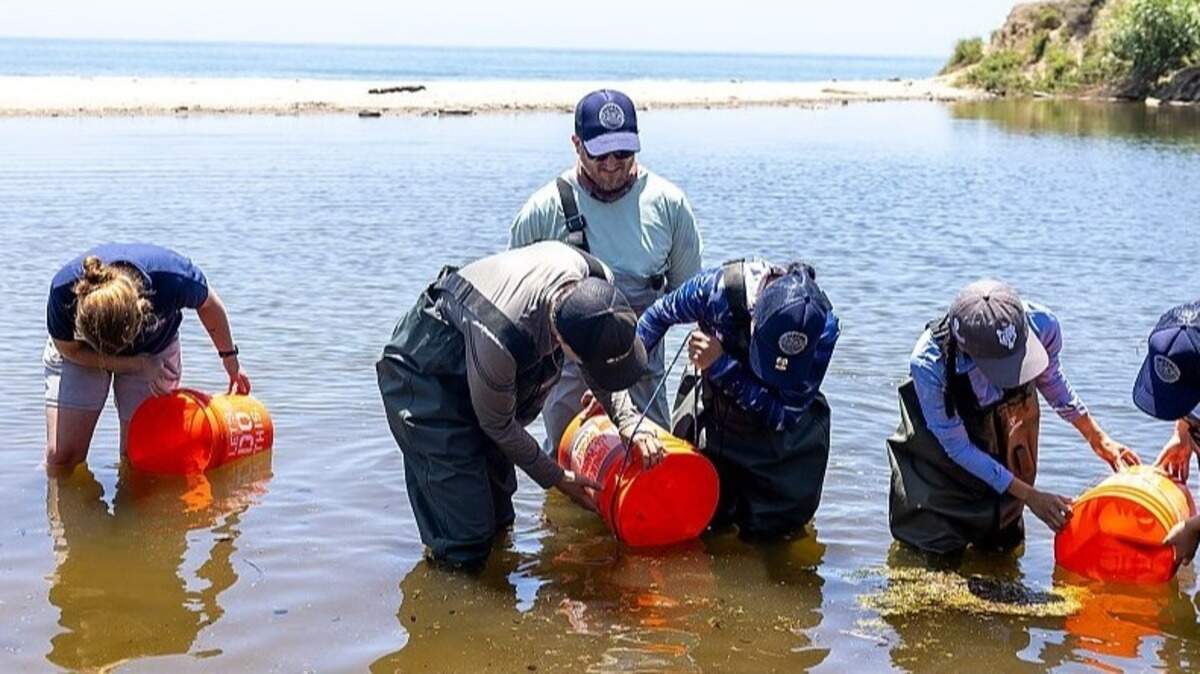
Ten days after the start of a deadly California wildfire, researchers rushed to a lagoon — one that held a tiny endangered species.
“Armed with three Coleman coolers, hand nets and larger, weighted ‘seine’ nets,” faculty member Brenton Spies and student Sophia Hoolihan traveled “to the shores of the Topanga Lagoon” in the Santa Monica Mountains on Jan. 17, California State University Channel Islands said in a June 18 news release.
The hope was to rescue a group of northern tidewater gobies “before the debris flow came down,” Hoolihan, who recently graduated, said in the release.
“We had to kind of jump on a call and make it all happen really fast,” Spies said .
A group of biologists managed to rescue the fish “from one of their few remaining natural habitats,” the Aquarium of the Pacific said in a news release.
And now, after the fish spent five months at the Aquarium of the Pacific and Heal the Bay Aquarium, “a crisis that began with the Los Angeles fires came full circle,” the university said.
“They’ve returned back to their homes more resilient than ever,” Aquarium of the Pacific aquarist Stacy Hammond said in the release.
The rescue and return home
After meeting in Santa Monica, the team, which included multiple wildlife agencies, headed to the lagoon in “about seven or eight cars,” said Hoolihan, who had been researching the fish as part of her senior capstone project.
“We had to get a bunch of ice chests, travel to the lagoon and then sort which fish we could take,” Spies said.
As two people held a net, others would “walk out 10 feet or so” into the lagoon, Hoolihan said.
Then, they placed the fish into 5-gallon buckets, where someone sorted “them using handheld nets, looking for fungal disease,” she said.
“One fish with fungal disease can spread,” Hoolihan said.
Once the fish were sorted, the team transported them to the aquariums, which cared for them until June 17, the university said.
“They were kind of on a vacation, getting fed twice a day, with no stress of predators,” Spies said.
During their months-long stay, the fish prospered.
“This group of fish are small but mighty, and they have physically grown so much during their time here,” Hammond said.
Though the fish’s lagoon was “significantly impacted by sedimentation from the fire,” there is now “sufficient habitat ... allowing these hardy fish to be safely returned to their natural habitat,” the aquarium said.
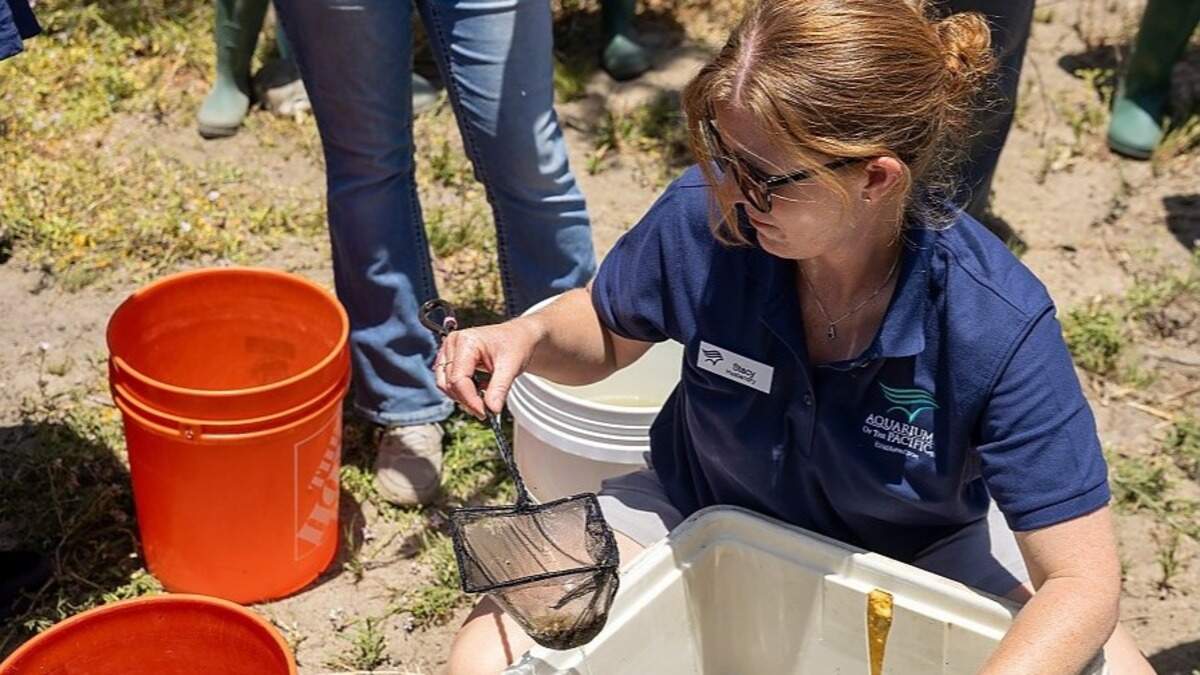
“The fish are doing really well,” Spies said.
Their return home was “significant,” as, prior to the Palisades Fire, the lagoon “supported the healthiest and most consistently abundant northern tidewater goby population in Los Angeles County,” according to the aquarium.
The species’ rescue, though, affects more than just their own population’s survival.
“It’s not just this one individual fish that we’re trying to save,” Spies said in a video shared by the Aquarium of the Pacific on Facebook. “It’s the health of these ecosystems.”
‘Keystone species’
Although it may be “easy to dismiss the relatively unimpressive gobies,” which are about 2 inches long and live less than a year, “they are a critical link in the health of the overall environment,” the university said.
.jpeg "fish_fitted (1).jpeg")
“They’re so small and they don’t have the vibrant colors everybody wants in their aquarium, but they are so important to the ecosystem,” Spies said. “They really are a keystone species. They hold the food web together.”
The fish’s “presence or absence can signal the health of the entire system, including coastal food webs and lagoon habitats,” the aquarium said.
While once abundant in Southern California lagoons, “loss of habitat, drought and introduction of non-native predators have taken a toll on the tidewater gobies,” according to the university.
In 2017, Spies pushed to have the species relocated from “from the Topanga Lagoon to other locations in order to increase their numbers,” the university said.
“There are very few of us who study the tidewater goby even though it’s endangered,” Spies said. “Very few scientists are permitted to collect them so it’s a niche I’ve had to maintain.”
The university, along with the Resource Conservation District of Santa Monica Mountains, will continue to monitor the fish “to ensure their survival,” the aquarium said.