Could CA bill meant to keep hazardous waste out of landfills undermine recycling?
AI-generated summary reviewed by our newsroom.
- SB 404 seeks to repeal a decades-old exemption for hazardous metal shredder waste.
- Environmental groups warn the bill weakens oversight and risks public health.
- Small recyclers argue uniform rules increase costs and bury usable scrap metal.
A California Senate bill addressing hazardous waste aims to close a loophole created in the 1980s, but environmental advocates believe it may have unintended consequences. And a recycling company with a south Modesto operation calls it “unconscionable” that recoverable metal would be put into landfills.
“The intent of SB 404 is to provide consistent legal standards for how metal shredding facilities operate in California — ensuring safe, comprehensive regulation while supporting the recycling of scrap metals into new products,” said Elisa Rivera, spokesperson for Anna Caballero, the state senator who sponsored the bill.
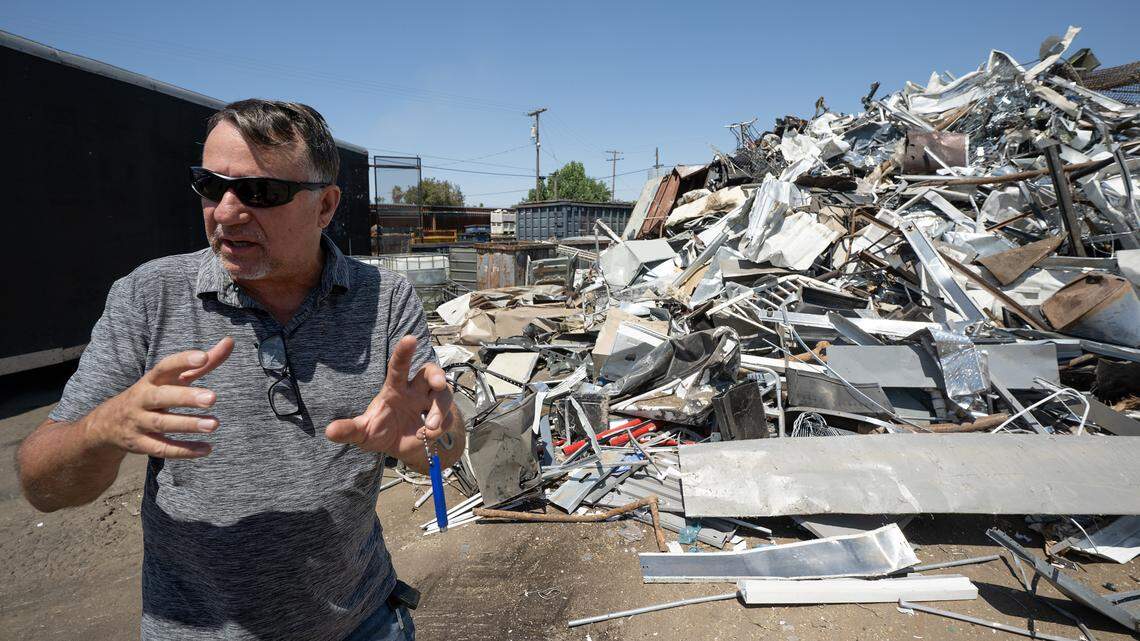
Steven Slater, the environmental health safety compliance manager at Universal Recycling Services, which operates a feeder yard in south Modesto, said he’s not against the bill but wishes it treated small metal shredders differently than the massive shredders that take apart cars.
Environmental groups have concerns with the bill, primarily that it would exempt metal shredders from hazardous waste regulations, despite their waste meeting the definition.
What would the bill actually do?
The bill would repeal a hazardous waste exemption that allows shredders to treat shredding residue and put it in landfills. And it would expand the oversight of the Department of Toxic Substances Control to include small operators, like Universal Recycling Services.
The current exemptions allow leftover materials like glass, rubber, dirt, auto fluids and plastics to be treated by spraying a thin layer of cement-like material intended to keep contaminants from leeching into the soil and groundwater.
Karen Chen, a fellow with the Natural Resources Defense Council who has been working with legislators on this issue, said it’s the removal from hazardous waste oversight that’s causing the issue.
“Hazardous waste should be considered hazardous waste,” Chen said.
If passed, DTSC would require permits and more direct oversight for all metal shredder operations under a new authority specific to the metal shredder business.
“We do appreciate that Sen. Caballero has put in a lot of thought and effort into trying to amend the regulation, to amend SB 404, to take into account many of the concerns that we have raised,” Chen said. “But despite the fact that we’ve been working on this for several months on it, many of the concerns we raised are still active.”
The way the bill is written now, Chen said, still allows shredders to possibly self-regulate and get out of their responsibilities for untreated hazardous waste that can pile up at their facilities and potentially blow over to nearby neighborhoods.
Small shredders, like Slater’s Stockton-based shredder, have been overseen by local agencies under a certified, unified program. Under this bill, all shredders would be regulated by DTSC.
Concerns about pulling recyclable metals from circular economy
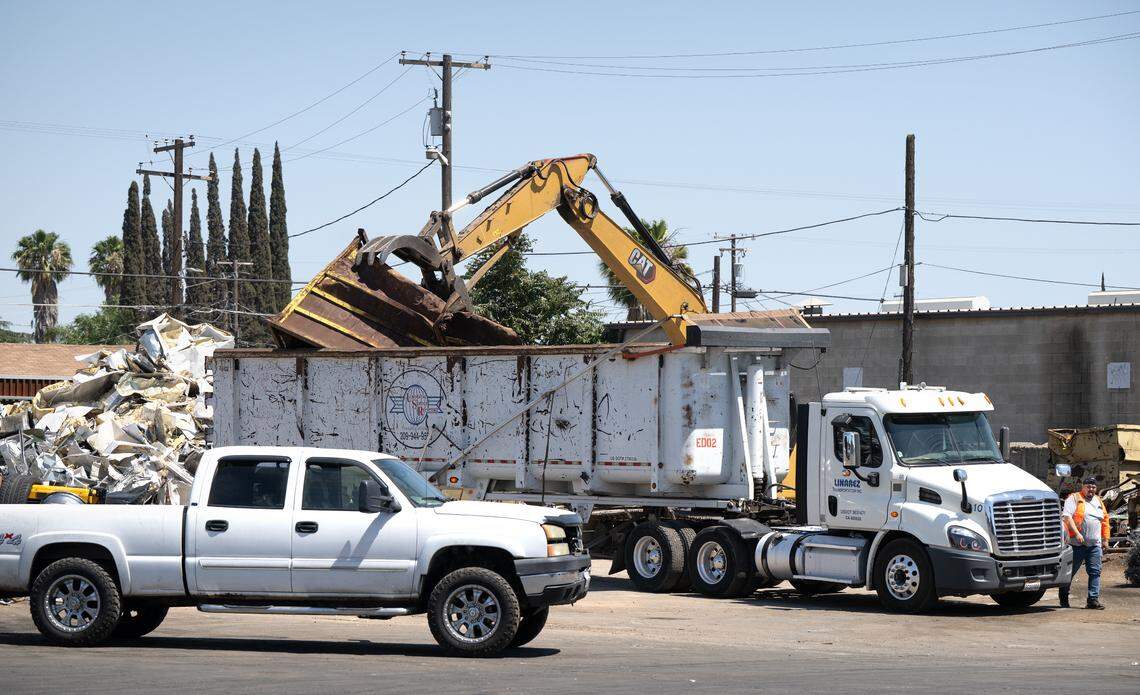
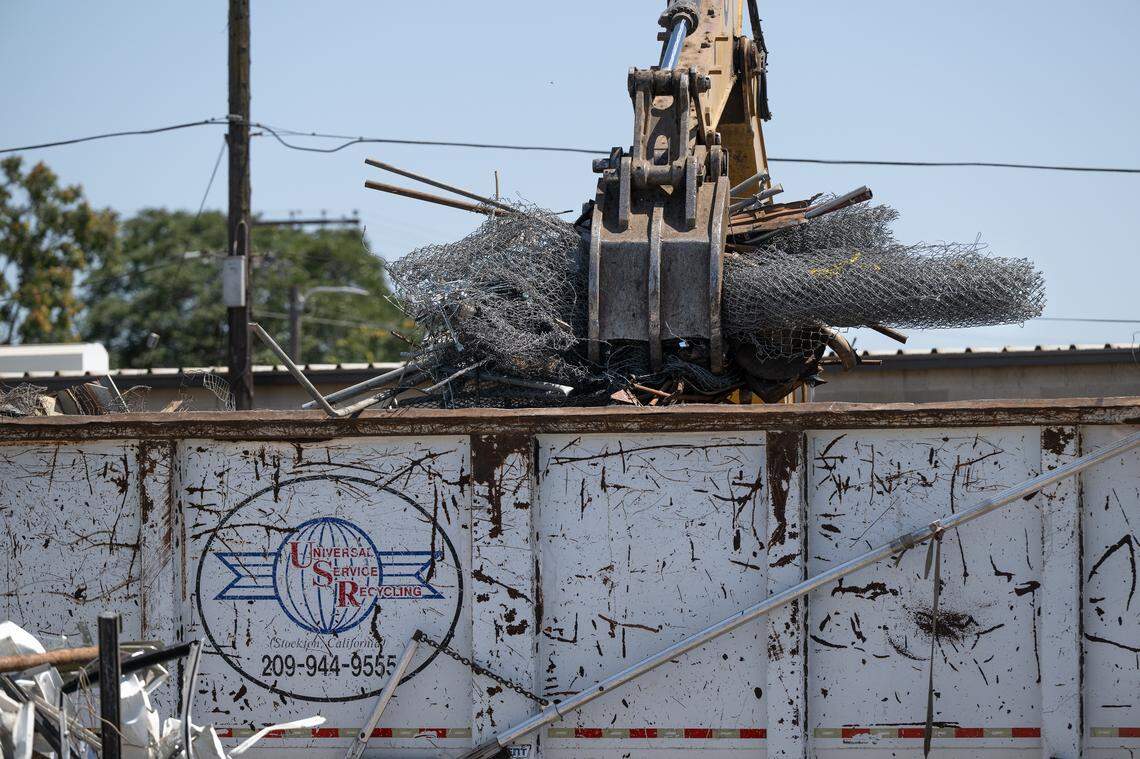
On the smaller scale, Slater works with industrial and commercial scrap metal, which gets piled into groups in his feeder lot in south Modesto. There, it gets separated into magnetic and nonmagnetic metals.
Then, at Universal’s Stockton-based facility, any remains from the shredding process get hand-sorted by staff into recyclable metal and anything else. Smaller chunks of metal get shipped out for further recycling. Anything that meets the California standard for hazardous waste gets disposed of as law dictates.
Slater said SB 404 would require all shredders regardless of size to chemically treat everything left over from the shredding process, including metal that could have been recycled. “With that much recoverable material — it’s unethical, it’s unconscionable,” he said. “It’s not morally right to bury that much metal in the ground. It’s still recoverable, recyclable material.”
Additionally, he said his company can’t afford to treat the material.
Slater said the blanket approach won’t resolve the longstanding issues with larger shredders, but will make it harder for people like him.
There are 10 metal shredders in California — seven of them considered “mega shredders,” which crush whole vehicles including buses.
“If California wants to be the poster child, the leader in recyclability, it’s a really bad decision for three out of those 10 businesses,” Slater said.
Chen said that as written, the bill still leaves a lot of wiggle room for metal shredders to self-regulate.
“I can absolutely appreciate and understand that we do need a comprehensive scheme for recycling materials in California, that is critical, but it shouldn’t be at the cost of neighboring communities,” she said.
Rivera said Caballero is still meeting with stakeholders.
“The senator is continuing to meet with small shredder representatives to find any ways to address their concerns, and is also happy to connect with concerned constituents.”
‘Mega shredders’ have risks that smaller operations don’t
“Mega shredders, in their operation, their size and scale is enormous compared to ours,” Slater said. “I mean, we’ll do 3,000 tons a month, they’ll do 4,000 tons a day— that’s the scope difference.”
Things like gas and tires, which can catch fire or explode at these facilities, have previously led to lawsuits and even criminal proceedings due to environmental and community impacts.
“There’s been catastrophic fires that have happened at metal shredders,” Chen said. “For example, the most recent fire at the West Oakland Radius facility — it took four hours and dozens of firefighters to put out.”
The remaining three shredders, including Universal Recycling Services, Slater said, don’t have the capacity to crush cars, and the metal scrap they do work with has much lower risk.
How did we get here?
In the 1980s, DTSC was in a bind. It classified metal shredder residue as hazardous waste based on its potential environmental harm, but the shredder industry said there weren’t enough facilities to accept it. So instead they came up with a plan to declassify the residue as hazardous waste, but only for the purposes of disposal. To mitigate the leeching risk, they worked with the industry to create a way to treat the waste before it was disposed of in landfills.
A report by the DTSC in 2021 states: “The metal shredding industry, through its treatability study, has demonstrated that while it can improve the performance of the treatment, it still cannot achieve a reduction in soluble levels below STLCs for zinc and, in some instances, lead. It also verified that the chemical treatment cannot affect the total concentrations of lead, copper, or zinc.”
Alysa Pakkidis, a spokesperson for DTSC, said the regulatory agency couldn’t comment or interpret pending legislation.
This story was originally published July 16, 2025 at 8:39 AM with the headline "Could CA bill meant to keep hazardous waste out of landfills undermine recycling?."