A California city hides its history, culture by mispronouncing its name | Opinion
AI-generated summary reviewed by our newsroom.
- Pronunciation errors erase cultural history; locals urge correct Los Baños usage.
- Tilde removal followed post office move and railroad influence in late 1800s.
- Modern diacritics laws and local debate push for official restoration of ñ.
What’s in a name? History.
In Merced County, the city of Los Baños is whitewashing its history by mispronouncing its name.
Phonetically, the proper, historical pronunciation of the town is: lohs BAN-yohs.
But it’s been bastardized through the years when pronounced: lohs BAN-ohss.
Dropping the simple y sound at the end of the correct pronunciation is not only disrespectful, it’s also cultural and historical erasure.
In a state with Spanish names peppered everywhere — San José, Los Angeles, San Diego, Fresno, etc. — it would be respectful if California correctly spelled or pronounced that place in deference to cultural history.
Credit for the city’s name goes to Felipe Royo de Laquesta, a Franciscan monk, whose missionary work would take him to bathe in a creek and nearby pools in the Diablo Mountain Range.
The area was named Los Baños del Padre A. Royo in his honor, and it was used by Mexican ranchers to identify the area when petitioning for land on the north fork of Los Baños Creek in the early 1800s.
The name was shortened not long after that and given to a settlement built around a store near Volta, just northwest of present-day Los Baños. Translated into English, Los Baños means The Baths.
What happened to the ñ?
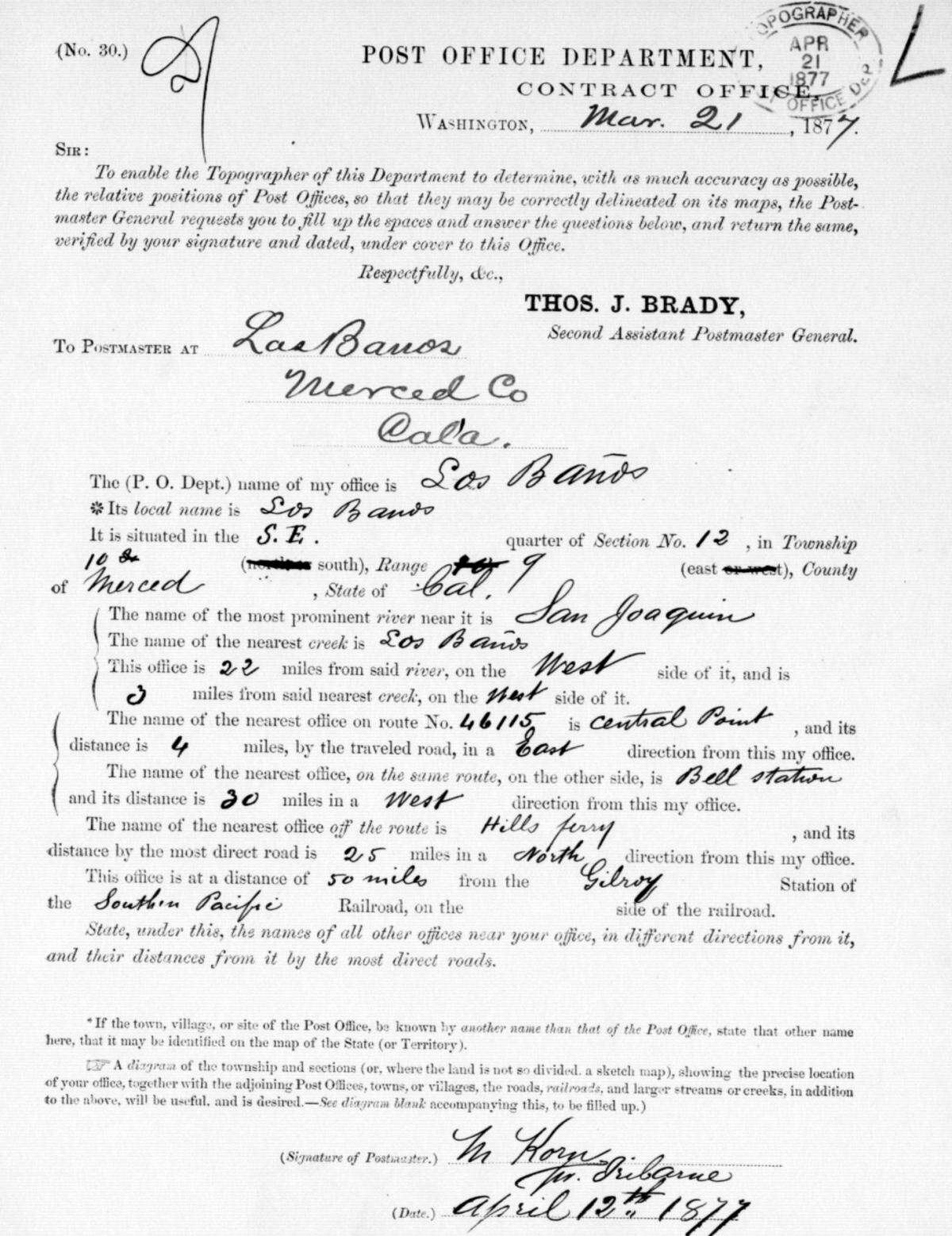
In March 1873, entrepreneur Moses Korn petitioned for a post office to be located near Volta because residents would have to travel to Gilroy for their mail. Eight months later, the federal government approved the post office and named him postmaster.
The “ñ” — one of 27 letters in the Spanish alphabet — remained until 1889 when Henry Miller moved the post office to the current site of Los Baños over opposition from residents who didn’t want it moved. Miller won out because he had the backing of the Southern Pacific Railroad.
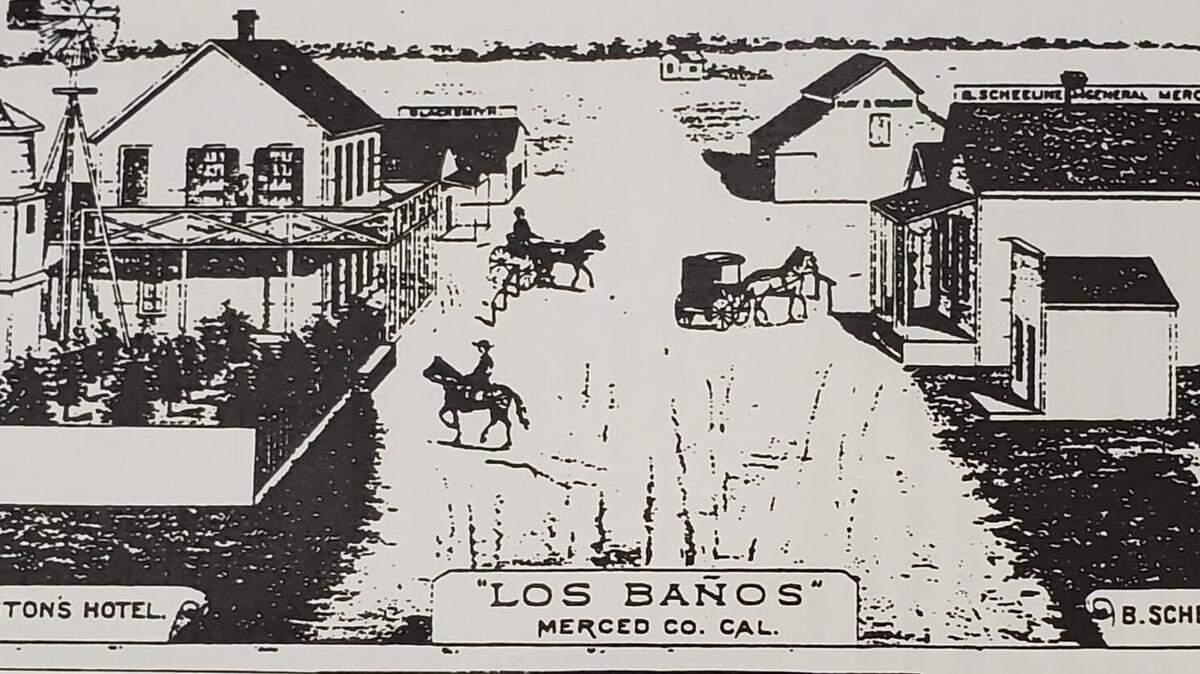
“Pictures of the new railroad depot show a lack of the tilde as well,” explained Milliken Museum docent Javier Powell in a Facebook video that explains how Los Baños got its name. “And with that, the new Los Baños became Los Banos, marking the end of an 80- to 90-year process.”
Shortly after American settlers moved in, the Latino population dropped to about 2%, said Powell, who spent a month researching the city’s history. With Basques and Italians among the newcomers not knowing Spanish, the loss of the tilde wasn’t significant, Powell said.
But through the decades, the tilde has appeared and disappeared. Former Los Baños Enterprise publisher Gene Lieb, recalls seeing copies of the newspaper from 1910 with the tilde in the masthead. He even showed people letterhead from the local bank that used the tilde.
Lieb’s reintroduction of the tilde in 2007 ran into controversy. Descendants of Italians and Basques who claimed their ancestors started the city chided the publisher for spelling the city’s name correctly.
City officials jumped into the fray, defending Los Banos as the name on paperwork when the city charter was approved in 1907, said Lieb, now publisher of the West Side Express newspaper.
“My contention was that all they had was manual typewriters that didn’t have the tilde,” Leib told me in 2012. “The tilde wasn’t there, not because they didn’t want to put it there, but because no typewriter had it.”
Los Baños is correct
In today’s high-tech world, it is easy to use diacritical marks on names. Gov. Gavin Newsom signed legislation last month allowing names with diacritical marks to be recorded on birth, marriage and death certificates. The legislation, AB 64, was authored by Assemblymember Blanca Pacheco, D-Downey, after two previous versions failed.
“Recording people’s names correctly sends the message that their identity matters and they belong here,” Pacheco said in a statement. “Our names represent our culture, our family and our dignity.”
The same can be said for place names like Los Baños.
San José and San José State University request the use of the accent mark in their names. La Cañada Flintridge, 9% Latino, proudly uses the tilde. Without the tilde, Los Banos has no meaning at all. There’s no way the city can point to the springs and pools in the Diablo Mountains and say it birthed the community’s name.
The debate continues
Insurance agent Joe Gutierrez, a former Spanish-language instructor at Merced College, said he would prefer the tilde be used but admitted the community is divided on the issue. He has lived in Los Baños for 35 years.
“History-wise, the tilde is right,” Gutierrez told me. “Somewhere along the line it was dropped.”
Gutierrez remembers the uproar a decade ago when the tilde appeared on the city newspaper’s masthead. He would prefer the tilde be used to accurately reflect the city’s name, but believes it will be up to the city council to educate itself and residents about the original name with the tilde.
“Once you put the tilde in, you’re going to divide the community,” said Gutierrez. “I’m proud of the history of this city. This is a proud history. Let’s embrace it.”
Gutierrez remembers his early years in Los Baños where the city logo would proclaim “Los Baños: The City of Spring Baths.”
With or without the tilde, Powell of the Milliken Museum said the city’s connection to Father Felipe Royo de Laquesta “is still there, it’s just evolving.”
I agree, Los Baños has a rich history. Officially using the tilde would affirm that identity and show respecto.
This story was originally published November 14, 2025 at 11:59 AM with the headline "A California city hides its history, culture by mispronouncing its name | Opinion."