
Is it a wolf or a coyote? What to do if you come across a wild gray wolf
As California’s wolf population continues to make its comeback, so does the state’s struggle to balance the needs of the endangered predator and the safety of residents.
Gray wolves have been increasingly present throughout rural Northern California, injuring and killing livestock and family pets in recent months. One wolf pack alone was responsible for killing nearly 100 cows and calves in a six-month period in 2025.
Despite wild wolves’ general avoidance of humans, the Beyem Seyo pack’s newfound reliance on livestock led to concerns of further danger for northeastern California residents. Last year, the state sanctioned the euthanization of the protected gray wolves for the first time in a century, The Bee previously reported.
The California Department of Fish and Wildlife offered several tips to both protect yourself and help track the growing populations. Here’s how you can protect yourself and pets if you come across a wild gray wolf.
What does a gray wolf look like?
Wolves can look and sound similar to their canine brethren, particularly coyotes and domestic dogs, but there are certain features that differentiate the apex predator from other animals, according to CDFW.
Gray wolves are much larger than an average dog or coyote, measuring up to 34 inches at shoulder height, more than 6 feet in length and weighing up to 120 pounds. When looking at the canine’s ears, wolves typically have small and round ears while coyotes and dogs have taller, pointed ears.
“Their coat is usually grizzled gray, but can be mostly or all black,” CDFW said on its website. “The tail hangs down or straight, but never curled.“
Although coyotes and dogs often bark, howl or growl like wild wolves, a wolf usually sounds deeper in pitch and their howls are often longer and drawn-out.
According to CDFW, no single trait can accurately distinguish between a wolf or another canine, and multiple features — including the animal’s behavior and any paw tracks or scat found — should be used for identification.
A document comparing the appearance of wolves, dogs and coyotes can be found on the CDFW website.
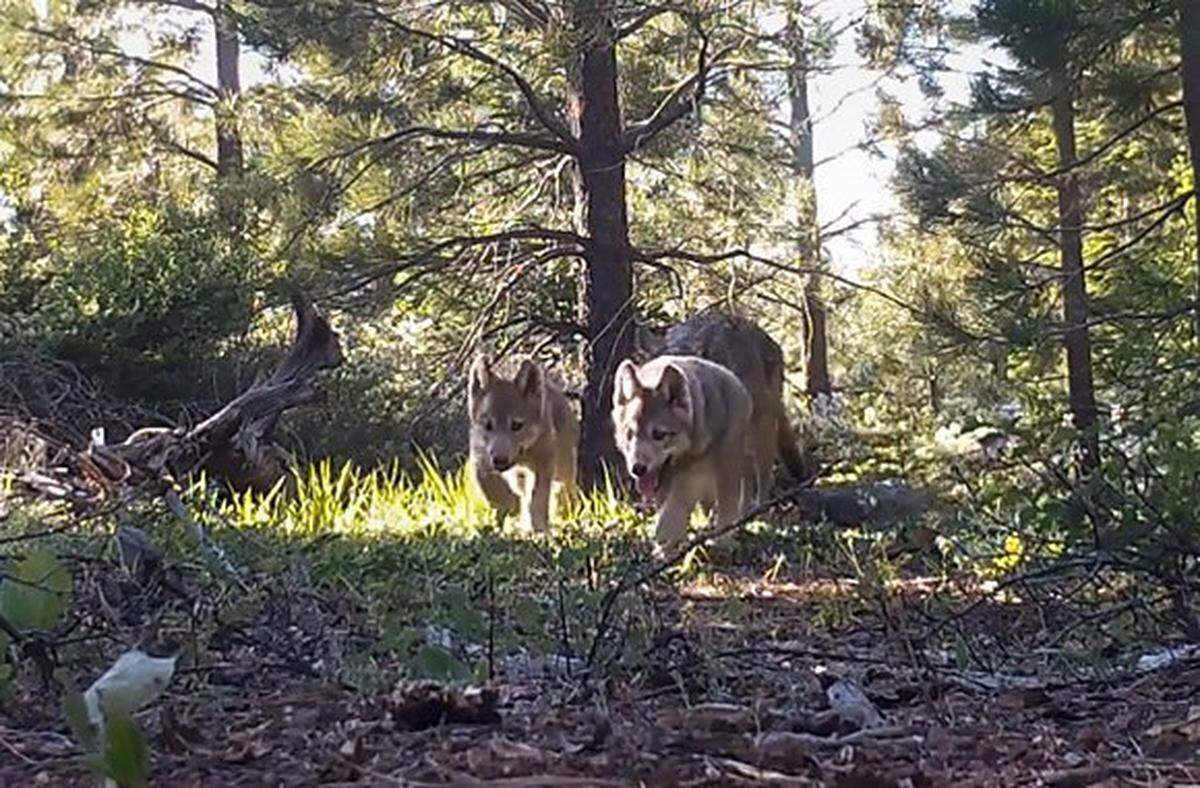
Where are gray wolves found in California?
Gray wolves are primarily spread across northeastern California, mainly in the region’s rural forest and agricultural areas. But the animal hasn’t always been around in the Golden State.
In 2011, California confirmed the existence of a wild gray wolf in the state for the first time in nearly 90 years after the native species had been considered locally extinct. The wolf, coined as OR-7, lived around the border between Oregon and California in the early 2010s, according to CDFW.
Nearly 15 years later, there are at least 50 observed and logged gray wolves in California, CDFW said on its website.
Gray wolves have been listed on the state’s endangered species list since 2014 to protect its small population. Hunting, harassing and killing a wolf are illegal as part of the California Endangered Species Act and the federal Endangered Species Act as of January 2026.
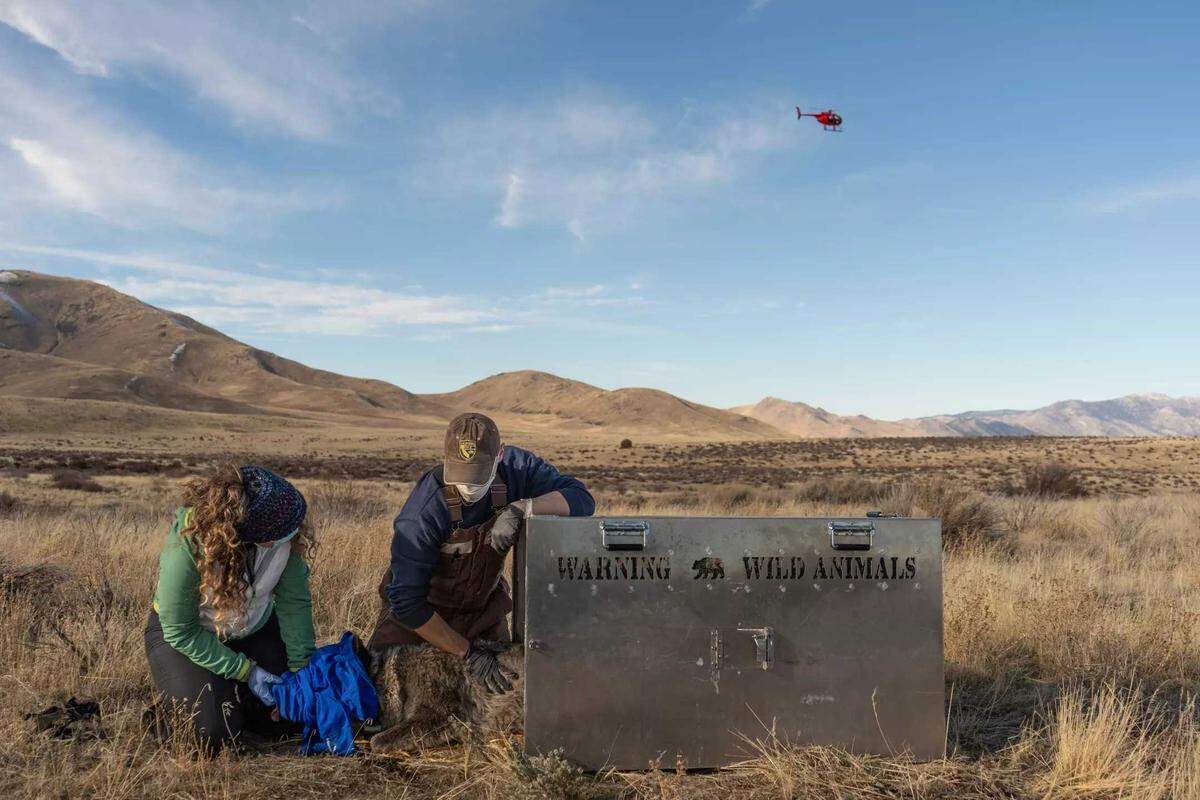
CDFW monitors and tracks wolves as part of its research and conservation work. The department has identified 10 active wolf packs in California across six counties.
In Northern California, wolf packs reside mostly in Shasta, Lassen, Plumas, Siskiyou and Tehama counties, while one pack lives in Tulare County in the southern Sierra Nevada. Individual wolves who are not part of an established pack may also be dispersed throughout the state’s rural areas, the agency said on its website.
What should I do if I see a wolf in the wild?
According to CDFW, gray wolves generally do not pose an active threat to human safety, as they are usually fearful and avoidant of humans. However, wolves may become accustomed to humans in areas where they encounter humans or food often.
The state fish and wildlife department encourages people to take these actions if they have a close encounter with a wild gray wolf:
- Do not run. Maintain eye contact.
- Act aggressively, make noise while retreating slowly.
- If the wolf does not retreat, continue acting aggressively by yelling or throwing objects.
- Never approach, feed or interact with a wolf otherwise.
Domestic dogs face a higher risk of attacks by wolves, so the department recommends taking certain precautions when bringing a dog near a wolf habitat:
- Place a bell or beeping collar on dogs that roam
- Talk loudly to the dog and/or use whistles
- Control the dog so that it stays close to you; this should cause wolves to associate dogs with humans
- Place the dog on a leash if wolves or sign of wolves are seen
- Keep pets and their food indoors, especially at night
CDFW requests that live wolf sighting or evidence — such as scat or tracks — are documented on photo or video and reported to the agency. Reports can be made on the department’s website.
If you do touch wolf scat or the fur of a dead wolf, the department cautions to wear gloves and thoroughly wash any part of your body that comes in contact.
Dead wolves should be immediately reported to the department by calling 530-225-2300 or emailing californiawolfsightings@wildlife.ca.gov.
.jpg)