Homeland Security shutdown affects TSA. What does it mean for CA airports?
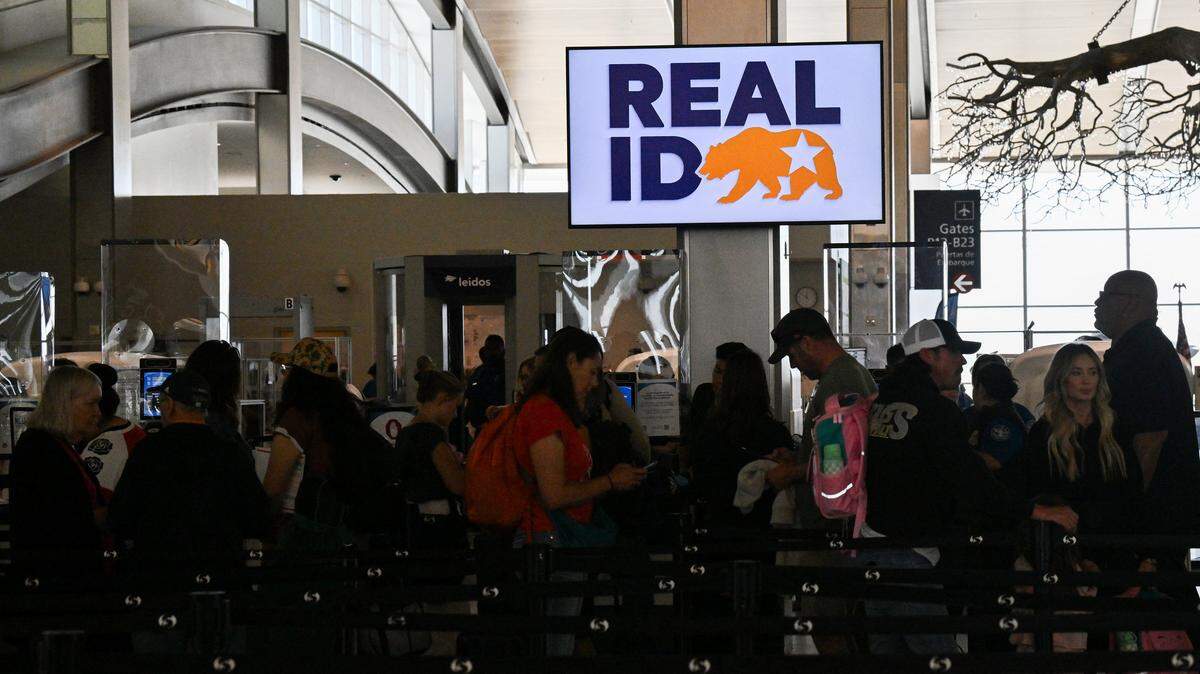
Funding for the Department of Homeland Security will expire this weekend, though Californians may not feel the effects at their airports for at least a few weeks.
The partial government shutdown stems from Congress not reaching an agreement over immigration enforcement reforms. Democrats, who issued a list of reforms last week, have called for increased accountability, unmasking of ICE agents and independent reviews of agents’ performance. Republicans have mostly balked at the proposed changes, and some have called for concessions like cracking down on sanctuary cities.
The result is no new spending plan for DHS. Immigration enforcement agencies will be least affected by the shutdown as they were funded through separate legislation last year.
Among the DHS agencies that could be most affected are the Transportation Security Administration and Federal Emergency Management Agency. Essential services will continue operating, but employees will have to go without pay. That puts a “strain on the frontline defenders of our nation,” a DHS spokesperson said in a written statement.
The repercussions of a shutdown will only exacerbate the longer it goes. In California, that could mean longer lines at airport security checkpoints and diminished capacity with emergency preparedness.
“Everything starts to snowball,” said Steve Jensen, a professor in Emergency Services Administration at California State University, Long Beach. “If we’re in a prolonged shutdown, and we’re compromised in our response — still up and running, but it’s severely less — and we get hit by a big disaster, an unforeseen earthquake or a storm, then we’re really in trouble.”
This shutdown could particularly drag on as Congress is in recess next week, and several lawmakers are expected to leave the country for the Munich Security Conference. There also appears to be minimal consensus between the two parties at the moment. Lawmakers are on call to return to Washington, D.C., if a deal is reached.
Other agencies under DHS include Secret Service, Coast Guard and Cybersecurity and Infrastructure Security Agency.
TSA agents ‘above and beyond’
California airports will likely remain at the normal operating functions during the beginning of shutdown.
About 95% of TSA’s roughly 60,000 employees are required to work through a shutdown without pay, said the agency’s administrator, Ha Nguyen McNeill, earlier this week. The shutdown will also affect air traffic controllers because they are under the Department of Transportation, which was funded already.
A Sacramento International Airport spokesperson said in a written statement on Thursday that the airport was not experiencing any operational issues due to the potential shutdown.
The Fresno Yosemite International Airport issued a similar statement on Friday, saying it had not been notified of any immediate impacts to operations and would be monitoring the situation.
The San Francisco International Airport did not respond to a request for comment.
About 250 TSA employees work at Sacramento International Airport, according to previous reporting from The Sacramento Bee. During last year’s shutdown, some TSA agents and air traffic controllers protested outside the airport during an ongoing stretch of unpaid work.
One consideration for TSA employees during this shutdown could be that Homeland Security Secretary Kristi Noem awarded $10,000 bonuses to some TSA employees for going “above and beyond” after the last federal shutdown ended.
TSA screeners would miss their first full paycheck in mid-March.
‘Major distraction’
The majority of FEMA employees are expected to continue working through the shutdown, though it would “severely disrupt” the ability to reimburse states for disaster relief costs and to support recovery from disasters, said Gregg Phillips, the associate administrator for the agency’s Office of Response and Recovery, earlier this week.
This could mean delays in providing financial assistance and long waits for response work.
Jensen said FEMA is affected regardless of the shutdown’s length. In the short-term, the issue is a “major distraction” from important work. The risk grows if a disaster occurs when the agency is at diminished capacity, he added.
The California Governor’s Office of Emergency Services, which coordinates FEMA funding, said a funding lapse would not change the state’s “near-term ability” to respond to emergencies. A long-term concern would be that some administrative functions may pause, and processing for grants and reimbursements could slow.
“Californians will continue to see firefighters on the line, emergency managers in operations centers, first responders in the field, and federal partners carrying out core life‑safety missions if disaster strikes,” said the office in a written statement.