Pink moon, planets and meteor shower to shine above California. When to look up
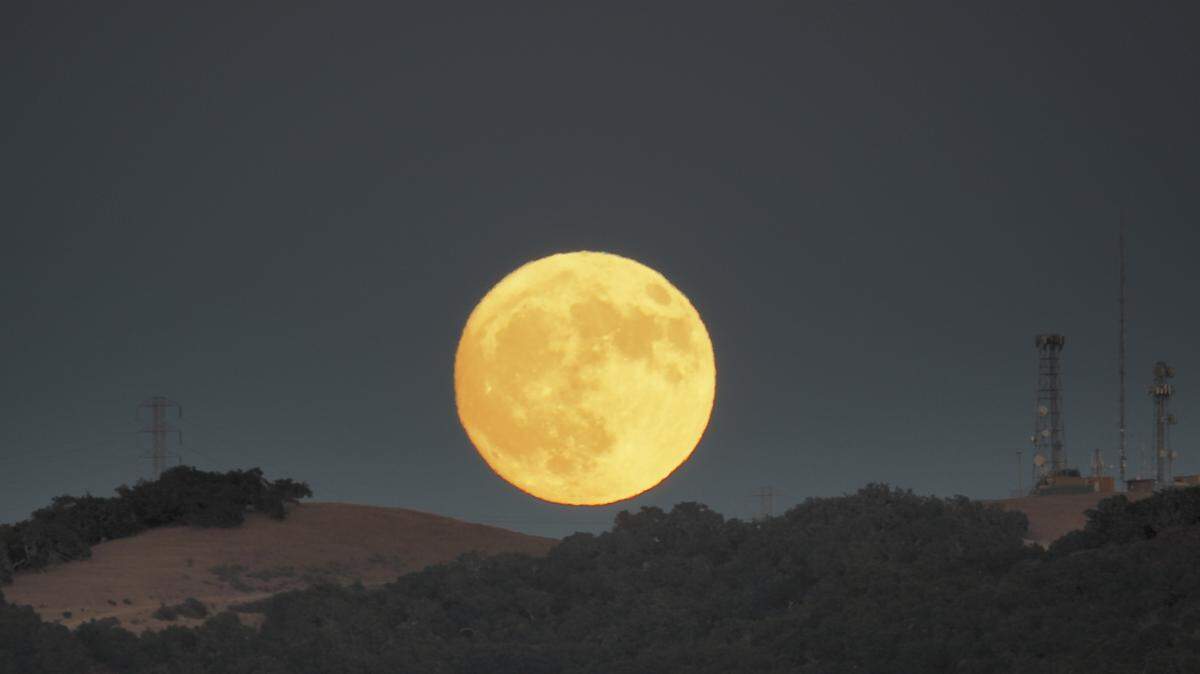
Want to see something dazzling in April? Look up.
Stargazers in California can spot a pink moon, planets and a meteor shower in the weeks to come.
Here’s what is happening, and when:
When’s the best time to see full moon in California?
The fourth full moon of 2026 will reach peak illumination at 7:11 p.m. on Wednesday, April 1, according to online calendar Time and Date.
On that day, the sun will rise at 6:50 a.m. and set at 7:29 a.m.
Why is April’s full moon called the pink moon?
April’s full moon is known as the pink moon, although the name has nothing to do with its color.
Instead, the pink moon get its name from the “dusty pink” wildflowers that grow during this time of year, according to BBC Science Focus magazine.
The full moon will “look exceptionally bright and large when it rises above the eastern horizon, just as the sun sets,” National Geographic said.
When are Mercury, Mars and Saturn visible in Sky?
An “elusive planet,” Mercury is rarely visible in the night sky due its location between Earth and the sun, according to Space.com. Most of the time the small planet is hidden by the sun’s glare.
On Friday, April 3, Mercury reaches its widest apparent distance from the sun, making it easier to spot.
“All About the Planets” author Patricia Lauber said Mercury “appears for short periods just after sunset and just before sunrise,” and “can be seen only if the sky is very clear.”
Be sure to step outside before sunrise at 6:46 a.m., Time and Date said.
Once Mercury rises, Mars will follow right behind it.
To see Mercury, Mars, and Saturn in a single glance, be sure to look at the horizon from Thursday, April 16, to Thursday, April 23.
All three planets will appear in a tight cluster around a half hour before sunrise, according to National Geographic.
The planets will appear closest together between Saturday, April 18, and Monday, April 20. Look to the eastern horizon to get an unobstructed view.
In the West, you can spot Venus near the crescent moon about an hour after sunset on Saturday, April 18, and Sunday, April 19, according to EarthSky. The bright orange star Aldebaran should also be visible nearby.
Sky watchers can see Jupiter on Tuesday, April 21, and Wednesday, April 22, near the twin stars of Gemini: Castor and Pollux.
How to watch the Lyrid meteor shower
The Lyrid meteor shower is “one of the oldest known meteor showers,” NASA said, with recording sightings going back as far as 687 BC.
The meteor shower will be active from Friday, April 17, to Sunday, April 26, according to NASA.
The Lyrids are known for “fast and bright meteors” with occasional fireballs— and they can be unpredictable, NASA said.
“Lyrids are known for uncommon surges that can sometimes bring rates of up to 100 (shooting stars) per hour,” EarthSky said.
According to In The Sky, the best time to view the Lyrids will be on Wednesday, April 22, before dawn, when the sky is moonless yet still dark.
What are the best conditions for stargazing?
According to National Geographic, you can find the best conditions for stargazing by getting away from city lights and heading toward clear skies with a lack of light pollution.
Areas with unobstructed views of the horizon, such as mountains or deserts, are good locations to see a full sky.