
Cal Poly alum, Artemis II crew return to Earth in picture-perfect splashdown
Cal Poly alum Victor Glover and the rest of the Artemis II crew returned to Earth on Friday evening in a picture-perfect ocean splashdown off San Diego.
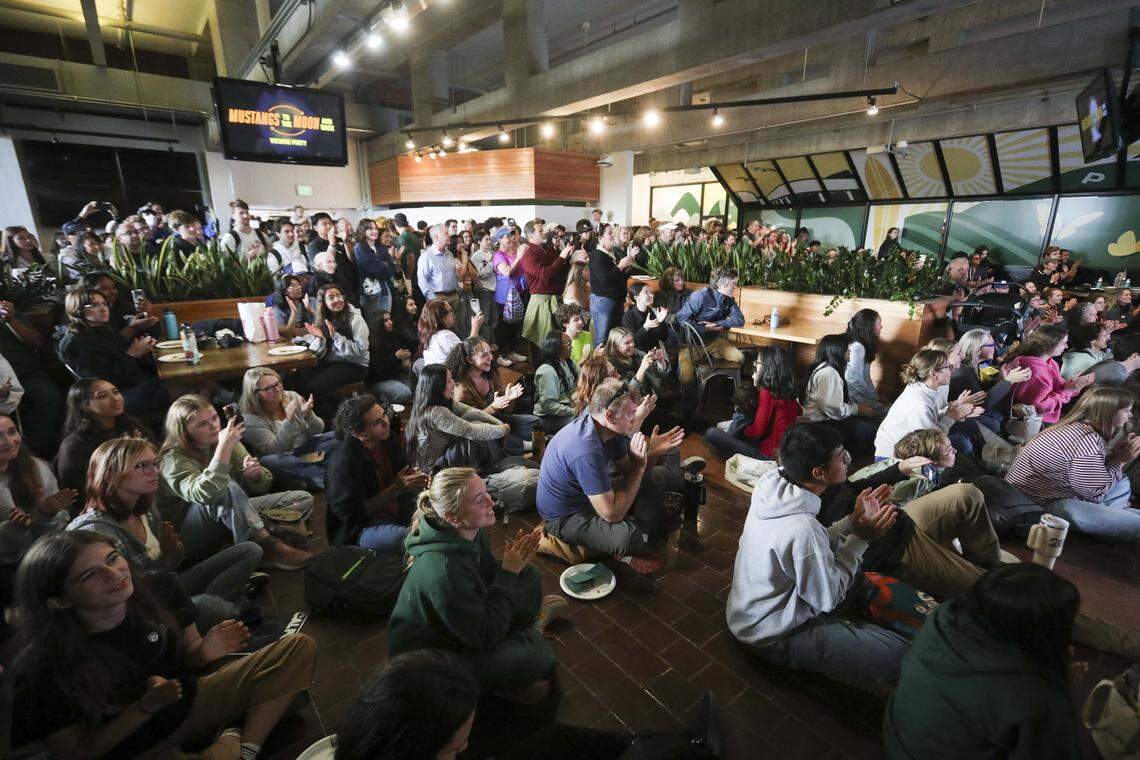
At Cal Poly, students, staff and alumni gathered in the University Union lounge Friday afternoon to celebrate as the pride of the university completed the historic mission.
As the capsule neared its return, the crowd of about 300 attendees grew quiet with nervous anticipation.
But those bated breaths soon transformed into cheers as the spacecraft splashed down off the coast.
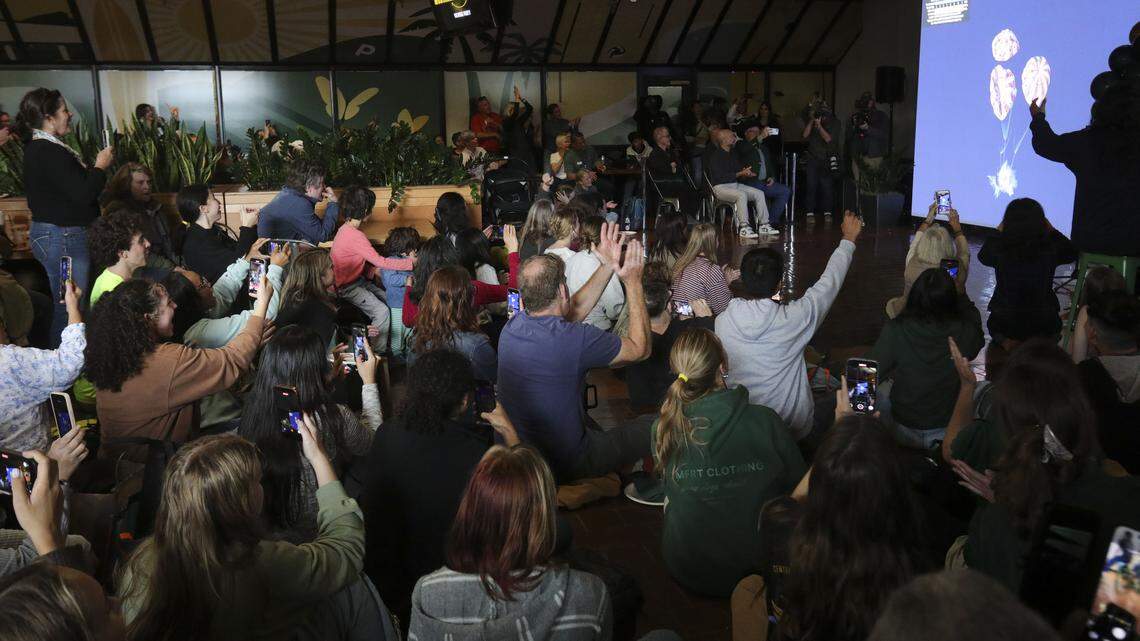
The feed reported that the mission concluded with a “perfect bullseye splashdown for Integrity and its four astronauts” — to which Cal Poly President Jeffrey Armstrong shouted in response, “Because the pilot was Victor Glover!”
“It’s been a real thrill for me to get to know Victor and know that he went to ISS (International Space Station) and came back safely,” Armstrong said in an interview with The Tribune. “And going to the moon and going farther than anybody in history, I just can’t put words to it. It’s so exciting.”

The university hosted the “Mustangs to the Moon and Back” watch party to celebrate Glover’s historic venture around the moon, joining NASA astronauts Reid Wiseman and Christina Koch, and Canadian Space Agency astronaut Jeremy Hansen, as part of the Artemis II crew.
It came at a perfect time, on the Friday evening of the university’s 33rd Open House, when thousands of accepted students, their families and alumni descend on the university in San Luis Obispo.
“This event allowed us an opportunity to celebrate ‘Learn by Doing,’ to celebrate the power of ‘Learn by Doing’ and what one person can do,” he said. “But it opens the doors for everybody. They can do anything.”
“It’s just a great day to be a Mustang,” he said.
‘Textbook reentry’ for Orion capsule
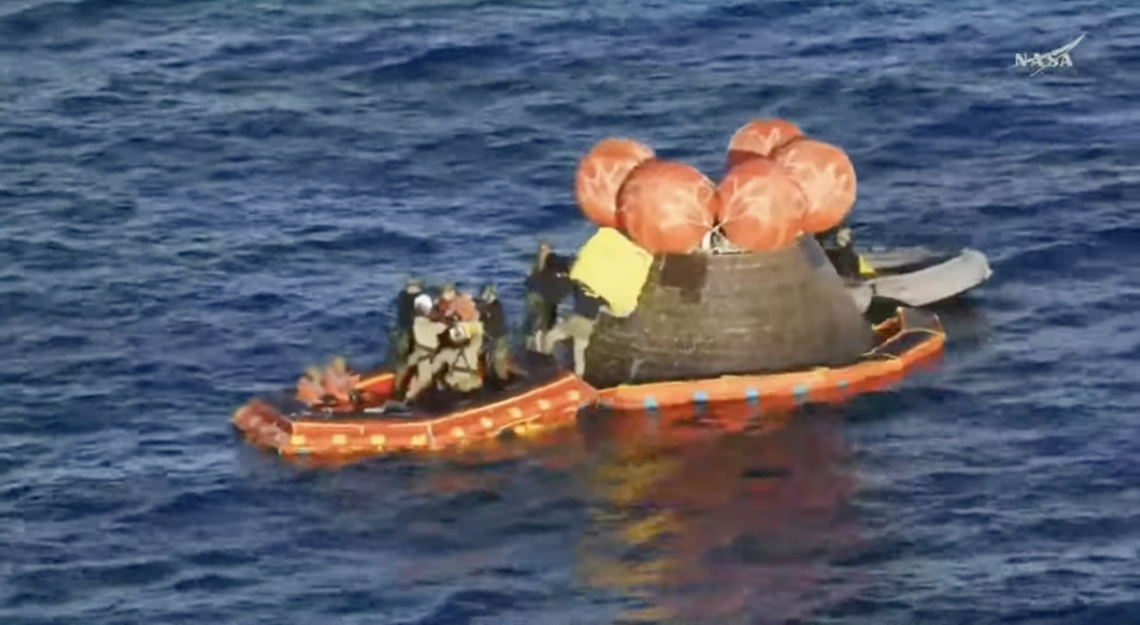
The spacecraft plunged through the atmosphere at a speed of more than 26,000 mph before deploying its parachutes and floating gently down to the waters of the Pacific Ocean in a picture-perfect landing at 5:07 p.m., where USS John P. Murtha waited to pick up the crew.
NASA’s live feed reported cheers from Mission Control room as it reestablished communications with the Artemis II crew and Orion emerged from a six-minute communications blackout.
“This was a textbook entry,” the NASA broadcaster said on the live feed after video showed Orion landing with a splash.
It then deployed five orange balloons on top and bobbed in the ocean while waiting for pickup. Just before 6 p.m. a recovery boat approached the capsule and opened the side hatch.
The process of removing the astronauts from Orion can take as long as two hours.
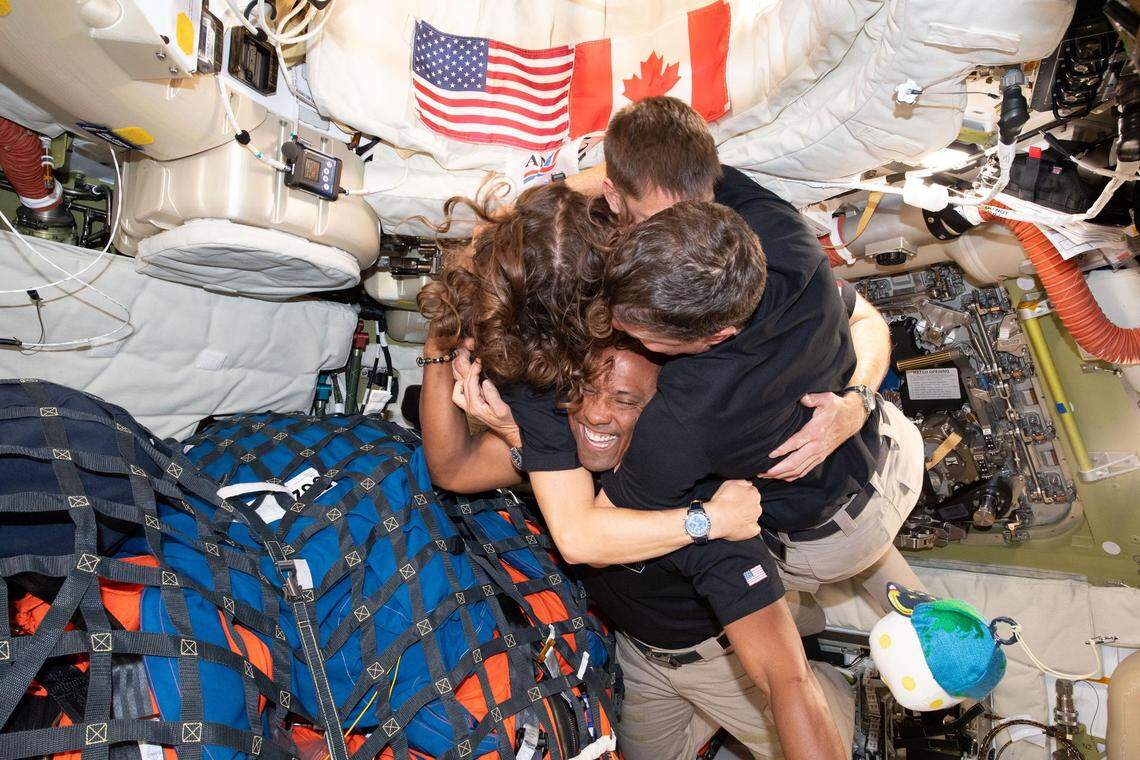
Artemis II completes historic moon mission
The successful reentry marked the end of the 10-day mission to the moon.
The astronauts made their successful return to Earth after venturing the farthest into space that humans have ever reached: 252,756 miles away, according to NASA.
The lunar flyby marked the first manned mission to the moon since Apollo 17 in 1972.
While in space, the crew captured new images of the moon’s surface — including never-before-seen areas — and witnessed an in-space solar eclipse, NASA said.




This story was originally published April 10, 2026 at 5:14 PM with the headline "Cal Poly alum, Artemis II crew return to Earth in picture-perfect splashdown."
CORRECTION: An earlier version of this story had the incorrect number for the distance the Artemis II crew traveled from Earth. They set a new record at 252,756 miles away.
