Endangered fisher seen running from Creek Fire before Shaver Lake property burns
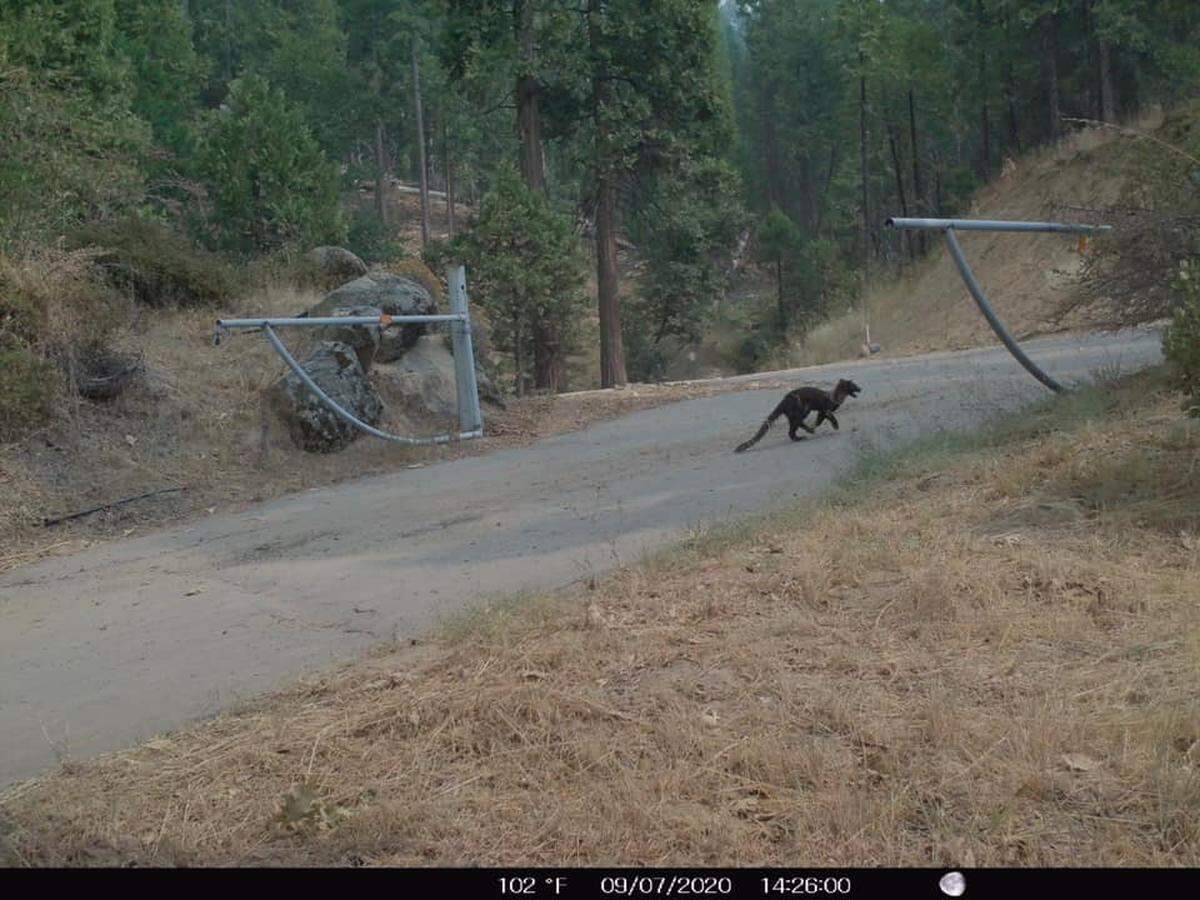
Scott Silva’s home below the village of Shaver Lake burned in the Creek Fire, but two of his seven trail cameras survived to tell another sad story: An endangered fisher fleeing wildfire.
The elusive animal that resembles a weasel was confirmed to be a fisher by two fisher experts with the U.S. Forest Service who looked at the image.
The peril the fisher faced is something that never should have happened, Silva said. He and his family are now at their second home in Kingsburg.
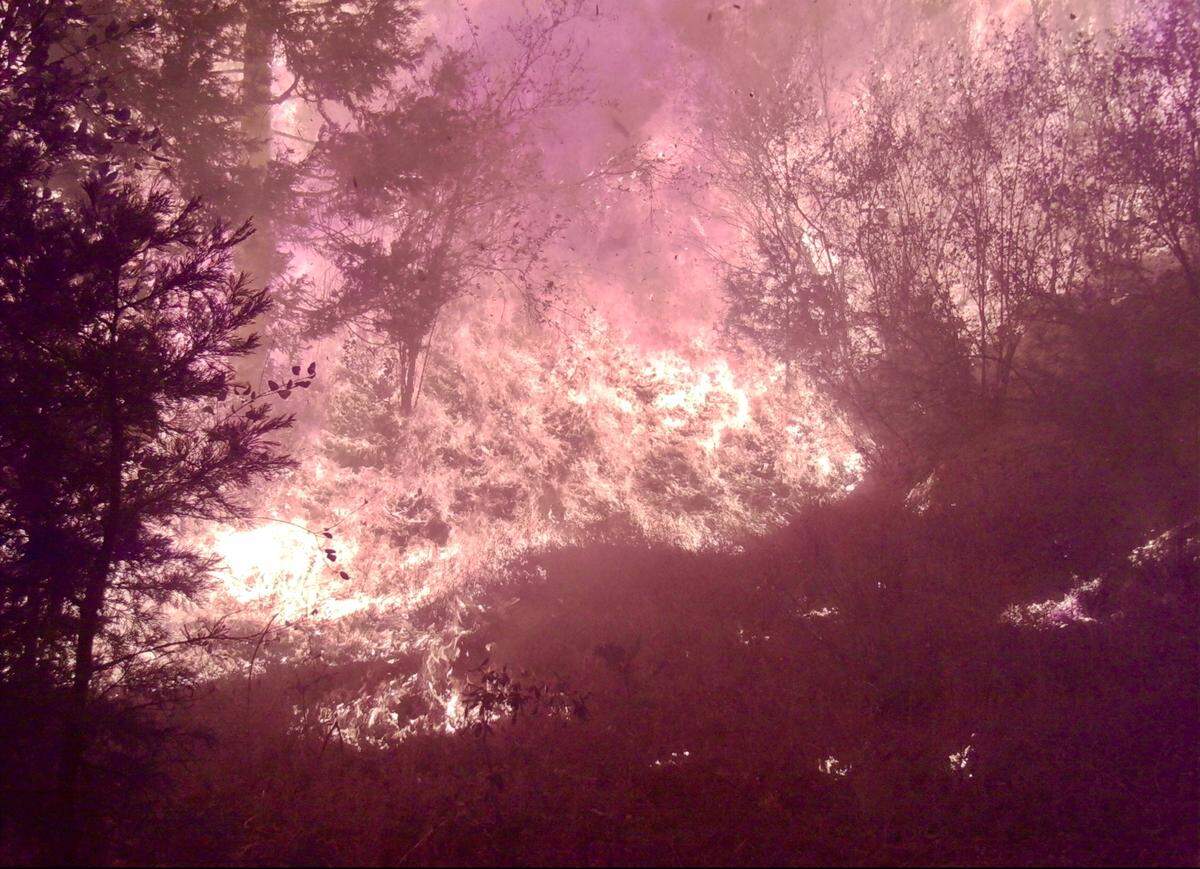
The animal was photographed in the afternoon of Sept. 7, just hours before cameras there recorded flames consuming Silva’s 10-acre property that he bought a year ago in the Dogwood neighborhood. Silva plans to rebuild his home there.
“My wife and I both enjoy the outdoors and like taking the grandkids up there and teaching them about the animals and trees and plants,” said Silva, who works as a metal fabricator.
He hadn’t seen a fisher on his property before the Creek Fire erupted.
“I wish I would have known these guys were around,” Silva said. “We see mountain lions, bears, deer and foxes all the time, but I’ve never seen a fisher up there.”
He’s far from alone. Silva shared the rare sight in a mountain area Facebook group, where guesses regarding what it was included chupacabra, ring-tailed cat, weasel, American mink, pine marten, burnt fox, burnt mountain lion, alien and baby dinosaur.
Sadly, fisher experts Craig Thompson and Rebecca Green said they’d already seen similar images this month of other fishers fleeing wildfires farther north.
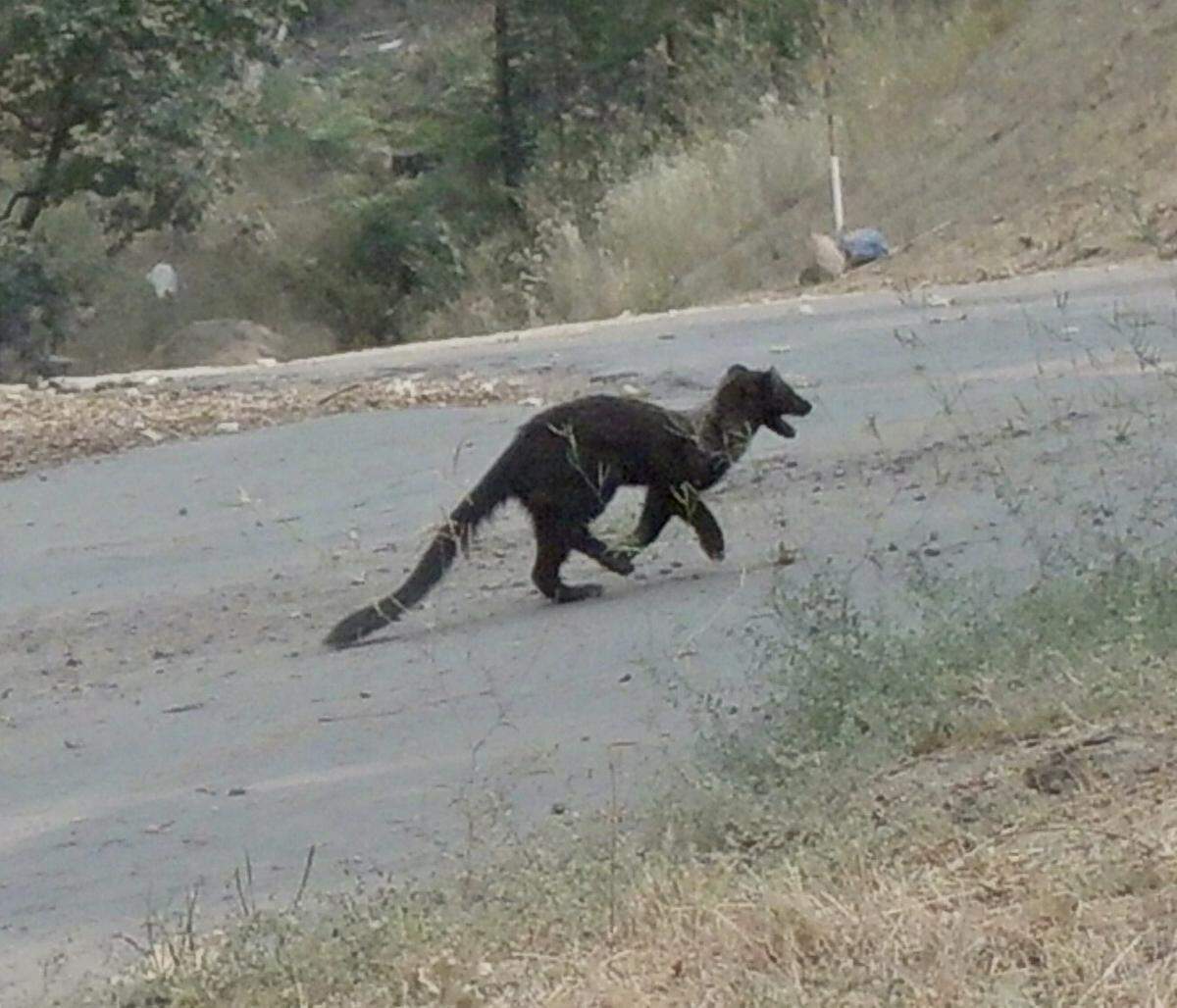
Thompson said the fisher in Silva’s photo appeared to be “badly burned.” Green said she couldn’t tell if it was burned or just a bit scraggly – a normal look for them this time of the year. She guessed it was a younger male.
What is a fisher?
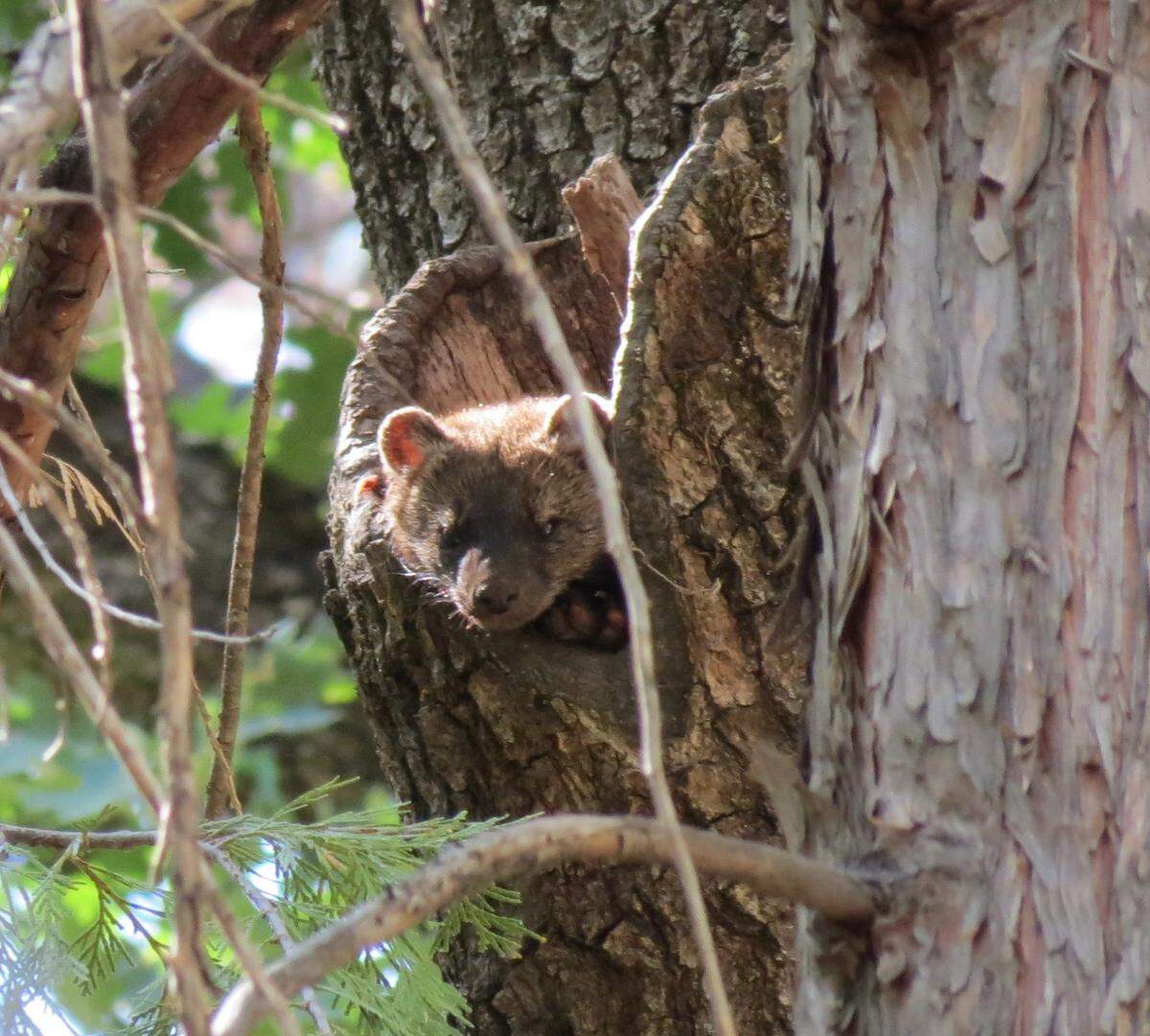
Fishers are related to wolverines, martens and otters, said Green, a research wildlife biologist who runs the Kings River Fisher Project and lives in Shaver Lake, which is still evacuated because of the Creek Fire. She has been studying fishers in that area for many years.
Fishers are typically the size of a house cat or a little larger, Green said, but with shorter legs. They are often a chocolate brown, although some can be blonder with lighter faces. They grow thicker fur coats for the winter – once sought after by fur trappers into the 1940s, contributing to their decline.
Martens look similar but are more reddish brown and smaller, with a bright orange throat patch, Green said. Fishers, if seen quickly, look dark brown or even black depending on the lighting and are excellent tree climbers, she said.
They live in the cavities of trees that grow at elevations approximately between 3,000 and 7,000 feet.
Why is the animal endangered?
Green estimated there was around 250 fishers in the Southern Sierra. She doesn’t yet know how the Creek Fire and other recent California wildfires might have impacted them. Previously, some had radio collars, but those were removed earlier this year, she said. Researchers were working to analyze data when this year’s fires hit.
The population in the Southern Sierra Nevada, from Yosemite National Park south, became a federally endangered species in June after being listed as threatened and following some lawsuits.
The U.S. Fish and Wildlife Service said “loss and fragmentation of habitat resulting from high-severity wildfire and wildfire suppression” were among the reasons for it being classified as endangered, along with “climate change, and tree mortality from drought, disease, and insect infestations.”
Southern Sierra fishers also suffer from other issues, the agency said, including increased mortality and decreased reproductive rates. The population in the Southern Sierra is isolated from other fisher populations in the West.
It’s now been subdivided further because of the Creek Fire, said Thompson who, like Green, led fisher research in the Sierra for many years. He now lives in Montana, where he continues to work for the Forest Service as a wildlife biologist, and as a landscape wildlife ecologist for the Conservation Biology Institute.
He said fishers historically evolved in an environment with frequent fires, but the Creek Fire and others recently are very different, igniting the canopies of large trees instead of just burning off smaller trees and brush closer to the ground.
“They can’t survive that,” he said of large, high-intensity wildfires, “and the ones that do look like the photo you forwarded.”
Other protected animals in the region include the threatened California red-legged frog and Yosemite toad. A lawsuit was filed earlier this year to protect the California spotted owl, which is not currently listed by the U.S. Fish and Wildlife Service.
Thompson described the Endangered Species Act as a landmark environmental law and powerful tool that can be used in many ways, sometimes in ways that are “not necessarily beneficial.” But in its best application, he said, it can help all – animals, landscapes and people.
“In some ways, the listing can make it harder because there are more hoops to jump through if you want to do vegetation management in fisher habitat,” Thompson said. “On the other hand, it also recognizes the fact that management is even somewhat more important to protect what we have.”
It’s a topic of growing interest as the Creek Fire and other California wildfires – now among the largest in state history – continue to burn.
This story was originally published September 18, 2020 at 10:29 AM with the headline "Endangered fisher seen running from Creek Fire before Shaver Lake property burns."