Can burned out giant sequoia groves be replanted? This California park wants to try
Humans are largely to blame for why one-sixth of the world’s giant sequoia trees recently perished in devastating wildfires that scorched California.
And without human help, it’s unlikely giant sequoias in the most severely burned areas will have a chance to grow back.
That’s the logic adopted by Sequoia National Park officials hoping to plant 12,000 giant sequoia seedlings in a remote section of the park heavily impacted by the 2020 Castle Fire. The seedlings would be delivered to Board Camp Grove via helicopter in October and individually planted by a crew that backpacked to the site.
Parks scientists plan to monitor how many seedlings survive after one year before deciding whether to plant more. If successful, the pilot program could be replicated in other giant sequoia groves decimated by recent wildfires.
“Some groves burned at such high intensity that large numbers of trees have been killed and at such high concentrations that we fear new sequoia seedlings will not take their place naturally to replace what was lost in these fires,” said Clay Jordan, superintendent of Sequoia and Kings Canyon National Parks.
Sequoia National Park is home to 39 giant sequoia groves and encompasses 40% of the tree’s natural range in California’s Sierra Nevada. Because giant sequoias are so massive and live for thousands of years, their permanence used to be an easy assumption — one proven false by wildfires made larger and more destructive by misguided suppression tactics and the combined effects of drought and climate change.
An estimated 7,500 to 10,600 adult giant sequoia trees died in the Castle Fire of 2020. The KNP Complex and Windy fires of 2021 killed between 2,200 and 3,600 more, or will cause them to die within five years. Under the best-case scenario, that’s 13% of the total population on Earth. Under the worst, 19%.
Which explains why Sequoia officials want the go-ahead to implement the first giant sequoia replanting program in the park’s 132-year history. Details and documents are posted online at parkplanning.nps.gov. Public comments are due March 25.
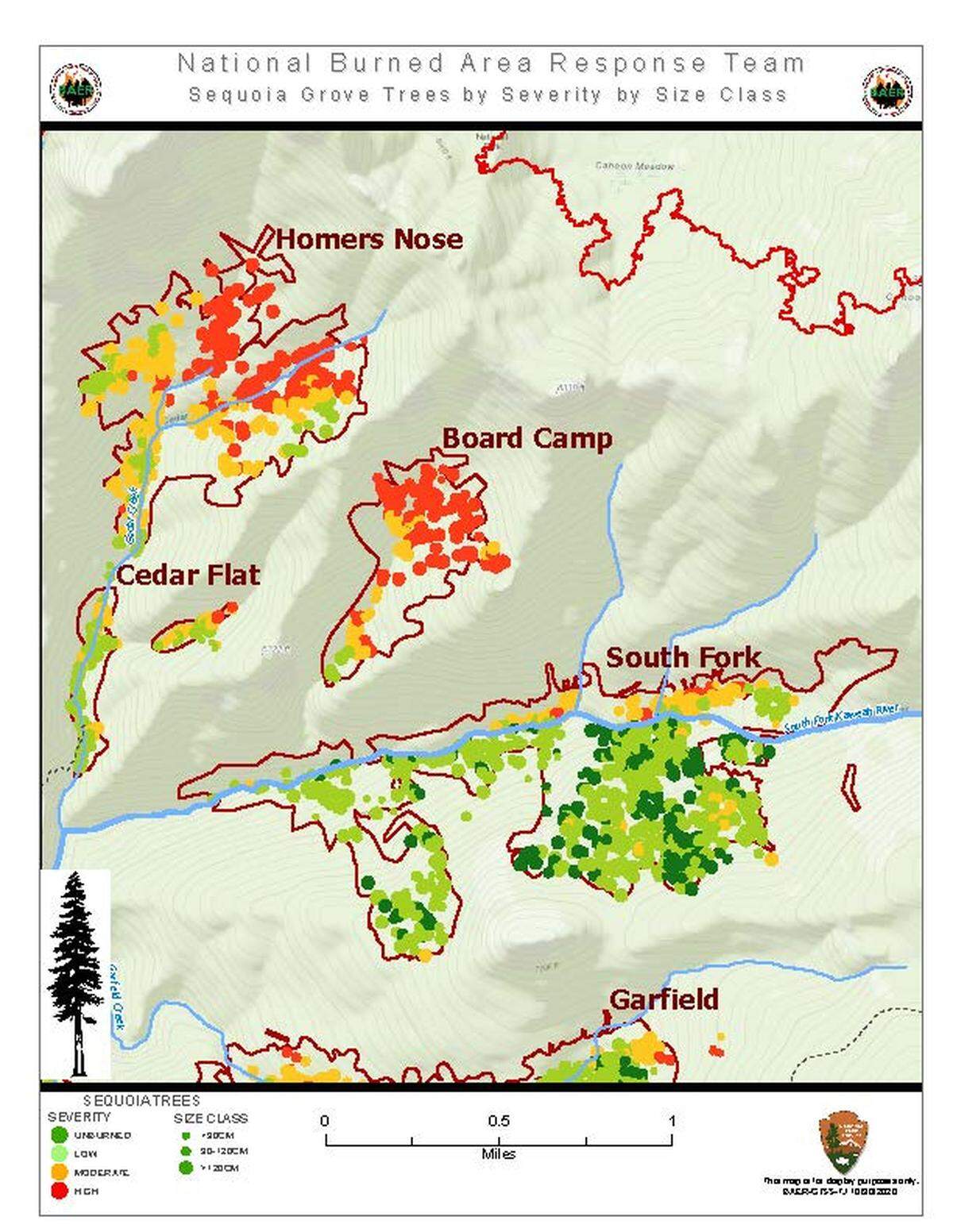
Board Camp Grove is located seven miles off trail in the lightly visited South Fork of the Kaweah River drainage. It was selected for the replanting project due to the severe damage sustained during the Castle Fire and because two field visits determined that so many giant sequoias had perished (an 81% mortality rate) that the likelihood of new trees growing on their own was very low.
“I really wish this grove would recover on its own. That is our preference, to let natural processes occur and to work with nature,” said Christy Brigham, the park’s chief scientist. “But we are facing a very difficult situation here.”
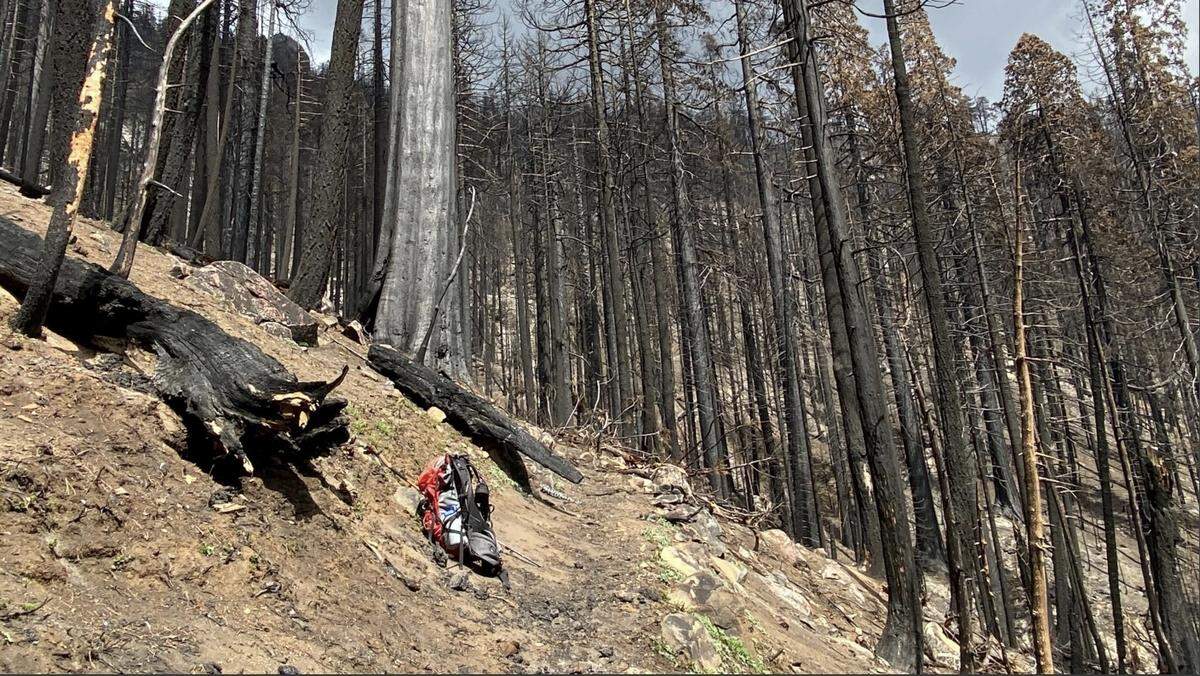
Because Board Camp Grove lies within designated wilderness, park officials pledge to utilize the least impactful methods in the replanting operation. Small holes and water basins for each 6- to 8-inch seedling will be dug by hand, using shovels, and planted in October with the expectation of natural precipitation. No special watering or weeding will occur.
Last April, Brigham and her staff collected giant sequoia cones from lightly burned sections of Board Camp Grove and two others nearby. Seedlings from these cones would make up 75% of the 12,000 planted. The remaining 25% would come from outside, drought-adapted seedlings grown at a Forest Service nursery in Placerville.
Plan draws support, criticism
The giant sequoia seedlings will be planted across 48 acres at a density of 250 per acre, following natural contour lines. The 25% from outside the vicinity will be charted, in case something unforeseen happens and they have to be removed.
The survival rate of giant sequoia seedlings isn’t especially high — more than 90% die within their first year. They’re also slow to develop. It takes between 30 and 60 years for a young giant sequoia to produce viable cones.
Park officials hope to improve those odds in the most heavily damaged areas, but within reason.
“If we do not have success in a reasonable time frame, say five years, we’ll stop,” Brigham said. “This is not a botanical garden. It’s a wilderness area in a national park.”
The plan has drawn support from the nonprofit Save the Redwoods League, which started planting giant sequoia seedlings last year in the privately owned (and heavily burned) Alder Creek Grove. It is opposed by some environmentalists who believe it violates the Wilderness Act and object to outside-grown trees being planted within a national park.
These criticisms aren’t without merit. Wilderness areas are legally defined as places “where the earth and its community of life are untrammeled by man.” But in order to create space for a helicopter to deliver the seedlings, several burned trees must be felled. Which certainly isn’t natural.
A few years ago, I probably would’ve taken the opposing side as well. Keep human activity — and all well-meaning improvements — out of the wilderness. No matter what.
Except the high-intensity wildfires that devastated so many giant sequoia groves aren’t entirely natural, either. They’ve been made more destructive by humans, either by suppressing natural fire or by driving climate change that compounds the effects of drought.
If not for us humans, giant sequoias wouldn’t be perishing by the thousands. Trying to help a few dozen grow back sounds like the least we can do.
This story was originally published March 15, 2022 at 10:04 AM with the headline "Can burned out giant sequoia groves be replanted? This California park wants to try."