
As McKinney Fire burns, Forest Service takes heat over forestry, wildfire management
As the worst wildfire of the season in California hovered a few miles from Yreka on Tuesday, locals were cautiously optimistic that the city of 7,500 would be protected by a forest-thinning project begun by state and federal agencies on Yreka’s outer flanks.
They just wished the project could have started a lot sooner.
The McKinney Fire was within a few miles of Yreka’s western edge — roughly the area where an $8 million effort called the Craggy Vegetation Management Project has been underway the past two years, thinning trees across an 11,000-acre region of the Klamath National Forest.
“We’re more prepared than we ever have been,” said George Jennings, co-director of the Yreka Area Fire Safe Council, a volunteer group that helped coordinate the project. “But we don’t have everything done that we would have liked to have done, by far.” The project is a little over one-third complete, according to the U.S. Forest Service.
Most fire and forestry experts say a combination of thinning out the trees and intentionally setting prescribed fires are needed to remove overgrown stands of small trees and brush that have come to dominate California’s forests after a century of aggressive logging and fire-suppression efforts.
The U.S. Forest Service began designing the Craggy project in 2010 to “improve fire resiliency” in the dense Klamath, according to a planning document. Another key goal: “improved defensibility against wildfire for the nearby communities of Yreka and Hawkinsville.”
In 2020, after initial work on the ground was completed, the project was credited with protecting the two communities from a pair of small wildfires that erupted in July. Even environmental groups that often go to court to block thinning projects — saying they’re an excuse to commercially log the forests — had no problem with the Craggy project.
So why, despite this consensus, did it take a decade of planning before the Forest Service began the physical work of thinning the woods around Yreka?
“Unfortunately, it’s pretty typical of our federal bureaucratic system,” said Larry Alexander, the co-director of the fire safe council. “The Forest Service can’t get a lot done.”
A Forest Service spokeswoman in the Klamath area, Kimberly DeVall, said the project took a long time to plan because of multiple stakeholders involved, including private landowners, Cal Fire, the U.S. Fish & Wildlife Service and the federal Bureau of Land Management. A big fire in the Klamath region in 2014 diverted manpower and caused delays.
Forest Service faces critics over fire issues
The Forest Service has come under increasing criticism in recent years over its role in managing wildfires and forestry projects. A group called the Western Klamath Restoration Partnership blamed the agency’s Klamath staff for not signing off on a proposed thinning project in the Siskiyou County community of Happy Camp. The community largely burned down in the Slater Fire of 2020, killing two people and destroying 197 homes.
Last summer, as fires raged on multiple national forests in California, Gov. Gavin Newsom and other elected officials criticized the agency for not moving more quickly to put them out — leading to a mea culpa visit to the state by U.S. Agriculture Secretary Tom Vilack, whose agency oversees the Forest Service.
Vilsack acknowledged the agency had been juggling funds between forestry-management and firefighting — and ended up doing a poor job of both. But he told Newsom, during a visit to the Mendocino National Forest a year ago Thursday, that the agency needed more robust funding from Congress.
Jennings and Alexander said they believe the Forest Service isn’t just understaffed; it’s also become gun shy because of incessant litigation filed by environmental groups trying to block, delay or minimize forest-thinning work. The agency has slowed down its planning process in an effort to stay out of court, they argued.
The entire Craggy project, Jennings said, “could have been completed by now.”
DeVall, the Forest Service spokeswoman, said the agency operates “under a series of laws and regulations that must be followed precisely and (be) well documented or else we risk major setbacks if our projects are litigated in federal court.”
Environmentalists insist they aren’t to blame. The Klamath-Siskiyou Wildlands Center — an Oregon-based group that’s filed nine lawsuits over thinning projects in Northern California since 2005 — didn’t object to the forest-thinning work being done around Yreka.
“The Craggy project is a good project — it’s going to help Yreka,” said George Sexton, the group’s conservation director. “What was the cause of the 10-year delay? It certainly wasn’t the conservation groups.”
Instead, he said the Forest Service has been plagued by staff turnover on the Klamath. And top officials at the national forest often took workers off the Craggy project to have them work instead on post-wildfire “salvage logging” that took out numerous big trees, he said.
The Klamath-Siskiyou group has been blamed for derailing other thinning work — notably a project to cull trees on a 9,000-acre section of the Klamath forest about 45 miles east of where the McKinney Fire is burning. The environmental group didn’t sue but was blamed by Forest Service officials for tying up the project for years in red tape. Before work could begin, the Antelope Fire last summer burned through some of the spotted owl habitat Klamath-Siskiyou was trying to protect from the Forest Service’s crews.
Sexton said the project was poorly designed and was improperly “focused on removing large trees, forest canopy, owl habitat.”
McKinney Fire still burning without containment
The McKinney Fire started Friday afternoon and its cause remains under investigation. It had spread by Tuesday to 56,165 acres with 0% containment. Weather conditions had turned more favorable and the fire’s spread slowed significantly in the past two days.
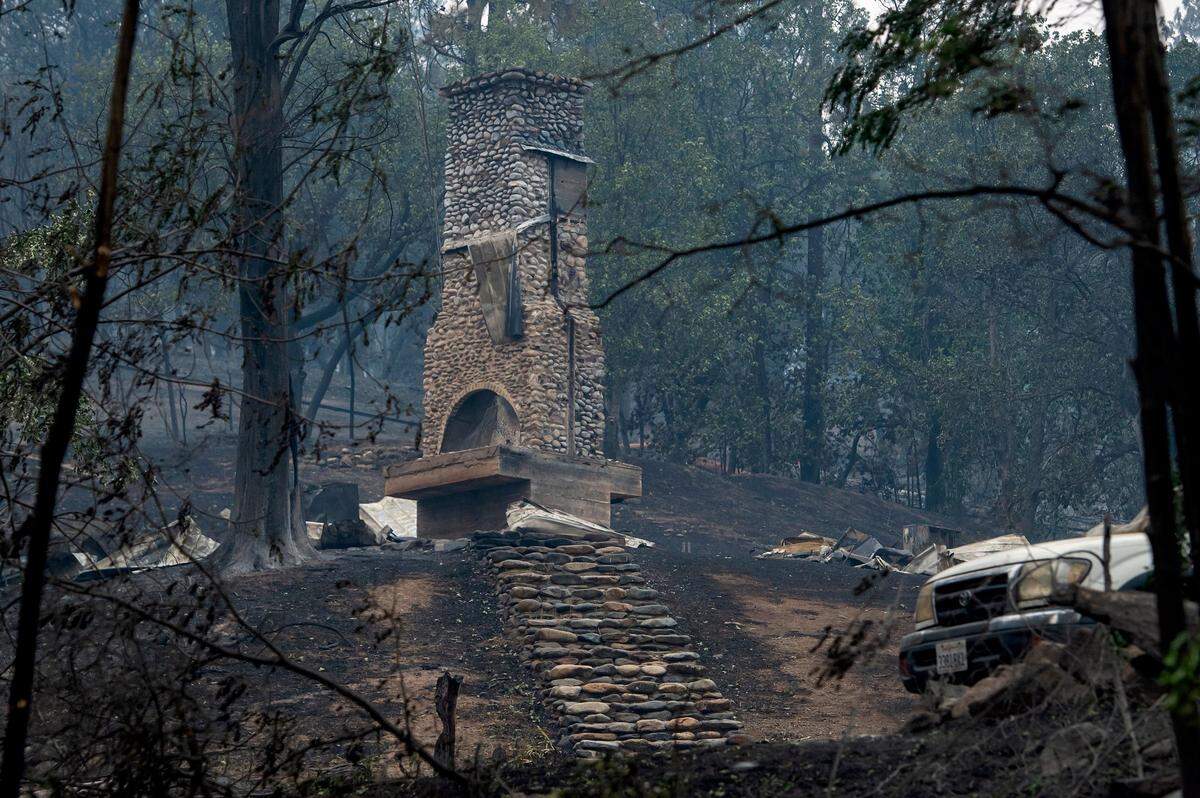
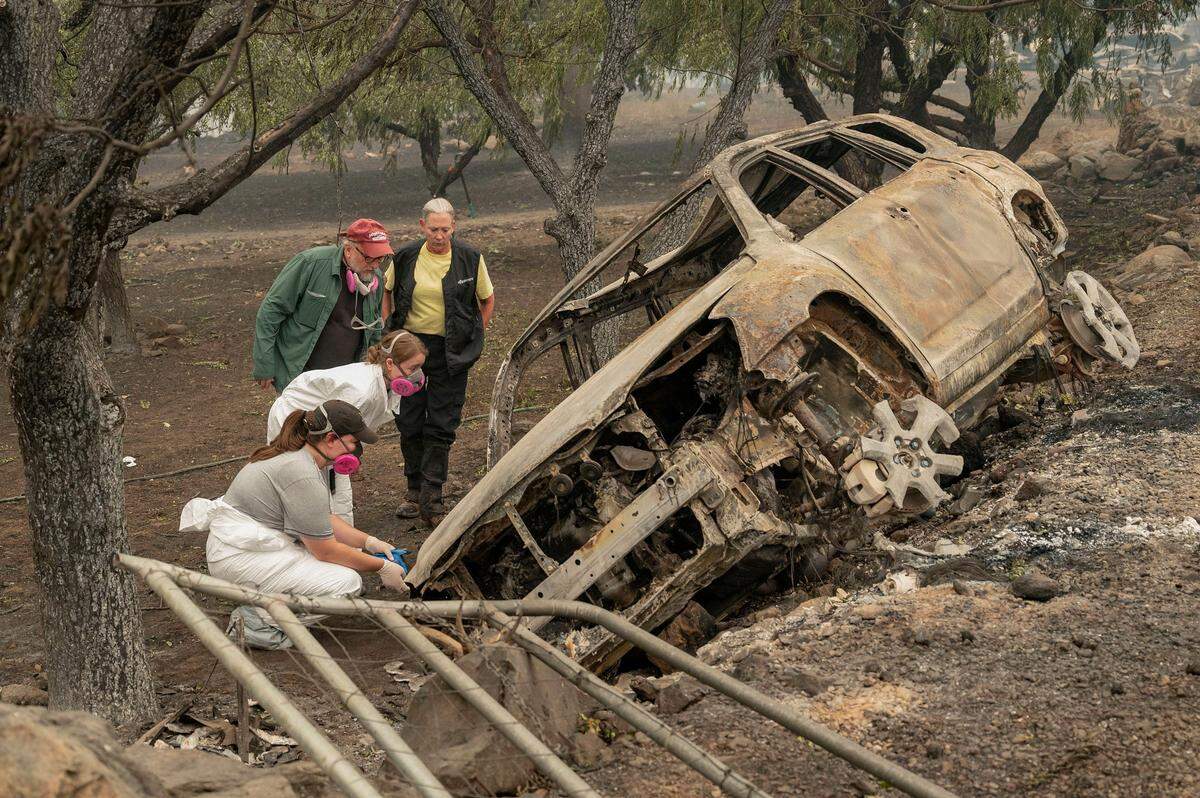
Meanwhile, a human tragedy was unfolding: The bodies of four victims have been discovered in the fire zone. Siskiyou Sheriff Jeremiah LaRue said search-and-rescue teams were inspecting about 100 homes, sheds and other buildings for other victims.
The fire was still several miles from Yreka — the city that officials believe was saved by the initial work of the Craggy project two years ago.
According to a Cal Fire report, about 2,000 acres of forest-thinning work on the Craggy project had been completed when the Humbug and Badger fires ignited in July 2020.
The fires merged into one but their spread was “dramatically slowed in these masticated areas,” the report said, referring to places where crews had fed vegetation into wood chippers. That enabled crews to build containment lines with bulldozers, and the fire was extinguished after burning just 600 acres.
The work “played a key role in slowing fire spread and keeping fire out of the community of Hawkinsville and the greater Yreka area,” the report said. Since then, the number of acres treated has more than doubled.
It “saved Yreka, basically,” said Mayor Duane Kegg. “They’ve done an awesome job.”
Late Monday, as the McKinney Fire was raging, fire officials said they’d used dozens of bulldozers to carve out a massive buffer zone on the ridgetops above Yreka.
Cooler, rainy weather slowed the fire’s progress toward the city, and Kegg said he was feeling fairly optimistic about Yreka’s chances.
“We’re sitting pretty good,” said the mayor, who is among those evacuated. “But you never know what could happen.”
This story was originally published August 2, 2022 at 11:17 AM.