
Dry wells, drastic cutbacks. For many Californians, drought hardships have already arrived
Staci Buttermore turned a faucet on the morning of May 28. She got nothing more than a stuttering sound, a staccato burp of air.
Her well, 95 feet deep, had gone dry.
For 24 years she and her husband had lived on a small ranch in Glenn County without a hint of water problems. Her husband’s family had lived there for a quarter-century before that, and every time the faucet was turned on, the water gushed out.
Suddenly, they had become the latest victims of California’s drought.
Buttermore, her husband and their son have spent the past four months relying on water trucked to their home and stored in a 5,000-gallon tank next to their house. That’s good enough for laundry and showers. For drinking, they get bottled water distributed by the Orland volunteer fire department every other week. A permanent fix is months away.
“It’s a nightmare,” said Buttermore, 54.
As California officials brace for a possible third year of drought — Karla Nemeth, director of the state Department of Water Resources, recently warned of “a worst-case scenario” for 2022 — the drought disaster is already in full force for many Californians.
With underground water tables plummeting, more than 700 residents have notified the state that their wells have gone dry this year — a 700% increase from 2020. They’re being forced to use bottled water, install storage tanks in their yards and wait for new wells to get drilled.
They’re learning, the hard way, to be patient.
“Well drillers are anywhere from eight to 12 months out,” said Evelyn Soltero, who runs a Nevada County consulting and maintenance business called All About Wells. “That’s scary.”
These well failures could provide an early glimpse of what California’s future will look like — in the current drought and beyond, as climate change dries up the Sierra Nevada snowpack and intensifies the state’s water shortages, putting ever more pressure on food production, the economy and California’s way of life. As many as 600,000 households in California rely on domestic wells, according to the Department of Water Resources.
Besides the residential wells sputtering out, an unknown number of small communities have had their wells conk out, too, mainly in rural areas of San Joaquin County. That’s brought hundreds if not thousands of additional Californians face to face with the state’s epic drought.
What’s more, 98 municipalities, community service districts and other suppliers — serving a combined population of 219,000 — have been placed on a “drought watch list” compiled by the State Water Resources Control Board. The list signifies that they could face significant water problems in the near future — either from failing community wells, dried-up rivers or “curtailment orders” issued by the state board, limiting the volume of water they can draw from California’s rivers.
Among those on the watch list is the Teviston Community Service District, which delivers water to 343 people in rural Tulare County. Over the summer it got a taste of just how quickly the drought can turn a California community upside down.
In early June the district’s community well simply gave out. An inspection revealed 40 feet of sand at the bottom of the well, and for about two weeks the residents had to find water elsewhere until the district could install a pair of 10,000-gallon storage tanks and emergency supplies could be trucked in from Fresno and Porterville. Although the well’s pump eventually was repaired, the district obtained a $4 million state grant, funded by a new drought program enacted by the Legislature, to drill a replacement well.
Residents say the new well is needed to ensure reliability and ward off a repeat of the June debacle as the drought worsens.
“Some people were going outside and using buckets to bathe,” said district board member Frank Galaviz, who had to shower at a friend’s house for two weeks in June. “Go outside, turn the main water supply of your house off for two weeks and that’s how it feels.”
Drastic water cuts on the Russian River
The state cut urban water use by just 1.8% in July — falling well short of Gov. Gavin Newsom’s plea for 15% in voluntary reductions. But Healdsburg has been the star pupil.
Since imposing mandatory cutbacks in early June — even banning the use of all outdoor drip and sprinkler systems — the picturesque Sonoma wine country city has reduced its consumption by half. In July, the most recent data available, it hit a 54% conservation rate, the best in the state.
“We’re No. 1,” said City Manager Jeff Kay.
He can only hope that’s good enough.
Here’s the problem: The well-to-do city of 12,104 gets its water from the Lake Mendocino and the Russian River watershed, which have been the subject of curtailment orders by the state water board. The board issued the orders soon after Sonoma and Mendocino counties became the first two counties in the state to be placed under a drought emergency by Gov. Gavin Newsom.
Curtailment means the city can’t draw any water from the river, except for what’s needed to meet “minimum human health and safety needs,” according to state regulations. That’s defined as an average of no more than 55 gallons of water a day, per person. The 55-gallon threshold is the product of a series of state laws passed in 2018.
Healdsburg’s residents, though, have been using 70 gallons a day, according to the state’s records for July.
Healdsburg, like dozens of other water users on the Russian River, has petitioned the state water board for an exemption from the 55-gallon ceiling.
Some requests have been approved — including the Sonoma County town of Cloverdale, which is using about 70 gallons a day — but most others are still being processed. Healdsburg and other cities have been told they can continue exceeding the 55-gallon threshold while their requests are pending.
The state board doesn’t have hard-and-fast rules for deciding these cases. The agency’s deputy director, Erik Ekdahl, said the board is likely to accept “reasonable and justified” petitions.
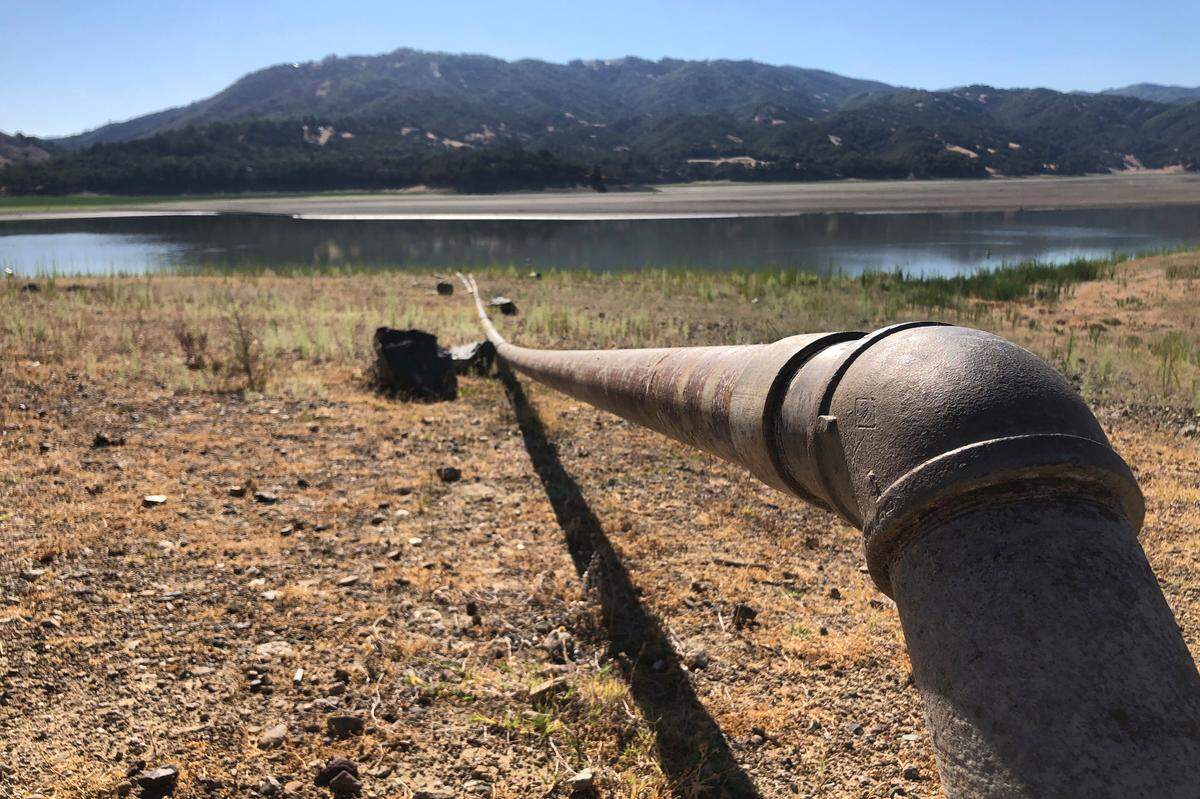
Among the criteria: How much of an effort has been made to conserve? Cloverdale’s water consumption fell 37% in July, for instance.
But as the drought intensifies, a strong conservation record may not be enough if California gets a third year of drought, Ekdahl warned.
“What’s sufficient right now may not be sufficient should catastrophic drought conditions emerge next year,” he said.
Little wonder, then, that anxiety is running high.
“It could be November til we have rains, and it is going to be tight and we are concerned,” said Tabatha Miller, the city manager of Fort Bragg (population 7,200). The city is rushing to install a $335,000 desalination plant to bolster a municipal water supply that’s been staggered by ultra-dry conditions on the Noyo River.
The largest city on the state’s watch list, Napa, has called on its 87,000 residents to cut water usage by 20% — a more severe reduction than the 15% statewide cutback being urged by Newsom. City staffers have begun leaving notes on people’s doorsteps, reminding them of the city’s conservation program, if they’re caught watering their lawns on the wrong day of the week.
The city, which gets much of its water from the State Water Project, believes it can weather this year but is worried about 2022 — when Nemeth says it’s possible the State Water Project won’t deliver any water to its members.
“Our conservation this year is about being ready for next year,” said Joy Eldridge, the city’s deputy utilities director.
Since late July the El Dorado Irrigation District has been trucking water daily, more than 20,000 gallons worth, to the tiny community of Outingdale, a rural outpost south of Placerville. The reason: low flows on the Middle Fork of the Cosumnes River, said district spokesman Jesse Saich. The water is trucked to a central distribution point in Outingdale and then piped directly to residents’ homes.
The district ran a similar rescue operation in the last drought. “Unfortunately, we’re getting good at it,” he said.
The deliveries come with a price: The irrigation district has told Outingdale residents to reduce their consumption by 50%.
Water woes hit the Valley hard — again
Dire water shortages are still relatively rare on the North Coast and the Sacramento Valley. In the San Joaquin Valley, though, water problems are seemingly an everyday occurrence.
In the last drought, relentless groundwater pumping by farmers caused water tables to fall and numerous community and individual residential wells to fail. The state had to rush in with bottled water, outdoor storage tanks and other forms of emergency assistance to bring some relief.
The situation was so bad that the drought officially never ended in parts of the Valley. In April 2017 then-Gov. Jerry Brown rescinded his statewide drought emergency declaration, but kept it in place in Fresno, Kings, Tulare and Tuolumne counties.
Now, to nobody’s surprise, the Valley is hurting again. Look no further than the Okieville-Highland Acres Mutual Water Co. of Tulare County.
Five years ago, after residential wells in the Okieville area failed, the residents formed a water company and secured millions of state and federal dollars to drill a well and build a community system. This year, though, the pump motor has been failing frequently, leaving the 72 homes connected to the system without water for hours at a time.
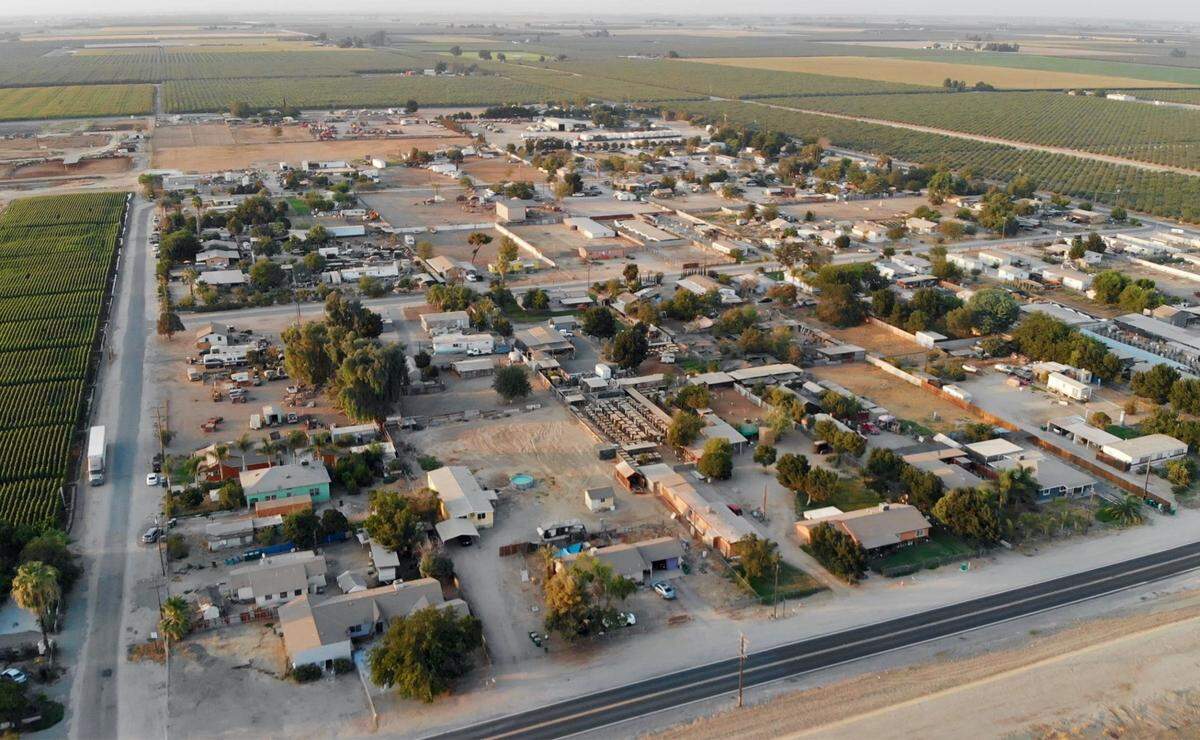
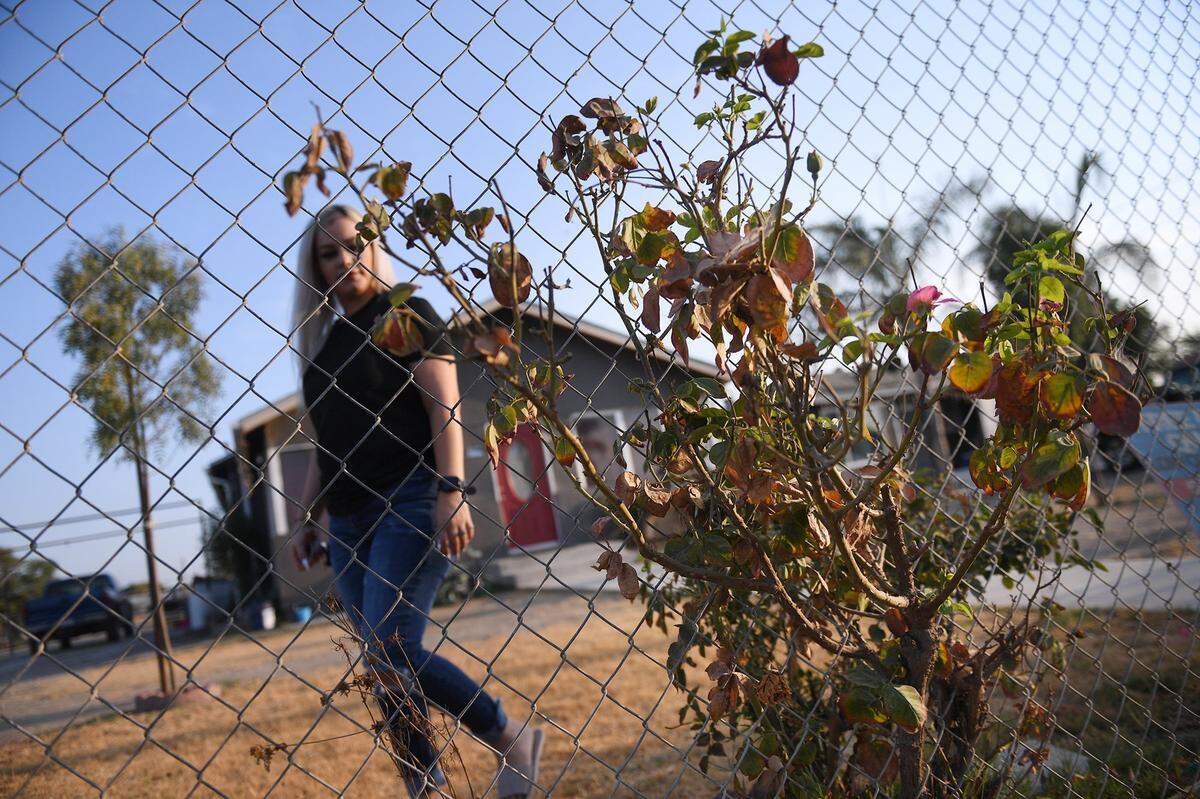
The troubles aren’t directly tied to the drought. But they do reflect the fragility of water supplies throughout much of the Valley.
“They only have that one pump. When that well has any kind of issue, they don’t have water,” said Jessi✓ Snyder, a director of Self-Help Enterprises, a Valley nonprofit that helps individuals and rural communities cope with water shortages.
This year Self-Help has distributed and installed hundreds of 2,500-gallon tanks in residents’ yards around the Valley where wells have gone dry. It’s also helped rural communities access state and federal dollars to repair pumps and dig new wells.
“The water tables are dropping deeper,” Snyder said. “It’s still very widespread, the failures.”
Snyder said she’s noticed one improvement from the last drought. Before, the state wouldn’t step in until a well actually failed. Now the state is making money available when red flags start popping up.
“We get to be more proactive,” she said.
Case in point is the Woodville Public Utility District, which serves about 1,900 residents between Tulare and Porterville and has been struggling with water shortages for the past two years.
The problem began in 2020, when the district had to shut off one of its two wells because of excessive amounts of nitrate — which can cause birth defects and cancer. Nitrate contamination in the water is common in the Valley because of fertilizer use and runoff from cattle ranches.
With one well out of commission, the second well began to falter through over-use. Ralph Gutierrez, the general manager of Woodville, said the well would periodically sputter out. So in early August, he warned residents that he was going to turn the nitrate-tainted well back on.
Now the water is flowing more surely, but “the problem is not solved,” Gutierrez said. “Our water table has dropped 140 feet.” He contacted the state, and within two weeks secured approval for a $2.2 million grant to lower its pumps in order to boost the system’s safety and reliability.
It’s not clear how quickly the work can get done.
“It’s moving in the right direction, but nothing happens as fast as you’d like it to,” Gutierrez said.
Drought raises anger in California farm country
In Orland, residents have been known to line up at a local truck stop to take a shower. A gym in nearby Willows is offering discounted memberships to anyone who just wants to use the shower.
All told, nearly 200 Glenn County residents have reported serious problems with their wells; more than 100 have said their wells have gone completely dry.
“Some days we’ll be OK and some weekends we’re not,” said Lea Eddy of Orland, whose well sputters out intermittently. She and her husband installed a 2,500-gallon storage tank in their yard.
It’s gotten to the point that the city of Orland obtained a $7.7 million state grant to dig deeper municipal wells and extend city water service to outlying areas.
More dramatically, the county Board of Supervisors has slapped a one-year moratorium that prevents farmers from digging any new agricultural wells — echoing a similar ban that was enacted during the last drought.
The decision wasn’t easy. In the summer, agriculture accounts for one out of every four jobs in Glenn County and generates $855 million a year in revenue. But supervisors stepped in after residents complained that their domestic wells were falling victim to groundwater pumping by farmers growing almonds, walnuts and other crops.
The goal is “to protect domestic wells,” said Scott De Moss, the county’s administrative officer.
Ritta Martin, president of the county’s Farm Bureau, said the supervisors made an “understandable decision” in light of the domestic well failures. But she said the decision overlooks a crucial fact — that the problems are largely centered around Orland and aren’t spread across the county.
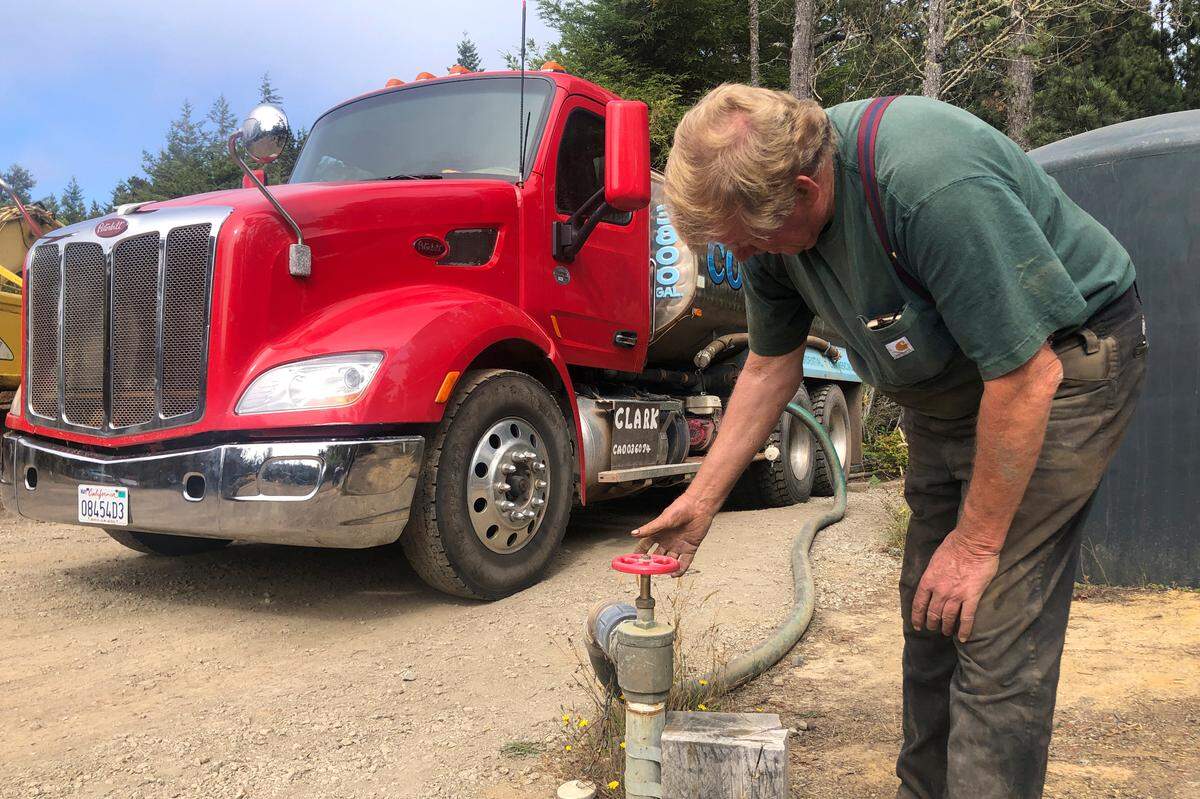
“There are areas that are not having a problem and the water levels are not declining,” she said.
Martin said she’s upset that the well failures have created an emotional divide between farmers and other residents.
“We don’t want their wells to go dry,” she said. “We don’t want the success of our crops to come at the expense of their drinking water .... It’s hard to see that animosity continue to grow.”
Staci Buttermore worries about the tensions, too.
She and her husband, James Silva, a Cal Fire firefighter, live on a property east of Orland. It’s their home, and their farm, and this year they lost both their residential and agricultural wells.
When their domestic well failed in late May, their lives turned instantly chaotic. They had to rent the giant tank ($107 a month) and arrange for water deliveries every two or three weeks ($270 per delivery). The water has a musty smell, Buttermore said, and she won’t use it for drinking or cooking meals.
Perhaps worst of all, with her husband away for long stretches during wildfire season, she had to haul water around the property in a four-wheel all-terrain vehicle to keep their horses, goats and chickens property watered. It became so time-consuming, she quit her job as an insurance agent.
“I was doing that every day, four or five hours,” Buttermore said. “I was the Lone Ranger.”
Their farm well failed a few weeks later and they had to scramble. They cut down three orange trees and a walnut tree. To save their 27-acres pistachio orchard, they spent nearly $12,000 buying water from the Orland Artois Irrigation District, which is part of the federal government’s Central Valley Project. The result: a stunted crop, about a quarter less than usual.
“We were fortunate to get something,” Buttermore said. “We were limping long.”
Because of the backlog in business, new wells can’t be drilled until winter — they are allowed to replace their failed ag well, despite the moratorium. But the whole experience, nerve-wracking and costly, has them questioning how long they’ll stay on a property that’s been in her husband’s family for nearly 50 years.
“We don’t know what’s in store for the future,” Buttermore said. “This could be our last year. ... We’re contemplating. Have we had enough? Is it for sale? It’s been in the family for so long, it’s a tough decision.”
This story was originally published October 3, 2021 at 5:00 AM.