‘Epic’: Extreme storms have California near an all-time snowpack record set 40 years ago
After a parade of atmospheric river systems from late December through mid-January and a whopper of a winter storm earlier this week, California’s snowpack levels have surged to near-historic highs.
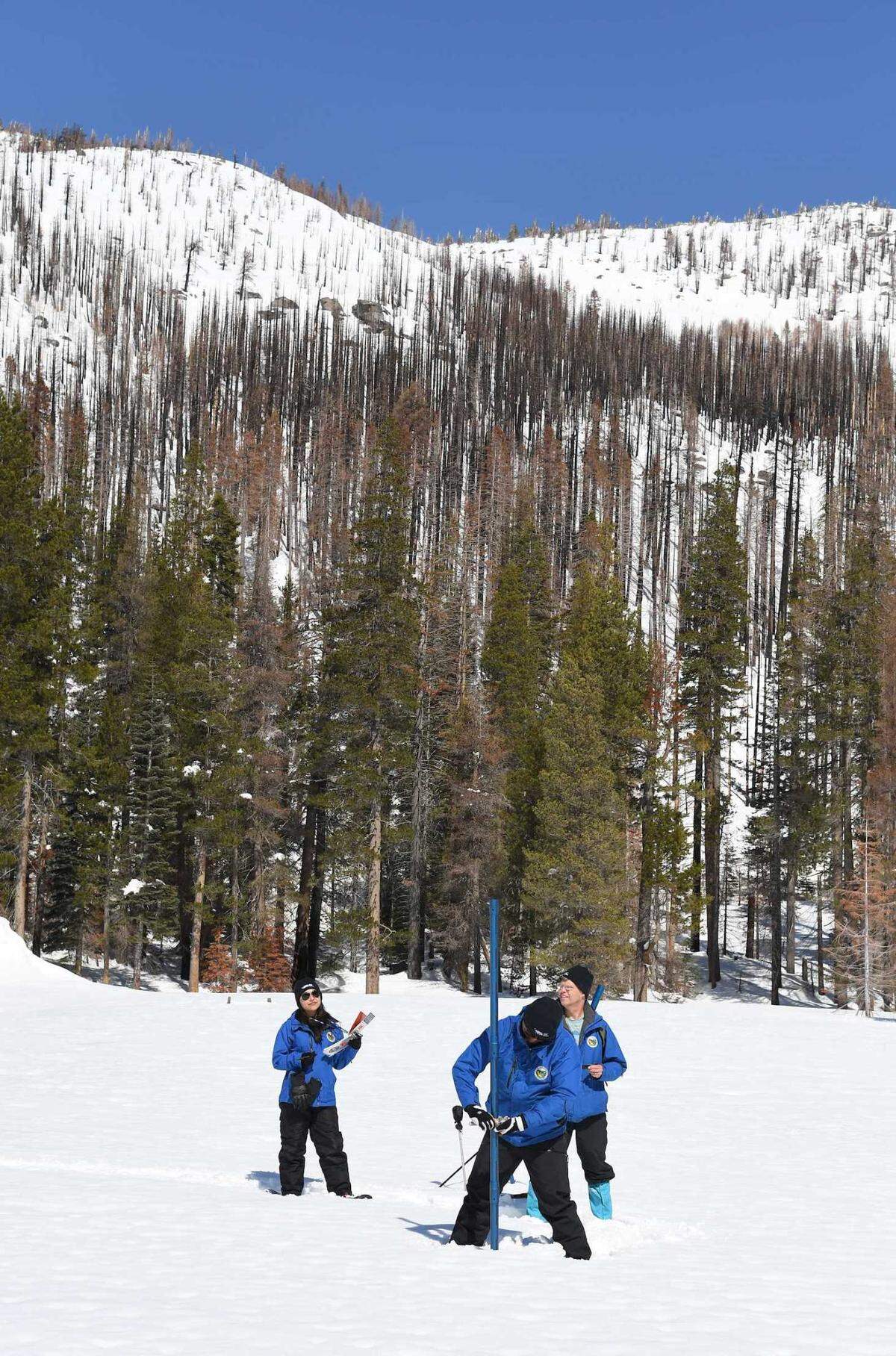
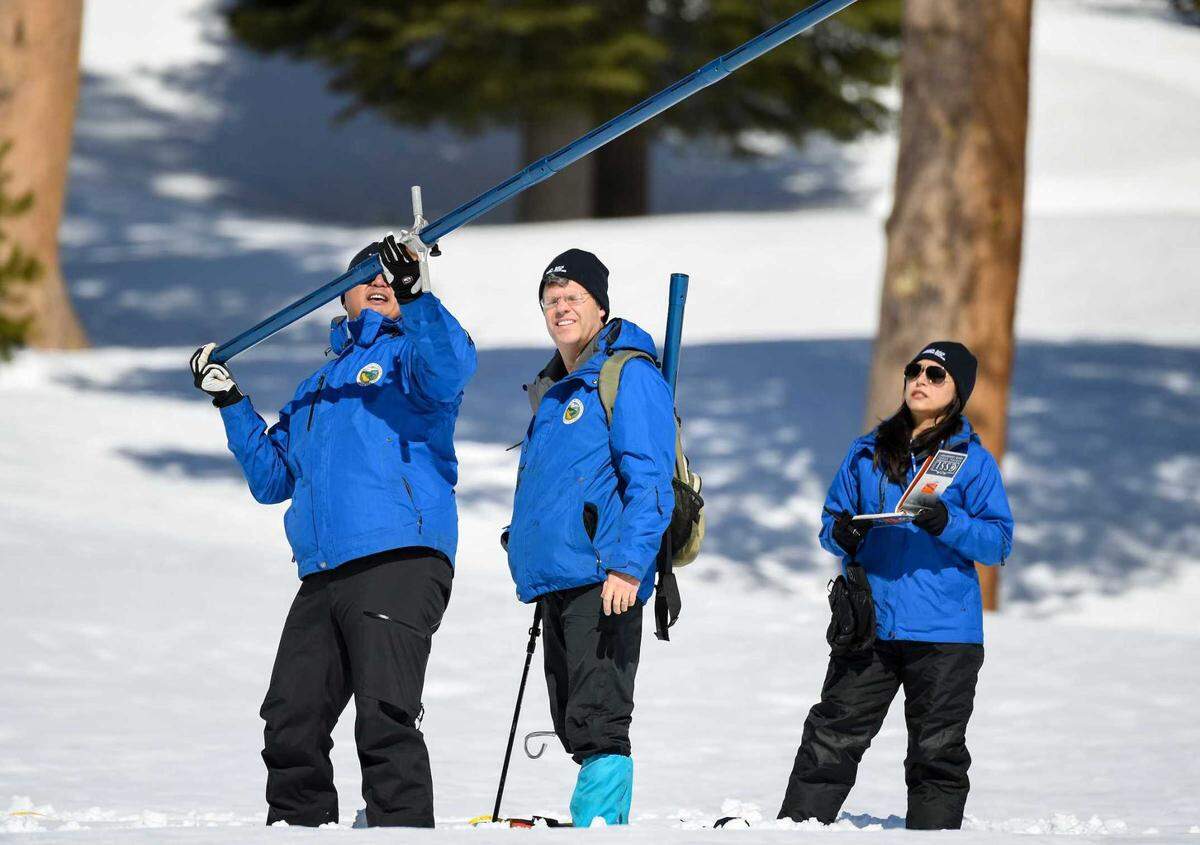
Water officials conducted a manual survey Friday morning at Phillips Station near Echo Summit, which revealed a snow-water equivalent of 41.5 inches, said Sean de Guzman, snow survey manager for the state Department of Water Resources.
That’s 177% of the site’s average for the date and 170% of its average for April 1, a date used by state water officials as a benchmark for the year’s typical peak in the snowpack, de Guzman said.
The statewide average for snowpack across all California sites stood at 45 inches as of Friday, which is 190% of normal for the date and 171% of the April 1 average.
“This snowpack actually rivals 1982-83, which is the largest snowpack on record,” de Guzman said.
Snow levels as of Friday were “hovering just below” the 1983 record level, de Guzman said. Winter storms during March, including one forecast for this coming weekend, will determine whether the state breaks the all-time record.
The reading of Friday’s snow survey results was delayed by about 20 minutes because the volume of snow made it difficult to maneuver the manual surveying equipment, said de Guzman, who referred to the snowpack in some parts of the mountains as “epic.”
One year earlier, when powerful storms the preceding October and December gave way to dismal precipitation totals in January and February, Phillips Station’s snowpack was at just 68% of average to start March 2022.
The southern Sierra Nevada range is leading the way this winter, reported Friday morning at 231% of the average for the date, with the central Sierra at 196% and northern Sierra at 151%, according to automated measurements.
The southern Sierra has been on pace since mid-January to break the all-time record for that region, de Guzman said.
“We could not be more fortunate to have had this kind of precipitation after three very punishing years of dry and drought conditions,” Karla Nemeth, director of the Department of Water Resources, said in a virtual news briefing following the snow survey.
California’s drought conditions easing
Wet and snowy weather has greatly improved California’s drought conditions, at least in the immediate term. A weekly update from the U.S. Drought Monitor on Thursday showed less than half of California in at least moderate drought conditions, down from 85% last week.
“The precipitation that California’s received in recent days combined with the nine atmospheric rivers during December and January have really helped ease a lot of drought impacts,” de Guzman said.
“But while it’s helped our snowpack and our reservoirs, our groundwater basins are a lot slower to recover. It takes more than a single wet year to really recover a lot of those groundwater basins that have been critically overdrafted for so many years during this drought.”
Nemeth said it is still too early to declare the drought over, noting the dry conditions that persist in the north state. The federal Drought Monitor showed 25% of California still in “severe” drought status.
It will take about another week to complete calculations about projected runoff from current snowpack levels, state officials said Friday.
Those runoff calculations could lead to another adjustment to this year’s projected allocation for the State Water Project, which delivers water to 29 agencies that serve a combined 27 million Californians.
State water officials last month announced a slight increase in that allocation, from 30% to 35% of requested supply, after boosting the allocation from 5% to 30% in the immediate aftermath of the nine atmospheric rivers earlier this winter.
“There is more work that needs to be done to help understand where things are headed relative to this terrific snowpack,” Nemeth said.
Reservoir levels mostly rising
With mountain snow and valley rain throughout most of the state since late December, nine of the state’s 17 major reservoirs are now above average for this time of year, the Department of Water Resources reported Friday.
Those nine include California’s second-largest reservoir, Lake Oroville, at 116% of its historic average and Folsom Lake at 114%.
Some reservoirs have been slower to recover. Trinity Lake stood at just 48% of average Friday morning, and the state’s largest, Shasta Lake, was measured at 84%.
This story was originally published March 3, 2023 at 12:47 PM.