California salmon season is canceled for the first time since 2009. Here’s what it means
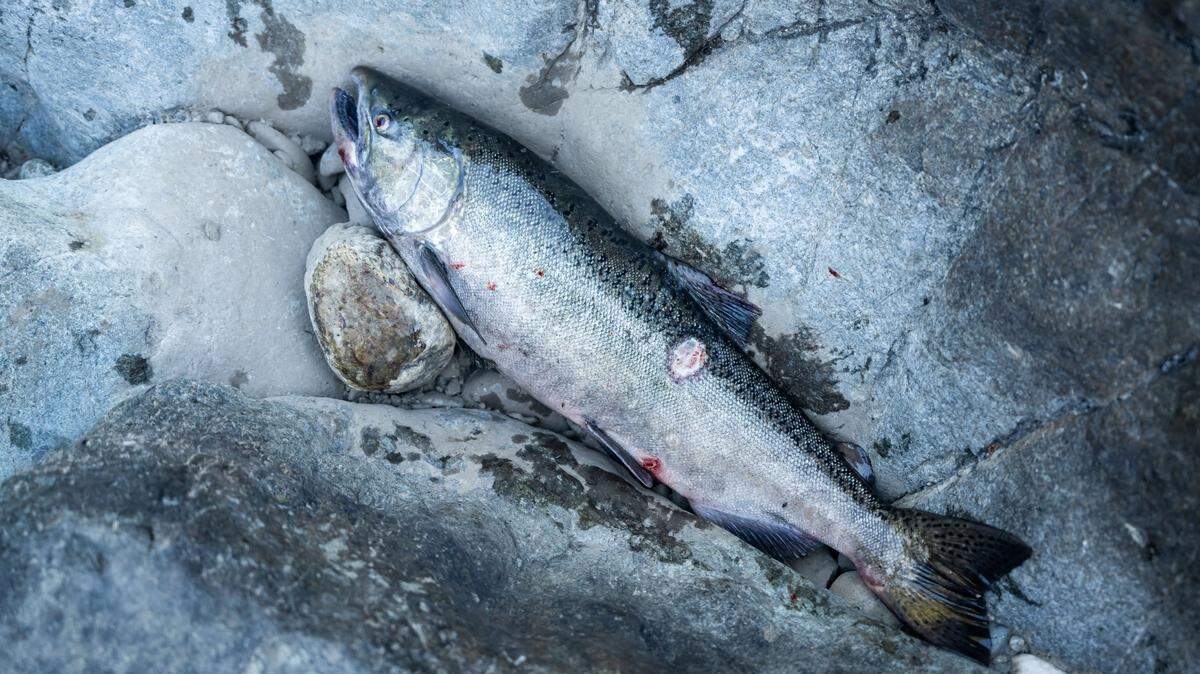
Federal regulators overseeing West Coast fisheries have effectively called off California’s entire 2023 ocean salmon fishing season, in an effort to protect fish populations that have dwindled during the ongoing drought.
In California, most fisheries had been set to open their season April 1.
Instead, the National Marine Fisheries Service on Friday canceled all ocean salmon fishery openers between Cape Falcon, Oregon, through the U.S. border with Mexico through at least May 15, the California Department of Fish and Wildlife said in a news release.
The Pacific Fishery Management Council, a federal conservation council that manages fishery operations for Washington, Oregon and California, has proposed three regulatory options for the window of May 16 of this year through May 15, 2024.
As state wildlife officials noted, none of the three options under consideration would allow for commercial or sport salmon fishing off the coast of California until April 2024 at the earliest.
In other words, salmon fishing season on California’s coast, which typically runs through as late as October in some parts of the state, is dead in the water for all of 2023.
Salmon fishing advocates say it will be a devastating blow for a more than a $1-billion-a-year industry, upon which tens of thousands of Californians’ livelihoods depend.
A rare and extraordinary step, the cancellation was initiated by the federal management council “to protect Sacramento River fall Chinook, which returned to the Central Valley in 2022 at near-record low numbers, and Klamath River fall Chinook, which had the second lowest abundance forecast since the current assessment method began in 1997,” the California Department of Fish and Wildlife wrote in a news release.
Prior to this year, California’s ocean salmon season had only been canceled in 2008 and 2009, also in the wake of severe and long-lasting drought conditions that ravaged salmon populations that decade.
The Pacific Fishery Management Council will meet for a public hearing March 21 in Santa Rosa to receive public comment on its three regulatory options for May 2023 through May 2024, then adopt final regulations for the year early next month, formalizing the cancellation. California’s wildlife department will abide by federal regulations.
California salmon population forecasts among lowest ever
State and federal scientists announced this year’s salmon outlook forecasts at the beginning of March.
“The 2023 projection for Sacramento River fall Chinook, the most predominant stock harvested in California’s fisheries, is estimated at 169,767 adults, one of the lowest forecasts since 2008 when the current assessment method began,” state wildlife officials wrote in a March 1 announcement.
“For Klamath River fall Chinook the forecast is 103,793 adults which is the second lowest forecast since the current assessment method began in 1997.”
The latest Sacramento River forecast is the lowest since 2009 (122,200 fish) and the Klamath River forecast the lowest since 2017 (54,200), according to state wildlife officials.
Canceled season marks huge hit to salmon fishing industry
The Golden State Salmon Association, a coalition made up of commercial and recreational salmon fishers and other related stakeholders, said in a news release last week that the economic hit from the season’s cancellation will be vast, encompassing not only fishing operations but coastal businesses like restaurants and hotels.
“California’s salmon industry is valued at $1.4 billion in economic activity and 23,000 jobs annually in a normal season,” the association says on its website.
“Salmon fishermen and women, and many businesses that serve both the sport and commercial salmon boats, are staring at no income in 2023 as a result of moves to close the season,” coalition officials wrote in a Friday news release.
Very wet conditions this winter have begun to alleviate California’s drought conditions, but it will likely take a couple of years for those improvements to manifest in healthier salmon numbers.
The coalition said low salmon populations are a result of priorities by upstream dam operators during the drought.
“Dam operation decisions favoring agriculture over salmon survival have resulted in very poor natural salmon reproduction in recent years because lethal hot water left after dam releases for agriculture have killed incubating salmon eggs,” the association wrote in Friday’s release.
“In addition, strong releases of water in the spring needed to wash baby salmon safely out of the Central Valley to the ocean have been diverted or withheld.”
The association has criticized Gov. Gavin Newsom for a Feb. 13 executive order that gave authorization to the State Water Resources Control Board to suspend certain environmental laws in an effort to preserve the state’s water supplies.
In part, the executive order allowed the water control board to modify releases and diversions at State Water Project and Central Valley Project facilities.
The water board earlier this month reversed a decision to eliminate river flows for fish and wildlife, citing relief given by continued wet conditions as a spate of atmospheric rivers pounds the state into mid-March.
But some environmentalists argue the damage has already been done. The Golden State Salmon Association contends that Newsom’s executive order demonstrated disproportionate attention toward agricultural production at the expense of wildlife protection, worsening the state’s ecological crisis.
This story was originally published March 15, 2023 at 5:00 AM.