Coronavirus updates: 1,400 dead in California; Newsom shares new state testing goals
A major development Tuesday night in California has shifted the known timeline for coronavirus spread in the U.S. significantly.
Authorities now say that the first confirmed U.S. death from the coronavirus came in early February in Santa Clara County, more than three weeks earlier than what had been reported for nearly two months as the nation’s first COVID-19 death, in Washington state.
Following autopsies by its coroner’s office and tissue sample testing, Santa Clara County in a news release late Tuesday announced three new deaths that predated a March 9 COVID-19 fatality health officials had originally believed to be the county’s first. Two of the deaths, individuals who died Feb. 6 and Feb. 17, occurred before what was previously reported as the nation’s first fatality, in Washington on Feb. 28.
The first death was a 57-year-old woman and the Feb. 17 death was a 69-year-old man, Santa Clara County health officials said during a Wednesday morning news conference. The third Santa Clara County resident, a 70-year-old man, died March 6.
“These three individuals died at home during a time when very limited testing was available only through the CDC,” the county news release said.
Samples from the two who died in February were sent to the federal Centers for Disease Control and Prevention, and on Tuesday, the county received results from CDC tissue sample testing that both cases “are positive for SARS-CoV-2 (the virus that causes COVID-19),” the news release said.
The autopsy results suggest that there could be numerous other uncounted deaths that occurred during the early weeks of its spread, but that were not linked to COVID-19 due to lack of testing.
“As the Medical Examiner-Coroner continues to carefully investigate deaths throughout the county, we anticipate additional deaths from COVID-19 will be identified.”
Statewide, the first confirmed COVID-19 fatality had previously been reported as a Placer County resident who died March 4.
At least 1,354 coronavirus deaths, 86 more than the day before, had been reported across California as of Tuesday, Gov. Gavin Newsom and the state Department of Public Health said Wednesday, among more than 33,000 lab-confirmed cases. As of Wednesday afternoon, 1,421 Californians had died from the virus among over 37,000 confirmed infections, data maintained by Johns Hopkins University shows.
More than 46,500 have died from the virus across the U.S. and more than 183,000 have died worldwide as of Wednesday afternoon, according to the Johns Hopkins University data. About 840,000 people in the U.S. and more than 2.6 million globally have been infected by the virus, the university estimates.
California remains under a mandatory stay-at-home order, issued March 19 by Newsom in an effort to increase social distancing and slow the spread of the highly contagious virus. The governor and state health leaders have spoken for weeks of “bending” or “flattening” the pandemic’s growth curve to ensure that a surge in cases does not overwhelm the state’s hospital systems.
Newsom and health experts have recently said that the curve may be starting to flatten, but that reopening the state’s economy or allowing large gatherings too soon could undo that progress.
Early last week, Newsom laid out six factors the state would have to consider before implementing a reopening plan. Chief among those is more widespread diagnostic testing, which Newsom said during Wednesday’s daily news briefing is likely the most important of the six factors at the moment.
Testing update: State at 16,000 per day, 60,000 is ‘short-term’ goal
The governor on Wednesday said that California is currently performing 16,000 diagnostic tests for the coronavirus per day. The goal remains to reach 25,000 daily tests by the end of April, which is eight days from now.
Eight days before Wednesday, on April 14, the state was at 10,000 tests a day. About two weeks earlier at the end of March, only about 2,000 tests were being conducted each day.
Beyond April, the “Phase One, short-term” goal for daily testing ranges from 60,000 to 80,000 tests, Newsom said, having previously described Phase One as the time period extending roughly through mid or late May.
He also said that 86 new sites will soon open across the state with an emphasis on “testing deserts,” which include rural areas and “black and brown communities.”
Newsom said that in a statewide survey of existing test sites, between 50 and 55 percent of them said their biggest need was testing swabs. Sites also reported shortages of viral transport medium, which is the sterile solution swabs must be placed in once they are used to collect a sample.
President Donald Trump has promised the state 100,000 swabs by the end of this week, 250,000 next week and more than 250,000 the week after that, Newsom said Wednesday.
The state’s testing indicator also includes the related topics of isolation, quarantine and contact tracing of confirmed coronavirus cases. The governor said the current goal is to have 10,000 “tracers” working toward that goal, including state workers who would be retrained to do so, in the near future.
Hospitals can resume surgeries, Newsom says
Newsom at the start of Wednesday’s news conference announced that hospitals “can begin to schedule surgeries again,” the first formal step taken in the direction of loosening the stay-at-home order since it was first issued.
The governor said that hospitals’ capacities are at a level where health systems can “resume delayed medical care” such as scheduling of elective tumor removals or other preventive care.
Newsom emphasized Wednesday that it is still too early to point to an exact date or even estimate a more specific time frame for when the stay-at-home order can be relaxed and sectors of the economy reopened. He referred several times to stay-home measures being “augmented” — modified in either direction, looser or more stringent, in real time as data and scientific evidence continue to drive those decisions, he said.
Less-urban California cities call upon Newsom to relax order
City and county leaders, including from some of the less densely populated parts of California, have recently called upon Newsom to begin loosening his statewide stay-at-home order, many of them noting the economic devastation experienced over the past month.
So far, handfuls of cities from Northern, Southern and Central California have weighed in.
Placerville’s City Council voted on April 14 to send a letter to Newsom, calling on him to lift the order. Vice Mayor Dennis Thomas, himself recovering from a case of COVID-19, said earlier this month he was “really frustrated at how these businesses are being disadvantaged” by the statewide shutdown.
Every mayor in San Luis Obispo County joined two county supervisors and Republican Assemblyman Jordan Cunningham this week in drafting a letter to Newsom, asking him to relax the stay-at-home order.
“Our community has done a fantastic job,” said San Luis Obispo County Emergency Services Director Wade Horton. “You’ve bent the curve. We are ready to move forward.”
Parts of Stanislaus, Riverside and Ventura counties have also either begun partial reopenings or signed letters urging Newsom to allow them to do so.
The governor has countered that it is still too soon to do that, and he said Tuesday that rural parts of California face more danger than may be immediately apparent.
“So if you’re living in a community where you think, ‘Well, we’re immune, we’re OK, we’ve got this. We’re not LA, we’re not some of these other counties in the state of California,’ “ Newsom said during Tuesday’s daily news conference. “I hope you’ll disabuse yourself of that and consider the fact that some of the most challenging parts of the state remain some of our rural parts of our state.”
Nonetheless, Newsom said that on Wednesday he will release more “prescriptive guidelines” for how the state can go about reopening.
Latest Sacramento-area numbers: More than 50 dead
There have been a total of 1,294 lab-confirmed coronavirus cases and 56 COVID-19 deaths across Sacramento, El Dorado, Placer and Yolo counties as of Wednesday afternoon.
Sacramento County public health officials in a Wednesday morning update announced one additional coronavirus death and 17 new lab-confirmed cases, as the county approaches 1,000 total infections. The most recently reported death came in an unincorporated part of the county.
Sacramento County now reports 36 deaths among 971 confirmed cases, last updated 9 a.m. Wednesday. Of the fatalities, 19 have come in the capital city, three in Elk Grove, three in Citrus Heights, one in Rancho Cordova and 10 in unincorporated parts of the county, according to the county public health department website.
El Dorado County has reported 39 cases of COVID-19 so far with no deaths, as of Wednesday afternoon, according to its public health department. There were no new cases reported Wednesday. El Dorado Hills area has the highest concentration of cases, with a total of 15 infected there. Thirteen tested positive in the Lake Tahoe area, five in the greater Placerville area and the rest are scattered throughout the foothills.
Placer County reports 133 confirmed coronavirus cases and eight total COVID-19 deaths, last updated 8 a.m. Wednesday. No new cases or fatalities were reported between Sunday and Monday mornings or between Tuesday and Wednesday, and just one case and no deaths were reported between Monday and Tuesday. More than 110 of the cases have come in South Placer, which includes Roseville, Rocklin and Lincoln, according to the county’s public health website.
Yolo County reported 151 cases and 12 fatalities as of Wednesday afternoon, including five new cases and two more deaths since Tuesday. Four of those new cases occurred in Woodland, which accounts for about half of all confirmed cases at 78, followed by West Sacramento at 46, 16 in Davis and 11 in Winters and unincorporated Yolo County.
Rancho Cordova researchers working toward virus treatment
Rancho Cordova-based ThermoGenesis is working toward a biopharmaceutical treatment that CEO Chris Xu says could ideally go to market within about two months.
In recent weeks, Xu said, MD Anderson Cancer Center, the Mayo Clinic and other major institutions have launched programs using convalescent plasma — blood plasma from people who have recovered from the disease — to treat other COVID-19 patients.
When people survive a virus, their blood plasma often develops antibodies that can neutralize the virus, Xu said, but some people have a much stronger antibody response than others.
Xu and his team began using their kit to screen for those individuals months ago in Asia, long before COVID-19 was first reported in the U.S., he said.
“We’re looking at whether there’s an antibody that can block the virus from not only recognizing the cell, but also from entering the cell,” Xu said. “So out of that 50 we sequenced, 16 neutralizing antibodies were identified.”
ThermoGenesis and affiliate ImmuneCyte hope to get the first monoclonal antibody treatment into the market within the next two months.
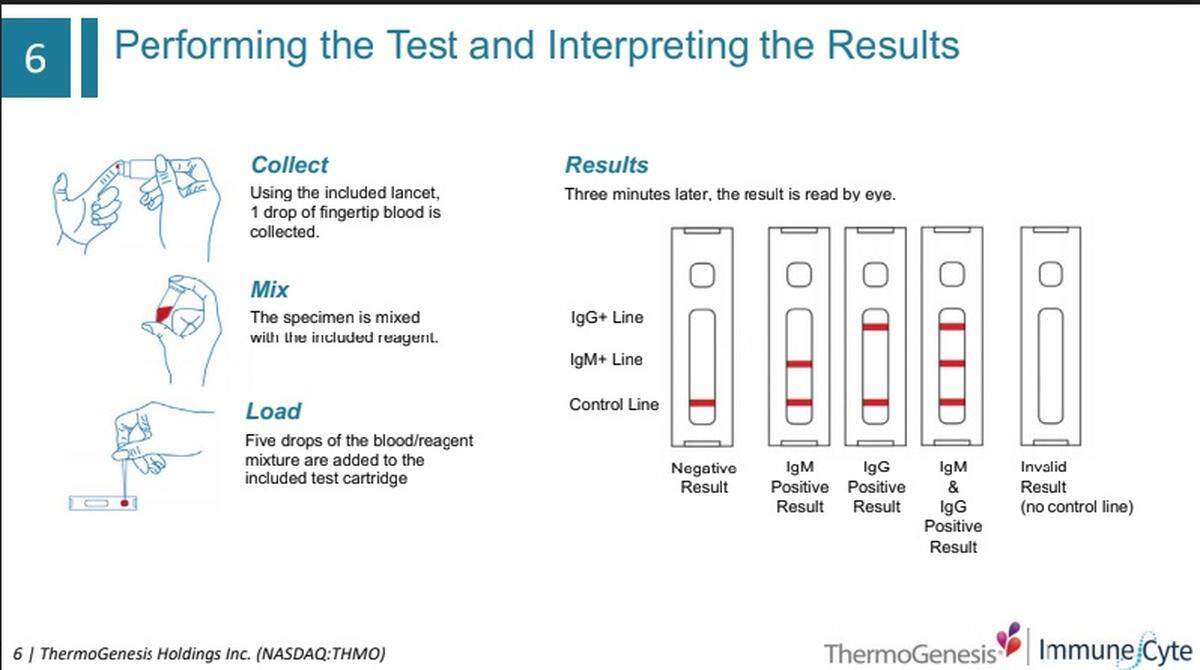
Additionally, ThermoGenesis is marketing a diagnostic kit that will allow health care professionals to tell patients whether they’ve already had COVID-19 and have developed antibodies that can help fight the disease, Xu said. The company is requesting federal approval to market this kit directly to consumers, with Xu saying the kit could sell for less than $30.
COVID-19 outbreaks reported at nursing, assisted-living facilities
Skilled nursing facilities and assisted-living facilities for seniors across California have become the sites of coronavirus outbreaks, some of them deadly. Concern remains high as older populations and those with existing health conditions are considered most vulnerable to COVID-19.
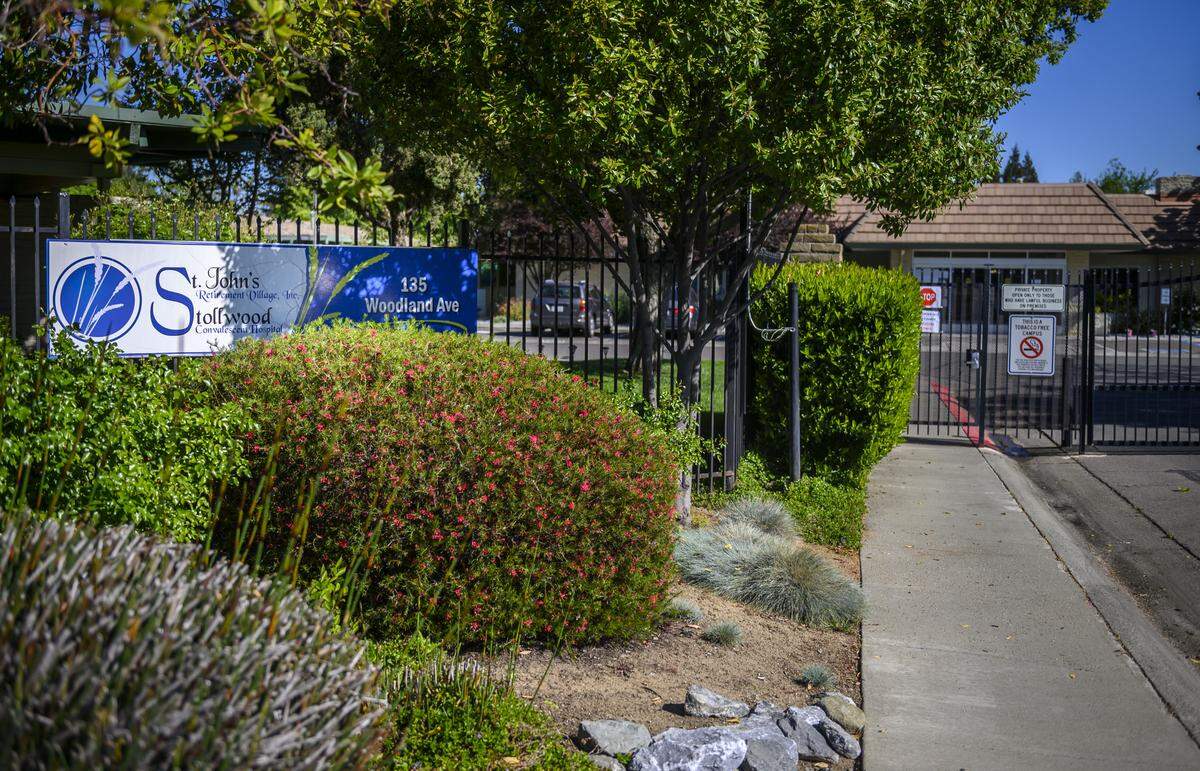
Yolo County officials on Tuesday confirmed that Stollwood Convalescent Hospital, a 48-bed nursing facility that is part of St. John’s Retirement Village in Woodland, has had six residents die of COVID-19 among 31 positive cases. Another 33 staff members have tested positive, the county says, with no deaths yet reported.
The infections and fatalities both make up roughly half of those reported across the entire county, where 146 cases and 10 deaths have been confirmed as of 5 p.m. Tuesday, according to the public health department’s online dashboard.
In Sacramento County, two facilities owned by a company called Sunrise Assisted Living — one in Sacramento and one in Fair Oaks — have accounted for a combined 65 positive COVID-19 tests among residents and employees.
The Virginia-based company, Sunrise Senior Living, operates 329 senior-living communities, including several in California. State inspection reports do not show any serious violations at the two facilities in recent years.
The 65 Sacramento cases make up one of the biggest clusters among at least 856 residents and employees of California’s assisted-living facilities who have tested positive for COVID-19, according to data released this week by the state.
The true number of cases is likely much higher, because the information provided by the California Department of Social Services only includes facilities that house more than six people and have reported clusters of more than 10 confirmed cases.
That data remains incomplete even within those parameters and will continue to be updated, a spokesperson said. The list does not reflect a known cluster of cases that happened in an Elk Grove assisted-living facility last month, Carlton Senior Living, that included the county’s first death attributed to COVID-19. At least six residents there also contracted the disease, officials said previously.
At least 91 people from California’s assisted-living facilities have died of complications related to COVID-19, according to updated data published Tuesday afternoon.
The state last Friday for the first time released numbers on coronavirus cases at licensed, skilled nursing facilities throughout California.
What is COVID-19? How is the coronavirus spread?
Coronavirus is spread through contact between people within 6 feet of each other, especially through coughing and sneezing that expels respiratory droplets that land in the mouths or noses of people nearby. The CDC says it’s possible to catch the disease COVID-19 by touching something that has the virus on it, and then touching your own face, “but this is not thought to be the main way the virus spreads.”
Symptoms of the virus that causes COVID-19 include fever, cough and shortness of breath, which may occur two days to two weeks after exposure. Most develop only mild symptoms, but some people develop more severe symptoms, including pneumonia, which can be fatal. The disease is especially dangerous to the elderly and others with weaker immune systems.
This story was originally published April 22, 2020 at 8:41 AM.