Coronavirus updates: 250 dead in Sacramento area; second El Dorado death reported
As California’s battle with the coronavirus proceeds into its sixth month, the state’s top public health official announced late Sunday her immediate departure from the position.
California Department of Public Health Director Dr. Sonia Angell in a letter to her staff thanked her colleagues for their hard work amid the pandemic but did not disclose her reason for leaving.
In his first COVID-19 news briefing in a week, Gov. Gavin Newsom declined multiple times to expand on Angell’s resignation.
“She resigned, she wrote a resignation letter, and I accepted her resignation,” Newsom said. “I don’t want to air anymore than that.”
A state Health and Human Services spokesperson told reporters in an email Sunday that Newsom on Monday was expected to appoint Sandra Shewry as acting director of CDPH; and Dr. Erica Pan, whom Newsom appointed state epidemiologist in June, will become the state’s acting public health officer.
The health leadership changes come as California finds itself in another critical moment amid the ongoing pandemic. With summer turning to fall, education and local government officials across the nation’s most populous state continue to scramble in advance of a fast-approaching K-12 school year that, for the vast majority of public districts, will have to at least begin on a distance-learning basis.
California’s death toll from the highly contagious respiratory disease surpassed 10,000 last week, a few days after the state’s official infection total shot past 500,000. Recent totals for the latter figure, of total Californians testing positive for COVID-19, have remained dubious as of late due to a data snafu — what Newsom, addressing it for the first time in his Monday briefing, called a “little bit of trouble.”
Counties and the state first announced early last week that a major technical problem involving the system (CalREDIE) used by labs statewide to report case data to CDPH and to local health offices had resulted in significant underreporting of cases, dating back at least to late July. Deaths and hospitalization figures, which come in through different channels, have not been impacted by the errors, officials have said.
Health and Human Services Secretary Dr. Mark Ghaly explained Friday that the issue stemmed from a July 25 server outage combined with an element of human error, resulting in a backlog of between 250,000 and 300,000 disease reports, the vast majority of them for COVID-19.
Ghaly on Monday gave a more precise figure of 295,000 backlogged reports Monday, and said those cases were cleared over the weekend.
Just prior to public disclosure of the problem, data updated daily by CDPH showed new infection totals abruptly becoming significantly smaller than they’d been in recent weeks. After over 9,000 cases poured in Aug. 1, the following four days each came in below 5,500, which would have been the four lowest daily figures since the July 4 weekend. But last Tuesday, CDPH began including in its data reports a disclaimer regarding underreporting, which remains attached as of Monday, after numerous counties had done the same on their own COVID-19 information dashboards.
The system error also represented a big setback to the contact tracing process, which state and local leaders have described as a critical component of the COVID-19 response.
Ghaly said the issue has been addressed via a series of workarounds. Another note on the state’s COVID-19 website says the recent reporting issues “have been corrected,” but that officials are continuing “to work through the backlog,” meaning daily totals will reflect older cases as the state handles close to two weeks of piled up data.
Ghaly also announced that the state is building a new reporting system because CalREDIE was not designed for the massive volume of data a pandemic has presented, which may have contributed to the outage.
“Our data system failed, and that failure led to inaccurate case numbers and positivity rates,” Ghaly said Friday. “We apologize. You deserve better. The governor demands better.”
Even with the backlog not yet accounted for, California surpassed 560,000 total cases Monday morning. The state reported only 7,751 new cases despite an apparent record-setting 172,000 COVID-19 tests processed the previous day. Its death toll climbed to 10,359, with 104 fatalities reported Sunday and 66 Monday.
Latest Sacramento-area numbers: Region soars past 250 dead, 18,000 infected
The six-county Sacramento area made up of Sacramento, El Dorado, Placer, Yolo, Sutter and Yuba counties has reported more than 250 combined coronavirus deaths and over 18,000 confirmed cases.
Sacramento County’s infection and death tolls grew significantly in a Monday update. The county for the first time in months did not update the numbers on its COVID-19 data dashboard over the weekend, likely due to the backlog issues that the county continues to include as a large disclaimer topping that dashboard.
Sacramento County has now tallied 12,040 confirmed infections, disclosing 1,245 new cases. At least 177 residents have died; the county increased this total by 16 between last Friday and Monday.
The county reports that by date of death, as opposed to reporting, COVID-19 has already caused 16 resident deaths in the first six days of August, the most recent period on record.
There are 263 COVID-19 patients currently in hospital beds across Sacramento County, according to Sunday’s state health data, including 87 in the ICU. Another 96 ICU beds remain available.
Placer County has reported 2,319 cases and 22 deaths, with 81 new infections reported Saturday, 96 Sunday and 37 Monday. The county reported one death per day last Monday through Thursday, one over the weekend and another Monday for six in the last eight days. Sixty-four people are currently being treated for COVID-19 at Placer County hospitals, with 12 in the ICU due to the disease, the county says.
Yolo County has reported 1,759 cases and 44 deaths. The county reported 38 cases and one death Sunday, after 31 cases were reported Saturday and 30 cases and one fatality were reported Friday.
El Dorado County reported its second death from COVID-19 on Monday. In its daily coronavirus update, county spokeswoman Carla Hass said the man was between the ages of 50 and 64 and lived in the Placerville area. No other details were released, including when the man died.
The county had gone 24 days between Monday’s reported fatality and the first on July 18 of an elderly man from the Lake Tahoe area.
County health officials added 26 new cases on Monday — including 11 in the South Lake Tahoe area, six in Placerville and three in El Dorado Hills — bringing the total to 755. The number of hospitalized patients increased by one to four, two of which are in intensive care. The county has 12 ICU beds available. It remains the only county in the capital region to have not been placed onto the state’s coronavirus watchlist, reflecting its relatively low case total.
In Sutter County, 952 cases and seven deaths have been reported. Sutter hospitals are currently caring for 13 with the virus, with six in the ICU.
Yuba County has reported 646 cases and four deaths. Thirteen people in Yuba County were hospitalized as of Sunday, including three in intensive care.
What California’s data glitch mean for counties, schools
Before the data problem became apparent, the state was regularly updating a monitoring list showing which of its 58 counties were considered to have elevated COVID-19 activity. Heading into last week, the watchlist had ballooned to 38 counties accounting for over 97% of the state’s 40 million residents.
The watchlist currently governs which counties may reopen several types of businesses and allow indoor religious services, while also carrying heavy implications for education.
Newsom last month announced that a county would have to be off the watchlist for two consecutive weeks before it could proceed with on-campus K-12 learning. On Friday, the state announced that colleges in universities can’t hold in-person lecture classes until their county is off the list for at least three straight days.
At the start of last week, CDPH and the Newsom administration also released details on a waiver process to allow schools in watchlist counties to reopen. The waiver is reserved for schools in counties that have observed fewer than 200 new lab-positive COVID-19 cases per 100,000 residents in the past two weeks, which is twice as the number used as the threshold for the watchlist.
All of that is up in the air until the backlog from the data problem gets sorted out. State health officials early last week announced the watchlist will be frozen until the data issue is considered resolved, and counties are unable to determine if they meet the 200-case restriction for school waivers until that happens.
Sacramento and Placer counties, which have the highest volume of total and hospitalized COVID-19 cases in the greater Sacramento area, appear to be amid the process of reporting their backlogs. Placer County on Sunday reported a one-day record 96 new cases, which it notes as a result of data “normalizing” following the statewide issue. The county reported just a little over a dozen cases a day early last week due to undercounting.
“Cases, case rates, positivity rate, and other metrics may be affected. This disclaimer will be removed when these issues are fully resolved,” Placer’s disclaimer reads.
Sacramento’s dashboard as of Monday morning remains topped with a disclaimer on the technical issue, stating that the numbers shown recently “are likely to be an underestimate of true cases” across the county. After it had reported between about 50 and 70 cases for four straight days in early August — far fewer than had been typical for the county of 1.5 million as of late July — the county disclosed 300 new cases Thursday and 251 in Friday’s update.
San Quentin reports first prison guard death from COVID-19
California prison authorities over the weekend announced two deaths related to the massive, continuing COVID-19 outbreak at San Quentin State Prison. One was the first guard to die of COVID-19 at the prison, and the other became the fourth inmate condemned from Sacramento County to die since early July.
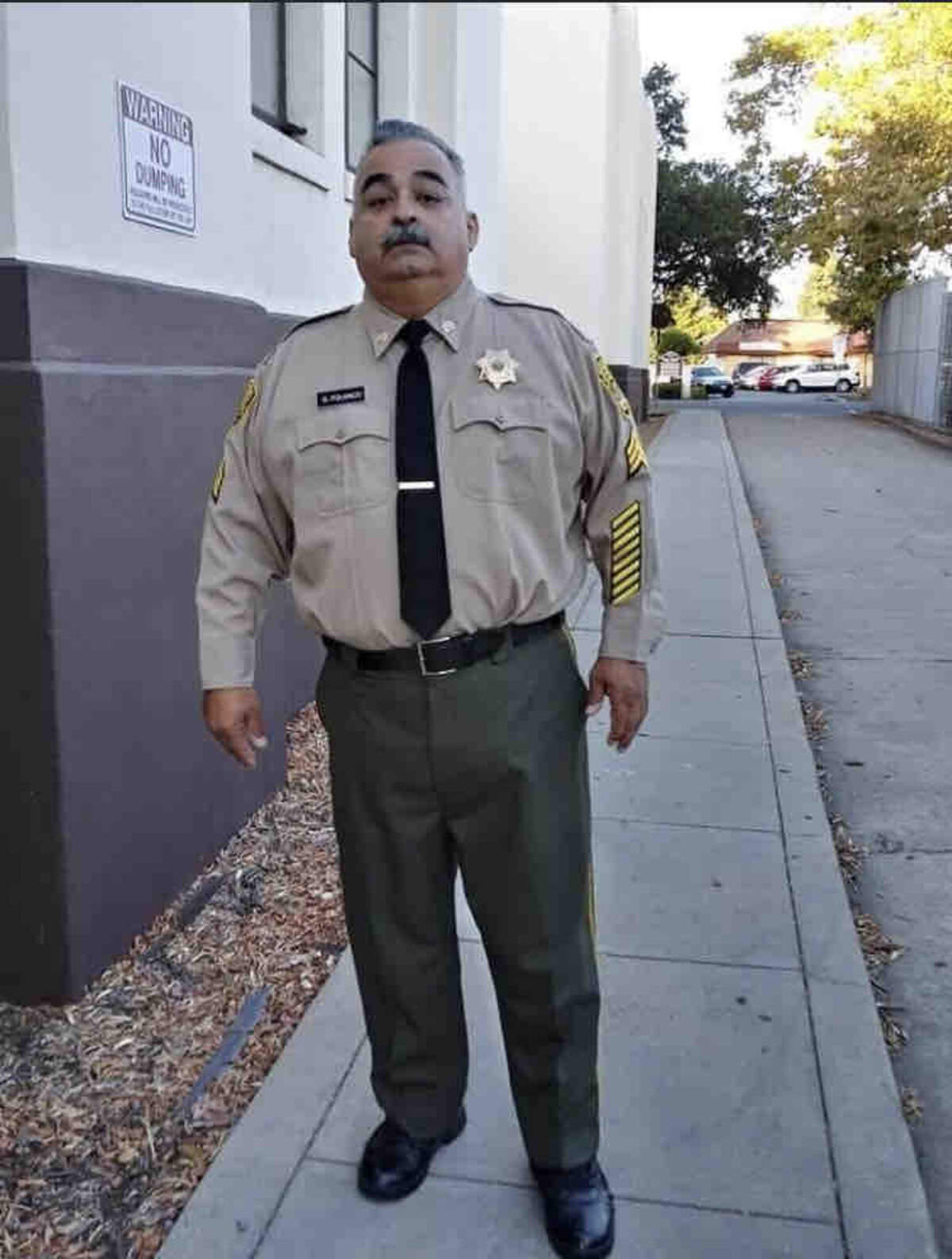
The California Department of Corrections and Rehabilitation said Sgt. Gilbert Polanco, an Army veteran and guard at the facility since 1988, had died. He’d been hospitalized since July 3 with the virus, officials said.
In total, 261 workers at San Quentin have been infected with COVID-19, but Polanco’s death was the first.
“Sergeant Gilbert Polanco is an example of the best of CDCR and his passing deeply saddens us all,” CDCR Secretary Ralph Diaz said in a statement Sunday. “His dedication to public service will not be forgotten.”
San Quentin inmate Pedro Arias, 58, died at an outside hospital from “what appears to be complications related to COVID-19,” CDCR announced. Officials said a coroner will further determine the cause.
According to CDCR officials, Arias was sentenced to death in Sacramento County on Feb. 22, 1990, for first-degree murder and second-degree robbery while armed with a firearm. He was also sentenced to life without parole for kidnapping for ransom/extortion, penetration with a foreign object, attempted sodomy, lewd and lascivious acts on a child under 14, sodomy of a child under 14, two counts of forcible rape, second-degree robbery and enhancements for the use of a firearm.
Arias is the 25th inmate at San Quentin to die from COVID-19 complications. The prison’s major outbreak, which has now afflicted over 2,200 inmates, has been linked to what lawmakers and others have called a “botched” May transfer of 121 inmates from the California Institution for Men in Chino, where an earlier outbreak took place.
Hospital numbers remain state’s most promising indicator of progress
Ghaly, in acknowledging the statewide data glitch last Tuesday and explaining it in further detail Friday, maintains that the state’s data on hospitalization and ICU totals remain accurate. Those numbers were not affected by the error because hospitals use a system other than CalREDIE to report, he said.
Hospital data from CDPH show significant downward trends: Total hospitalized COVID-19 cases have dropped from a peak of nearly 7,200 as of July 21 to just over 5,600 by Sunday’s update; and the ICU total dropped by more than 300 patients, from about 2,050 to fewer than 1,750, in the same period. Assuming they’re accurate, each would represent over a 15% decline in less than three weeks.
Ghaly on Friday said the state is confident these downward trends show that California’s actions from the first half of July — closing bars, dine-in restaurants and a number of other indoor businesses and activities across most of the state, as well as improving adherence to a mask mandate that’s been in place since mid-June — have resulted in a true decline in COVID-19 spread.
However, even with hospitalizations apparently declining statewide, there continue to be hot spots, including the Sacramento area and Central Valley. Graphs show solid drops in regions hit hardest earlier in the pandemic — Los Angeles, San Bernardino, Riverside and Orange counties are all on the decline, as well as San Joaquin County in the valley. But counties including Fresno, Stanislaus, Sacramento, Placer and the Yuba-Sutter bi-county area are each at or near all-time highs for COVID-19 prevalence in their hospitals, state data show.
World numbers: More than 20 million infected as death toll approaches 750,000
A map and data compiled by Johns Hopkins University shows the global coronavirus infection total at just over 20 million, with the United States passing 5 million cases over the weekend.
The U.S. now accounts for about 163,000 of the 733,000 confirmed COVID-19 deaths worldwide as of Monday evening, according to Johns Hopkins. Brazil is next in terms of death toll, recently surpassing 101,000. After that are Mexico at 52,000 dead, the United Kingdom at nearly 47,000, India at more than 44,000, previous European epicenter Italy at 35,000, France at just over 30,000, Spain at about 28,500 and 21,000 in Peru.
The long list of countries with five-digit death tolls continues with 18,600 dead in Iran, almost 15,000 dead of the virus in Russia, nearly 13,000 in Colombia, and just over 10,000 in South Africa and Chile.
What is COVID-19? How is the coronavirus spread?
Coronavirus is spread through contact between people within 6 feet of each other, especially through coughing and sneezing that expels respiratory droplets that land in the mouths or noses of people nearby.
The Centers for Disease Control and Prevention says it’s possible to catch the disease COVID-19 by touching something that has the virus on it, and then touching your own face, “but this is not thought to be the main way the virus spreads.”
Symptoms of the virus that causes COVID-19 include fever, cough and shortness of breath, which may occur two days to two weeks after exposure.
Most people develop only mild symptoms, but some people develop more severe symptoms, including pneumonia, which can be fatal. The disease is especially dangerous to the elderly and others with weaker immune systems.
This story was originally published August 10, 2020 at 8:30 AM.