
This COVID contact tracer is filling a crucial gap in Sacramento’s Hmong community
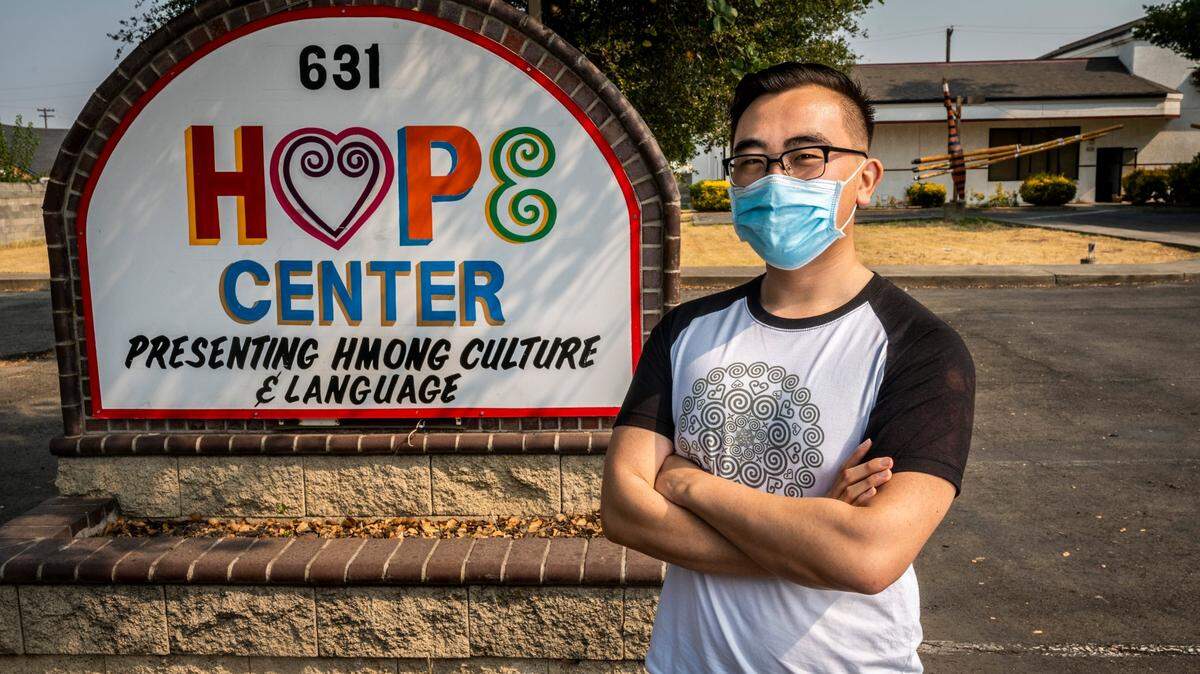
George Yang graduated Thursday from the University of California, Davis, public health master’s program, but he’s already hit the ground running as a Hmong language COVID-19 contact tracer and case investigator for Sacramento County.
Yang is one of two Hmong-language COVID-19 case investigators who are trying to bridge the gap between non-English speaking Hmong residents and crucial COVID-19 resources. It’s part of a partnership with Sacramento-based Hmong Youth and Parents United and The Center at Sierra Health Foundation.
Using a statewide database, Yang and his colleague, Lay Vang, track down folks who have tested positive for COVID-19 and listed Hmong as their first language or their most recent interactions as Hmong speakers.
It’s their job to then give these people a call and figure out who they were most recently in contact with. From there, they track down and inform those recent contacts about a potential exposure and walk them through next steps for testing, quarantining and monitoring symptoms.
“Some are very scared and they’re reluctant to talk to you,” Yang said. “You just gotta be there for them. Some are very understanding and appreciate you checking up on them, some of them don’t even know what’s going on. And they’re surprised that you even care.”
Many Hmong families in Sacramento are still in the dark about essential information related to COVID-19, according to Mai Yang Thor, executive director of HYPU, such as where the nearest testing site is or what to do if they become exposed to the virus
“There’s not a lot of in-language information that’s available for our community,” Thor said. “This is one of the first steps in how to directly support these individuals.”
The language barrier presented a challenge for Sacramento organizations even before the pandemic, Thor said. Sometimes it’s been difficult to explain to some Hmong residents how serious the pandemic is, she said, especially for those who said they needed to see it with their own eyes to believe its existence.
Yang has run into this problem himself, especially when he’s translating certain medical terms. If the English words don’t exactly line up with Hmong equivalents, he said, he’ll try to translate around the terms, then ask the person on the other end of the line to explain what he said back to him as an extra layer of verification.
He’s lost track of how many Hmong-language residents he’s had to call up since he started three weeks ago. Although some have been reluctant to give him details about who they’ve been in contact with, for the most part the people he calls are very appreciative.
Aside from translating a positive test result or English medical jargon into Hmong, Yang has also found himself filling the role of advocate and counselor for the people he calls.
One person he spoke with was living with an entire household full of people who had COVID-19 and was apprehensive to reach out for help. Another was an elderly man who lived alone after his wife passed away a few years before. He didn’t have a lot of close contacts and wasn’t a high-risk priority case, but Yang could tell that he “needed that call.”
“Some of them are actually really struggling, but they don’t want to talk about it, even to their family members,” Yang said. “You’re there to provide that support. You’re there to give them the information they need to seek resources for themselves in a way that they’re comfortable with. Every call like that gives me hope that our community can get through this together.”
There are only two Hmong-language contact tracers for Sacramento County at the moment, but three more at La Familia Counseling Center are scheduled to complete their training this week and plans are being made to hire more, according to Laura Jackson, contact tracing program officer for The Center at Sierra Health.
“We’re excited for the partnership, to bring in ethnic CBOs (community-based organizations) to do this kind of trusted messenger work,” said Kindra Montgomery-Block, associate director of community and economic Development for The Center at Sierra Health.
“We’re not just state workers. We’re community members, we’re neighbors, we live down the street,” Yang said.
This story was originally published August 28, 2020 at 11:19 AM.