‘We thought we were done’: COVID visits flood Sacramento emergency rooms. Many aren’t sick
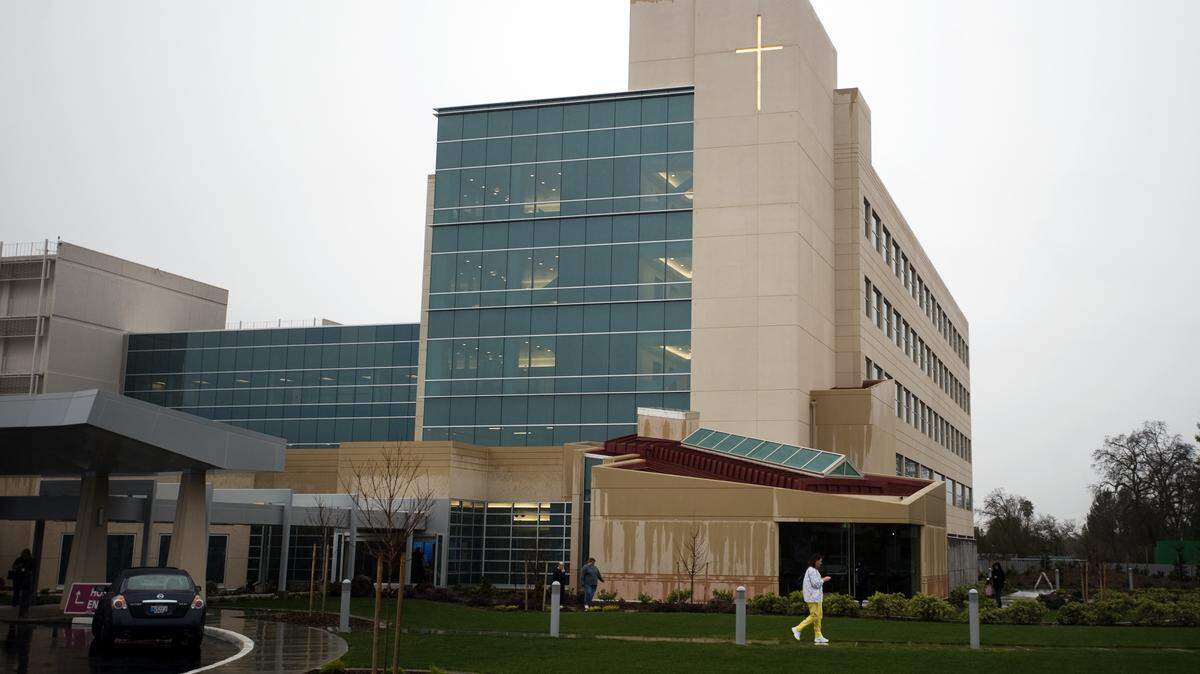
Doctors and nurses at Mercy San Juan Medical Center had hoped, maybe even believed, that the days of being crowded with coronavirus patients were over.
The Dignity Health hospital even closed its designated COVID-19 unit, preparing to convert that part of the observation floor back to its original purpose. There were no virus patients left to occupy it.
That was hardly three weeks ago, said Dr. Nicole Braxley, medical director of Mercy San Juan’s emergency room.
Despite a glimmer of optimism — more than half the local population becoming at least partially vaccinated by early June, case rates dwindling by the first day of summer — the Carmichael hospital, like others in the Sacramento region, is once again facing a deluge of patients seeking COVID-19 care as the delta variant maintains its foothold.
The number of patients hospitalized across Sacramento County with confirmed virus cases jumped from 175 to 326 in the past two weeks, according to state data updated Tuesday. In early July, the tally was below 60.
Some of the plans to return operations at Mercy San Juan to a pre-pandemic normal are back on hold.
“We were done,” Braxley said in a Monday interview. “We were done. I don’t know what to say. We’re tired.”
Despite that fatigue, Braxley said COVID-19 cases at this point aren’t currently threatening to overwhelm Mercy San Juan’s capacity.
The situation “is teetering, though, on, ‘Ooh, this doesn’t feel comfortable.’”
COVID-19 symptoms? ‘Nope, nope, feel fine’
The latest coronavirus spike brings familiar struggles to an already-exhausted health care workforce. But it’s also bringing some challenges that hadn’t been seen in previous surges.
“What we’ve seen now more than any other time of the pandemic are patients coming through the ER that are testing positive for COVID but going home,” explained Braxley, who works in the ER as an emergency physician almost every day.
“Anyone who had COVID (during the winter surge) was getting admitted. They were so sick, very critically ill … this time around, we are seeing a majority of the patients positive for COVID going home and just a small minority being admitted.”
This is happening, according to Braxley, because many of the patients coming into the ER for COVID-19 related visits don’t have severe symptoms.
Some don’t have any symptoms at all. They just want a test.
“We have entire families that are checking in just for a COVID swab, which is really kind of bogging down the system,” she said. “We’re a department that is set up to triage patients that are ill or critically ill.”
Emergency rooms can’t deny care, so they must give those tests.
“A number of people, this is the exact same story: ‘I went to a party last week, and then my friend called me and said they were positive for COVID. So I’m here for a swab,’” Braxley said.
“And I’m like, ‘Do you have a cough? Do you have shortness of breath?’ ‘Nope, nope, feel fine.’”
To maintain ER resources, Braxley is strongly encouraging those who suspect they may have COVID-19 but are not sick to instead seek swabs through other testing providers, such as pharmacies, primary care providers, community centers or county-run sites like the walk-up at Cal Expo.
“We don’t have the extra resources to set up a little clinic in front of the ER just to do swabs,” Braxley said, but Mercy San Juan is working to create handouts they can put in front of the ER to give information about testing and vaccination sites in the area.
As for those who are showing up to Mercy San Juan ill with COVID-19, Braxley says the top cause for hospital admission remains low oxygen levels. Some others are sick with gastrointestinal issues.
ER visits for COVID up across Sacramento region
Federal data support the emergency director’s observations on non-critical ER visits for COVID-19.
According to weekly hospital census reports collected by the U.S. Department of Health and Human Services, Mercy San Juan’s emergency department during the week ending July 29 recorded 537 visits related to COVID-19, more than one-third of all its ER visits for any reason that week. But less than 6% of that total, 32 patients, were admitted into adult inpatient care.
Many hospitals across the Sacramento region showed similar patterns, according to HHS data from the latter half of July: Several large emergency rooms saw a few hundred ER visits related to COVID-19 on a weekly basis, but only a few dozen admissions.
There are 16 hospitals with emergency departments across the six-county region of Sacramento, El Dorado, Placer, Sutter, Yolo and Yuba. Overall ER visits held steady from the week of July 22 to the week of July 29, each right around 22,000, but those related to COVID-19 grew from 4,250 to 4,800, going from 19% to 22% of total visits.
COVID-19 comprised more than 40% of emergency visits at Sutter Auburn, Sutter Roseville, Marshall Medical Center in Placerville and Sutter Medical Center in Sacramento. Sutter Auburn, where nearly 300 out of 640 total ER visits the week of July 29 were related to COVID-19, had only nine admissions for confirmed COVID-19 that week.
As with Mercy Medical Group, hospitals in the Sutter Health network are growing crowded but still have capacity for patients.
“Like other health systems, we are seeing an increase in emergency department visits and hospitalizations at network hospitals in the region,” a Sutter spokesperson said in a statement.
“We are carefully monitoring the situation and are able to adjust our operations accordingly. Our hospitals and care centers are open and able to provide high-quality care to patients, and we continue to encourage the public to seek care when they need it.”
Mercy General, Mercy San Juan and Mercy Folsom in Sacramento County, along with Sutter Davis and Methodist Hospital of Sacramento, all saw COVID-19 make up between 30% and 40% of emergency department visits the week of July 29.
“I’m happy to take care of people, but the numbers are getting so massive now that it’s really getting difficult to care for everybody else,” Braxley said. “Because we’re an emergency department, I can’t just swab people and send them out. I have to perform a medical screening exam.”
This leads to longer wait times at the ER for everyone.
Braxley said she suspects people are turning to emergency rooms because that’s what many are used to from before the pandemic.
“They’re scared. They don’t have great access to their primary care. Half the primary care offices are closed anyway — they don’t wanna see you with a 10-foot pole if you have COVID. And patients, they don’t know how to access this in any other way, so they do what they’ve always done: they come to the ER.”
Hospitalizations, deaths up as infections surge
Coronavirus infections have been rising rapidly across the capital region, as well as throughout California and the U.S., due to the highly contagious delta variant, which the California Department of Public Health reports made up more than 86% of cases tested for variants in July.
Statewide, test positivity for the virus jumped tenfold from a record low of 0.7% in mid-June to 7% by the end of July. COVID-19 hospitalizations across California, which entered July at just over 1,000, have swelled to more than 6,250 as of Tuesday’s update from CDPH.
Daily cases in Sacramento County essentially quadrupled in a month, from 7.2 per 100,000 residents for the week ending July 1 up to 28 per 100,000 by July 31, according to the local health office.
Deaths have also increased, though to a much smaller extent than cases or hospitalizations, likely because the age groups most vulnerable to COVID-19 now have very high vaccination rates. Sacramento County health officials recorded at least 47 virus fatalities in July.
That’s more than April, May or June, but well below the nearly 400 who died last December.
This story was originally published August 11, 2021 at 5:00 AM.