COVID updates: California smashes case record; K-12 testing kits come late
A key measure of coronavirus transmission in California has reached an all-time high as the omicron variant plunges the Golden State into its fourth surge of the pandemic.
The California Department of Public Health in its first COVID-19 data update of 2022 reported a seven-day positivity rate of 20.4%, cruising past the previous record of 17.1% from the height of the winter 2020 surge.
The state’s case rate also spiked to 70.4 per 100,000 residents. That remains below last winter’s record of 112 per 100,000 but is fast approaching it, up 148% in the past week, CDPH data show.
Positivity is currently highest in Southern California counties: 27% of recent tests have returned positive in Riverside and San Bernardino counties, 24% in Orange, 23% in Ventura and San Diego, 22% in Los Angeles and 21% in Santa Barbara, according to CDPH.
Most Bay Area, Sacramento area and Central Valley counties range to 20% from 15%.
California’s case rate has nearly quadrupled and positivity has increased more than sevenfold since Dec. 16.
State health officials added 237,000 cases to the tally Tuesday, a four-day total, or about 59,000 per day. CDPH does not update case rates on weekends, and did not provide an update Monday after the New Year holiday.
The true count of recent positives is even higher — potentially much higher — as the CDPH figure does not include at-home rapid tests with results not reported to health officials.
Throughout the pandemic, California has recorded more than 5.4 million cases and 75,924 deaths from COVID-19.
California’s death rate from COVID-19 has not shown recent signs of increase, according to CDPH, though deaths tend to trail hospitalizations by at least a couple of weeks.
Hospitalizations with COVID-19 soaring across California
Just over 7,400 patients with confirmed cases of COVID-19 were in hospital beds statewide Monday, up from 4,000 on Dec. 26 for a week-over-week increase of 85%, according to CDPH.
The state reported 616 more patients Monday than Sunday, one of the biggest single-day increases of the pandemic, and the latest tally is the state’s highest since early September.
The total in intensive care units has jumped 31% in the past week, to 1,280 severely ill patients from 980.
Hospitalizations are spiking throughout the state. Some of the biggest increases have come in Los Angeles County, where the tally of COVID-positive patients has more than doubled to 2,240 from 966 in the past week; and in San Francisco, where it has risen to 100 from 41.
Significant increases have also been seen in other Bay Area and Southern California counties, as well as in the greater Sacramento area.
The state numbers do not distinguish between patients admitted to hospitals for COVID-19 versus those admitted for other reasons who then test positive for COVID-19 while hospitalized.
Recent reports on that distinction appear to vary widely by health jurisdiction.
For instance, roughly two-thirds of patients who tested positive for COVID-19 at county-run hospitals in Los Angeles were admitted for other reasons, health services director Dr. Christina Ghaly said, according to the Los Angeles Times.
But Placer County, one of the only Sacramento-area health offices tracking that distinction, reported that 100 out of 119 of its COVID-positive patients as of Monday were being treated for the coronavirus, about 84%. That included 19 of its 20 ICU patients, or 95%.
Sacramento libraries giving free at-home test kits
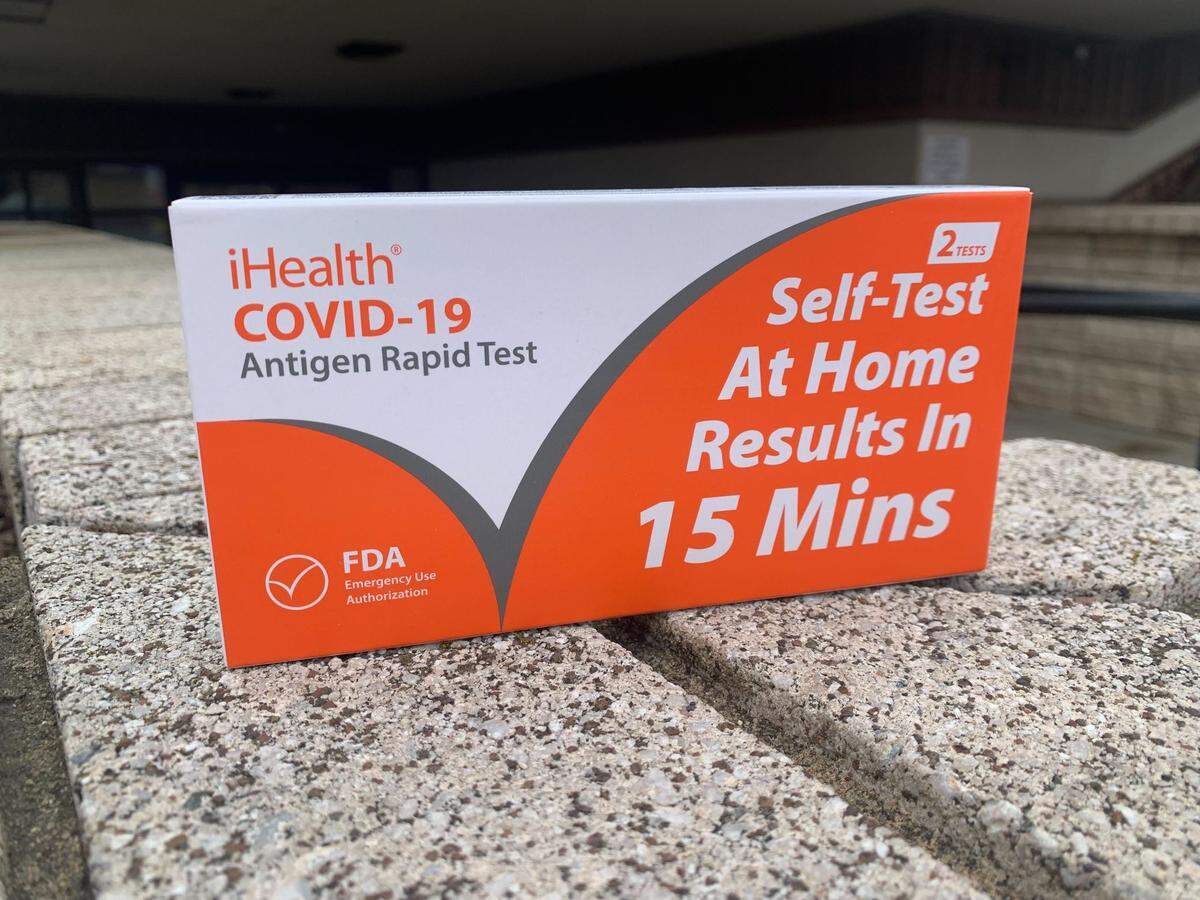
The Sacramento Public Library and Folsom Public Library system on Tuesday began distributing 91,000 rapid antigen at-home test kits provided by county health officials.
The kits are available for free on a first-come, first-serve basis at all 28 Sacramento Public Library locations plus the Folsom library, while supplies last.
Kits are limited to two per person.
Sacramento prison inmate dies of COVID-19
The California Department of Corrections and Rehabilitation in an update this week said an inmate housed at California State Prison, Sacramento, died last week of “causes related to COVID-19.”
It is the second coronavirus death reported among inmates at the prison, located near Folsom and often referred to as New Folsom to distinguish it from nearby Folsom State Prison, which has also recorded two inmate deaths.
No other details were provided on the circumstances of the Dec. 30 death or victim’s identity, including existing health conditions or vaccination status.
New Folsom’s two virus deaths came more than a year apart — the first was reported Dec. 15, 2020. A CDCR employee based at the prison also died of COVID-19 in September.
Data from CDCR shows the prison is currently amid its second-largest wave of inmate coronavirus cases, reporting 31 active infections in custody as of Tuesday, compared to a peak of about 130 in December 2020. The prison also had 36 active cases among employees as of Friday, according to CDCR.
Prisons have been a hotbed for COVID-19 spread due to overcrowded conditions. More than 52,000 inmates across the state prison system have tested positive while incarcerated and at least have died 246 of the virus during the pandemic. CDCR has reported more than 23,000 cases and 49 deaths among its employees.
California recommends upgrading your mask
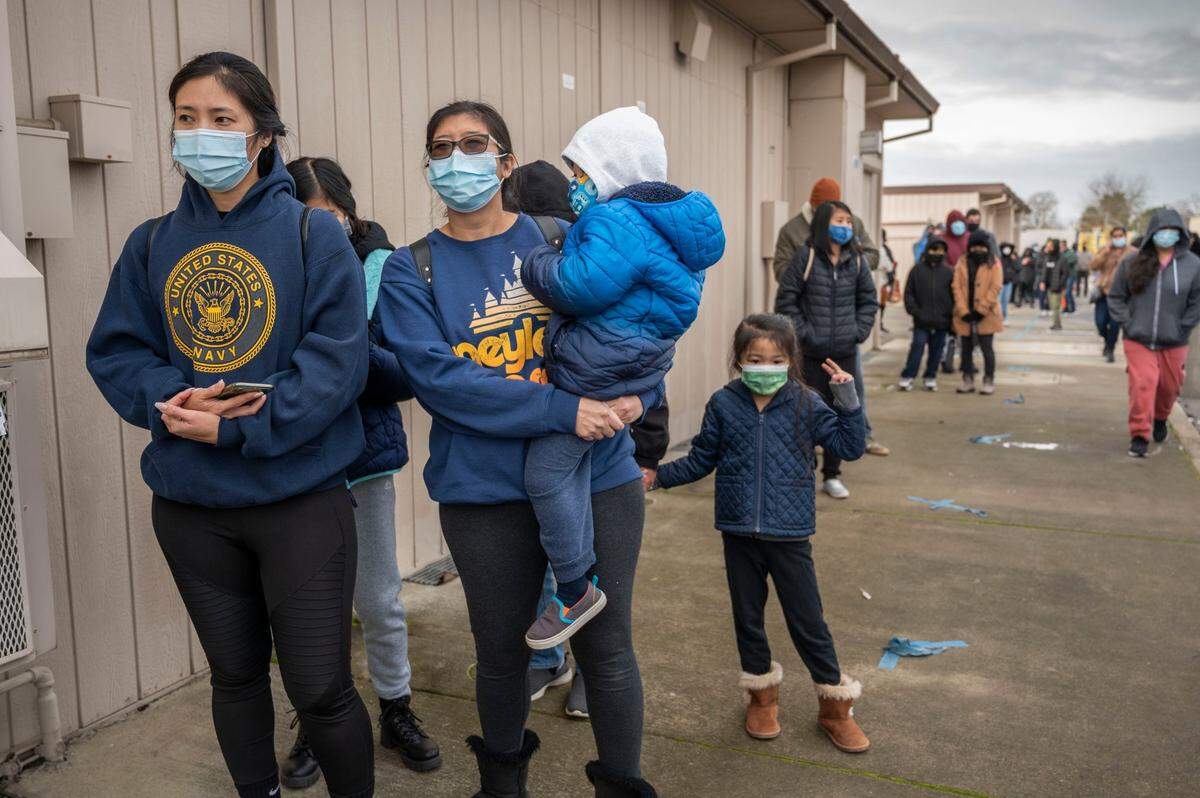
CDPH now recommends that residents avoid a cloth mask and use a surgical mask or respirator to provide better protection.
Appropriate respirator masks include N95, KN95 or KF94, according to the state health department.
Masks are required in indoor public spaces through at least Jan. 15, per a state health order.
Latest on omicron variant
The Centers for Disease Control and Prevention estimates omicron made up 95% of U.S. cases for the week ending New Year’s Day, up from 77% the week ending Christmas and from 38% the week before that.
Researchers believe the omicron variant tends to produce milder symptoms than delta, which had been the dominant strain in California and across most of the world this past summer.
But health officials warn that even if a lower proportion of infected people require hospitalization, omicron is spreading so quickly that it could outweigh this proportional decrease and threaten to overwhelm health systems.
Omicron also prompts concern because full vaccination, with two doses of Pfizer or Moderna’s mRNA vaccines or via the Johnson & Johnson single-dose vaccine, appears to be less effective in preventing infection against omicron than delta and previous variants.
Experts say a booster dose appears to restore a significant amount of efficacy, which is why public health officials are urging eligible residents to get a booster. Health officials also say the mRNA vaccines continue to provide strong protection from severe illness.
The Food and Drug Administration on Monday authorized Pfizer’s vaccine booster for adolescents ages 12 through 15.
Vaccines and boosters
About 26.9 million Californians are fully vaccinated and an additional 3.2 million have had one dose of the Pfizer or Moderna vaccine. CDPH says just shy of 80% of eligible residents ages 5 and older are at least partially vaccinated.
California on Monday surpassed 10 million booster doses given, and CDPH reports about 48% who are eligible have been boosted. This does not yet include those ages 12 to 15.
Those fully vaccinated with a two-dose vaccine are due for a booster six months after their second dose; those who received the J&J vaccine are eligible for a booster two months later.
Newsom announced last month that California will require health care workers to get a booster dose.
California State University and University of California campuses will also require students, staff and faculty members to receive a booster once eligible.
Schools return, but not all districts have test kits
Gov. Gavin Newsom on Dec. 22 promised free at-home test kits for K-12 students returning from winter break, but not all districts received them by this Monday, when many schools returned to class.
CDPH spokeswoman Ali Bay on Monday said the state last week delivered about 3 million tests to counties with another million “currently en route to counties due to arrive in the next 24 hours.” Bay also said deliveries were delayed by severe winter storms.
Newsom in a news release last month said the state would make at-home test kits “available to every K-12 public school student as they head back to the classroom for winter break.” California has more than 6 million K-12 students.
Newsom’s office in a tweet Tuesday morning said more test kits arrived Monday night “and will immediately be sent to continues for distribution through county offices of education.”
Sacramento City Unified School District received about 38,000 at-home test kits from CDPH in December, distributed before winter break. District spokesman Al Goldberg said that out of 20,000 test results reported by Monday, about 500 were positive, roughly one in every 40.
Testing was not required to return to the classroom, but highly recommended by Sacramento City Unified officials. The 500 students and staff who tested positive are now isolating, Goldberg said.
In line with recent updates to CDC guidance, school districts in the Sacramento area are also preparing to shorten their quarantine period from 10 days to five days for students and staff who test positive for COVID-19.
Surge affects universities, court systems
Sacramento Superior Court announced Tuesday that it will reduce the number of trials and hearings held through at least Jan. 21, an effort to mitigate spread of the virus.
“We will continue to monitor the situation and will scale up or scale down depending on the current circumstances,” Presiding Judge Michael G. Bowman said in a statement. “A further scale down could include fully remote hearings.”
Seven University of California campuses on the quarter system opened their winter quarter this week on a remote learning basis. UC Davis plans to return to on-campus instruction next week while UC Riverside, UC San Diego, UC Irvine, UC Santa Cruz, UCLA and UC Santa Barbara are slated to return Jan. 18, the day after Martin Luther King Jr. Day.
Sacramento-area COVID numbers
Sacramento County has recorded 181,210 total lab-confirmed cases and 2,552 deaths from COVID-19 over the course of the pandemic, local health officials reported Tuesday.
The county reported its daily case rate at 80.3 per 100,000 for the final week of 2021, extending on its all-time record of 72.4 set one day earlier. Prior to the omicron surge, Sacramento’s highest case rate had been 63.5, set in December 2020.
According to CDPH, Sacramento County’s latest test positivity rate is 17%.
County hospitals were treating 276 patients with confirmed COVID-19, up from 165 one week earlier. The ICU total increased to 57 from 41.
Placer County has tallied 42,075 cases and 488 virus deaths to date, according to a Monday update.
Local health officials last reported the daily case rate at 20.8 per 100,000 for the week ending Dec. 22.
Placer’s positivity rate is 16.4%, according to CDPH.
Placer County hospitals had 137 COVID-positive patients Monday, up from 85 one week earlier. The ICU total dropped to 24 from 25.
Yolo County has confirmed 22,411 infections and 266 deaths from COVID-19, last updated Monday.
The county’s latest reported case rate is 19.3 per 100,000, for the week ending Dec. 30.
CDPH reports Yolo County’s positivity rate at 5.5%, among the state’s lowest.
Yolo County hospitals were treating 11 patients with COVID-19 on Monday, up from seven a week earlier. The ICU total ticked up from two to three.
El Dorado County has reported 18,294 cumulative cases and 175 deaths from COVID-19, last updated Monday.
El Dorado’s latest case rate, for the week ending Dec. 27, was 28.7 per 100,000.
The county had a positivity rate of 19.9%, CDPH reported Tuesday.
Hospitals in El Dorado County had 13 COVID-positive patients Monday, up from 10 one week prior. ICU patients increased from four to six.
Sutter County has recorded 15,423 cases and 200 deaths, and Yuba County has recorded 11,956 cases with 90 deaths, according to a Monday update from the bi-county health office.
The per-capita case rate shown on the bi-county dashboard has not been updated since early December. CDPH reports Sutter at 25 per 100,000 and Yuba at 23 per 100,000.
Positivity was 17.6% in Sutter County and 18.2% in Yuba County, according to CDPH.
The lone hospital serving Yuba and Sutter counties, Adventist Health and Rideout in Marysville, as of Monday had 23 patients with confirmed COVID-19, up from 11 one week earlier. Its ICU total for virus patients doubled from three to six.
This story was originally published January 4, 2022 at 10:01 AM.