Most who recover from COVID are back to normal. But for some, life just isn’t the same
Douglas Schmidt’s battle with COVID-19 was more harrowing than most, including seven weeks of mostly intensive care at the University of California, San Francisco, Medical Center.
As the coronavirus pandemic shows signs of fading away in Stanislaus County, more attention turns to people like Schmidt who were disabled by the respiratory virus that may attack different organs in the body.
Winton resident Schmidt, 62, is hoping to return to work at a trucking company in Turlock. But as he and his wife live on some disability income and savings, it’s not certain yet what kind of job he can perform.
Other COVID-19 survivors are distressed by disabling symptoms that have not gone away even though they were infected nearly two years ago.
A Center for American Progress article this month cited data supporting earlier warnings the pandemic would be “a mass disabling event.” An analysis of U.S. Bureau of Labor Statistics data revealed that 1.2 million more people age 16 and older had a disability in 2021 than the previous year.
The article said almost 500,000 more workers had a disability, though it’s hard to pin down how many of those had prolonged COVID symptoms.
If the coronavirus evolves into a routine illness, the pandemic won’t be over for an untold number of people in Stanislaus County who have long-term debilitating effects of COVID-19.
“We are hoping Doug can go back to work in March,” said Carolyn Schmidt, his wife. “I don’t think he will be able to drive a diesel truck, but there should be a job he can work if he’s cleared by a doctor.”
Doug Schmidt, who wasn’t vaccinated, came down with symptoms and tested positive for COVID on July 29. Carolyn said his illness quickly grew worse until “he looked at me with really sad eyes and told me, ‘I can’t breathe.’”
‘Miracle Man’ has endured a lot
Doug was in the Kaiser Permanente Modesto hospital for two weeks, was released and came home with blood clots, one of the known complications of COVID illness. He was placed in a rehab facility in Turlock and then Emanuel Medical Center, where a doctor found he had an abscess on his lungs, which could not be treated at Emanuel.
With hospital ICUs in Northern California filling with COVID patients, Carolyn said, the doctor got on the phone and begged UCSF to take her husband to try to save his life.
Doug was treated for complications of COVID at UCSF and put in a medically induced coma. At one point, a nurse noticed one of his eyes was wandering and realized he was having a stroke, prompting action to address the life-threatening emergency.
Doug finally was able to come home in a wheelchair Nov. 11, an outcome that was inspiration for “Miracle Man” T-shirts made for him and family members, who had supported and prayed for him.
Doug needs to make more progress before returning to the labor force. He was taught to walk again at Kaiser rehab services in Vallejo and Fresno, and physical therapy continues to strengthen his ankles and improve his balance. He also has needed speech and occupational therapy to recover from the stroke.
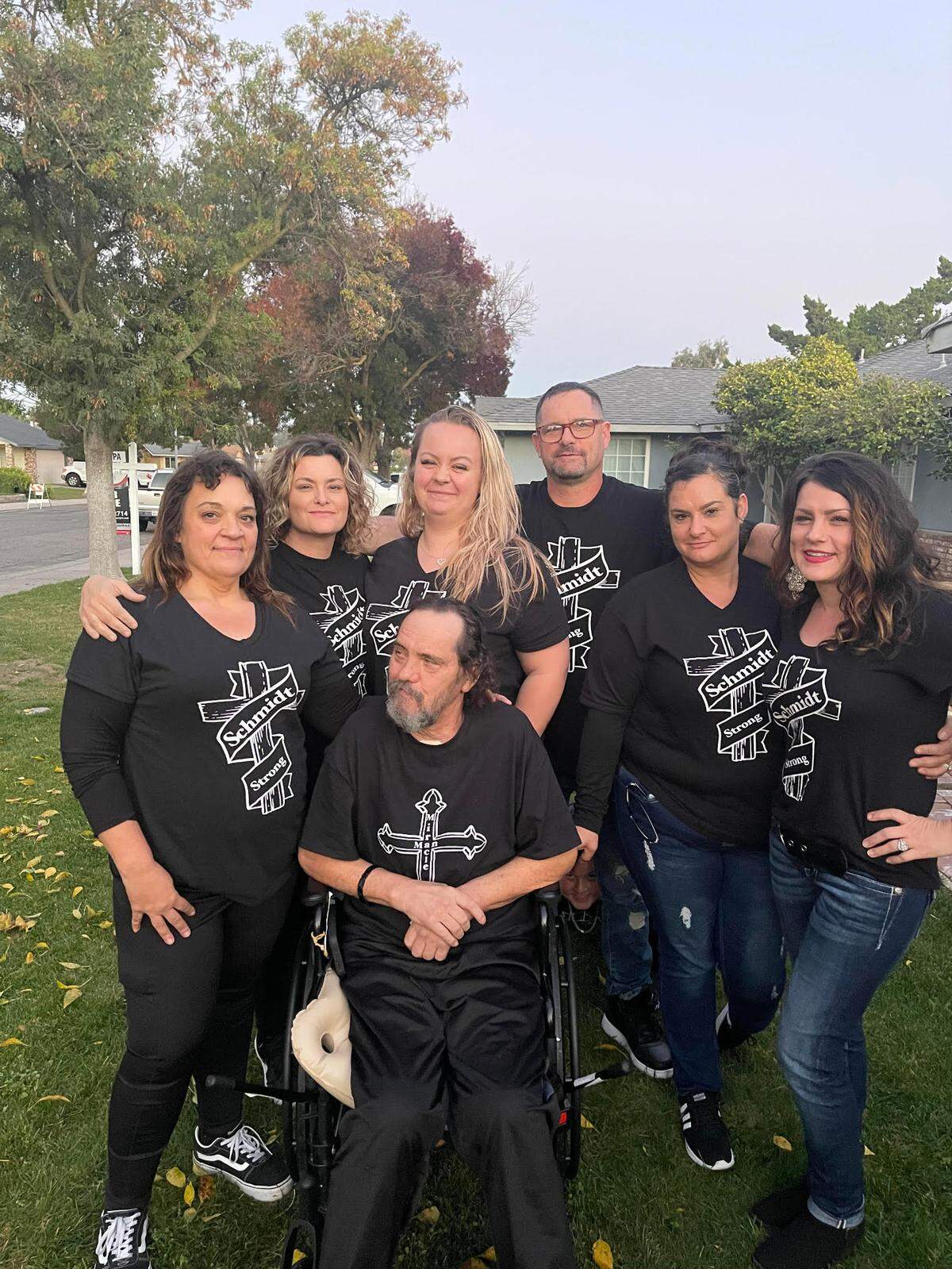
He takes about 15 pills every day including a blood thinner, heart medication, a statin, zinc and vitamins. “He is getting out and becoming more active, but it is taking time,” Carolyn said.
Studies suggest that stroke is one cause of disability tied to COVID-19. Doctors Medical Center in Modesto had a 5% increase in patients with a primary diagnosis of stroke in 2020 and an 18.5% jump in 2021, but the hospital couldn’t say how much of the increase was attributed to COVID-19 patients suffering strokes.
In addition, other patients who were hospitalized for COVID are known to experience symptoms for months after their release from hospitals, including shortness of breath, constant fatigue, heart, vascular and neurological problems, dizziness and loss of taste or smell. Some have scarring on their lungs.
Even people who had mild symptoms initially may experience symptoms of “long COVID” for six months or more.
Articles in the Journal of the American Medical Association estimated that long-haul COVID-19 affects 30% of those infected, which translates into 11 million Americans living with long-term symptoms as of August 2021. That number includes 1.25 million in California.
Stanislaus County public health officials have recorded 1,636 deaths since the virus surfaced here in March 2020, but they have no records on people disabled by the contagious illness. During summer 2020, winter 2021 and the delta surge last year, local hospitals swelled with admission levels of 300-plus COVID-infected patients, including upward of 70 at any given time in ICUs.
Salida man has disabling COVID symptoms
Mike Estrada, 55, of Salida, said he was in the Kaiser Modesto hospital for 12 days in August 2020 after all five members of his family contracted COVID-19. At that time, a coronavirus surge was ripping through the city and the hospital was overrun with patients. He was placed in a room converted for patients who needed more extensive care.
“You could hear the code blues all the time,” he said.
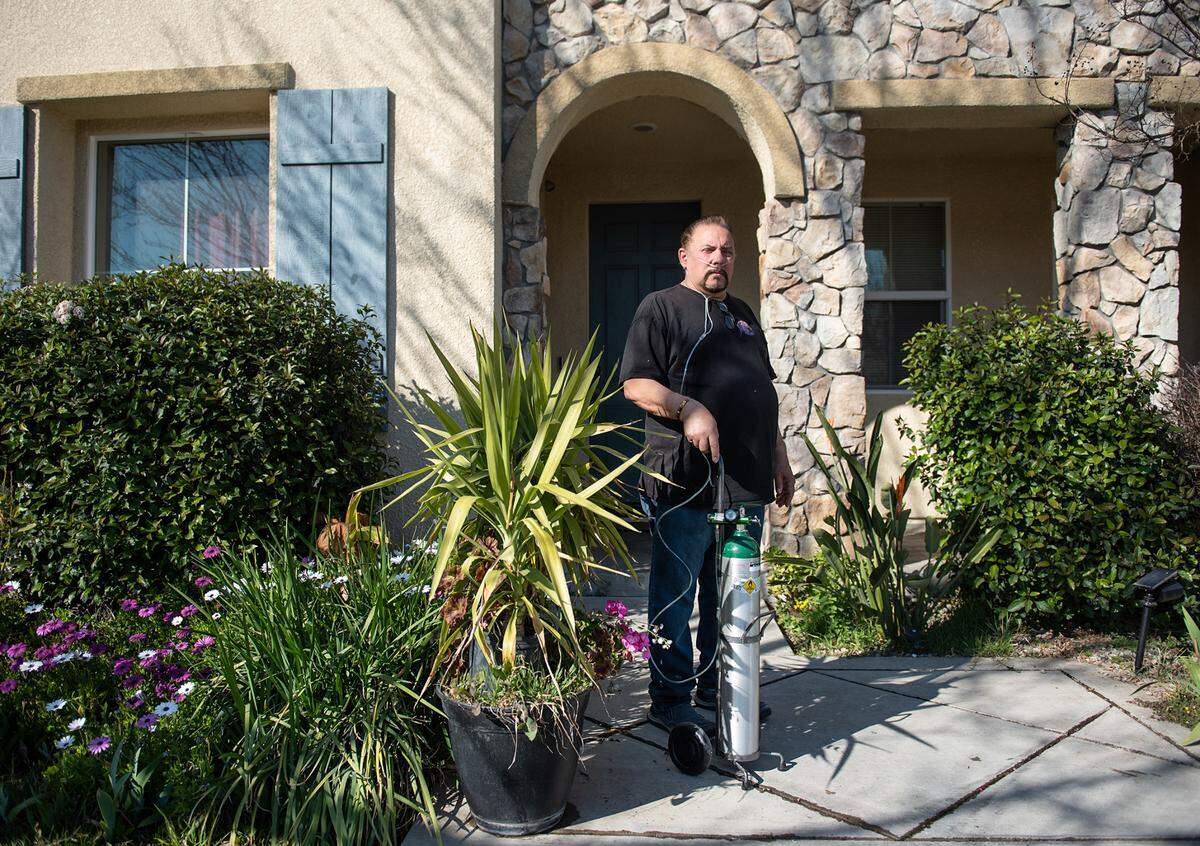
Estrada used a walker after his release from the hospital and it took 3 1/2 months before he could walk on his own again, he said. He was on oxygen for six weeks.
Estrada said the coronavirus ended his career as a Teamsters truck driver. Today, he still has shortness of breath, headaches and back pain that hasn’t gone away since his hospital stay 18 months ago. His sense of smell is not always there.
Estrada said he understands what it is meant by “brain fog”, one the symptoms of long-term COVID characterized by memory lapses and poor concentration. “I used to work on a website, posting videos for a youth basketball league,” Estrada said. “I can’t do it now. I don’t even remember how to do it.”
Mickey Davis, 64, of Modesto, came down with COVID pneumonia and was hospitalized for 17 days starting in September 2021. Davis was never admitted to an ICU and declined a ventilator but said steroids helped to relieve the pneumonia.
Five months later, he still has breathing problems and uses oxygen at home.
“It was really bad when I first got out of the hospital,” said Davis, who lives in a two-story house. “I was stuck in my bedroom for a couple of months before I could even go downstairs.”
Davis said when he gets out of breath today, it feels like someone has punched his stomach, causing his lungs to collapse. “I feel like COVID ruined my body,” he said.
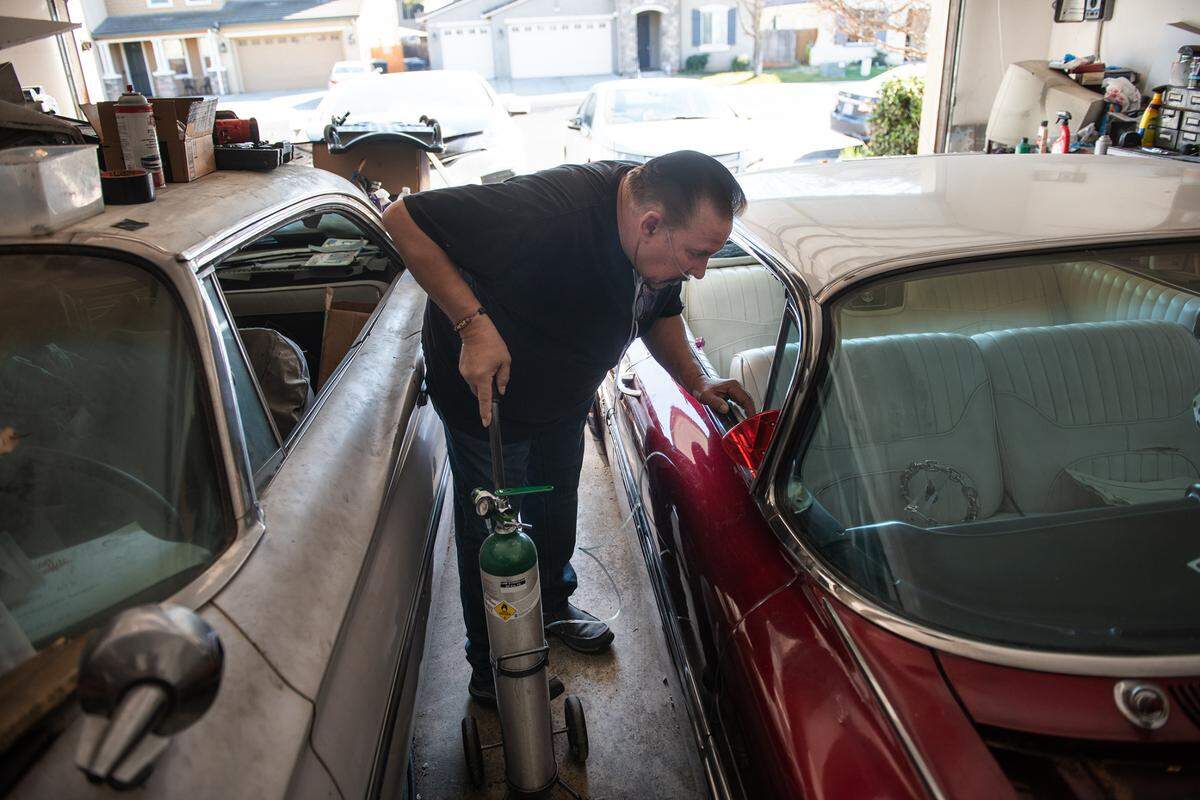
Davis said he has follow-up visits with his primary care doctor and does breathing exercises to try to expand capacity in his lungs. He said he takes a blood thinner as prevention against blood clots.
The Modesto Bee ran a story in June 2020 on Turlock resident Jessenia Lizarraga, who was pregnant when she contracted COVID and was in a medically induced coma for 10 days at UCSF. Doctors conducted a C-section to deliver the premature baby and give the mom a better chance to live.
Lizarraga survived the onslaught of COVID-19 and was reunited with her baby son.
Last week, Lizarraga told The Bee she has not recovered her strength in the 22 months since her bout with the acute illness. The medical assistant has not been able to return to her job at a local health clinic.
Lizarraga, 35, said she gets out of breath while doing housework. “I just have overall weakness,” she said. “I still have weakness in my legs and arms, and it’s hard to move around. There are days when I feel so tired.”
She said CT scans revealed scarring in her lungs. She loses her voice if she has any cold symptoms or a sore throat.
Lizarraga has follow-up visits with UCSF staff in person or via Zoom. She has been told the lung scarring is not treatable.
She said her husband helps with household routines, whether it’s picking up their children from school, buying groceries or running errands. “The dependency of needing someone for any reason is tough,” she said.
Lizarraga hopes that pulmonary rehab can make her lungs stronger. She has not wanted to consider long-term disability benefits at her age, she said, because of her desire to get clearance to return to work.
“I am slowly getting there,” Lizarraga said. “I have come a long way but it is going to take time. The lungs are not going to recover. Trying to get back to where I was will take time.”
Many recover well, many don’t
Dr. Silvia Diego of Family First Medical Care in Modesto said there’s not much awareness of the difficulties many people face in recovering from COVID illness. “Most people think it’s just a virus and it will go away,” she said.
She mentioned a woman, healthy before contracting COVID, who was sent home from the hospital with oxygen and still is using it three months later. COVID-19 is also suspected in a patient whose lungs failed and is now on the list for a transplant.
“If they get very sick, it can definitely affect their lungs,” Diego said. “When they return home, they have trouble walking across the living room, much less going out to get the mail. Some patients have cardiovascular compromises as well.”
People who lie in a hospital bed for 10 to 15 days will have deconditioned, or weak, muscles and will need to rebuild their strength.
Diego said it’s not understood why some COVID patients recover well after being on a ventilator and why some struggle for a prolonged time.
“There are plenty of patients (who recover as expected) and plenty of patients not like that,” she said.
COVID survivors in low-income populations may have less access to care for long-term symptoms because they’ll need transportation to an out-of-town center, Diego said.
Dr. Tyson Weese, a Kaiser family medicine physician, cares for patients hospitalized with COVID-19 and people in the recovery phase after their release.
He said he gives a listening ear to patients who have a more difficult time with recovery to understand what they’re going through and offer support. The most common complaint is fatigue, he said.
“They are worn down, run down — they don’t have the same energy level they used to have,” Weese said.
For COVID patients who are sick enough to be hospitalized, he said, the recovery period is generally four to eight weeks. Weese said he just saw a patient who was sick a year ago and has not regained the sense of smell.
Kaiser has a course of smell retraining that uses scents like lavender and eucalyptus to retrain the nose.
Post-COVID care centers helping
About 20 post-COVID-19 care centers in California are helping survivors who have persistent symptoms for months after the initial illness or hospitalization.
The website for one center says an estimated 10% to 30% of COVID survivors have problems with “shortness of breath, persistent fatigue, cognitive ‘brain fog’ issues, difficulty eating and drinking, speech and language problems, cardiac issues, plus the anxiety or depression often associated with these challenges.”
The closest post-COVID care center to Modesto is at UC Davis Health in Sacramento; two other centers are at UCSF and Stanford. The centers are positioned to provide services across multiple specialties, such as lung or cardiac care, which might not be easy to replicate in Stanislaus County.
Dr. Bradley Sanville, a pulmonologist for UC Davis Health, said the Sacramento center was created fairly early in the pandemic when hospitals were taking in many patients with respiratory failure. The staff anticipated a lot of patients needing follow-up care for extensive damage to their lungs.
It turned out a lot of patients served at the center have been long-haul COVID patients who were not very sick at first but later developed health issues that limit their activities, he said. The Sacramento center agrees with the lower estimate that long-term symptoms occur in 10% of COVID-19 cases.
Some patients who were hospitalized with critical COVID disease have lung scarring. For post-COVID patients with persistent shortness of breath, it will take up to a year for recovery, Sanville said.
“We do put people on inhalers and try to put most of them through pulmonary rehab,” Sanville said. “It’s basically exercise and going over breathing techniques. We do that for several weeks and, at the end, the goal is they will be much more functional.”
Disability benefits for long-term COVID
People with disabling COVID symptoms lasting for months may run into difficulties in getting long-term disability benefits, according to a Society for Human Resources Management article.
“Disability certification is an uphill battle, particularly when there is a subjective element to symptoms,” said Jackie Reinberg, a national legal expert quoted in the article.
According to the article, the language in long-term disability plans will likely tell if an employee suffering from long-haul COVID is granted benefits. Some policies use the same definition for “disabled” as Social Security Disability Insurance, which provides benefits to those who can no longer work at all, the article says.
Doug Schmidt, the former truck driver, would need to pass tests to show he could safely drive a semi again on the road. When he is cleared for work again, he said, he won’t likely return to 12-hour days.
Carolyn Schmidt said her husband’s employer has seemed open to accommodations such as a job assignment for Doug moving trailers in the yard.
Mike Estrada of Salida said acceptance is setting in since his health issues have persisted so long. He said he is doubtful of surviving another COVID infection, so he will get every booster shot that’s authorized and will keep wearing a mask.
“I am realizing I will be living with shortness of breath and the brain fog the rest of my life,” Estrada said. “I just look at quality of life and enjoy my five kids and wife. Right now, I am just happy to be here.”
This story was originally published March 1, 2022 at 8:14 AM with the headline "Most who recover from COVID are back to normal. But for some, life just isn’t the same."