
38 California counties are in ‘high’ community COVID levels. Here’s what that means
The U.S. Centers for Disease Control and Prevention reports 38 out of 58 California counties are in a “high” community level for COVID-19.
The map below, created by the CDC, shows high, medium and low levels of COVID presence, as of June 30, the most recent available data.
.png "California_COVID-19_Community_Levels (1).png")
What is my county’s community COVID level?
High
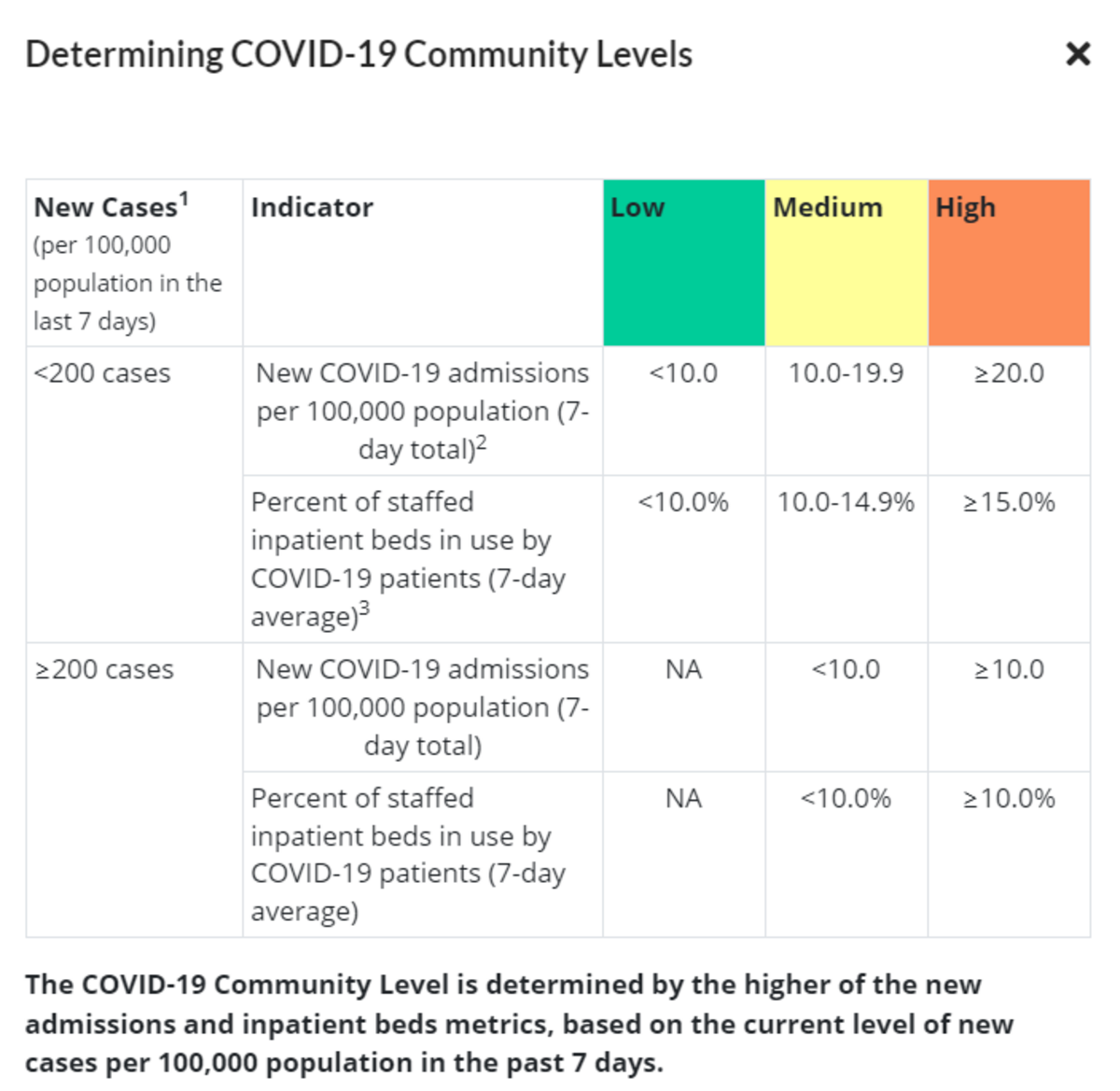
A community that is designated at a high level has 200 cases or more out of 100,000 people in the past seven days or increased levels of hospital admission and occupancy with COVID-19 patients — or some combination of the above, according to the CDC.
In this category, the CDC recommends wearing a mask in indoor public spaces, regardless of your vaccination status. It also says individuals should have a testing plan and avoid unnecessary indoor events.
The following 38 California counties are in the high level: Alameda, Amador, Calaveras, Contra Costa, El Dorado, Fresno, Kern, Kings, Lake, Lassen, Madera, Marin, Mariposa, Mendocino, Merced, Monterey, Napa, Nevada, Placer, Plumas, Sacramento, San Benito, San Francisco, San Joaquin, San Mateo, Santa Clara, Shasta, Siskiyou, Solano, Sonoma, Stanislaus, Sutter, Trinity, Tulare, Tuolumne, Ventura, Yolo, and Yuba.
Medium
A community that is designated at medium also at least 200 cases out of 100,000 people in the past seven days. Hospitalization numbers are higher than the low level, but do not meet the threshold for high.
In this category, the CDC recommends being tested when showing symptoms, talking with a health care provider if you are at risk, and staying up to date on your COVID vaccinations.
The following 18 California counties are in the medium level: Alpine, Butte, Colusa, Del Norte, Glen, Humboldt, Imperial, Inyo, Los Angeles, Modoc, Orange, Riverside, San Bernardino, San Diego, San Luis Obispo, Santa Barbara, Santa Cruz, Sierra.
Low
A community that is designated at a low level has less than 200 cases out of 100,000 people in the past seven days and fewer hospitalizations per capita.
In this category, the CDC recommends being tested when showing symptoms and staying up to date on news about the virus in your county. It also says you should stay up to date on vaccines.
The following two California counties are in low transmission: Mono and Tehama.
This information updates every seven days, according to the CDC website.
How can I check my community level?
Simply, search for the CDC risk level in your county, or the county you’re visiting, on the CDC website or visit the CDC’s interactive map of California counties, found at the same link.
The following image, from the CDC, shows the individual thresholds:
How is the CDC gathering the data?
The CDC checks the number of reported cases and hospital cases related to COVID within jurisdictions required to share the data. Data can come from public health departments and medical facilities where people can self report.
Are we under counting COVID cases?
California COVID cases are likely to be heavily under-counted, based on research done by the Sewer Coronavirus Alert Network.
Coronavirus cases in California are potentially higher than the omicron surge based on a water waste study. The differences in case numbers reported by the CDC and waste water testing is attributed to reduced number of positive cases determined in medical facilities or testing sites, as at-home testing for the virus becomes more available.