
See beekeepers come to the rescue after a sidewalk hive broke open in Sacramento
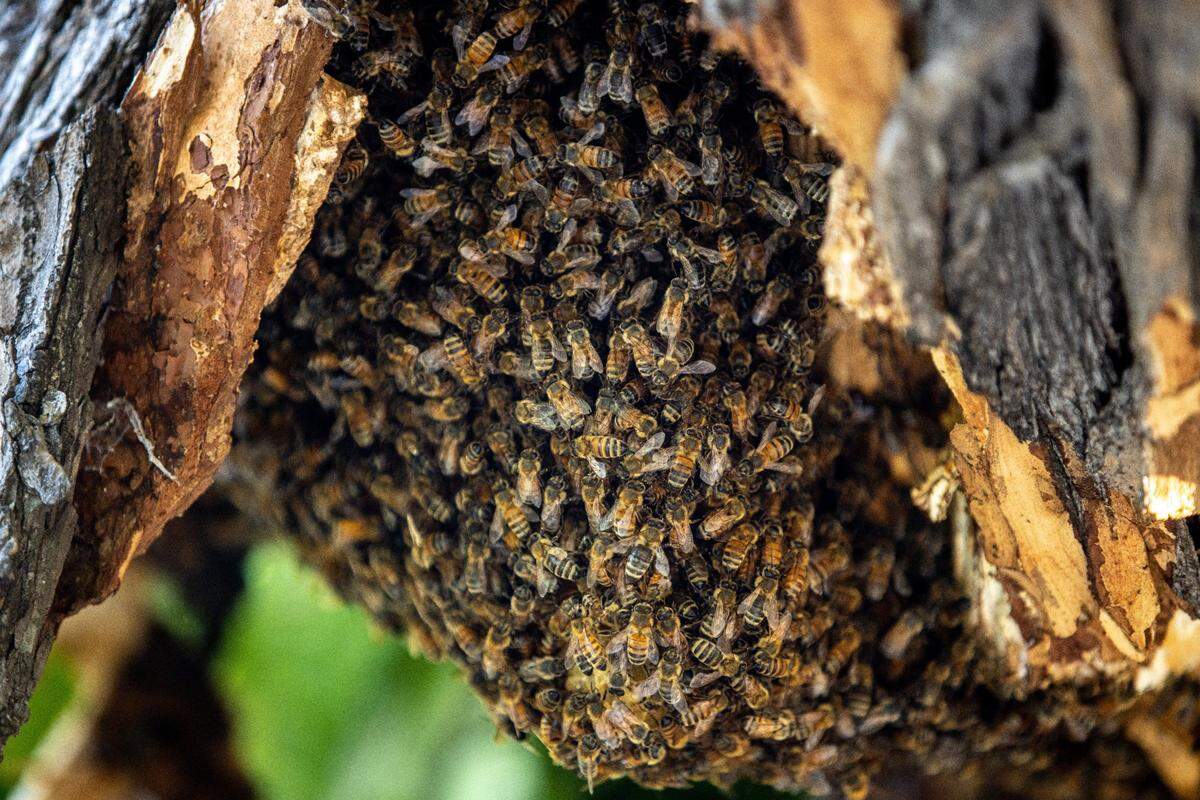
The honeybees made their home above the Freeport Boulevard sidewalk, across from Marie’s Donuts, since at least last year.
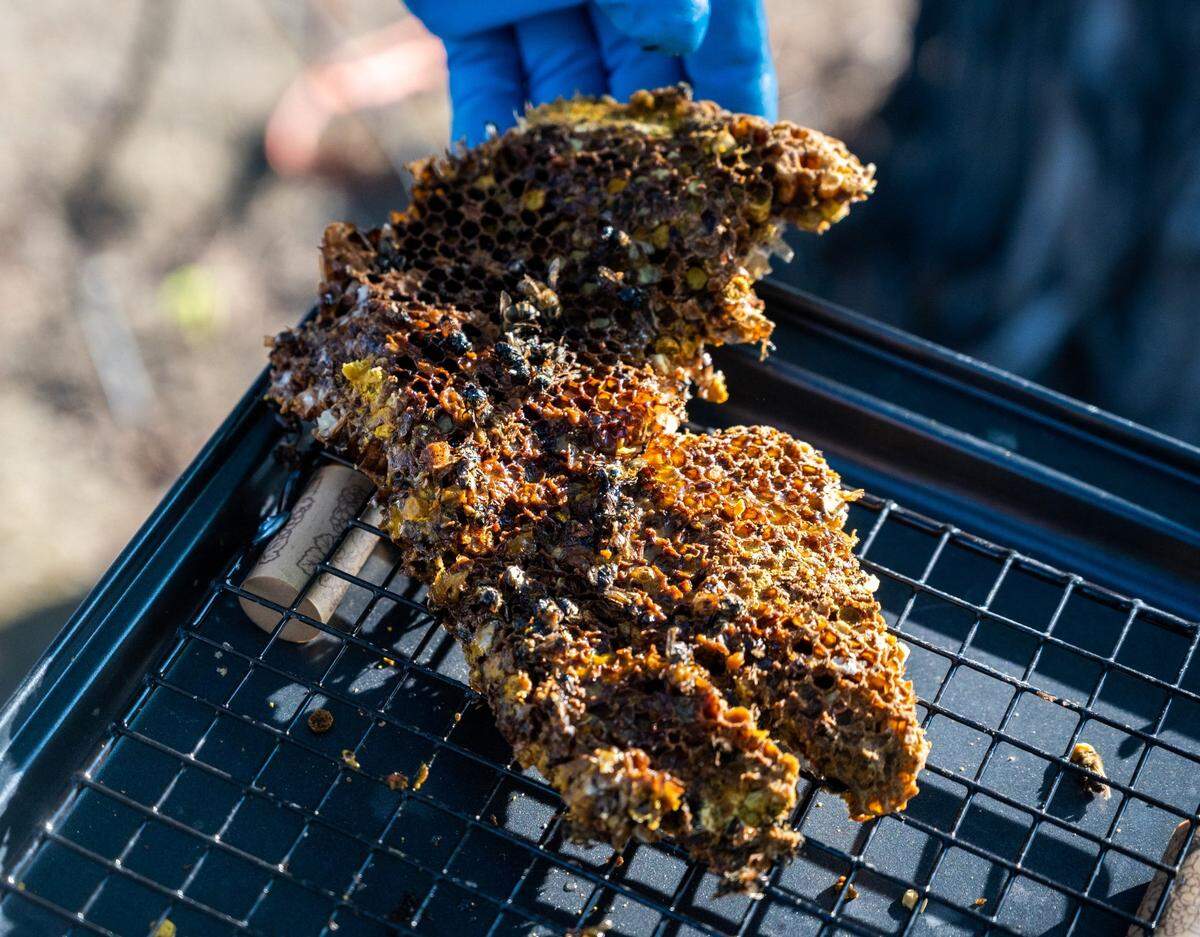
The elm tree had been there much longer, but it was rotten and no match for the weekend’s high winds. When one of its largest limbs shattered, the bees’ hive was exposed and they needed a new home.
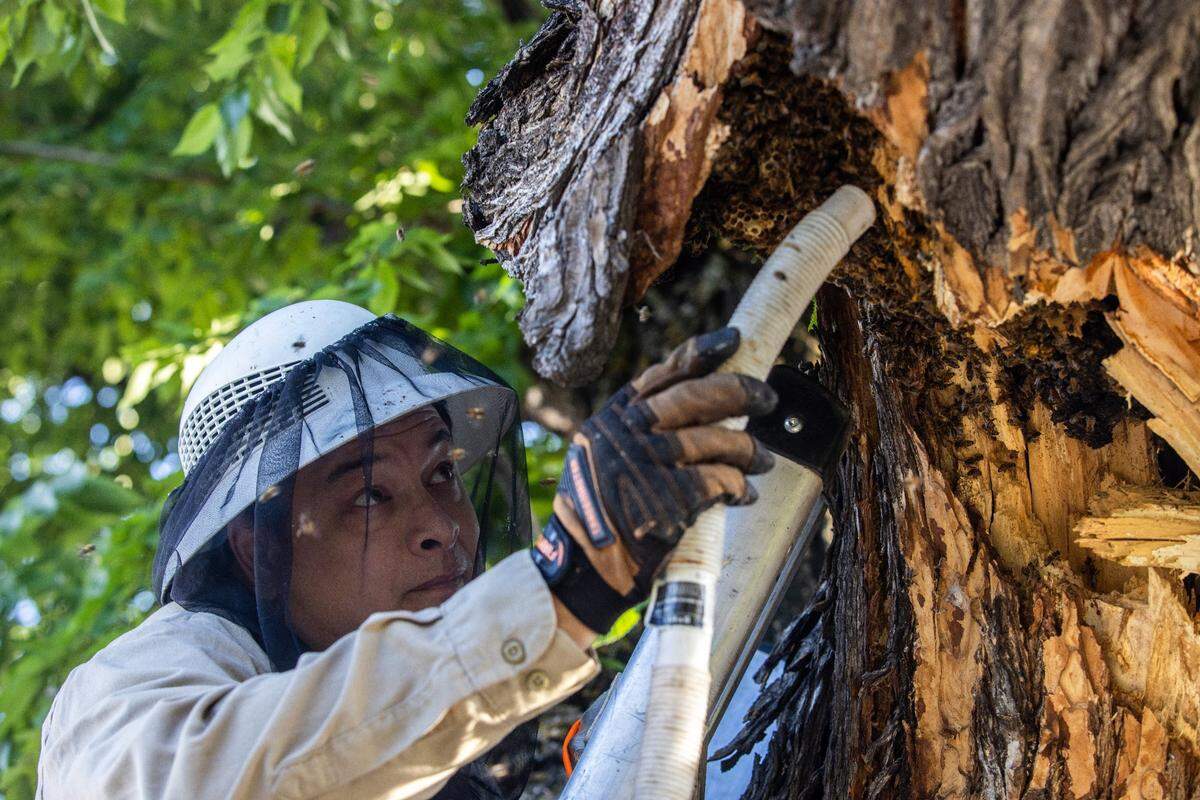
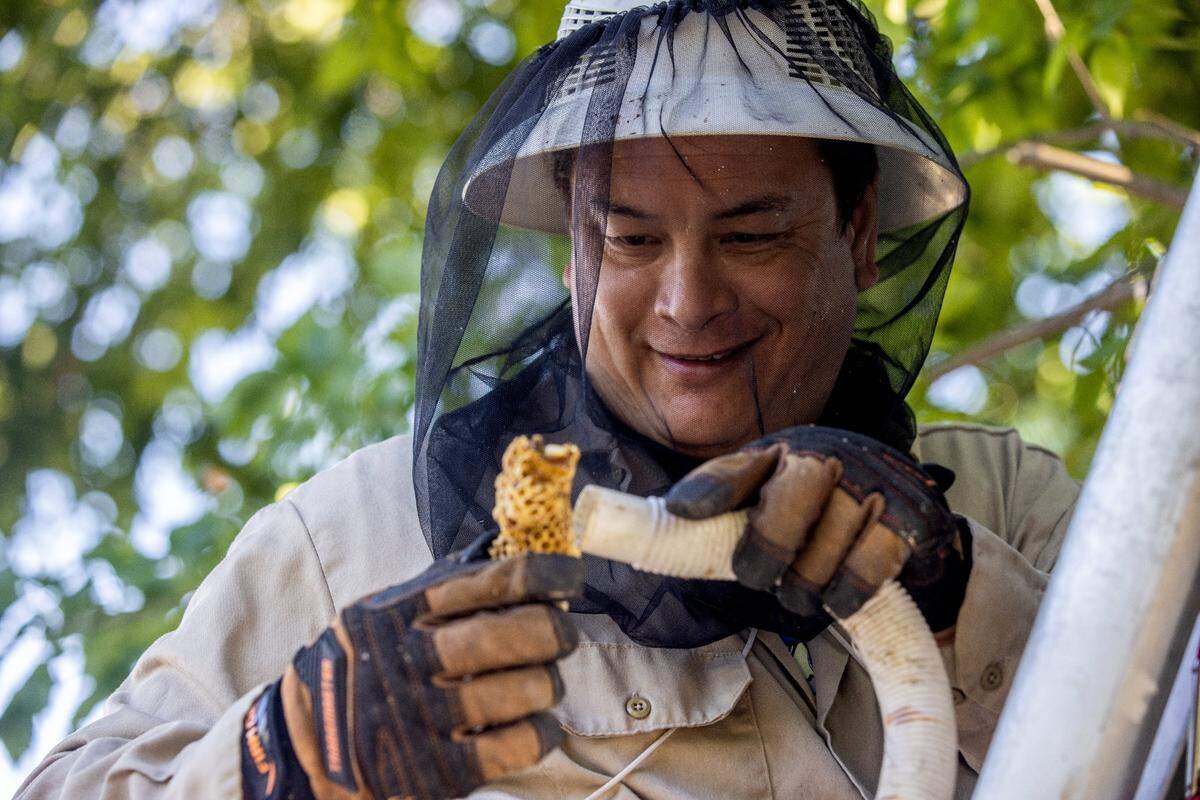
Monday morning it was time for the rescue. Beekeeper D.W. Schoenthal, of rescue group BlueGreenHorizons, and volunteer Jeff Goding were on scene with a low-pressure vacuum to gently collect the bees once the branch was stabilized by the Sacramento urban forestry department.
“They tend to move into rotten trees,” said Schoenthal, who described the colony as previously healthy and normal-sized at about 60,000 bees. “At some point that goes south.”
The damage was catastrophic, he said, probably crushing up to half the bees – and their queen – instantly. His group had visited the site over the weekend to calm the bees and protect the public until the city tree was safe to access.
The rescued bees were quarantined to make sure they don’t harbor pests or disease. The beekeepers will eventually provide additional population and a new queen to sustain the colony. BlueGreenHorizons supplies healthy bees to groups like 4-H and Girl Scouts, or other nonprofits, community gardens or beekeeping volunteers.
Schoenthal is a listed “swarm collector” on the Sacramento Area Beekeepers Association web page, meaning he has volunteered to be on call to handle bee emergencies, including established hives, which not all beekeepers are equipped to handle.
Honeybees are rarely aggressive – most stings occur because they are trapped in clothes or stepped on – but they will ferociously defend the young in their hives. It’s a response they’ve evolved in their age-old struggle against bears. “Don’t pretend to be a bear,” Schoenthal said.
Reports of reproductive swarming activity, where bees have left a hive with a queen in search of a new home, are more common than problem hives. Those bees are only interested in protecting their queen while the swarm rests.
With many people at home amid the COVID-19 pandemic, swarm sightings increased 200%, by Schoenthal’s rough estimate. Bees swarm between 10 a.m. to 4 p.m., so swarms that once would have gone unnoticed were reported.
“We all had to up our game. We had to become more of a teacher, because the kids really wanted to know what was going on,” he said. “When 20,000 bees show up, you notice it.”
The beekeepers ask for donations for their work – mostly to defray the cost of insurance. Reproductive swarm recovery is generally done at no charge, but costs for established hives vary.
Schoenthal will also relocate bumblebees, which nest in smaller colonies. Problems with wasps and yellow jackets can be addressed by the Sacramento-Yolo Mosquito and Vector Control District – unless they are in a building, which requires a private contractor.
Pollinators such as bees and butterflies are critical to agriculture, including many beloved backyard citrus trees in nearby Land Park. But bees have struggled in recent years.
A new state coalition, launched Wednesday by leaders in agriculture, government and conservation, aims to protect bees from pesticide spraying, habitat loss and other threats.
The drought will pose another challenge for bees.
“We had a very warm and wet spring. That produced a tremendous amount of forage,” Schoenthal said. “We’ve had pretty much a record reproductive season for honeybees this year.”
Without rain since, the large populations of bees won’t have food. Schoenthal said he thinks the wild bees are running into a food problem already, and expects a large population drop this summer. Managed hives can be fed by beekeepers.
“With the feral hives, it’s kind of ‘Game of Thrones.’ Who’s ever the strongest might survive,” Schoenthal said.
This story was originally published May 14, 2021 at 5:00 AM with the headline "See beekeepers come to the rescue after a sidewalk hive broke open in Sacramento."